I Will Miss This World
On our walks along Scotland’s west coast — something my wife and I have done for years — we often drift into our own quiet worlds. The sea, the sky, the wind off the loch lomond: they create a kind of gentle solitude we share without speaking. On one of those walks, I found myself thinking how beautiful this planet is, and how much I will miss it when my time here ends.
The thought was prompted, oddly enough, by a man I met who told me he’d abandoned his disappointing hotel and booked into another, taking the financial hit just to salvage his holiday. I understood him. Life is short, and we try to gather good memories while we can.
If you’re new here and haven’t read the backstory, let me bring you into it.
Three years ago, I learned that the very cells which had served me faithfully all my life had turned traitor. They staged a rebellion in my prostate, marched to my pancreas, and finally settled in my liver — a cancerous time bomb quietly ticking inside me.
The diagnosis arrived in September 2023. Neuroendocrine cancer. Spreading. Serious. Delivered gently, almost tenderly, by a consultant who knew there is no script for receiving such news.
And yet, I discovered there was a script — one written long before I knew I would need it.
On the morning I was due to receive my results, something extraordinary happened. Before I stepped into the hospital, before the diagnosis had a name or a prognosis, God spoke to me through words I hadn’t sought but that arrived like a lifeline dropped into deep water:
He who dwells in the shelter of the Most High will rest in the shadow of the Almighty. I will say of the Lord, “He is my refuge and my fortress, my God, in whom I trust.” — Psalm 91:1–2
I didn’t read those words casually. They were spoken into my spirit — not just read, but revealed. It felt as though God leaned close and whispered: This is for you. For today. For what you’re about to hear.
I turned to my wife and said, “We’re going to get bad news today.”
And He didn’t stop there.
That evening, my wife — who has walked every step of this path with me — showed me something I had missed. She had been reading the same psalm, but her eyes were drawn to its closing verses:
Because he loves Me, I will deliver him; because he knows My name, I will protect him. When he calls out to Me, I will answer him; I will be with him in trouble. I will deliver him and honor him. With long life I will satisfy him and show him My salvation. — Psalm 91:14–16
In her quiet way, she revealed what I needed most: God was not only promising protection — He was promising presence. Not just a fortress, but companionship in trouble. Not just deliverance, but honour. And most tender of all: long life, whether measured in days here or in eternity with Him.
Cancer can make you feel absurdly small — like Sisyphus, condemned to push the stone of your own body uphill, knowing it will only roll back down. Camus wrote that one must imagine Sisyphus happy, that the struggle itself is enough to fill a man’s heart. But unlike Camus’s Sisyphus, my life is not condemned to futility. The stone is heavy, yes — but I do not push it alone. God’s presence transforms the absurd into the bearable, and the unbearable into the meaningful.
Viktor Frankl, who endured the concentration camps, wrote that those who have a why to live can bear almost any how. My why is clear. It is anchored not in medicine or prognosis, but in God — my refuge, my fortress, my salvation. I know how easily this can sound like well‑worn Christian rhetoric. But unless you’ve walked this path with God yourself, you may never know how it feels from the inside.
Psalm 91 does not promise the absence of pain. It promises His presence in it. It promises that when we love Him and call on Him, He hears, He answers, He walks with us.
I may have been given a year, but I have been given far more than that — I have been given hope. Not wishful thinking, but anchored hope. The kind that steadies a man living with a time bomb inside him.
To anyone who has sat in that sterile room and heard the doctor say “cancer,” or who lies awake wondering what the future holds: God still speaks. And more than that — He stays.
There is a future for those who walk with God. John 5:24 says:
Truly, truly, I tell you, whoever hears My word and believes Him who sent Me has eternal life and will not come under judgment. Indeed, he has crossed over from death to life.
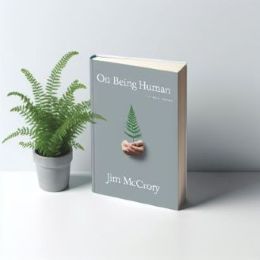
Before all this, I was working on a book called What It Means to Be Human, exploring the question from Christian, subjective, and objective angles. These days I write smaller, “word of the day” style pieces instead — finishing them when I finish them — many of which appear here. Thank you for reading.
And as for the man searching for a better hotel, a better experience, a better memory — I hope he found it. We all want our days, however many remain, to be good ones.
Tags: Christian Reflection, Living with Cancer, Scotland’s West Coast, Faith and Suffering, Mortality and Meaning, Gentle Prose

