This watercolour is a favourite of mine/
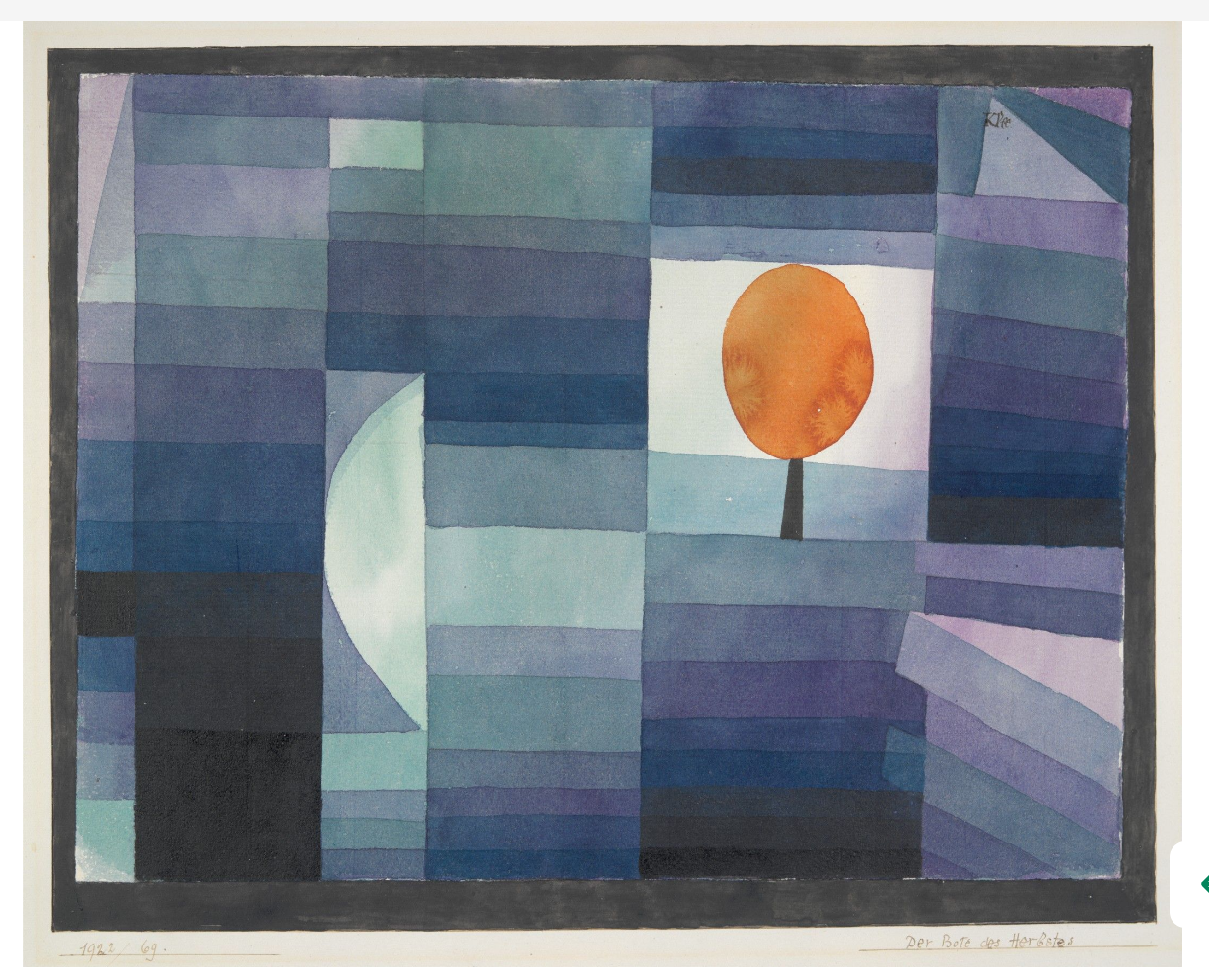
The Harbinger of Autumn by Paul Klee [1]
Today a harbinger means a messenger or foreteller, but it comes via French from a Frankish word *heriberga, 'lodging', and originally had the sense of an army camp. The sense of a messenger developed from the name given to an official sent on ahead with the news that the army needed putting up at yours ('Oh goody!').
In German the painting is called Der Bote des Herbstes, Bote meaning 'messenger', presumably cognate with English bode, 'warn of', and Herbst being the German for autumn; essentially the same word as harvest. The Old English for autumn was hærfest and most extant Germanic languages use a similar word, but we borrowed the French word automne.
Here's a snatch of Old English poetry; the four seasons —
“Winter byð cealdost, lencten hrimigost... sumor sunwlitegost... hærfest hreðeadegost."
Maxims II. Mid-11th century
It's interesting that we can make this out in parts, "Winter be-eth coldest, Lent (so Spring) rimiest (frost is still described as rime), Summer sunlightiest, Autumn is ??". The last word is harder to guess but when I looked it up it means 'gloriousest' (this word really exists!)
[1] Yale Art Gallery, public domain.
Tags: The Harbinger of Autumn, harbinger, Der Bote des Herbstes, Harvest Paul Klee

