

All my posts: https://learn1.open.ac.uk/mod/oublog/view.php?u=zw219551
or search for 'martin cadwell -caldwell' Take note of the position of the minus sign to eliminate caldwell returns or search for 'martin cadwell blog' in your browser. There is a space between my name and the minus sign and NO space before 'caldwell' to eliminate the name 'caldwell' in the Google listings
I am not on YouTube or social media
Cadwell NOT Caldwell
They can see children hiding behind their hands
[ 9 minute read ]
 Opinion based on
  Fact
Fact
While the best place to get information for what The Open University expects from its students; and I believe the primary source is on their information pages, I have provided my take on how I can make the changes in their policy work best for me.
IMPORTANT INFORMATION
 Final versions of TMAs for some modules must now be submitted and no resubmission is possible. Drafts are uploaded and saved and cannot be submitted because that would make them final versions and they would be the only version that can be offered for marking. If the student does not submit a final version by the assignment deadline, the last draft uploaded or saved is automatically submitted for marking after the deadline day.
There was a message posted on a forum the day after I received an email from The Open University that read the same for all students doing level 2 modules (and above I presume).
18 Sept 2026 09:28 POST 1. '... concerned about the students uploading drafts and then submitting a final version. ....How many times will [students] accidentally [upload and save] a [draft] that is not the final version as a result.'
The words in square parenthesis I changed or added, to clarify the intent behind the post.
'As I understand it, we don't have to submit drafts. It's there if we're concerned about not being able to submit a final draft [version]. At least then there is something that will be submitted [marked]
I understand that tutors will not be able to access any drafts that have been uploaded or saved UNLESS THERE IS NO VERSION THAT HAS BEEN SUBMITTED in which case the latest version will be considered as the final version and that one shall be marked. This is in order to avoid students missing assignment deadlines.
The student who posted POST 19 (immediately above) then went on to say:
'...they only send [final versions] and if there was a computer crash it would not matter, because all their drafts are backed up to an eternal drive.'
That works if the computer can be fixed in time to meet an assignment deadline; we all still have electricity; are not in hospital; ill from flu or something; at least have one working arm or know someone who understands what the student is saying and can type...You get my drift.
We cannot resubmit final versions; so we should not submit any version until it includes associated TMA forum comments if they are required; so I advise sending at least one draft by saving. This makes the new Open University TMA and EMA Submission policies hugely restrictive for me, and the best way to get the best draft marked (the last one) is to never submit a final version, since if no final version is submitted, the last draft that was uploaded and saved will be marked as a final version submission anyway.
I found some information (below) and a bit more on an OU site. Incidentally, the time for the deadline has long been 12:00 noon, but we were given twelve hours grace for late submissions on the deadline day. I am not certain, but I think versions that are submitted do not get that twelve hours grace. I may be wrong, but I am working from memory on that, and that piece of information is not important to me, because I shall send a version before the deadline day anyway, so I didn't bother fitting that into how the new policies will impact me. Certainly, if anything is submitted the student can not ask for an extension before or after the deadline time and date.
Interestingly, the Open University site (partially reproduced below) uses the word 'upload' as separate to 'submit'. I have extrapolated from their words 'Upload and revise your work' to mean upload sends the work to a plagiarism checker, such as TurnItIn, and there is no point in saving it for later download if the student intends to submit the same file since it cannot be downloaded and only one version can be submitted. I think I forgot to mention that now because only one version or work can be submitted, any drafts saved anywhere are rendered useless if there latest draft was used to be marked, and it can only be of use to reflect on what went right or wrong. In the past, I have downloaded the submitted marked final version after the deadline, but now we cannot. I advise saving the final version before it is submitted. I believe a student can ask for more time to complete the assignment if the submit something. This means that if the student has an expectation that they will not be able to complete the assignment at any time before the deadline; new expectation of a long hospital stay or expectation of a long physical or mental illness, they should get someone to submit anything, and not let their latest saved draft be automatically submitted to be marked (see the OU web site below). However, within that site there is a contradiction.
From an Open University site:
'Upload and revise your work before submitting for marking
You can upload your work as a draft as many times as you like before the cut-off date until you're ready to submit it for marking.
If you do not submit your work for marking by 23:59 (UK time) on the cut-off date, the latest version you've uploaded will automatically be submitted to ensure you do not miss the deadline. You will not be able to request more time to complete your assignment if your draft has been automatically submitted.
Submit your assignment for marking
Once you submit your assignment for marking, you cannot submit it again. Before submitting for marking, download and check the uploaded files to make sure they're correct. If you realise something is wrong with your files after submitting, contact your tutor to tell them what's happened and discuss your options.'
https://learn2.open.ac.uk/course/view.php?id=245647&cmid=2741576
Also read: ADDENDUM to TMA and iCMA Policy
https://help.open.ac.uk/documents/policies/tma-icma-policy/files/411/tma-icma-policy-addendum.pdf
The gist I got from another Open University site, is that draft TMAs can be uploaded / saved as a draft, through the Submit button and may automatically go to TurnItIn. Uploading does not save the work; only saving saves and is distinct from uploading.
'How to save your work as a draft
To upload and save your work as a draft, you can either go to the Assessment page of your module website and select the ‘Start submission’ button. Or go to the module record page of StudentHome and select the 'Submit' button for the relevant TMA. This will take you to the new service where you can upload your files, and you'll have the option to save your work as a draft. '
https://help.open.ac.uk/documents/policies/tma-icma-policy
I think the issue that might offend some people, and especially me, is whether drafts get automatically sent to TurnItIn. The changes seem to follow a statement that the OU is concerned with plagiarism and AI assisted work. I say this because I read on an OU site that the tutors will not see the drafts and so the issue of students being continuously tracked is not evident. However, the tutors WILL see the final draft that is uploaded and saved if no final version is submitted; so some kind of automation or even manual manipulation is obvious. That is worrying for me because that means A.I. is likely to automate the process; it is not difficult to write in a couple of lines of code that perform an IF-THEN-IF ELSE-ELSE subroutine. This means that it is highly likely that A.I. will continuously track how students have performed throughout the process of creating any work that is uploaded and submitted. That is useful information for tutors because I often read about student performing poorly and even failing level 1 modules.
What this means, is that by uploading and drafts, A.I. generative software WILL have access to the students' work including their writing style and so that student's style can be known, and even emulated and that makes THAT student obsolete.
I shall either not upload drafts or learn a new style specifically for TurnItIn to emulate. There is another problem, in that, if students do not have their work checked by TurnItIn, the student cannot prove that they have not plagiarised another student who later DOES use TurnItIn with similar work.
Also, because only ONE final version can be submitted, no student can submit more final versions for future TMA marking by working ahead (during the long Christmas break for example) and expect high marks since the Tutor Group Forum comments would be missing from their final versions; if they never upload and save their drafts (which TurnItIN may have access to).
I must conclude that in the drive to eradicate plagiarism and students' use of generative A.I. software, students are now compelled, even forced, to upload drafts and then submit a final version. Progress, performance and style will be measured and if two or more students have the same style of writing or performance then at least one of them is cheating. Expect accusations if you try to interfere with a profile of your studying; working style; and performance being created.
 I listen to James O'Brien on LBC, a UK national phone-in radio show. He likes to ask particular callers what EU laws they don't like that the UK was subject to prior to Brexit. I never hear any of the callers being able to offer a good reply to this.
 In supply chain management we learn about the KanBan system, which though you may come across a number of ways to describe it (Chinese Whispers) it is ostensibly this: When a bag of sugar passes through a Tesco checkout someone in a warehouse, hopefully not too far away, puts a bag of sugar on a pallet; or more closely; in ALDI, when a pallet of sugar goes through a checkout, one by one, the number of bags of sugar is automatically counted, and when a specific number is reached someone replaces the pallet of sugar on the shop floor.
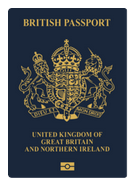 In case you are wondering: Passport and driving licence photos used to allow the wearing of glasses; they no longer do because the lenses distort the sides of the face and mess up face-recognition analysis. Not a real problem because it is only the Government that has those photos, right?