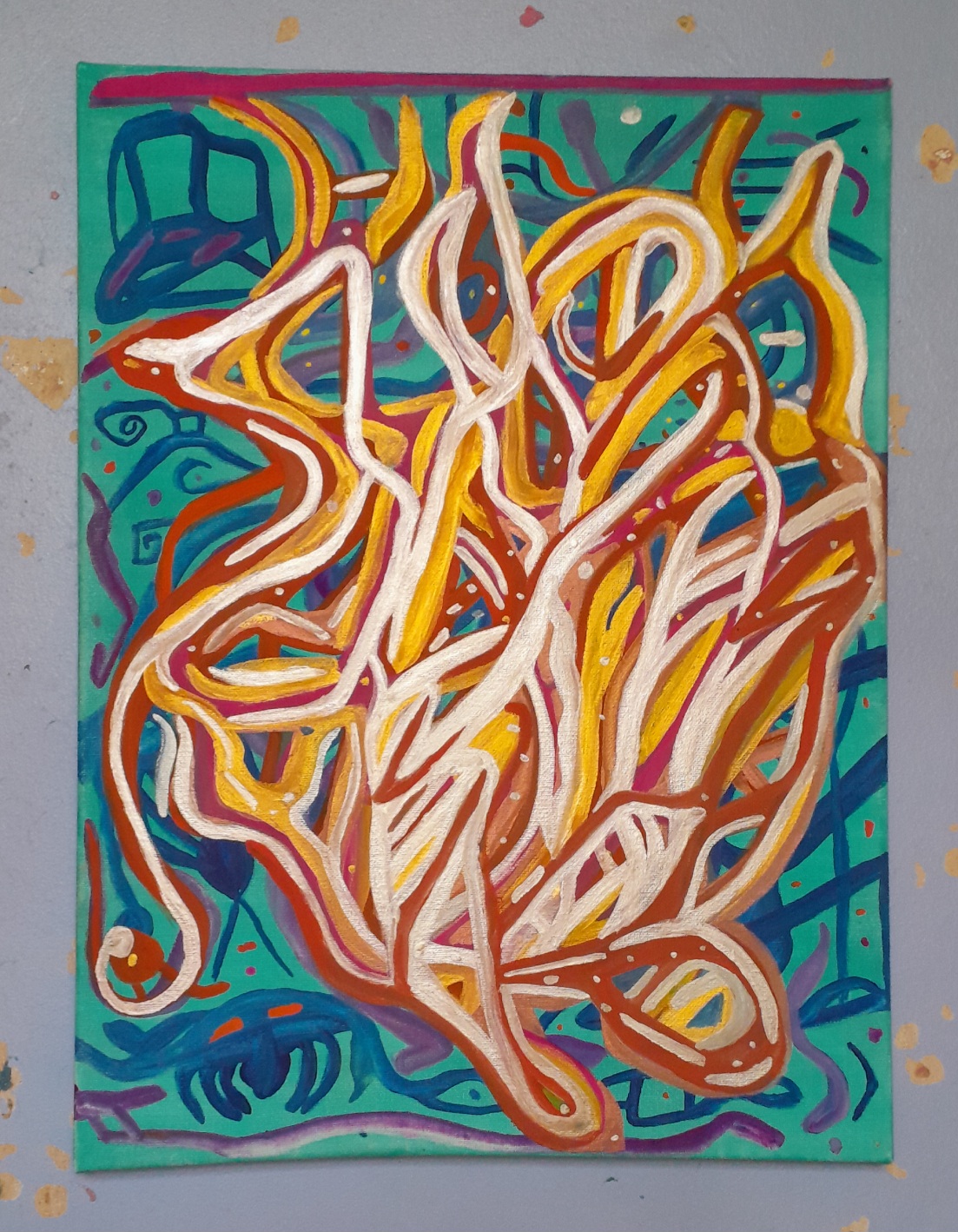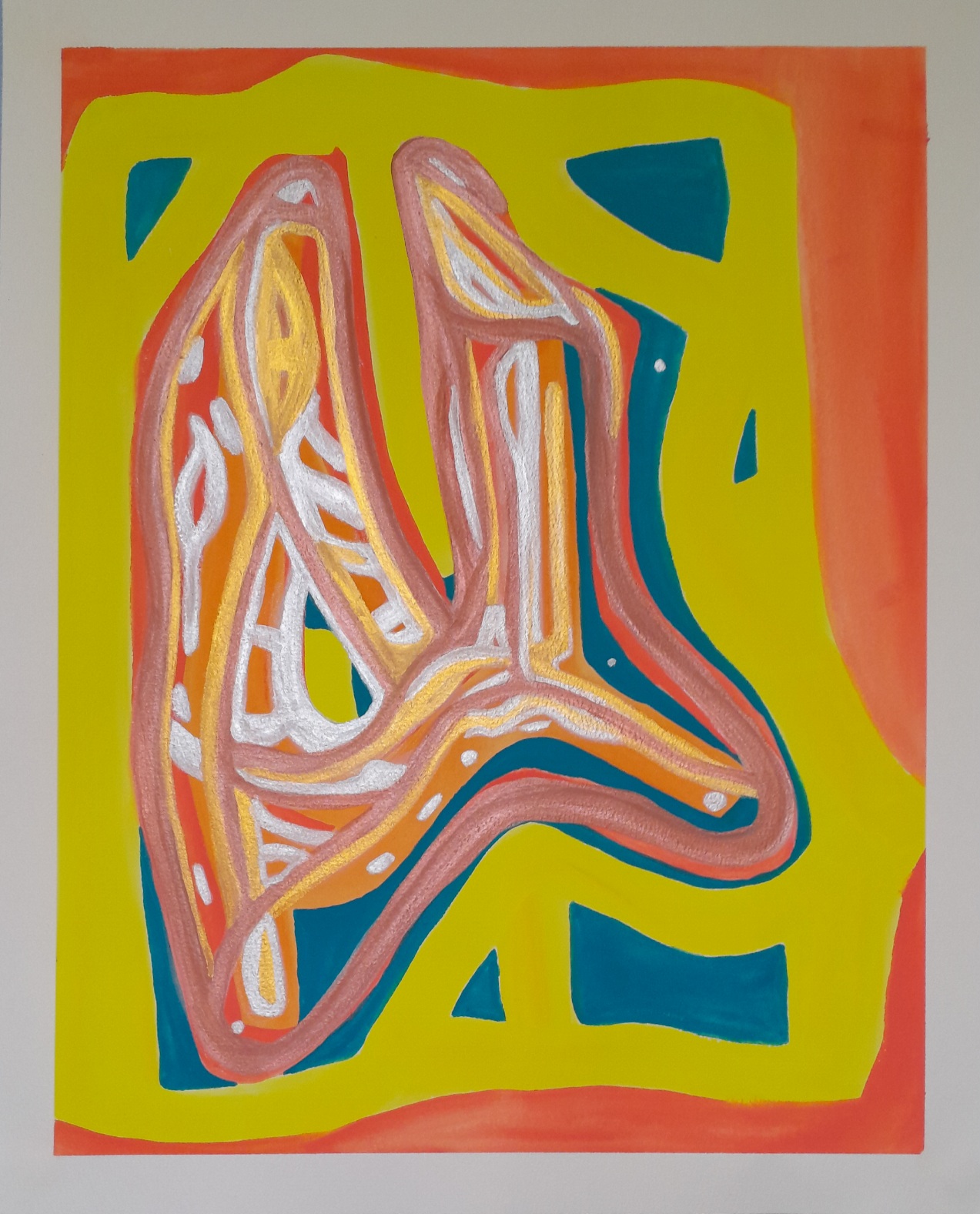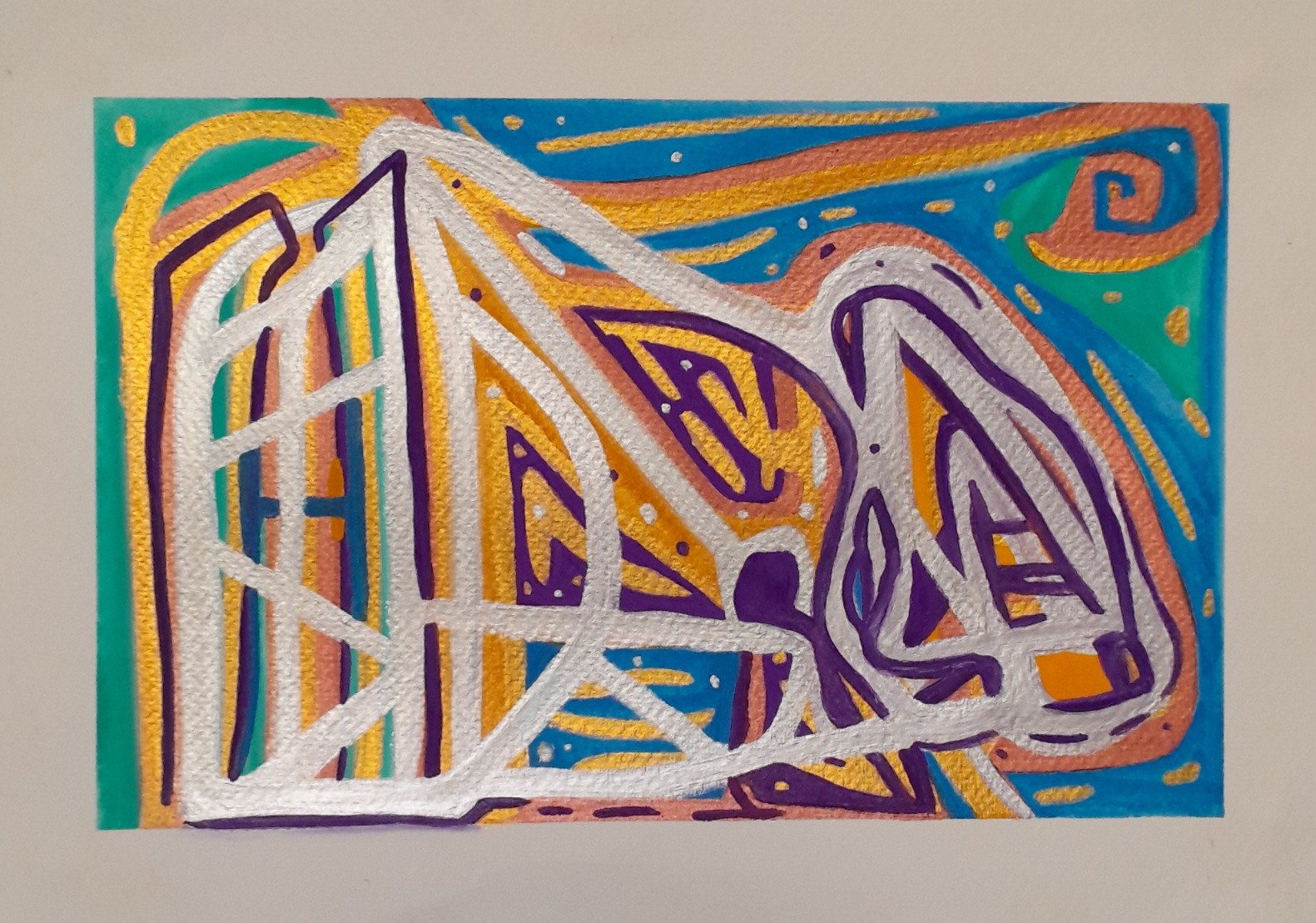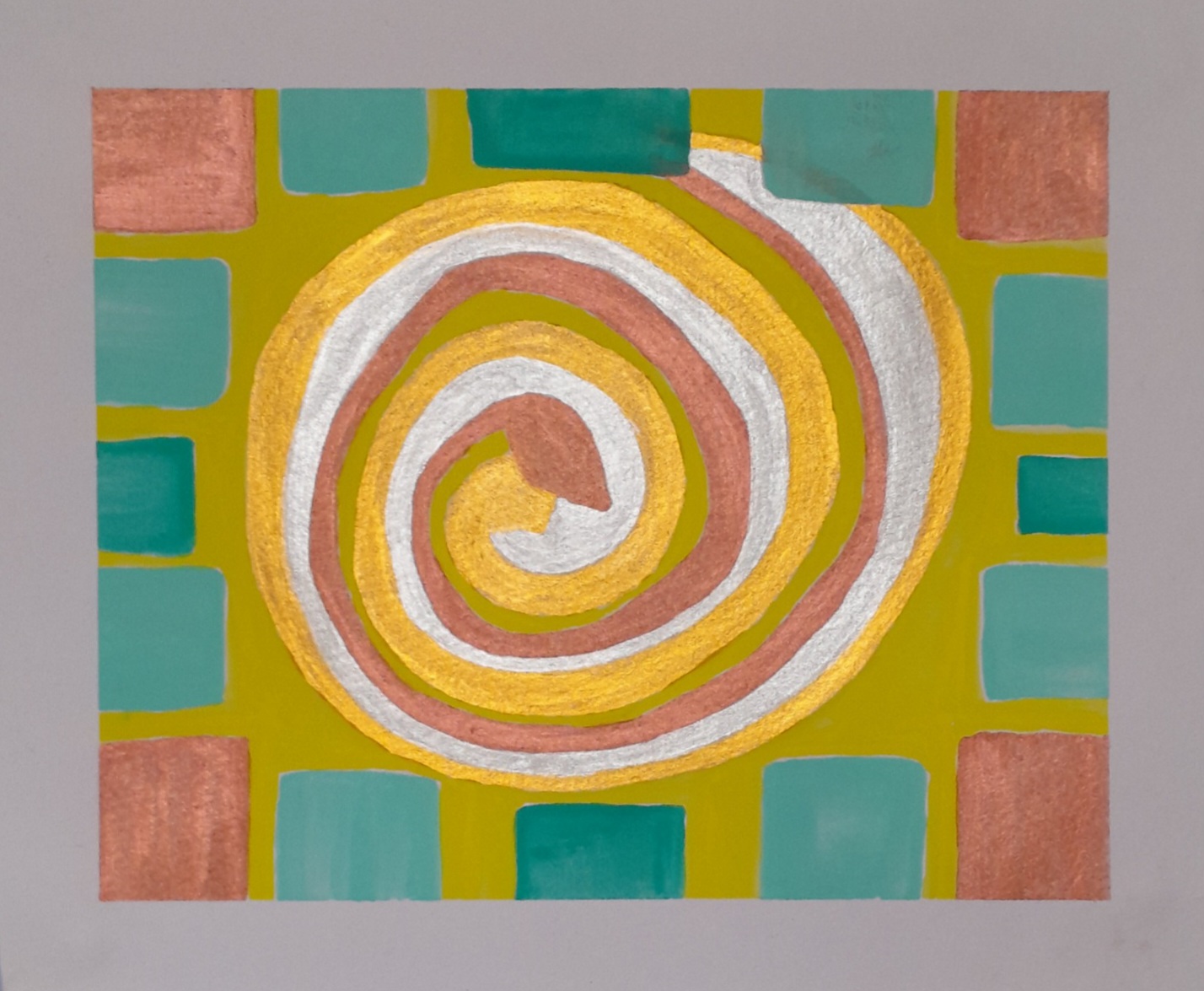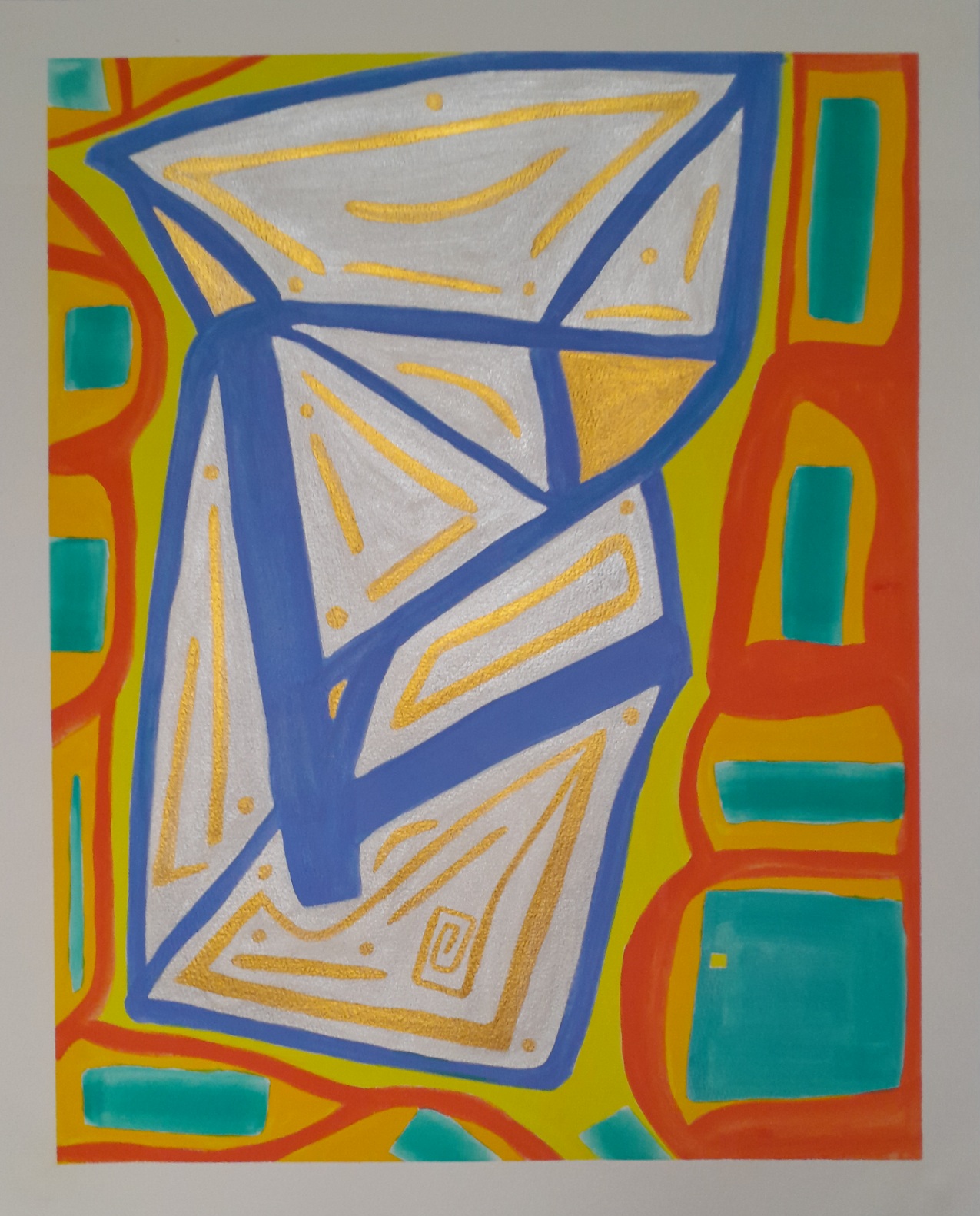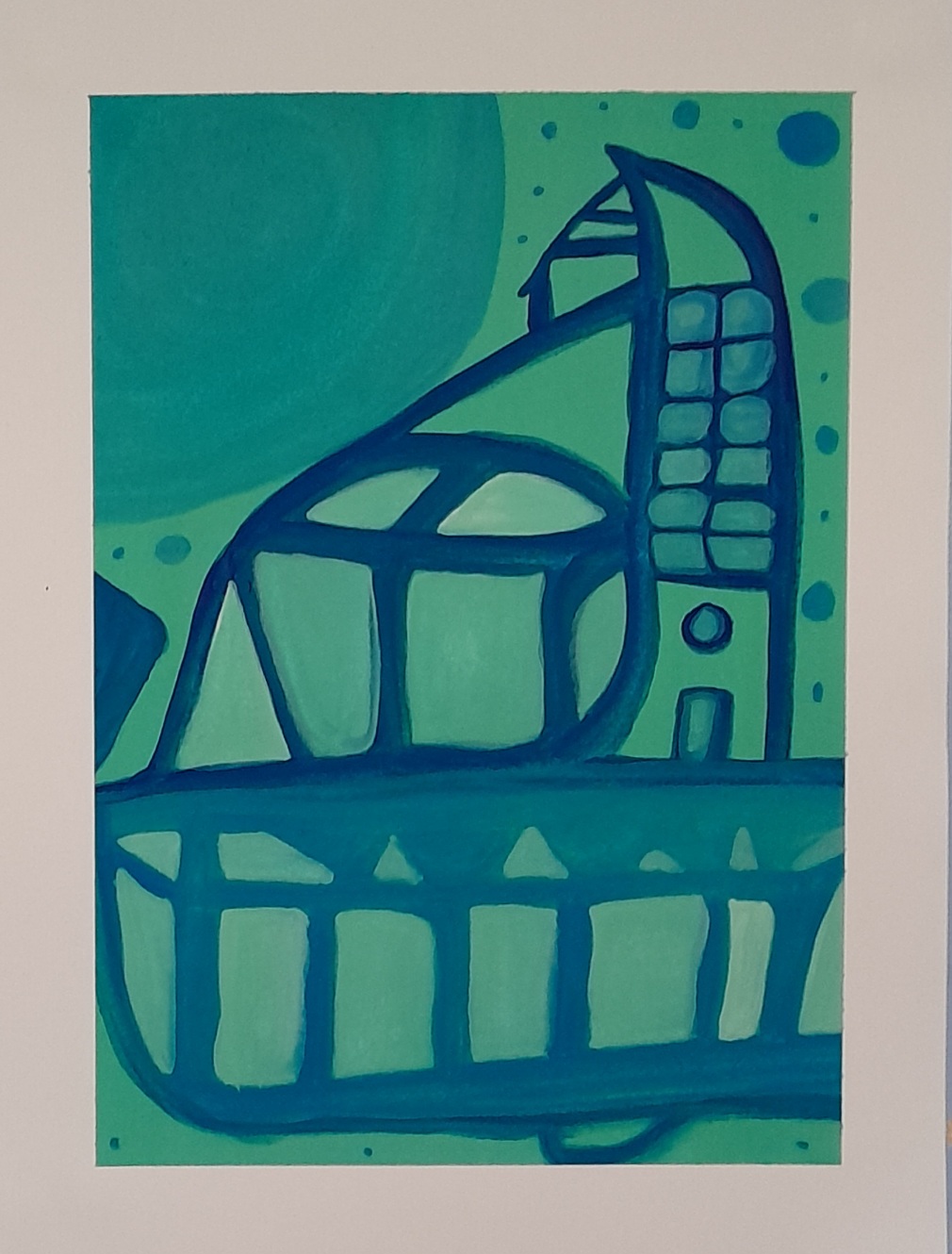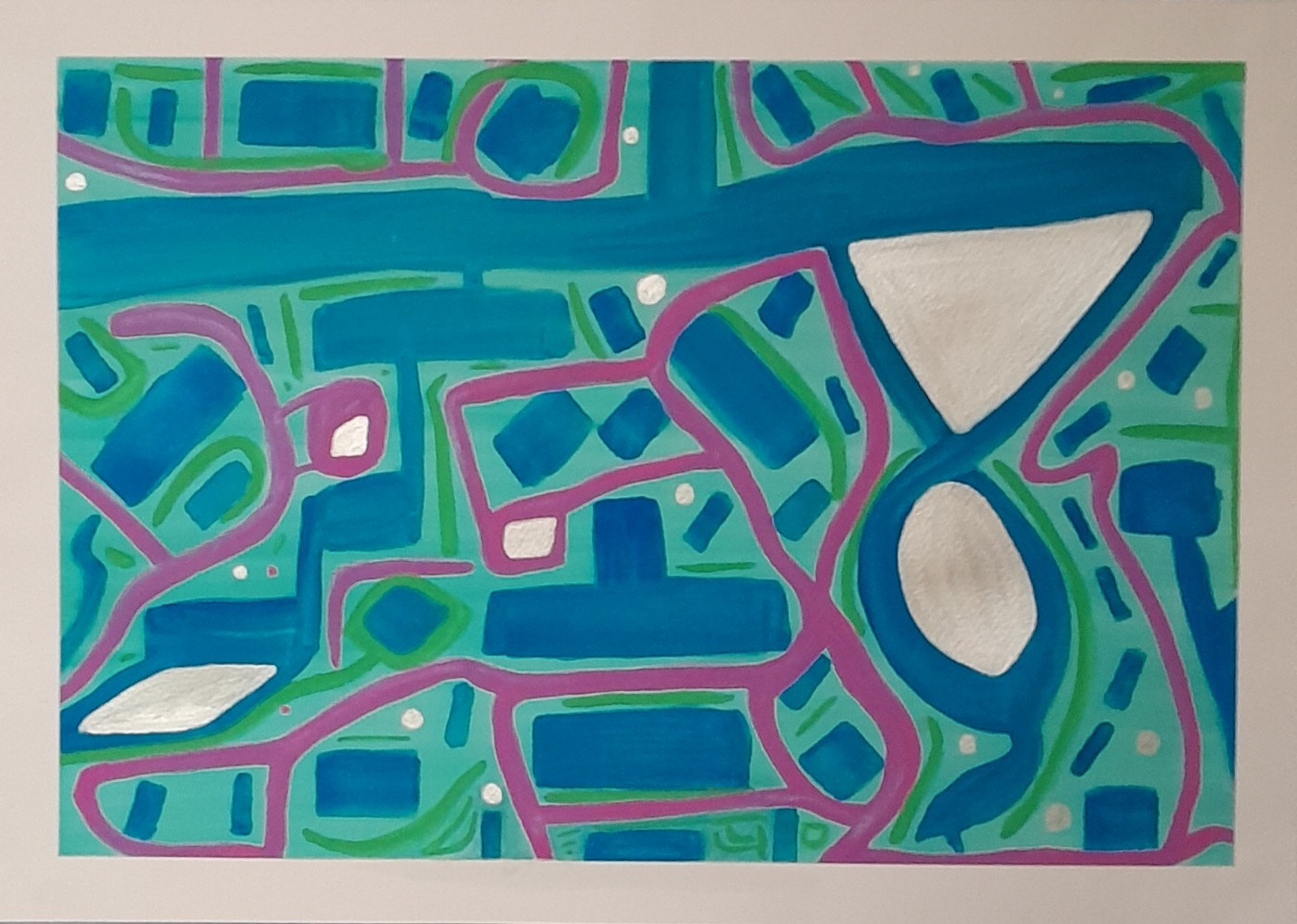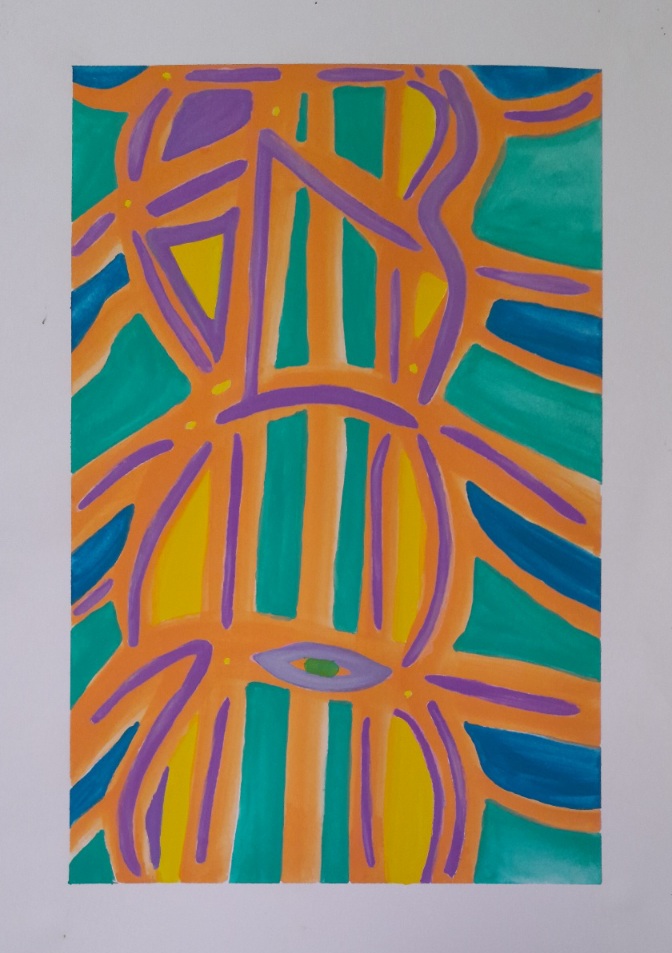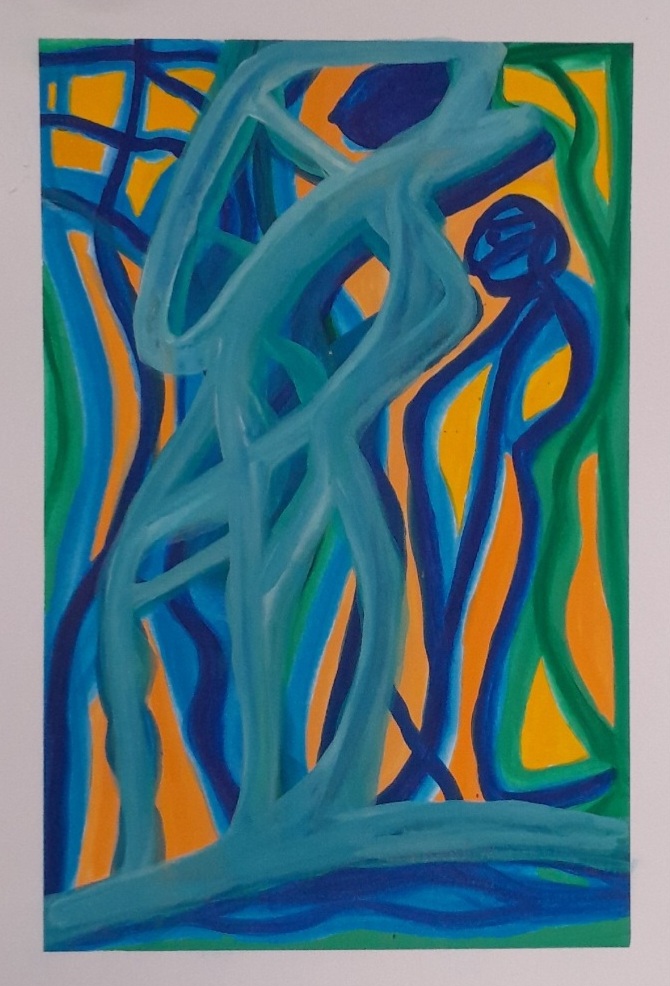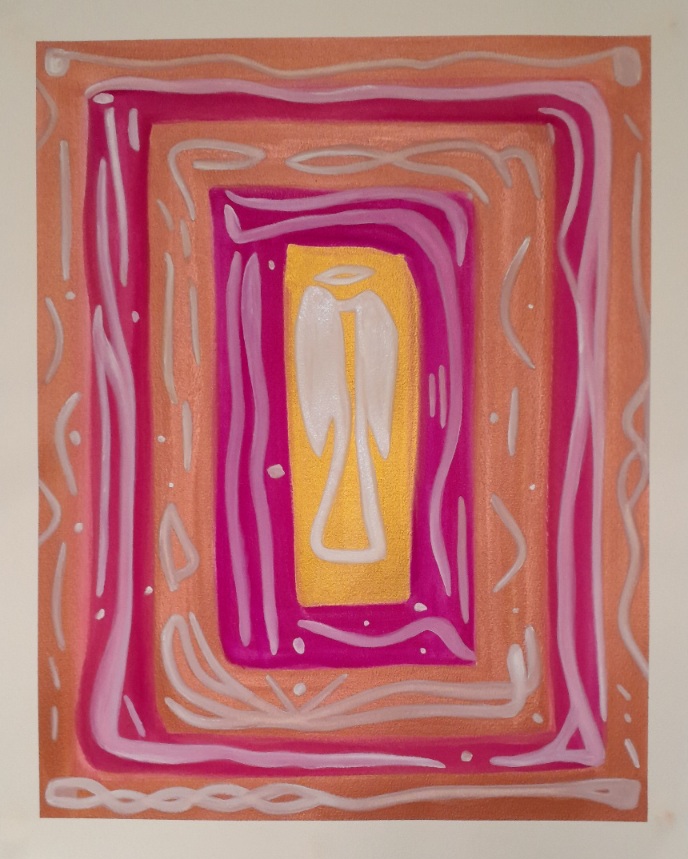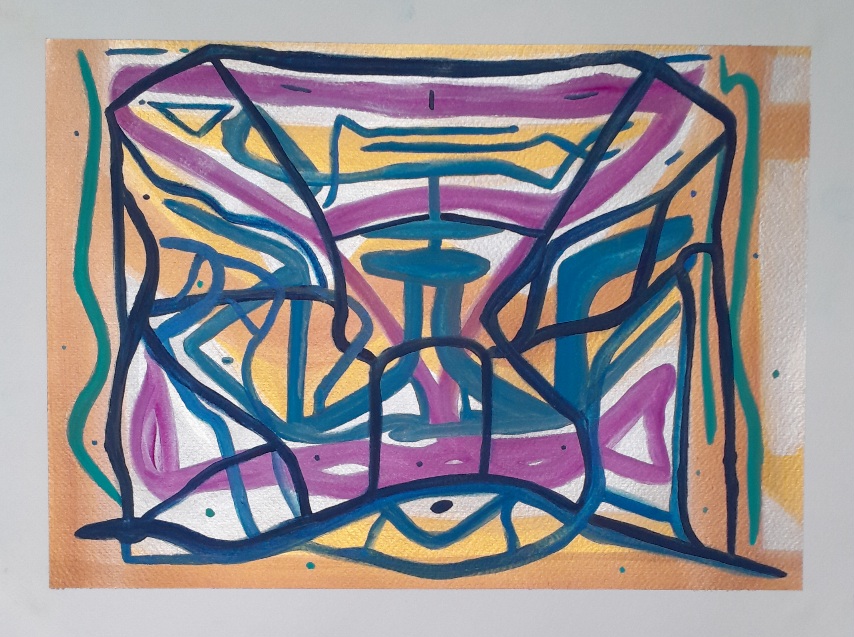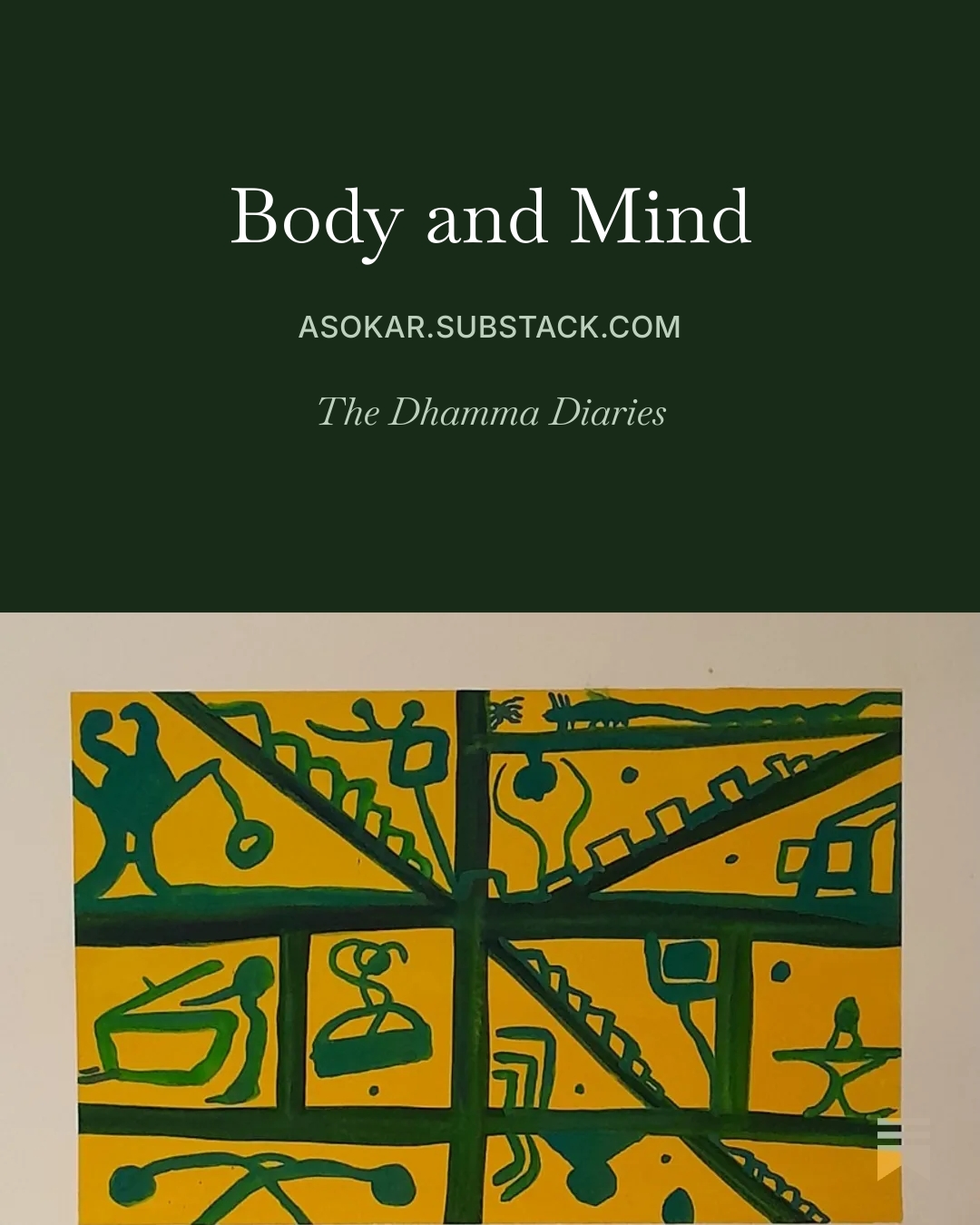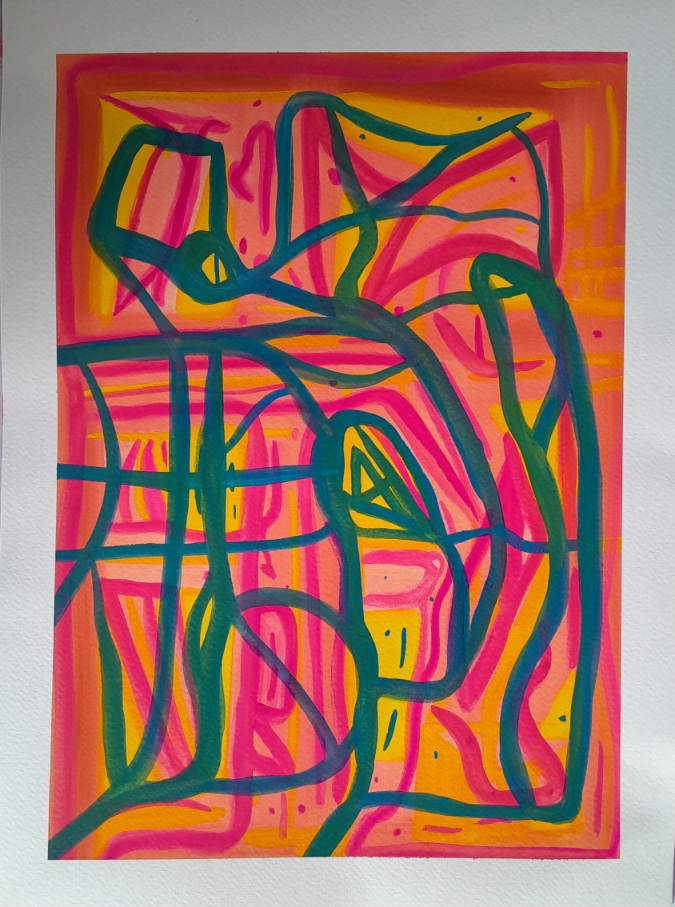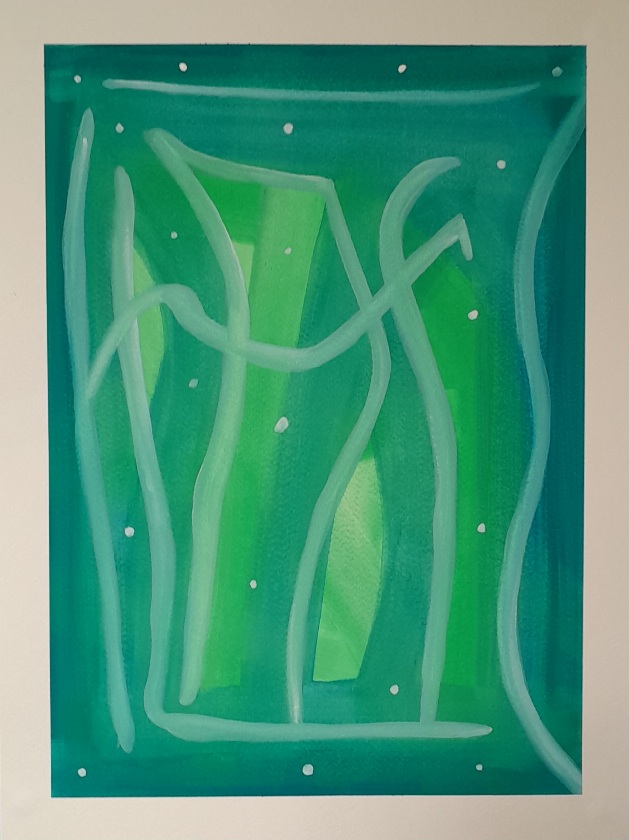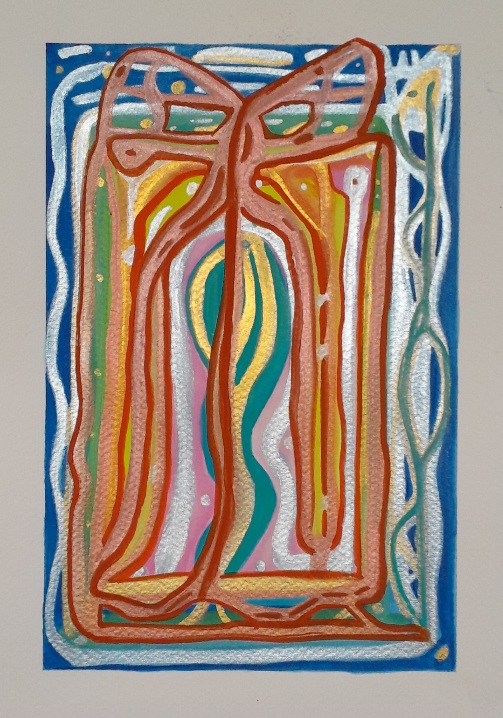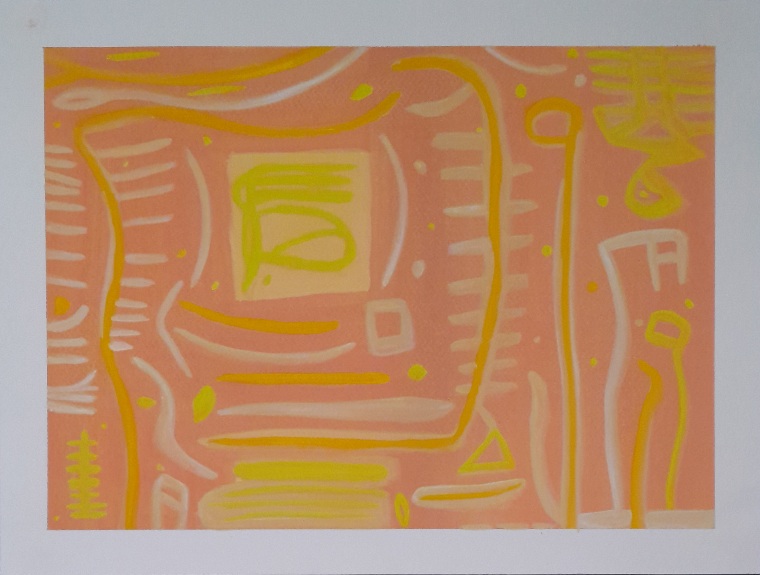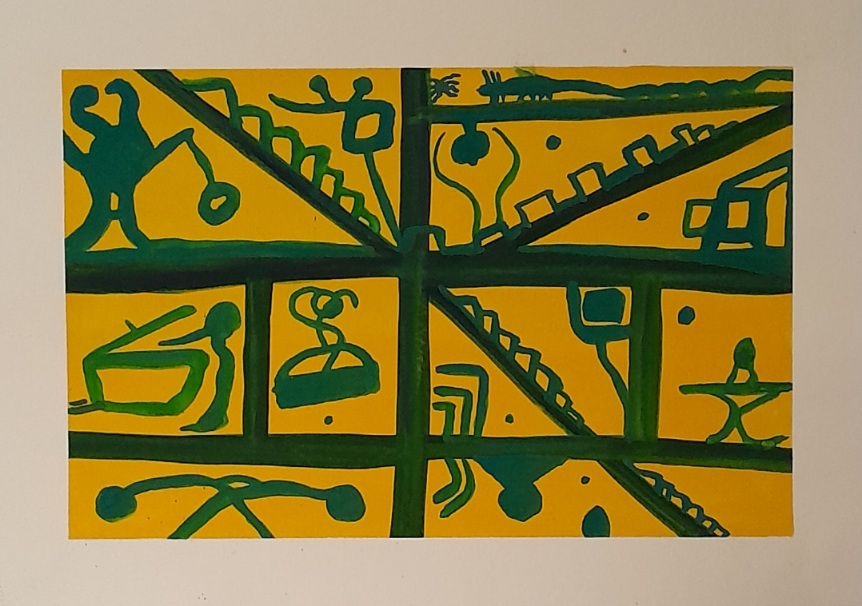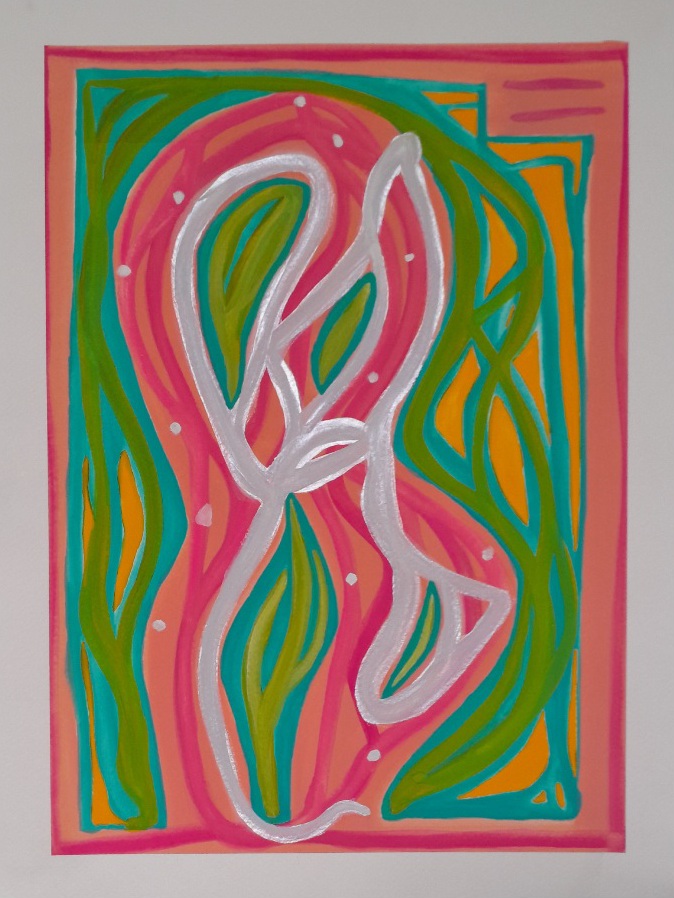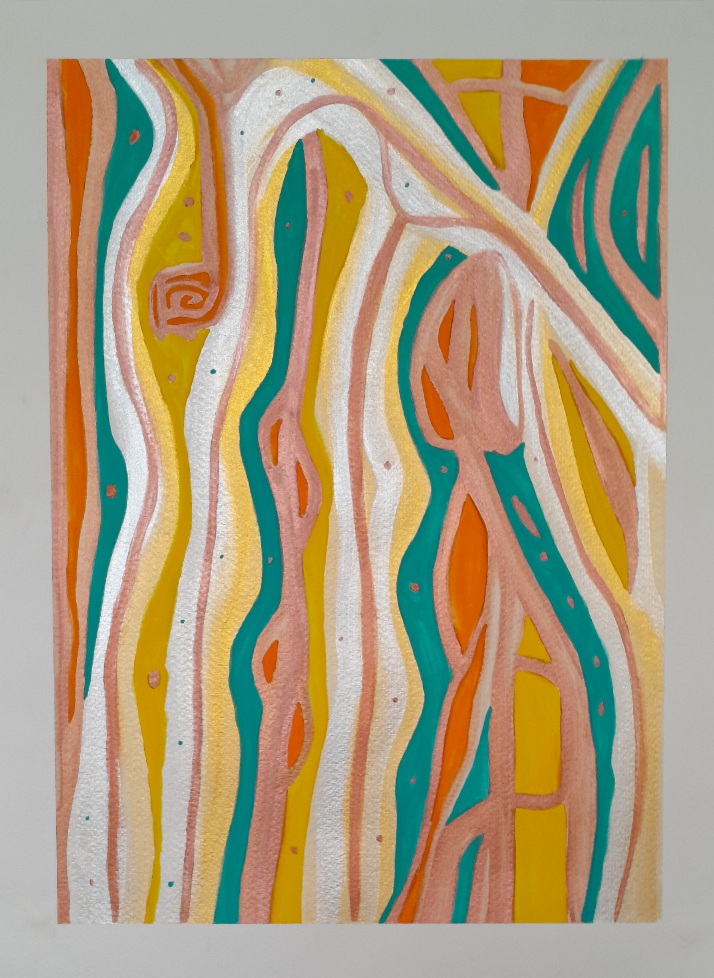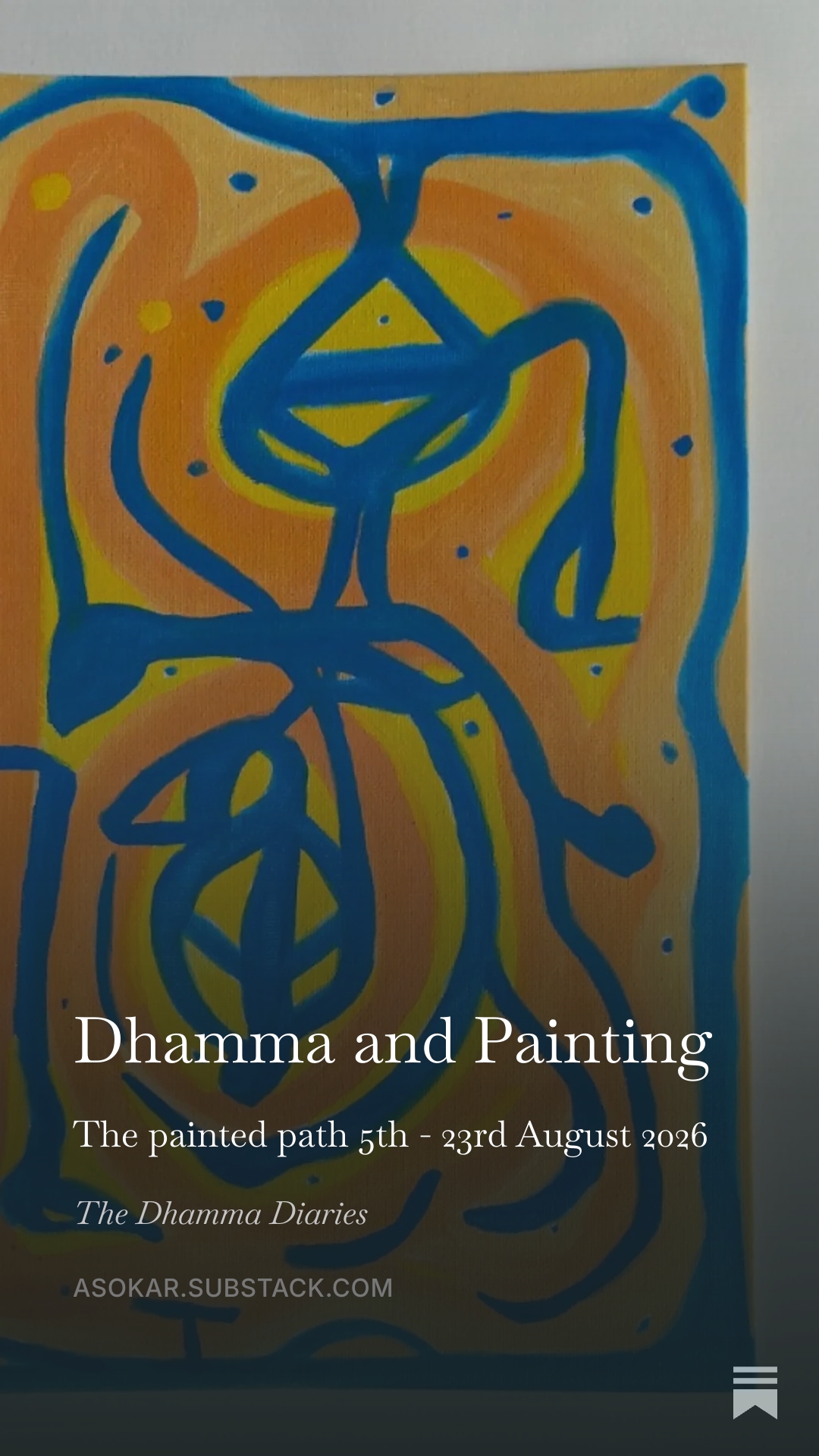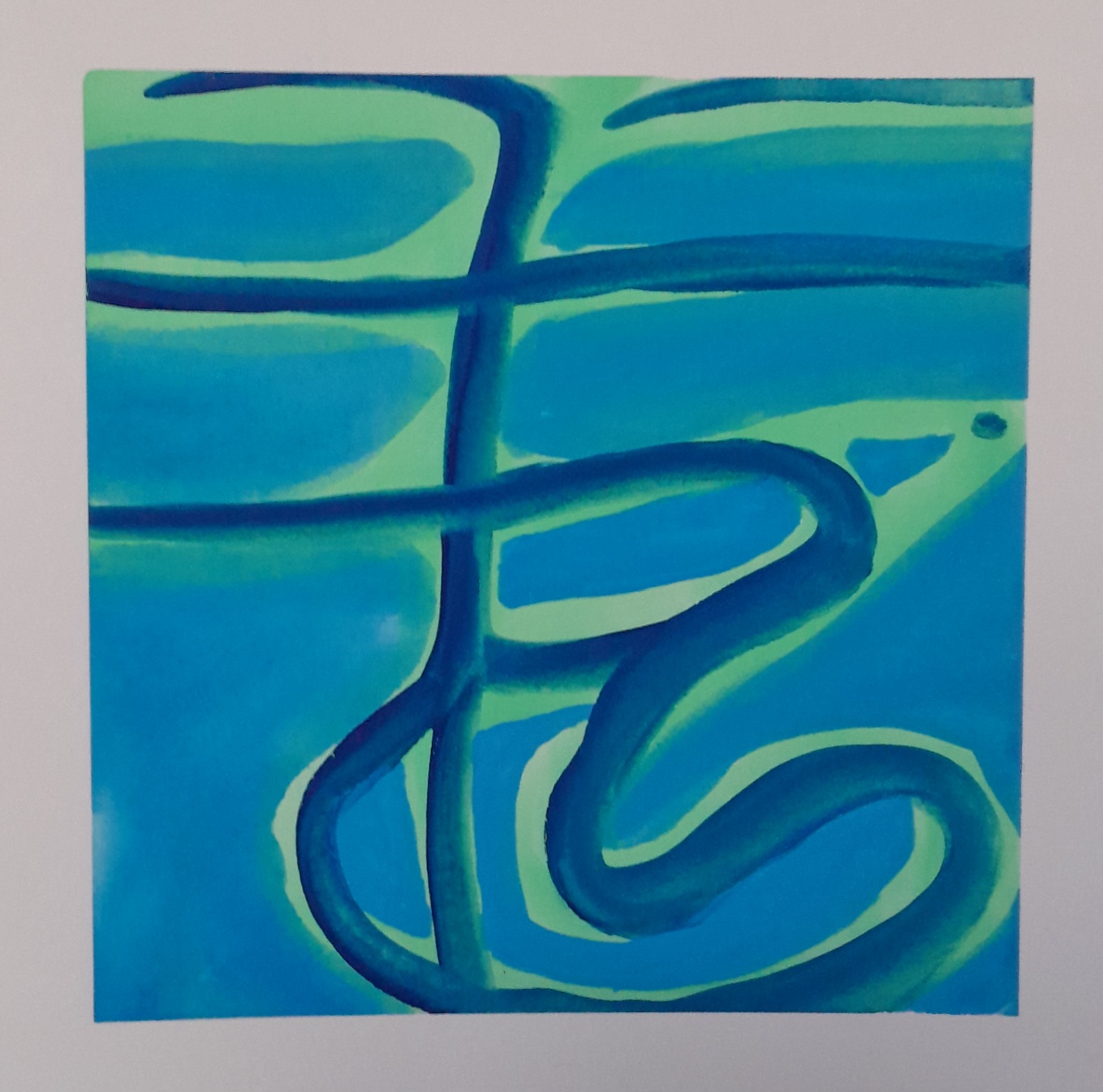
Gouache on paper (20×30cm)

Gouache on paper (20×30cm)
In Buddhism, we talk a lot about greed, hate, and delusion. This is because they are a concise easy-to-remember summary of what causes emotional suffering.
Of the three, hatred is the worst and leads consciousness to Hellish states of becoming; but thankfully, it is also the easiest of the three poisons to remove.
This is because anger and hatred feels intrinsically unpleasant. It doesn't make us feel good. Noone likes feeling stressed. Hatred makes us feel unwell, it makes us mentally and physically ill. It is like a sickness, that is toxic and deadly. It feels like a great relief when we stop being angry. I much prefer to feel peaceful and serene than full of rage.
It is because hatred feels unpleasant and toxic that it is the easiest of the three poisons to recognise and let go of.
Greed is a lesser stain on the personality, and doesn't necessarily lead to Hellish states of consciousness, it can at times feel quite heavenly, and this is what makes it difficult to let go of.
Greed can feel pleasant, especially when our desires are being met and fulfilled. When we get what we want we feel happy, but only for a time. It cannot last and greed is never satisfied. The pleasant feelings eventually wear off, and if we keep getting what we want our senses start to become jaded. Then we start to feel dissatisfied, we can become lazy and mentally weak, and our appetites can become larger and more dangerous to ourselves and others. Greed keeps driving us to acquire more.
The Buddha said even if it rained gold coins, our greed would still not be satisfied.
We keep chasing the dragon. Which leads to spiralling addiction, unhappiness, and suffering. Yet greed doesn’t feel like that in the beginning, it decieves us, which is why it is so hard to overcome.
Delusion is both a great stain on the personality and very difficult to let go of. It's the toughest of the three fires to extinguish.
If you imagine a video game with three bosses, delusion is the big boss at the end, the toughest one to defeat.
Delusion is born from ignorance. It comes from a lack of information and misinformation. It forms our views, beliefs and opinions of reality, and is closely tied to our sense of self, our ego. We build an identity around our views, opinions, and beliefs and cling to them as if they are the most important thing in the world, even onto death. Which can cause much suffering for ourselves and others. It can make us conceited, and we suffer when we take things personally.
Delusion comes from ignorance of the truth. It fuels the conceit: ‘I am.’ It is behind the I-making and mine-making that causes so much suffering in the world.
This is a very brief introduction to greed, hate, and delusion. To sketch a picture of them if you like. The rest of the knowledge comes from experience. From watching our own minds and understanding these states and what triggers them. Then through stillness, meditation, and changing the way we talk to ourselves we train to stop holding onto these states. To let go of them.
This training can take quite some time. Results are not instant, and for some, it can take lifetimes.
But when the mind is finally freed from greed, hate, and delusion. It stops harrassing itself. The agitation and involuntary mind movements stop. Then there is peace and contentment and in that space where the three fires stop clinging to their fuel, the mental suffering ceases.
Physical suffering can still occur. The body still aches and feels pain. It still gets sick, ages, and dies, but the mind does not suffer with. The mental suffering has ended.
The noble eightfold path is a training one undertakes to recondition the mind so it can accomplish this goal of letting go.
Once the heart is no longer poisoned by greed, hate, and delusion, the training is complete and then the path can be let go of. At that advanced stage there is nothing more to do. One is free, and will never again fall back into Samsara.
But in the meantime, the path is something to cling to. Something to help us cross the flood of Samsara and realise the emancipation of the heart.

Gouache on paper (20×30 cm)

Acrylic on canvas (40×50 cm)

Gouache on paper (30×40 cm)

Offworld VII
Gouache on paper (20×30 cm)

Mixed media on canvas (30×40cm)

Gouache on paper (20×30cm)
I have become a private person lately. I spend a lot of time alone.
I paint because I have to.
I enjoy the process. The swishy feeling of the brushstrokes. The way mind, eye, and hand become one. A flow state. Where what was once difficult feels like second nature now.
This is something AI can never replicate.
A prompt is not the same as making something by hand.
What is art? Who defines it?
And what was art before it was defined by that person?
How old is it?
Older than we.

Gouache on paper (20×30cm)

Acrylic on canvas (40×50 cm)

Gouache on paper (20×30cm)

Gouache on paper (20×30cm)

Gouache on canvas (40×50cm)

Gouache on paper (30×40cm). Painted by the author, Richie Cuthbertson

Gouache on paper (20×30cm), painted by the author (Richie Cuthbertson)
I stand watching the ocean and become aware of the sounds
happening all around. I notice there is ringing in my ears, but instead of
judging it, I just listen to it with gentle curiosity. Noticing how it
keeps changing. How sound is change. How sound needs time, it can’t work
without it.
We can preserve an image in a moment, but
not sound. Without time, sound doesn’t work. What is sound? It is waves of
vibrating air molecules hitting the eardrum, which then creates a sense
impression in the mind.
I notice the sound of seagulls and feel the
breeze and the cool air all around and within me. It feels invigorating,
uplifts my mood, and my attention becomes centred on the air element.
Thoughts continue in the background like
whispy white noise, and I notice how similar they are to the ringing in the
ears, constantly changing. I feel grateful for the freedom to be able to
disengage from them, to stop identifying with them. To be able to absorb my
attention into something else instead, something more tranquil. Just that in
itself can feel like freedom. It is no fun being caught up in the head.
Constant thinking can be tiring and feel like torture.
I keep the body still and upright, enjoying
the solidity, the weight, the feeling of the earth element grounding me. I feel
the earth below spreading out boundless in all directions, and this helps to
steady the mind and bring some composure.
Upāsaka means male lay follower. A female lay follower is called an Upāsikā. We make the determination to follow the five precepts.
These (in no particular order) are:
They aren’t vows or commandments. They are training rules and guidelines that one strives to follow to live a moral life and maintain peace of mind.
The precepts are important for two reasons. First, by keeping them, you are no longer causing harm in society. This means you become a person that others can trust. Which is important. We all know stories of spiritual people who tarnish the reputation of spirituality by behaving in immoral ways.
The other reason is for one’s own benefit. By taking the precepts, one is training the mind to abandon unwholesome tendencies that lead to suffering (both for ourselves and others). By not engaging in immoral activities, one does not become stressed by the unwanted repercussions that come back at you (like a boomerang).
The precepts cover roughly a third of the noble eightfold path (right speech, right action, right livelihood).
The five precepts will also reveal the mental dispositions that keep causing us problems in life.
For instance, my biggest problem was with intoxicants. It was a long, hard struggle for me to become free of those. I used to be an addict and have had problems with substance abuse since I was a kid. I won’t go into details here because it will make this article too long. But I may perhaps share more about that in a future article when I am feeling braver.
Without a foundation in morality, one will struggle to make much progress on the spiritual path. Morality is an important component for developing peace of mind.
Without it, one will also struggle to meditate. Regret and remorse will prevent one from entering the deep states of absorption known as samādhi.
Instead of letting go or not clinging. I prefer the term 'not holding onto' that seems to work for me. Just let things be without holding onto them. I can still enjoy things then, and live, but if I don't hold onto them, then I don't have to worry about letting go of them later, because I never became attached.
I've done some pretty stupid things in my life and made some poor choices. When I try to let go of the regret I feel for that, it doesn't seem to work for me. I find that although I seem to let go for a moment, I find myself clinging again the next moment.
When I think instead about not holding onto anything, then that makes it easier. I don't know why, it means the same thing as not clinging, but a different use of wording has a magic effect on the mind.
There's nothing to hold onto, everything changes from moment to moment, this moment is already gone, and the next, and the next... and everything and everybody is destined to die one day. I don't mean that to sound depressing. On the contrary, it is a relief to know this. Nothing matters then. One becomes like a peaceful life stream just flowing from one moment to the next without stressing.
I feel unwell today. And the body is creaky. Fatigue is challenging. It often defeats me. I really didn’t want to get out of bed this morning. It can be a mission sometimes. Cooking felt like a chore. Did manage to rustle up a meal in the end. It is always a relief when I get that out of the way. I don’t have to worry about cooking again or eating for the rest of the day. I try to eat before 3 p.m. and fast until the next morning.
I am studying machine learning at the moment. Did a recap on Python programming, got lost somewhere in arrays and tensors, and the many ways these can be accessed — before I had to stop and have a rest. I will try to manage it in small doses. Learning new stuff can be painful, especially when it comes to computers.
There’s a lot of hype about A.I. in the news, but it isn’t what we think it is. We like to attribute human characteristics to it, but it is just a machine, an advanced autonotom. It gets fed lots and lots of training data, and if it makes mistakes, it adjusts itself according to some set parameters. It keeps doing this until it gets better at what it does and makes fewer mistakes. But it takes a long time to get there and a lot of training.
The scary thing is people are giving power to these machines to make important decisions. AI is very efficient at specialist tasks and can do them really fast, but only those specific tasks, and it still can make mistakes, it isn’t 100% right all the time.
If an AI was to try and live a day as a human being or even as an earthworm. It would struggle and fail. It has no experience of what it is to be a human.
I guess hype sells. It is the next Silicon Valley gold rush.
While AI does have the potential to be a useful tool, to become dependent on it to run society would be a huge costly mistake and a disaster waiting to happen. Not because AI is evil and wants to take over the world, and not because it wants to destroy humanity, it has no concept of good or evil. It just obeys instructions and does what you ask it to because it is a mindless machine.
It’s the way it solves problems that may be dangerous. The solution it comes up with may be unexpected and not what one intended. A.I. has no experience of being a human or what it feels like to have a body. So its solutions can be a bit quirky, and unlike anything a human would have thought up.
It may also worsen social inequality due to inherent bias in the data it is trained on. As well as hallucinate and make mistakes. Not to mention the huge amount of electricity that is needed to run these machines, and the materials used to make them, how that is harming the environment. The truth of the matter is they are designed to make corporations wealthy, not really about making society or the planet better.
AI is not what we imagine it is when we interact with it. It is not like us, it’s a bunch of algorithms and artificial neurons, and nowhere near as advanced as a human being.
Maybe one day it may get that advanced, who knows, but it is not there yet.
There are computer chips now in development that use human lab-grown brain cells, called neuromorphic chips, which could have the potential to become sentient. They are being designed because they are more efficient at using electricity. But it is rather creepy, and I am surprised scientists were even allowed to do this. If these part biological machines do become sentient, it would be cruel, as the corporations that made them will claim ownership over them and of course, deny they are sentient. It raises all sorts of ethical quandaries.
Still, humans may not survive long enough to see really advanced AI, especially with the way modern consumerism is consuming the planet. Greed is insatiable, and all this industrial pollution is not just affecting the wildlife, it is affecting us too, our biology. We are part of the natural world, what kills ecosystems, also kills us.
...
If someone does evil, don’t feel you have to punish or hate them. That will only hurt you. The universe has a way of balancing things out, and those who do wrong will eventually face the consequences of their actions. Either in this life or a future one. Nobody escapes their karma, not even those who are enlightened.
The difference between the enlightened and the unenlightened is that the enlightened don’t add any more to their karma. They do not hold onto the greed, hate, or delusion associated with it. By not holding onto it there is nowhere in the mind for it to land and take root. And the karma ends right there, in that moment because the enlightened being does nothing that will cause it to rise again.
Everything we do has an effect on the mind and leaves traces on it. The tendencies we indulge in become our karma. They grow and gather a momentum of their own, whether they are good or bad.
Knowing this, a wise person cultivates wholesome tendencies.
Be like a broken gong when it comes to the opinions of the world. The words may strike the mind but they don't have to reverberate inside. Let the opinions of fools be like water falling off a duck’s back.
Perceive the voice of a worldling as if it is the wind blowing through leaves, or the strange vocalisations of a creature that arises and ceases. Just sound, nothing more.
One doesn't have to follow the herd if it's going in the wrong direction. Choose your own way.
Quite fatigued today. Lots of rain here. I have a sore shoulder, the pain is unrelenting, it has been like this for weeks, I have no idea what I’ve done to it. I probably should see a doctor, but I really dislike using phones and making appointments and don’t feel up to the traveling, so I keep putting it off.
Whilst sat in meditation today I remembered the Buddha say that he suffered from backache almost constantly, and that the only time he got relief from it was when he went into samadhi. So, I tried that, but couldn’t get into samadhi. So, I turned to face the pain instead. Felt it throbbing in my shoulder and noticed how it spread down my arm with a buzzing sort of pain.
I tried to just see the pain as sensations without the perception of like or dislike. Exploring what happens when I move the breath energy through that area, using the breath to bring ease to it. Sometimes that worked and other times it didn’t.
It was hard to sit still for long as my arm kept needing to be moved into different positions as it got very uncomfortable. It was hard practising walking meditation also, as the movement kept jarring the shoulder. But there were moments where I stayed centred with the meditation object and remained there for a good while, and I did seem to enter a momentary samadhi and yes, the pain did go away. But maintaining that state was not always easy.
The mind would sometimes show a lack of inclination to practise, and thoughts about doing something else grabbed my attention. Then I remembered that this is one of the five hindrances, and I don’t have to follow these impulses or thoughts.
(n.b. the five hindrances are: greed, hate, sloth, restlessness, and doubt)
I have the power to choose, to set an intention. I can consciously choose to continue meditating and stay with the object of mindfulness. That’s where my power lies, in choosing. So, I choose to do so each moment, making that choice over and over instead of going along with the hindrances. That worked for a bit, but sometimes a loud noise would pull me out of it, and I had to start again.
Samadhi is not easy, but it is a very important part of the noble eightfold path. That unification of mind is essential. I notice the difference on the days I don’t practise. It definitely helps.
Movement is exercise for the body, and stillness is exercise for the mind.
A mind that keeps wandering and has difficulty become still, is a sign that it is getting out of shape. Learning how to bring the mind to stillness and steadying it, strengthens the mind, it does it a lot of good.
Even if the meditation seems like a waste of time. One can learn a lot about how the mind works from the simple exercise of attempting to keep it centred on one thing. It reveals a lot about what makes us tick, what our desires are, our angst, our delusions. Can be very interesting.
…
This blog might contain posts that are only visible to logged-in users, or where only logged-in users can comment. If you have an account on the system, please log in for full access.