What stays with me about 70 Up is the distance between the life a child imagines and the life an adult actually lives.
The Up series began with fourteen seven-year-olds in 1964, exploring how background and circumstances might shape their futures. Across the decades, it has become an extraordinary record of people growing older within a changing Britain. For me, it also raises a question familiar to many Open University students: how much of our story is already written, and how much remains open to revision?
At sixty-five (last week), I am a little younger than its participants. Nevertheless, I recognise that experience of looking back through successive versions of yourself. The child, the teenager, the young adult and the person you are today remain connected, sometimes in ways you could never have anticipated.
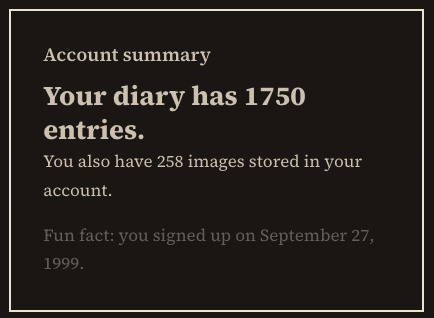
My own record takes the form of diaries from age 13 to my early twenties. Your adult notebooks, followed by online writing on Diaryland from September 1999, preserve what mattered to me then. Reading them now, I have to resist giving my younger self knowledge he didn't have. He could not see where his enthusiasms would lead. Neither could the man approaching fifty who returned to study with the Open University.
That uncertainty matters. It is easy to make a life look inevitable once you know what happened.
On 5 February 2010, my Diaryland entry brought together several competing ambitions: an OU module in e-learning, the possibility of studying fine art at West Dean, swimming-coach qualifications and applications for work. Substantial fees and the journey from Lewes constrained art study. Curiosity was plentiful; money and practical possibilities were less accommodating.
The following day, 6 February, I began the blog that would become my sustained exploration of learning.
Then, on 8 February, I wrote:
"Like an undergraduate again, I feel the buzz of learning new things."
That sentence still makes me smile. I had corrected the spelling here, but I would leave the excitement exactly as it was.
I compared exploring the OU library with the freedom I had once enjoyed calling up books in Oxford's Bodleian. Twenty-five years later, that appetite had returned. Alongside it, the same entry recorded anxiety about the mortgage, a cold and the swimming programme I was due to teach that evening.
Many OU students will recognise that combination. Intellectual discovery happens in a life already crowded with responsibilities. There is an assignment to finish, but also work, children, caring, bills and tiredness. The pleasure of learning does not make those demands disappear. Sometimes it gives us something sustaining.
Another Diaryland entry, from April 2010, shows a different kind of discovery. I began recognising how much of my previous career had already involved distance learning: producing videos distributed by post, satellite broadcasts, facilitated courses and interactive learning materials.
I had experience before I had the academic language to examine it.
I also wrote about the career break during which I took our children to nursery and primary school, collected them afterwards and took them swimming and sailing. Those responsibilities had helped lead me into teaching and coaching. Returning to study offered a way to bring these different periods of experience together.
For an adult student, that can be a profound change in perspective. A career interruption, an apparently unrelated job or years spent caring for others may contain knowledge that has gone unrecognised. Study gives us concepts to question it, connections to understand it, and opportunities to develop it further.
My MA in Open and Distance Education gave structure and challenge to my curiosity. Across seven modules, including Creativity, Innovation and Change, Accessible Online Learning and Researching Learning in the Digital Age, I became more demanding about the claims made for educational technology.
Who could participate? Who was being excluded? What evidence supported an approach? What did creativity require beyond an attractive tool?
Those questions have followed me into work as a Learning Technologist, into historical education with The Western Front Association, and into teaching. Further study in British history and the First World War, followed by a PGCE completed in 2022, brought fresh ways of examining practice. MOOCs and mentoring also gave me opportunities to learn alongside people with different experiences.
Looking back, I can see continuity across these activities. Living through them felt much less orderly.
That is one reason 70 Up interests me. I am wary of treating any life as a simple demonstration of an early prediction. Circumstances matter enormously. So do relationships, health, resources, encouragement and chance. We should be equally wary of claiming that determination alone allows everyone to overcome their starting point.
I benefited from educational privilege. My story cannot stand as proof that opportunity is equally available. Indeed, the barriers recorded in my own diaries remind me how much depends on being able to afford study and fit it around a life.
For me, the promise of the Open University lies in making further learning possible at stages when conventional educational routes may no longer fit.
That learning also travels beyond the qualification. At the swimming pool, it informs how I coach age group swimmers whose confidence is developing at a different pace from their performance. In council work and environmental advocacy, it shapes the questions I ask about evidence, access and responsibility. In drawing, printmaking and writing, it encourages me to keep observing and experimenting.
I still play the guitar. I still occasionally sing Bowie. I still begin things without knowing quite where they will lead.
Watching 70 Up, I therefore find myself thinking about the student opening a module website after years away from education. They bring a history with them: achievements, disappointments, responsibilities, unfinished ambitions. That history will influence how they learn. Learning may, in turn, change how they understand that history.
My diaries preserve moments when I felt stuck, distracted or uncertain. They also preserve the delight of discovering that I could become a student again.
For an OU readership, that is the reflection I want to carry forward. Seven should be a beginning, not a prediction. And at forty-eight, sixty-five or seventy, there should still be room to ask a new question—and time and support to pursue it.