OU blog

Personal Blogs

Jim McCrory

The Happiness Evil Cannot Give

Visible to anyone in the world
Edited by Jim McCrory, Saturday 12 September 2026 at 08:25

The Creator has so inseparably interwoven the laws of eternal justice with the happiness of each individual, that the latter cannot be attained but by observing the former.”

English jurist William Blackstone
sketch.png

The Happiness Evil Cannot Give

In my early morning today with the Word of God, I became fixed upon a single proverb:

“Evil men understand not judgment: but they that seek the LORD understand all things.” — Proverbs 28:5

My first instinct might easily have been the instinct of most of us: Well, I am not an evil man.

The word “evil” immediately summons people worse than ourselves. We think of the cruel, the violent, the corrupt and the obviously wicked. Whatever else Proverbs 28:5 might be saying, surely it is talking about them.

But perhaps that instinct itself should make us stop.

Psychologists speak of what is sometimes called the Lake Wobegon effect, named after Garrison Keillor’s fictional town where “all the children are above average.” Applied to ourselves, it describes our rather endearing—and sometimes dangerous—tendency to rate ourselves more favourably than is warranted. Most of us find it easier to recognise selfishness, prejudice, pride and questionable motives in other people than in ourselves.

Then we encounter the Hebrew word translated “evil” in Proverbs 28:5.

It is raʿ (רַע), a wonderfully uncomfortable little word. It can certainly describe what is wicked or evil, but its range is broader: that which is bad, harmful, disagreeable, morally wrong or injurious. Suddenly it becomes harder to keep the proverb at a comfortable distance.

The question is not simply, Am I an evil person. It is this: What is there within me that bends away from the good?

And now the proverb becomes intensely personal.

Its remarkable claim is that evil does not merely affect our behaviour; it affects our judgment. “Evil men understand not judgment.” The Hebrew word translated “judgment,” mishpat, carries the idea of justice, right judgment, what is fitting and what ought to be.

In other words, our moral condition affects our ability to see.

That is a profound observation about human nature. We like to imagine ourselves as detached judges of reality, calmly examining evidence and reaching rational conclusions. But human beings are not quite like that. Our reasoning travels in company with our desires. We are remarkably good at finding reasons for believing that the thing we want is also the thing we ought to have.

Greed can rename itself ambition. Pride can masquerade as self-respect. Resentment can call itself justice. Selfishness can present itself as freedom. Slowly, almost imperceptibly, the moral compass moves.

And this matters enormously because we are all searching for essentially the same country. Namely, Happiness.

We may give it different names—peace, fulfilment, success, love, contentment—but behind so much human activity lies the hope that somewhere ahead there is a life worth having.

Here Proverbs 28:5 contains a warning of extraordinary importance. If evil distorts judgment, then evil may distort our understanding of happiness itself.

Imagine a traveller whose compass is gradually becoming unreliable. He desperately wants to reach home. He walks faster, works harder and covers enormous distances. His problem is not lack of sincerity or effort. His problem is that the instrument by which he determines direction is pointing away from his destination.

There is something like this in the relationship between goodness and happiness.

We may seek happiness through wealth and gradually become incapable of saying “enough.” We may seek it through admiration and become dependent upon the opinions of others. We may seek it through sexual gratification while damaging our capacity for faithful intimacy. We may seek freedom by avoiding obligation and eventually discover that the deepest friendships are built precisely upon loyalty, sacrifice and commitment.

Evil offers us the fruit while quietly taking an axe to the tree.

This is why goodness and happiness may be much more intimately connected than our culture sometimes imagines. Goodness is not merely the entrance fee God demands before allowing us to be happy. Goodness may describe the very kind of creature a human being must increasingly become in order to experience the deepest forms of happiness.

The grateful person can enjoy what he possesses. The generous person can delight in another’s flourishing. The humble person does not have to win every comparison. The forgiving person is gradually released from the exhausting task of carrying yesterday’s injuries. The faithful person can enter the extraordinary security of being deeply known and deeply trusted.

Virtue enlarges our capacity for certain kinds of joy.

And vice does the opposite.

Envy makes another person’s happiness painful to us. Greed makes “enough” perpetually inaccessible. Pride turns other people into competitors. Lust can turn persons into objects. Resentment permits someone who injured us years ago to continue occupying rooms within our hearts.

The terrible possibility is that evil does not merely prevent us from obtaining happiness. It can damage the person who must experience happiness.

And then comes the glorious second half of the proverb:

“But they that seek the LORD understand all things.”

Notice the word seek. It does not say that those who seek God already possess perfect understanding. They are travellers too. They can make mistakes, take wrong turns and misunderstand the landscape.

But their compass is continually being brought back to true north.

Perhaps this is one of the deepest lessons of Proverbs 28:5. In the great human race for happiness—indeed, for eternal happiness—the first question is not simply, How quickly am I travelling? Nor even, How happy do I feel at this moment?

The greater question is:

What direction am I becoming pointed in?

For if God is the source of goodness, truth, love and ultimately happiness itself, then seeking Him is not a diversion from the human search for happiness.

It is the recalibration of the compass by which we hope to find it.

Permalink Add your comment
Share post
Jim McCrory

Their is Something about Norway That Captured My Heart

Visible to anyone in the world


Image by https://unsplash.com/@gunnarridder


In the early spring of 1999, I found myself walking the streets of Stavanger, a Norwegian city that had captured my imagination long before I ever arrived. For me, this was more than just a trip; it was the realization of a dream that had begun years earlier in a classroom in Scotland. Back then, I was a boy, unaware of the world beyond my small town, until one day, my music teacher introduced me to something extraordinary.

It was the Peer Gynt Suite that first sparked my fascination. As the music swirled around me, I was transported to a place of towering mountains and deep fjords, where the figure of Peer Gynt seemed to come alive. The melody was full of life and adventure, stirring something deep within me. Soon, I was at the library, eager to learn more. That’s when I discovered Edvard Grieg, whose music, rich with Norwegian folklore, spoke to me like nothing else. "In the Hall of the Mountain King" was especially captivating—the crescendo, the trolls, the excitement—it all felt like stepping into another world.

From then on, Norway became a land of dreams for me. I imagined its rugged beauty, ancient legends, and the people who lived among the fjords. Like Peer, I felt a restless yearning, a desire to explore and find meaning. Norway called to me, and I promised myself I would go there one day. I had no idea that this dream would come true in 1999.

Living in Stavanger fulfilled everything I had hoped for. The city, nestled between mountains and the North Sea, felt both modern and timeless. As I wandered its cobbled streets each day, I felt a deep connection to the land and its stories. It wasn’t just the striking landscapes—the fjords reaching endlessly or the bright summer skies—it was the sense of myth and history that seemed to permeate the very air. There was a quiet magic about it, a hum that reminded me of Grieg’s music and the spirit of Peer Gynt.

The natural beauty around Stavanger felt almost enchanted. The mountains rose like ancient fortresses, and during my solitary walks, I often thought of the trolls and the childhood tales that had once captivated me. Here, they didn’t feel distant at all. I would sit for hours by the fjords, listening to the wind echoing through the valleys, almost expecting to hear Grieg’s melodies accompanying the scene. Norway had a way of making the line between reality and myth blur.

But it wasn’t just the landscapes that made the year so special—it was the people. Norwegians had a deep sense of connection to their history and land. Their simplicity and quiet strength resonated with me. There was a humility about them, a quality that reminded me of the Christian values I held dear. Despite their reserved nature, there was a shared understanding of life’s deeper truths, and I felt a kinship with them.

Now, as I sit and reflect on that peaceful year, I find myself transported back to those moments, but not just as the man I am today. It’s as though I see myself in three stages: the wide-eyed boy, first discovering the magic of Peer Gynt; the man living his dream in 1999, exploring Norway’s landscapes; and the person I am now, reliving it all through memories. These moments are bittersweet, a mixture of joy and nostalgia, knowing that time has passed but the memories remain vivid.

If you happen to find yourself in Stavanger, perhaps wandering through its Old Town tonight, give a nod for old times' sake. Somewhere in those streets, I’m still walking, forever connected to the boy, the man, and the memories of all that Norway once gave me.


Permalink Add your comment
Share post
Jim McCrory

You Have a Year to Live, What Will you Do With It?

Visible to anyone in the world
Edited by Jim McCrory, Friday 17 October 2025 at 08:02

sketch.png

“There’s a young man inside me.

 He has followed me around all his life.

 His age, I do not know, but 

he is always there

 He comforts me

 and his presence 

convinces me

 God has eternity in view for me” 

Last autumn, I went through a series of medical examinations. Then came the day to see the consultant for the results.

That morning, my wife and I read our usual scripture together—Psalm 91:1–2:

He who dwells in the shelter of the Most High
Will abide in the shadow of the Almighty.
I will say to the Lord, “You are my refuge and my fortress,
My God, in whom I trust.”

I turned to her and said quietly, “We are going to get bad news today.”
She agreed, her face pensive.

God has often spoken to us through scripture in ways that feel precise, almost personal—as if the right verse lands in our lap just when it is needed. And sure enough, that day the news confirmed what I had already sensed: the faithful cells in my prostate had turned hostile, rebelling and spreading to the pancreas and liver—and perhaps beyond.

The consultant, a kind Asian man, looked worried that I hadn’t fully grasped the gravity of what he was telling me.
“You are very bravado about this?” he asked gently.

“There’s a young man inside me,” I replied. “He has followed me all my life. His age, I do not know, but he is always there. He comforts me, and his presence convinces me that God has eternity in view for me.”

We came home that afternoon and read the whole of Psalm 91. Both of us felt a deep sense of peace. I have never experienced what the Germans call Torschlusspanik—that sense of the gates closing in. Instead, I wake each morning with a miraculous calm, the kind that only God and Christ can give.

Contentment and Gratitude

The first thing I needed was space. When word spreads that you have a terminal illness, people from your past often want to speak with you. But I am a solitary person by nature, one who needs time to reflect and put life in order.

A year has almost passed since that day. Who knows what the next will bring? Yes, the side effects of treatment are wearying—tiredness, intrusive thoughts, dry eyes, and other discomforts—but my wife and I have not lost our joy.

We are grateful for what we have accomplished this year: the quiet beauty of summer in Scotland, the camping trips, the people we met along the way, and the opportunities to share our faith.

Exercise and nature remain restorative companions. Cancer and stress are not harmonious bedfellows, so I carefully guard my peace and cherish it.

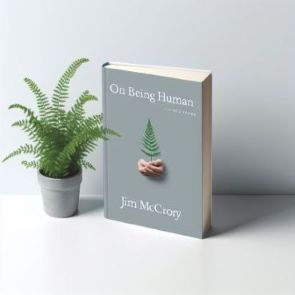
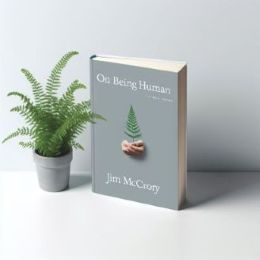
I still take pleasure in reading and in writing my book What It Means to Be Human each day. Like the ancient cave painters who pressed their handprints onto the stone, I write to leave a mark—a reminder that I was here, that I lived, that I believed.

Life is a journey, but the destination can be determined—through God’s undeserved kindness.

When a man dies, will he live again?
All the days of my hard service I will wait,
until my renewal comes.
—Job 14:14 (BSB)


"Renewal", a wonderful concept.

Image by Copilot

Permalink Add your comment
Share post

This blog might contain posts that are only visible to logged-in users, or where only logged-in users can comment. If you have an account on the system, please log in for full access.

Total visits to this blog: 2608825