Written in the Genes
In the back end of the 70s, I was standing on the thin edge between boyhood and whatever came next, I sensed a quiet unravelling. The friendships of my youth fell away, not with drama but with a kind of inevitability. I was restless. Unqualified, unformed and lost. Cardonald College in Glasgow became my refuge, a place to gather the pieces required for university after wasted school years, though I suspected I was searching for something less tangible than certificates.
One Sunday afternoon a door-to-door evangelist knocked my door; he noticed me watching a Scottish Gaelic language programme called Can Seo. Nothing remarkable in that, yet a week later he placed a cassette in my hands. A folk group called Na h-Òganaich. I remember the feel of the music unfamiliar yet familiar. I played it until the music felt less like sound and more like memory. Soon after, I found my way to Runrig’s Play Gaelic. The songs did not simply entertain me. They unsettled me. It was as though a door had opened somewhere inside and light poured through.
Youth have a way of disguising turning points as accidents. Someone gives you a cassette. You press play. A seed is planted in the dark.
Last year, decades later, that seed stirred again. At the Glasgow Royal Concert Hall, Beat the Drum performed a Runrig tribute set before an audience drawn from across the UK, Ireland, and mainland Europe; a primarily over 50s audience. I looked around at faces lit by stage light and memory. We were not merely spectators. We were witnesses to something we had carried for years.
For much of my life I felt a quiet grievance with the curve balls that life handed me. Why Govan? Why tenements and shipyards, angry hammers and the neurotic sizzle of welding torches. Why not sea lochs and machair and the tongue to read the poets? Why Glasgow and not the Hebrides? Age softens certain questions. I have made peace with this pilgrim rather than a native. Still, there remains a pull I cannot fully name.
I felt it again watching Donnie Munro Walk the ridgelines of Skye in Wilderness Walks. The Cuillins rose behind him, ancient and unspeaking. He spoke of music as though it were a current running through the human spirit, invisible yet undeniable. He recalled a concert in Ireland during the years of unrest. The morning after, a Catholic woman approached the band to thank them. Her family had attended and for a few hours, she said, the bitterness that haunted their home had loosened its grip.
A song cannot rewrite history. Yet it can still a storm, if only briefly.
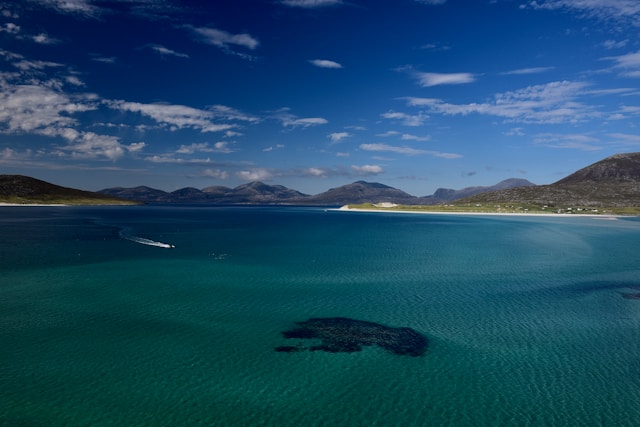
That story settled into me. I grew up far from the islands where Gaelic endured, yet the language had claimed me early. Over the years I travelled north and west. Skye. Islay. Jura. Each arrival felt less like discovery and more like recognition. I would stand looking out over water and feel an easing in my chest, as if my internal compass had stopped trembling.
Curiosity eventually led me to test my ancestry. Numbers returned, clinical and precise. Ninety percent Celtic heritage, reaching even to Brittany.
I was adopted as a baby so I never knew the details of family history, so after a DNA test and some digging. My paternal line traced back to Islay. The island that had long stirred something wordless within me was not only a symbol. It was blood.
What are we to do with such knowledge?
It is easy to dismiss these moments as coincidence, to speak of probability and genetic drift. Yet when a melody learned in adolescence continues to echo across a lifetime, when a landscape you have barely known feels like an inheritance, coincidence begins to feel too small a word.
Perhaps there are currents moving beneath the visible world. Currents of language, of song, of memory carried not only in stories but in cells. Perhaps what we call longing is simply recognition delayed.
I think now of that young man in 1974, sitting with a borrowed cassette, unaware that he was being quietly called home. Not to a place he had lived, but to a place that had lived in him.
And I am left with the sense that our lives are threaded with meanings we only perceive in retrospect. A melody. A mountain. A strand of DNA. Each one a whisper.
As if something within us has always known.