OU blog

Personal Blogs

Jim McCrory

Home Thoughts from Abroad

Visible to anyone in the world
Edited by Jim McCrory, Saturday 23 May 2026 at 07:09

sketch%20%281%29.png

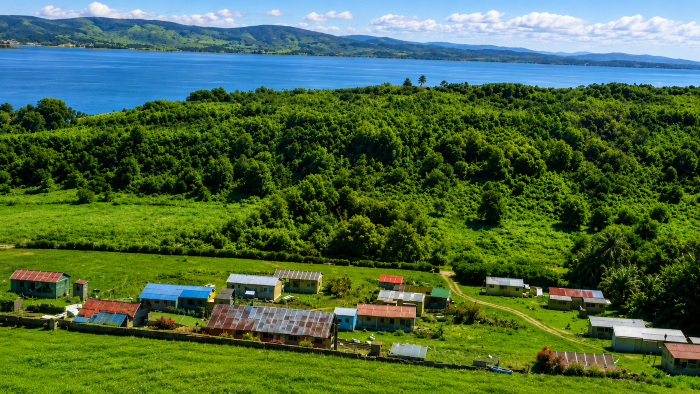
The  "Huts", Bogany Farm, circa 1960s AI enhanced

Home Thoughts from Abroad

There are certain songs that follow us through life with a quiet persistence. They do not demand attention; they wait. They surface unannounced, years later, carrying with them not only melody but entire seasons of who we once were. Clifford T. Ward’s Home Thoughts from Abroad has always been one of those songs for me. Gentle, almost hesitant, yet luminous in a way that is difficult to explain. It does not overwhelm. It lingers, like the kind of memory that does not fade so much as settle deeper into the bones.

Ward himself seemed to belong to that same quiet register. An English schoolteacher before recognition found him, he carried none of the urgency of performance. His songs feel spoken rather than sung, as though confided across a table. When I first heard him, I was young, and though I could not have explained it then, I felt that his songs were not performing for me but sharing something with me. We met somewhere in the middle of experience, even if his years were far ahead of mine.

His Home Thoughts from Abroad reaches further back, drawing from Robert Browning’s poem of the same name. Browning’s lines are not grand declarations; they are acts of noticing. Blossom, birdsong, the slow return of spring. Beneath them runs a current of longing—not loud or theatrical, but steady and human. It is not simply nostalgia. It is recognition. The sense that somewhere, there exists a place that fits the shape of us, even when we are far from it. A call back to nature, perhaps, but also a call back to something within ourselves that we fear losing.

Ward understood this instinctively. In both the poem and the song, place is never just geography. It is emotional ground. It is belonging. And belonging, I have come to realise, is not always something we are given. Sometimes it is something we spend a lifetime trying to name.

This came back to me one recent Saturday evening, sitting with friends over a meal. Among us was a friend from Mongolia, and as she spoke of home and I sensed a deeper meaning than just Mongolia. There is a word in the Mongolian language—нутгаа санах (nutgaa sanakh). Like most untranslatables, it does not fall neatly into a box; it is often reduced to “homesickness,” but that feels too thin, too casual from what I read. What I sensed when speaking to her was something deeper: a rooted longing, an emotional tether that stretches across distance but never breaks. A sense of homeland that lives within the body as much as in any physical place.

I listened, and found myself quietly envious. Not of the place itself, but of the certainty. The clarity of belonging. I realised that I had never quite felt that. Nowhere has felt like home to me, albeit, my heart is in the Hebrides and Norway and a place I shall tell you, but I never grew up in these places. 

I was brought up in the heartland of the Clydeside shipping industry, in a landscape that offered little to romanticise. It was a place of labour and soot, of function rather than beauty. There was nothing there to envy. And yet, there was a kind of grace hidden elsewhere.

We had a cabin on the island of Bute, set between Rothesay Golf Course and Bogany Farm. Each year, when the summer holidays began, I would go there for the full six weeks. It was, in every sense, another world. Loch Ascog lay to one side, still and watchful, while the Firth of Clyde opened itself out in a wide, patient horizon. At night, the sky was dark in a way I had never seen in the city—stars not scattered, but cascading.

My days were spent fishing, or wandering without urgency. Evenings gathered themselves around campfires, where friendships were formed quickly and dissolved just as easily at the end of the season. There was no permanence, and perhaps that was part of the magic. We belonged fully, if only for a while.

One memory remains with particular clarity. Late summer, I think. The cabin had no running water or electricity. My task each day was to fill containers from the communal well. The cows would approach slowly, cautious but curious, their presence both unsettling and companionable. The smaller ones edged forward, as though drawn by the novelty of it all.

At dusk, we lit paraffin lamps. Their soft, sibilant burn filled the cabin with a low, steady sound that seemed to quieten the world. My father would read aloud—HeidiTales from 1001 Nights, Chinese folk stories. We listened without interruption, held by the rhythm of his voice. Pancakes were eaten, sweet with jam, accompanied by small glasses of stout that felt, at the time, like something ceremonial.

The lamp would flicker as it consumed the kerosene, its light growing softer, heavier. Sleep came not suddenly, but as a kind of surrender.

Lying in bed, I would watch the stars through the window. Not one or two, but all of them. And I would wonder—whether somewhere, far beyond my understanding, a Chinese farmer boy or a Bedouin shepherd or a milkmaid in the Swiss mountains might be looking at the same sky. Whether they felt that same quiet awe. It was not a thought I could fully form, but it carried with it a sense of presence. As though, in those moments, the universe leaned closer, and something like God made itself known, not in words, but in stillness.

And then, inevitably, the leaving.

Packing for the ferry. The return to school on Monday. The slow re-entry into the tenements of Clydeside. It brought with it a heaviness I could not quite explain then. A kind of quiet grief. As though something had been taken, or perhaps left behind. It felt, in some small way, like the stories of islanders after Viking raids—an absence where something living had once been.

And yet, in that leaving, something else became clear. For the first time, Rothesay—the cabins near Bogany Farm—felt like home. Not in the sense of permanence, but in the sense of truth. Life there had a richness to it, something akin to the simplicity of Walton’s Mountain, where nothing extravagant was required for something to feel complete.

Years later, I came across a word in John Koenig’s The Dictionary of Obscure Sorrowskenopsia. The eerie, hollow atmosphere of a place once full of life, now empty. The silence after the crowd has gone. The ghost of presence lingering in absence.

I recognised it immediately.

I feel it each time I return to Bute, walking the stretch between Bogany Farm and Canada Hill. Where once there were fifty or sixty cabins scattered across the land, there is now only overgrowth. Nettles reclaiming paths. The shape of what was, barely visible beneath what has taken its place.

I walk there, and the cows look at me as though I do not belong. As though I am the intruder. And perhaps I am. The land has continued without me. It has formed its own continuity, one in which I am no longer central.

There was a time when that field was alive. Evenings filled with barbecue smoke and song, with burnt toast and laughter carried on the sea air. Campfires under slow-turning stars. Children running barefoot, voices spilling freely into the dusk. Adults leaning back, storing sunlight as though it might sustain them through darker months.

Memory, I have come to understand, is not entirely honest. It softens edges. It rearranges. Like a Potemkin village, it presents a version of truth that is more bearable, more beautiful. And yet, even if it is not precise, it is not false. It tells us what mattered.

In those recollections, people seem kinder than they perhaps were. Lighter. More open. Whether that was the effect of unhurried time, or the influence of the sea, I cannot say. But something about that place allowed us, however briefly, to become better versions of ourselves. As though the land itself permitted it.

Now, the cabins are gone. The voices have faded. The field stands, but it does not hold us in the same way. And yet, walking there, I am not entirely alone. The land remembers.

Robert Macfarlane once wrote that landscape is not a backdrop to human life, but a participant in it. Standing in that meadow, I feel that truth. The land holds what we have given it—the sounds, the moments, the ordinary acts that, together, formed something meaningful.

Time, in this way, is both a thief and a gift. It takes what we cannot hold, but in doing so, reveals what was worth holding in the first place.

Perhaps that is where the idea of home begins to shift. It is not always where we come from, nor where we return to. Sometimes it exists only in fragments—in songs, in remembered light, in the echo of voices that are no longer there. It is not fixed. It moves with us, even as we move away from it.

I never had the certainty of nutgaa sanakh, that deep-rooted longing tied to a homeland. But I have something adjacent to it. A quieter, less defined version. A sense that home is not a single place, but a convergence of moments that once made us feel fully present.

And that is enough; home is not something we possess, but something we recognise—briefly, imperfectly—before it changes.

Like a song, heard once in youth, that never quite leaves us.

P.S. I met a lady five years ago who had Clifford as her English teacher.


Permalink Add your comment
Share post
Jim McCrory

The Ship of Theseus and the Island of Memory

Visible to anyone in the world
Edited by Jim McCrory, Saturday 14 March 2026 at 10:29

 We too were made for a greater voyage,
where nothing that was truly loved is ever lost,
and the joys of the past are lived again—without end.

Everlasting Cadence 

sketch.png

The Ship of Theseus and the Island of Memory


Raised in a maritime city like Glasgow, one inevitably learns to look outward. Ships depart, tides shift, horizons beckon. Yet the places we travel to often shape the landscapes within us even more profoundly than the geography we leave behind.

I'm in the middle of an MA Creative Writing and in desperate need for a break. One morning I cross to the Isle of Bute aboard the MV Bute. In my hands is a book describing an ancient philosophical puzzle first recorded by Plutarch: The Ship of Theseus. According to the story, the Greek hero Theseus sailed to Crete to slay the Minotaur. After returning triumphantly to Athens, the vessel was preserved as a monument. As the years passed and the ship slowly decayed, carpenters replaced its timbers one by one until eventually every plank had been renewed.

The question arises: which vessel is truly the Ship of Theseus—the restored ship standing proudly in the harbour, or the original timbers rotting somewhere on the shore?

Our own bodies are not so different from this paradox. Red blood cells form, set off on arduous voyages through our circulatory seas, navigating what for them must seem like violent rapids and treacherous currents. They travel through nearly half a million miles of arteries, veins, and capillaries before quietly disappearing after a journey of roughly two months.

Skin cells also live brief lives. They loosen, shift, and fall away like tiny avalanches from continental plates, drifting downward in invisible currents until they vanish entirely within a day or two.

Scientists estimate that much of the human body renews itself every seven to ten years. Like Theseus’s vessel, we are continually rebuilt plank by plank. Standing on the ferry deck, contemplating the quiet industry of renewal taking place within my own body, it is difficult not to wonder what exactly remains constant within us.

I step off the ferry into sepia-coloured showers on this Sunday morning. A grey-haired man remarks to a young student beside him, “Back in the day this place was like Benidorm in July.”

But that day has long since passed. A subdued stillness hangs over the town this autumn morning. The island seems to rest in a kind of mournful silence, like a village abandoned after the Vikings have come and gone as they did in the past.

In the 1960s my father bought a small cabin in the island’s interior. Each summer he would pack our blue Comer van to the roof and transport my mother and me—along with every conceivable necessity—to what became our seasonal home: a three-by-twelve-metre wooden hut with no running water, no electricity, and no sewage.

At the time these inconveniences never occurred to me. All that mattered was escape—from playground bullies, razor gangs, and the shadowy characters who loitered in dark corners of the Govan streets among half-starved dogs and crumbling tenements.

Bute was paradise.

Half a century has passed since those bright summers. Now I walk through the town once more, paying quiet homage to the landscapes of my childhood.

There is a Portuguese word, saudade, sometimes described as a pleasure you suffer, an ailment you enjoy. The past has become something like that for me in recent years—an indulgence in gentle melancholy.

Crossing the town square, I am conscious of walking upon layers of history. Hangings were carried out here. Witch trials once echoed across these stones, and human bodies burned in medieval nights that flickered with firelight and fear. The past truly is, as someone once wrote, a foreign country—wistfully recalled, imperfectly remembered, and often misrepresented through the slow march of time.

One record in the Survey of Scottish Witchcraft Database captured my attention:

McNicol, Janet – 15 October 1673
Prison: Tolbooth, Rothesay
Confession: 1673
Sentence: Execution – to be strangled and burned at the gallows.

One cannot help wondering why Janet McNicol, having once escaped the island, returned a year later to face such a fate. Perhaps, like many of us, she felt some invisible tether binding her to this place.

The Victorian age has left a stubborn footprint here. Even with the trams long gone from the promenade, a nineteenth-century flaneur transported into the present might feel little disorientation. The streets remain narrow, built for horse-drawn carriages. Beach shelters still face the water. Public conveniences retain their tiled mosaic floors and gravity-fed cisterns.

I find myself thinking about the countless generations who have passed through this town.

I am only passing through myself.

Yet above it all the pale October moon continues its silent watch over each wandering generation.

Turning left at Rothesay Castle—built in the thirteenth century as defence against Viking raiders—I climb the Serpentine, a steep road twisting through thirteen tight bends. One year my father attempted this ascent in the overloaded van. The engine roared uphill only to slip backwards again and again in a Sisyphean ritual before he finally admitted defeat.

Halfway up the hill I notice a Victorian letterbox embedded in the wall. The initials VR remain proudly stamped into the iron. It comforts me strangely, this small symbol of continuity linking present and past.

Later, walking across Canada Hill golf course, the honking of migrating geese interrupts my thoughts. Instinctively I recall a song I once sang accompanied on my guitar—words written by the Victorian poet Violet Jacob.

O wind, hae mercy, haud yer whisht,
For I daurna listen mair…

Like the homesick exile in Jacob’s poem—the “hameless loon”—perhaps we are all exiled from somewhere, especially from our own past.

The Japanese speak of wabi-sabi, a quiet acceptance of life’s impermanence: the bonsai tree struggling to root itself in shallow soil, shedding its leaves, withering, and eventually dying. Such transience, we are told, should be observed with a sense of gentle appreciation.

But human hearts do not surrender easily to such wisdom.

The poet Kobayashi Issa wrote after the death of his child:

The world of dew
Is the world of dew
And yet… and yet—

That hesitation—the refusal hidden in those final words—reveals the difficulty of accepting a world where everything passes away.

We are born with the capacity to live a thousand lives. Our bodies age, yet inside we remain strangely youthful. Deep within the hippocampus lie countless neurons preserving the memories of everything we have loved and lost.

These memories form a kind of inner archive—the quiet record of who we are.

Why would nature equip us with such elaborate machinery for remembrance? Memories of childhood summers, of friendships, of first loves and small moments that once seemed insignificant but now shine with unexpected clarity.

Perhaps these memories are not accidental at all.

Eventually I find the clearing I have been searching for. Only those who once belonged here would know how to reach it.

The cabins are gone.

Where once stood sixty small huts filled with families, laughter, bonfires, music, and children’s voices, there is now only open land dotted with a few Guernsey cows staring curiously in my direction.

Yet the memories remain vivid.

Here I first heard Creedence Clearwater Revival singing Up Around the Bend. Here, I carved my eternal love beside a girl whose name I can no longer remember—and who surely has forgotten mine. How fickle the prepubescent boy.

The landscape itself remains unchanged. Loch Ascog glimmers to my right; the Firth of Clyde stretches to my left. But the cabins, the families, the laughter—gone forever.

Still, they shine brightly in memory like sunlight dancing on water.

There is a German word, Sehnsucht, which describes a deep longing for something lost, something altered beyond recovery. Standing here, looking over this quiet field, it is the only word that seems adequate.

Centuries ago, the ancient prophet Job asked a question that has echoed through human history:

“If a man dies, will he live again?”

Will all our memories be sealed permanently within our coffins?

Job answered his own question with quiet hope:

“I will wait for my renewal to come.”

Like the Ship of Theseus, we are vessels continually renewed. Perhaps we too were designed for a greater voyage—one in which nothing truly loved is ever lost, and the joys of the past are lived again without end.

Postscript

“For there is hope for a tree: if it is cut down, it will sprout again, and its shoots will not fail. Though its roots grow old in the ground and its stump dies in the soil, at the scent of water it will bud and put forth shoots like a plant.”
Job 14:7–9 (BSB)

“His flesh shall be fresher than a child’s; he shall return to the days of his youth.”
Job 33:25 (BSB)


Permalink Add your comment
Share post
Jim McCrory

Stars like the sand of the sea

Visible to anyone in the world
Edited by Jim McCrory, Sunday 6 July 2025 at 18:31

Updated: see Living on an Island | learn1

“Two things fill the mind with ever new and increasing admiration and awe... the starry heavens above me and the moral law within me.” Immanuel Kant.


Permalink Add your comment
Share post

This blog might contain posts that are only visible to logged-in users, or where only logged-in users can comment. If you have an account on the system, please log in for full access.

Total visits to this blog: 2103466