OU blog

Personal Blogs

Jim McCrory

Lessons from the Clydeside

Visible to anyone in the world

“That man is a success who has lived well, laughed often, and loved much.”

Robert Louis Stevenson
sketch.png

Lessons from the Clydeside

Let me set the record straight. I was born on the Clydeside in the late fifties, where I woke each morning to the sound of angry hammers and neurotic welding torches; sounds that helped build massive vessels destined to sail the seven seas.

I left school at St Gerard’s Senior Secondary in Govan, Glasgow, at fourteen—probably—but I poked my nose back in occasionally, just to make sure I got my Leaving Certificate, because as far as I knew you didn’t get a job without one. To my knowledge, no one in my class ever went on to win a Nobel Prize for literature, peace, science or anything else. I suppose in today’s world we’d be called losers.

It wasn’t that we weren’t bright. It was that high school was chaotic. One year we broke for summer and returned for third year only to discover, after the holidays, that every teacher had been replaced. It was traumatic, like losing a family overnight.

I missed Mr A… , who taught us how to make fishing rods and took us fishing in the Clydebank canal, where the goldfish were enormous thanks to the warm water from the local Singer factories. And by the way, every man and his dog owned a Singer sewing machine back then, we weren’t a holy nation.

There was also the music teacher who made me feel Scandinavian while he played and explained The Hall of the Mountain King. And the English teacher who never really taught us English at all, but read to us Rob Roy, Treasure Island and Ivanhoe.

But I digress. What I’m trying to say is this: we yearned for learning—just not in the way it was meant to be delivered.
Permalink Add your comment
Share post
Jim McCrory

Good Morning Germany! I Like That Word

Visible to anyone in the world
Edited by Jim McCrory, Thursday 12 September 2024 at 18:01

The mediocre teacher tells. 

The good teacher explains.

 The superior teacher demonstrates.

 The great teacher inspires.”

― William Arthur Ward


Image by https://unsplash.com/@mockupgraphics


When I think of the German word Fingerspitzengefuhl, I think of Mr Abbot, our science teacher at St Gerard's in Govan, Glasgow.

Academics were in 3A. Girls were 3B, and we were in 3C. Whilst 3 A were absorbed into the more scholarly curriculum that included subjects like Latin, French and German, we, 3C focused on technical subjects like metalwork and woodwork. We were the offspring of hard drinking, macho shipbuilders. We were destined for the shipbuilding yards like our fathers and forefathers.

With that in mind, Mr A knew we would never be Nobel Prize Winners in science, so, he taught us to make fishing rods. Every Thursday, with our two periods of science, we would get out the fiberglass, glue and twine, and skilfully make seven-foot fly rods. They were works of art and it engendered self-esteem in us teenagers.

When the project was completed, he would take us all in the minibus over to the Clydebank canal to catch 1-to-3-pound goldfish. Yes, you read correctly: goldfish.

During the war, families could not obtain food for the pet fish, so they did the humane thing and poured them into the canal. The warm water emanating from the nearby Singer Sowing Machine factory allowed the fish to thrive and reach considerable sizes.

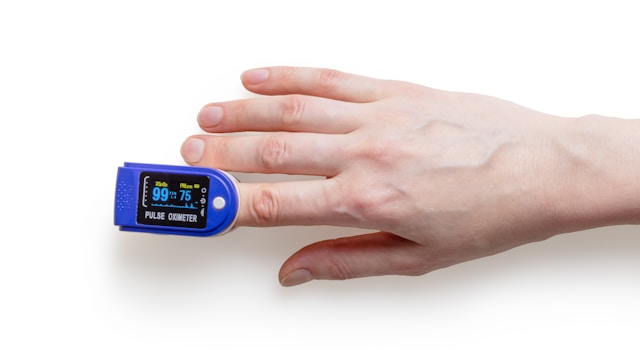
Fingerspitzengefuhl (literary finger-feeling) describes someone who has the finger on the pulse. Someone who can assess human nature and bring the best out in them.

Mr Abbott changed our life. Every weekend, Sammy, Tam and I would hop on the bus with our rods and fish in the Barrhead Dams and Loch Libo in Neilston. Many young people in those days adopted a life of gang violence and crime and I often wonder, what if I, we, never  experienced Mr A's Fingerspitzengefuhl?


Writing:  © 2024 Jim McCrory


Permalink Add your comment
Share post

This blog might contain posts that are only visible to logged-in users, or where only logged-in users can comment. If you have an account on the system, please log in for full access.

Total visits to this blog: 1598857