OU blog

Personal Blogs

Jim McCrory

Lessons from the Clydeside

Visible to anyone in the world

“That man is a success who has lived well, laughed often, and loved much.”

Robert Louis Stevenson
sketch.png

Lessons from the Clydeside

Let me set the record straight. I was born on the Clydeside in the late fifties, where I woke each morning to the sound of angry hammers and neurotic welding torches; sounds that helped build massive vessels destined to sail the seven seas.

I left school at St Gerard’s Senior Secondary in Govan, Glasgow, at fourteen—probably—but I poked my nose back in occasionally, just to make sure I got my Leaving Certificate, because as far as I knew you didn’t get a job without one. To my knowledge, no one in my class ever went on to win a Nobel Prize for literature, peace, science or anything else. I suppose in today’s world we’d be called losers.

It wasn’t that we weren’t bright. It was that high school was chaotic. One year we broke for summer and returned for third year only to discover, after the holidays, that every teacher had been replaced. It was traumatic, like losing a family overnight.

I missed Mr A… , who taught us how to make fishing rods and took us fishing in the Clydebank canal, where the goldfish were enormous thanks to the warm water from the local Singer factories. And by the way, every man and his dog owned a Singer sewing machine back then, we weren’t a holy nation.

There was also the music teacher who made me feel Scandinavian while he played and explained The Hall of the Mountain King. And the English teacher who never really taught us English at all, but read to us Rob Roy, Treasure Island and Ivanhoe.

But I digress. What I’m trying to say is this: we yearned for learning—just not in the way it was meant to be delivered.
Permalink Add your comment
Share post
Jim McCrory

Their is Something about Norway That Captured My Heart

Visible to anyone in the world


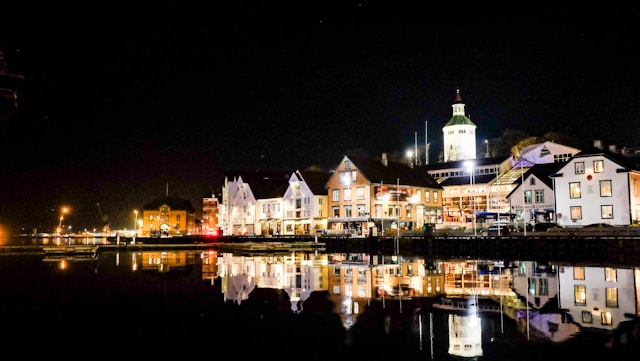
Image by https://unsplash.com/@gunnarridder


In the early spring of 1999, I found myself walking the streets of Stavanger, a Norwegian city that had captured my imagination long before I ever arrived. For me, this was more than just a trip; it was the realization of a dream that had begun years earlier in a classroom in Scotland. Back then, I was a boy, unaware of the world beyond my small town, until one day, my music teacher introduced me to something extraordinary.

It was the Peer Gynt Suite that first sparked my fascination. As the music swirled around me, I was transported to a place of towering mountains and deep fjords, where the figure of Peer Gynt seemed to come alive. The melody was full of life and adventure, stirring something deep within me. Soon, I was at the library, eager to learn more. That’s when I discovered Edvard Grieg, whose music, rich with Norwegian folklore, spoke to me like nothing else. "In the Hall of the Mountain King" was especially captivating—the crescendo, the trolls, the excitement—it all felt like stepping into another world.

From then on, Norway became a land of dreams for me. I imagined its rugged beauty, ancient legends, and the people who lived among the fjords. Like Peer, I felt a restless yearning, a desire to explore and find meaning. Norway called to me, and I promised myself I would go there one day. I had no idea that this dream would come true in 1999.

Living in Stavanger fulfilled everything I had hoped for. The city, nestled between mountains and the North Sea, felt both modern and timeless. As I wandered its cobbled streets each day, I felt a deep connection to the land and its stories. It wasn’t just the striking landscapes—the fjords reaching endlessly or the bright summer skies—it was the sense of myth and history that seemed to permeate the very air. There was a quiet magic about it, a hum that reminded me of Grieg’s music and the spirit of Peer Gynt.

The natural beauty around Stavanger felt almost enchanted. The mountains rose like ancient fortresses, and during my solitary walks, I often thought of the trolls and the childhood tales that had once captivated me. Here, they didn’t feel distant at all. I would sit for hours by the fjords, listening to the wind echoing through the valleys, almost expecting to hear Grieg’s melodies accompanying the scene. Norway had a way of making the line between reality and myth blur.

But it wasn’t just the landscapes that made the year so special—it was the people. Norwegians had a deep sense of connection to their history and land. Their simplicity and quiet strength resonated with me. There was a humility about them, a quality that reminded me of the Christian values I held dear. Despite their reserved nature, there was a shared understanding of life’s deeper truths, and I felt a kinship with them.

Now, as I sit and reflect on that peaceful year, I find myself transported back to those moments, but not just as the man I am today. It’s as though I see myself in three stages: the wide-eyed boy, first discovering the magic of Peer Gynt; the man living his dream in 1999, exploring Norway’s landscapes; and the person I am now, reliving it all through memories. These moments are bittersweet, a mixture of joy and nostalgia, knowing that time has passed but the memories remain vivid.

If you happen to find yourself in Stavanger, perhaps wandering through its Old Town tonight, give a nod for old times' sake. Somewhere in those streets, I’m still walking, forever connected to the boy, the man, and the memories of all that Norway once gave me.


Permalink Add your comment
Share post

This blog might contain posts that are only visible to logged-in users, or where only logged-in users can comment. If you have an account on the system, please log in for full access.

Total visits to this blog: 1598860