OU blog

Personal Blogs

Stylised image of a figure dancing

Cast your Books Aside

Visible to anyone in the world
Edited by Martin Cadwell, Tuesday 3 February 2026 at 14:27

All my posts: https://learn1.open.ac.uk/mod/oublog/view.php?u=zw219551

or search for 'martin cadwell -caldwell' Take note of the position of the minus sign to eliminate caldwell returns or search for 'martin cadwell blog' in your browser.

I am not on YouTube or social media

silhouette of a female face in profile


[ 10 minute read ]

Defacing Education

Scrawls, scribbles and random ideas

I read a question a few days ago on what someone should do with their defaced text books now they had finished their studies; presumably because he felt that the information in the books was now once read and dissected, useless. It is so useless that it can be discarded or mulched or burnt. I was horrified.

A while ago, my brother worked for me for the odd day or two. He is one of those people that mark informational books for an immediate purpose; in this case it was one of my UK Road Atlas's.

I ordered a book on, I can't remember, economics or logistics, from an online used book seller. It arrived with passages highlighted, text underlined and annotations on every page. Every page! The whole book was somehow highlighted! Think for a moment on that. If the book remained unmarked it would have been similarly relevant. I sent it back, expensively it seems at the sellers cost.

Years ago, I bought a van and decided to set myself up as a delivery service. One of my customers had just finished studying for, I think, a PhD in Comparative Literature. He had hundreds and hundreds of books and none of them were in boxes or were wrapped. We had to gently lay them next to each other in the back of my van and carefully stack them so there were no gaps.

     'Please be careful with them; they are my babies!' he pleaded.

To me, they would have been safer in boxes or even wrapped in paper but he thought he knew best. I had to drive as though they were eggs but not in egg boxes. I have been injured in an ambulance and it drove faster and swerved more than us that day.

I think making annotations in books; underlining text; and highlighting passages is a 'Marmite' thing. There are people who consider their studies over once they have been tested; and there are people who consider that they have never learned enough. There are people who can remember that there was a piece of text in a book they once read and go back to read it weeks or years later because it is suddenly relevant; and there are people who simply don't care what is in a book once a goal has been reached. 

Take for example a dictionary: Many people regard a dictionary as a device to tell us how to spell a word; others want to 'know' the meaning of a word. Imagine highlighting the words in a dictionary as we go through an academic year and then simply throwing it away. Why throw it away? Why mark it at all. Well, the first question is easy to answer. Once a book has been marked it is, to me, almost useless, so the best thing to do is buy a new one as soon as possible.

I think we have to be honest with ourselves. Why do we think that certification qualifies us to do anything other than operate a piece of machinery? I am an undergraduate; that means I hope to one day 'get' a degree, but not the same sort of degree that an Archeology graduate got. Her degree said she had successfully completed a series of lessons and tests that culminated in certification. I had been lucky enough to spend six or seven hours the day before with someone who had just finished studying for a PhD in Archaeology, so we got chatting. I could not have the same conversation with the graduate. She was not at all available for an open discussion. She had carefully balanced all the relevant information on her head before writing her final dissertation, I suspect. 

     'Right! Job done. I can relax now. I have a degree! Woo Hoo! No more studying.'

Maybe in archaeology, people don't need to learn more than what is taught for a degree to be able to attend a dig and catalogue artifacts. I don't know.

The books in question; the ones in the first paragraph above, the ones that were defaced after they had been read, and the Tutor Marked Assignments were submitted, and the module completed, are copies of books to which I have copies. I have also finished the same module. I subsequently went on to do another module within the same field of study. I remembered that I had read something in the books for the previous module and so I flicked through in the approximate area for the passage I wanted to reread because I wanted to expand on a point in the immediate Tutor Marked Assignment I was working on. There were no highlights or annotation to distract me and I easily found it. Most importantly, I arrived at the passage with the same thought pattern and intent as when I left the more recent and subsequent study books; unadulterated by my previous trains of thought I had last year.

I write from top to bottom, freely and without going back to align anything with something that occurs before. My train of thought is 'in the now'. Of course, i can remember the main points of what I have written but the nuances will definitely cause my thinking to be diverted towards my previous trains of thought. This will inevitably result in circuitous thinking. Although I like being able to tie the beginning to the end, I need to let my understanding 'kick in' with all the 'clean' thoughts of before; ready to 'add to the soup of my fancy', if you will. None of my previous thoughts should be encapsulated, bound or circumscribed to be only available for attribution to a single goal. In other words, I must NOT highlight them. By repeatedly going back to them with the mistaken idea that they are the most relevant ideas I had, will, as sure as there is writing on the wall, the die will be cast, and there cannot be any other conclusion to any future focus.

Of course, writing for fun is a lot different to academic writing. It might have a lot of similarities though. I am not going to explore that because that would require me to stop expunging my mind and start focusing in a direction that is not the one I am attempting to follow and portray. I have a plan.

The road atlas my brother had for the day was in conjunction with a SatNav. Any serious driver uses a road map to get somewhere, because it shows all the escape routes and experienced drivers can ascertain the best route to get somewhere according to traffic flow; the vehicle being driven; and the load that is carried (It is not cool to drive past a primary school carrying fireworks at school-kicking out time). 

My brother marked a single town on a page; his destination. It is also not cool to to look at an atlas while you are driving. Yet, the amount of time to recognise where to go from where you are if you glance at a road atlas is the same amount of time it takes to glance at the speedometer and know your speed. That is unless there is a highlighted town on the page.

If you consider a page of a road atlas to be like the proverbial football pitch that was described by early radio presenters as being divided into numbered squares: (Robson in 2 passes to Green in 3 who fumbles the reception. Michael collects it and it is back to square one where Bublé gathers it), then you might realise that the driver knows which 'square' of the atlas to glance at as being the square where the driver currently is. If there is a highlight on the page the driver is distracted by the mark and he has to glance again with the recognition that the mark should be ignored. That is do-able with a single mark, but incredibly irritating and probably means that the driver needs to find a safe place to stop just to glance at the page for the extra necessary half-second. That is not going to happen! It is time to buy a brand new road atlas.

I don't deface any book. I don't dog-ear them and I don't mark them in any other way. I could mark a passage on growing parsnips in one of my home-gardener books and it would not impinge on my search for information on tomatoes. At my level of understanding horticulture, the information is quite distinct, in that a parsnip is a root vegetable and a tomato is a fruit - same soil but with different nutrients. When it becomes complicated and crucial I really don't want to be drawn to the potassium requirements for good root production when I am looking for the requirements for good fruit production. My gardening books, even at entry level are unmarked.

I am an advocate for stumbling across information that may or may not be relevant or interesting; that is why I have a Roget's Thesaurus with real pages that I have to flick through and accidentally reveal weird words before I get to the ones I am seeking. I NEVER highlight any words. I note them down and stick them to my wall for later inclusion in a worrying discussion.

If something is interesting I either rewrite it in full as a direct quote in a Word document; use calligraphy with the idea, point, or concept on an A3 sheet of paper to stick to my wall; or write it in a notebook. Sometimes, though rarely, I summarise stuff. But that is like writing something down when you come back from the pub and trying to make sense of the sentiment the next day, even if you can read your handwriting.

Most of us can read at 200 wpm (words per minute). I think we are doing well if we can type at 135 wpm. The reason we can read faster than we write is because we 'chunk' words on a page and read it like a single word; 'words on a page' is a single chunk. To a large extent we can predict what words will appear in a sentence from our previous experience. Writing something down means we have to hold chunks in our heads for a longer time than if we read it. We still chunk parts of sentences if we directly copy text; otherwise we would need to look at every single word of the text, type it and then go onto the next. So what is the merit of directly copying text instead of highlighting it in a textbook? I shall follow this question because there are many people who will just scribble in books and then revise from their scribbles, and they are, no doubt opposed to my thinking. It is the chunking of words when we copy them at a slower rate than reading that allows us to slot the words into our long term memory, thereby increasing understanding and reducing revision time.

Highlighting and annotating is fast; really fast. It allows for speed-reading and in some ways negates having to make notes. It allows someone to have an individual approach to the text. If I like politics I might (I never would) highlight the political aspects of an ancient society in history books; someone else might (I hope not) highlight agricultural practices. It is, however, linear learning. Oh Dear!

Well, coming up with 'Linear Learning' is, for me, the equivalent of mentioning a certain German Fascist dictator in an argument. The person who mentions the WW2 leader will not brook any argument that contrasts with their own. 

I despise Linear Learning. Maybe other people do not. Maybe my primary school put magic mushrooms in the school milk, or the cows ate them.

Permalink Add your comment
Share post
Stylised image of a figure dancing

Inattentive and could do better

Visible to anyone in the world
Edited by Martin Cadwell, Tuesday 30 December 2025 at 17:26

All my posts: https://learn1.open.ac.uk/mod/oublog/view.php?u=zw219551

or search for 'martin cadwell -caldwell' Take note of the position of the minus sign to eliminate caldwell returns or search for 'martin cadwell blog' in your browser.

I am not on YouTube or social media

silhouette of a female face in profile  A new years resolution

[ 8 minute read ]

Well that went well!

Inattentive and could do better

Many students have to cite and reference sources in their essays. Years later, they might find themselves working in ALDI or LIDL at the checkout in what may be a banal and mundane role. I have met a few and they consistently say that learning how to cite and reference sources was one of the worst things they ever had to do at undergraduate level and they are glad they never have to do it ever again. I can't help thinking that they probably do cite others in their everyday lives, most likely without them even knowing they are doing it, and if the referenced person is party to the nod directed towards them, as long as it is positive, they will likely think that the person is a kind and respectful person for noticing them and attributing knowledge to them. I think that no-one in the room will recognise that the respect is an honed attitude. A bit of a nature versus nurture aspect, really.

I have spent years collecting books both real and from the internet; we used to be able to download a bunch for free. I haven't tried that for a couple of years. Many of the e-books are on one of my laptops or shunted off onto a dongle or flashdrive, but some are in the Desktop folder or in a folder called 'Read Now'. For years, I would copy from real books from the library into new files and store them on my computers and drives, slowly absorbing information, waiting to match it or compare it with more information on different topics to get a greater understanding of stuff; peering behind the curtain to watch the puppeteer because I have seen the show, if you like. This form of incredibly slow learning is quite evident in my posts. 'Stuff' has been percolating on a warm stove and distilling, so I can be more than direct, even astringent in my approaches. Wish I didn't do that! Because I know this, I snatch facets of humanity from the air whenever I recognise any; effectively the ones that 'fit' me, and I write down what I think, or have read, in paragraphs of perhaps only 150 to 250 words. I have done this without including references to the sources. Oh dear! Because I write what I think, and make direct copies from books, I no longer know who wrote what.

If I was in a film, I would become part of the library, but not because I know much, more because I would be exploring. I would be the voice in your head that says, 'Have you considered looking for a cat in a box?' or 'Job interviews are enhanced by understanding Models of Brand Evaluation in Marketing.' There might otherwise be a scene where someone rounds a corner in a library and finds an unkempt man with books all around him on the floor, some with the same titles and opened on different pages. Occasionally, in the scene, a beam of sunlight would highlight the dust in the air and the slam of a book closing would stun the air before the particles jump.

I asked a librarian if she had a book about Pavlov's dog and Schrodinger's cat. She said it rang a bell but wasn't sure if it was there or not.

The cure lies in our own hands

'[...] Again, even when we live benevolent, admired lives according to the standards of our times, we can fear that had things been tougher we would have joined the fallen. If we are good, it may be because we were never tempted enough, or frightened enough, or put in desperate enough need. We can also fear the restless evil in the human heart. We know that neither success nor suffering ennobles people. In such a mood, we can be overwhelmed just by the relentless human capacity for making life horrible for others. The right reaction is not to succumb to the mood, but to reflect that the cure lies in our own hands.'

The above is a direct quote from a little book called 'Ethics: A Very Short Introduction' by Simon Blackburn, Oxford University Press, 2001.

I haven't read all of it. Up until today, I was the sort of person, who impressed by someone's personal library of real books, would crassly ask, 'Have you read all of these?' I realise now why the person I was addressing would look at me as though I was a buffoon for a while, then say, 'Most of them.' The pause before they answered was not shock at my stupid question, it was them assessing what was the best way to teach me about why having books to read is as important as having read books. Why would I assume that someone has intellectually died when I have known this pretty much my whole life? 

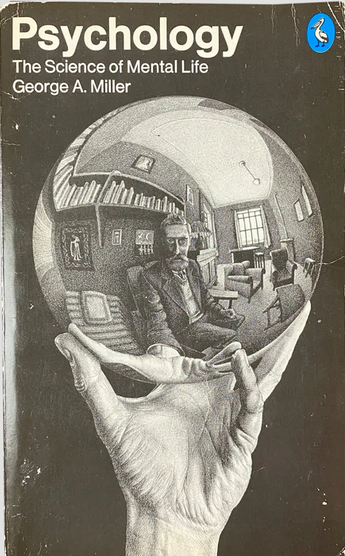
Image of a book on psychology. A drawing is of a hand holding a reflective ball

I think the first most influential book I have read was a book on psychology. 'Psychology: The Science of Mental Life by George A. Miller' (Pelican, 1979). The front cover was a hand holding a ball of glass (crystal ball) by the wonderful M.C. Escher. My sister bought it for my 13th birthday as a present. I think I can trace a lot back to that day! I think a lot of the 'cure' was in that book. Thank you sister, thank you!

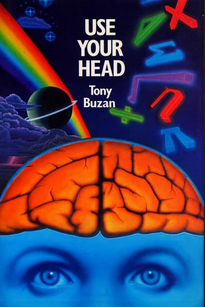
A cartoon head showing the brain inside. It is a book cover

I think the second most influential book I have read was a book called 'Use Your Head' by Tony Buzan. (Book Club Associates, London, 1984). Originally published in 1974 by Guild Publishing, London.

'Use Your Head', which I bought when I was 17, taught me how to learn as I like to learn. The most prominent message I got from it was that when reading a text book, do not start from page one at the beginning and read through until you reach the end of the book. Instead, flick through it and read the bits that immediately interest you. Build up 'keywords' on which to hang other bits of information. Eventually, the bits that you would never have comprehended are as meaningful and exciting as the bits that first interested you. 

Back to 'Ethics: A Very Short Introduction'. On page 81 is an image of a painting 'Liberty Leading the People' by Eugène Delacroix; one of my favourite artists.

On page 80:

Freedom from the bad

'Another approach to what matters in living well is to consider what has to be avoided. It is much easier, to begin with, to agree on this list. We don't want to suffer domination by others, or powerlessness, lack of opportunity, lack of capability, ignorance. We don't want to suffer pain, disease, misery, failure, disdain, pity, dependency, disrespect, depression, and melancholy. Hell was always easier to draw than heaven.'

It mentions that the list is of most use in political philosophy, which is a great subject in itself, but I have often tried to find where obstacles lie in my life and then gone on to attempt to remove or overcome those obstacles, so the list works well for me, on a personal level. I read it three times slowly.

Before I married my wife, I noticed that there were no books to read in her own home; no small personal library. I set one up in our marital home. Books that she might read, and books we could read together, like the book on Shiatsu massage. Without knowing what our children, once they were born, might like to read, I set about buying books for beginners on everything that I knew a little about; gardening, cars, herbs, the climate, Egypt, lots of art and creativity books, history, travel (especially Germany) and as they grew up, aircraft, boats, fish, dogs, wild animals, people, psychology, lots more art and craft, jewellery, fashion, war, self-help, biology, physics, maths and languages, and many, many more. It was never my hope that any of them would be fully read. A paragraph from just one of the books might have been the 1% that made a puzzle complete for them, or started a new interest. 

As we move away from the events of the past, measured as being contained within a single year, and reach the end of the festivities of Saturnalia, now turned into Christmas by Pope Julius I in the 4th Century, from it being celebrated, in Europe, anywhere between early January to late September; we might look to our futures and make a resolution to change something. 

The most influential non animate learning aid in my life is definitely the Collins Pocket Thesaurus I bought when I was sixteen.

What would I change? What would I improve or remove? I am jaded, tired and morose. I have lost the fizz, the effervescence of life. I am going to buy something sharper to puncture the balls that come into my back garden from next door, and a mirror to perfect my scowl. If you've got it, flaunt it!

Get the 'Martin' look!

Permalink Add your comment
Share post

This blog might contain posts that are only visible to logged-in users, or where only logged-in users can comment. If you have an account on the system, please log in for full access.

Total visits to this blog: 281159