OU blog

Personal Blogs

Design Museum

From Compliance to Care: Learning, Behaviour and Health in a Digital Age

Visible to anyone in the world
Edited by Jonathan Vernon, Friday 16 January 2026 at 12:16

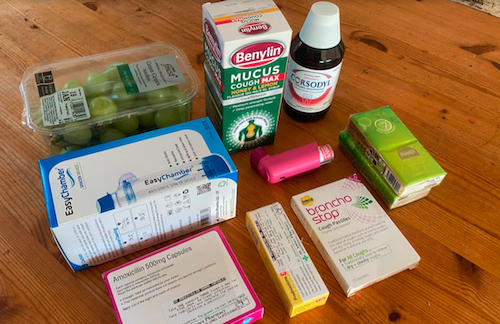
A selection of asthma and cough remedies, cures and comforts.

Over the past two weeks, I experienced the most severe respiratory illness of my adult life.

What started as a cold quickly went to my chest. I lost several days and nights to relentless coughing fits, barely sleeping and feeling completely drained. When I began blowing my nose, the tissues were first speckled with blood, then suddenly drenched in blood mixed with phlegm, which was alarming and heightened the sense that something wasn’t right.

I’m asthmatic but usually well controlled, and initially this presented as a heavy viral cough. As symptoms escalated, I deliberately used AI as a structured thinking and communication aid — not for diagnosis, but to organise information and make sense of what was happening.

I shared accurate background information (age, asthma history, usual peak flow, medications), daily symptoms, objective measurements (peak flow trends, temperature, heart rate), and responses to treatment. The AI helped me interpret patterns, distinguish between infection and airway inflammation, and identify when recovery had plateaued rather than progressed.

Crucially, it helped me translate this information into clear, clinically relevant language suitable for NHS triage systems — concise summaries that highlighted objective deterioration, functional impact, and the reasons for intervention. This avoided both minimisation and alarmism. As a result, I was booked for a face-to-face GP appointment rather than dismissed as “just a cough.”

At the surgery, the clinical outcome aligned closely with the structured reasoning developed beforehand: the GP identified a viral-triggered asthma exacerbation and initiated appropriate management—oral steroids, standby antibiotics, improved inhaler delivery via a spacer, and a planned asthma review once recovery was complete. I now have a clear treatment plan, objective markers to monitor recovery, and guidance on pacing my return to work.

The value of AI here was not replacing medical judgment or bypassing clinicians. It acted as a cognitive scaffold, helping me organise complex, evolving information, maintain perspective during illness, and communicate efficiently within a strained healthcare system. It supported timely escalation rather than self-diagnosis. In short, AI functioned as a tool for improved patient advocacy and clearer clinical dialogue, enabling the NHS to do what it does best—assess, treat, and plan care—with better information and less friction.

Over a decade ago, drawing on my MAODE from the Open University, I proposed a PhD research project exploring how online learning could improve compliance with prescribed medication and health monitoring. The aim was to conduct a three-year study using measurable behavioural change and asthma statistics to assess whether structured online learning improved adherence and outcomes. A decade on, the case for this approach remains strong, arguably stronger. 

I still have that PhD research proposal. I should give it a second airing. The University of Southampton rejected me at the time. 

Quiz time: Study the attached image. For those who were ever tucked into bed with a hot water bottle, off school with a cold, what else did you expect in addition to grapes?! 
Permalink Add your comment
Share post
Design Museum

Pause for thought

Visible to anyone in the world

We humans have not changed, so all this tech coming along is not going to change that. The approaches that work are those that play to our nature. I am fed up of seeing EdTech people treating EdTech as something you grab from the shelf in the proverbial sweet shop.

The answer is in the learning, not the tools - by understanding the students, knowledge of the curriculum and working within your means. Shoehorning approaches into a class, or pushing inappropriately complex solutions on a teacher is wrong, They/we do not have time to master one platform after another, or another ... nor do we want an outsider parachuting in with their answer which too often is a fancy interactive thing that took days to produce, that students can do in minutes. What is the point in that? Has that investment in time and staff costs been well spent? Never.

Would a surgeon in a hospital stand back when a junior administrator with not medical qualifications comes in with a tech tool they say is the answer to everything. It is rarely the answer to anything and causes more problems than solutions.


Permalink Add your comment
Share post
Design Museum

Blinkered to Learning Opportunities

Visible to anyone in the world
Edited by Jonathan Vernon, Saturday 2 February 2019 at 14:06


I'm worried that eLearning is too prescriptive. This will depend of course at what level a student is being taught. Primary is different from Tertiary. At primary there is stuff you need to know, at tertiary you can be expected to explore around the subject. However, believing that a student can pick up everything in the most suitable way simply from what is put before them is surel a mistake.

The online learning I have experienced is rather of this type. You are blinkered to anything other than the content presented to you. This might work for some people, or even most people, unfortunately for me, I know this approach does not stimulate me at all.

I am trying to become a certified Google Educator Level 1. This is fairly basic communications stuff, though with some parts of the Google Suite I never touch. The 'learning' is repetitively of the same type and format: read a bit, watch or listen to a few examples, typically a teacher reading a portaprompt off camera (always from the US) in tones that lean towards sales pitch rather than candid revelation. My Teflon brain smells a rat and won't buy it. There are interludes to complete a multiple choice quiz. When you have done this for 12 hours and studies as many units you sit down to a formal 3 hour online test. I don't respond well to having been expected to wear blinkers all the way through the training, and remain blinkered during the test There is no room for manoeuvre: there is their way or the wrong way.

How many MOOCS are of a similar ilk? The learning is a kind of conveyor belt where through reading, answering questions and watching videos you are supposed to become conversant and more importantly a competent practitioner.

I need to be set tasks, I need to fail at these tasks and been corrected, I need to be recognised and rewarded when I get something right. Over time, a lot of time, what I am doing, why I am doing it and how I do it makes sense. This is what I call practical learning. I do best when such learning is on the job. I do best when two years in I am faced with an exam. The narrative of my learning follows the Hollywood Arch which builds towards a climax. I cannot abide coursework because my first efforts are invariably terrible. Here at the OU I was known to get grade in the 40s or 50s. It took a couple of years to reach the stratospheric heights of grades in the 80s (and one 92).

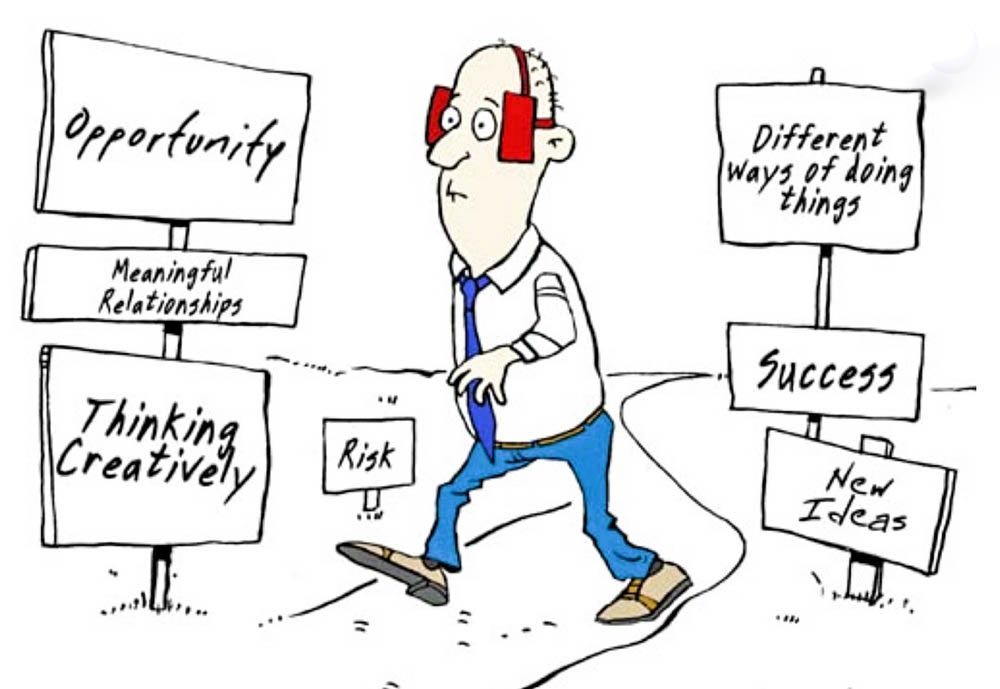
Take the blinkers off. Don't put your students in blinkers, Expect them to venture far and wide. Encourage them to look around, and therefore click around the many resources they can find and be informed by. 

Permalink 2 comments (latest comment by Jonathan Vernon, Wednesday 6 February 2019 at 11:20)
Share post
Design Museum

Papyrus and paper ...

Visible to anyone in the world

'Papyrus and paper chalk and print, overhead projectors, educational toys and television, even the basics technologies of writing were innovations once'. Beetham and Sharpe (2007)  L525 (Kindle Edition)

REFERENCE

Beetham, H., Sharpe,R. (2007)  Rethinking Pedagogy for a Digital Age: Designing and Delivering E-learning. Taylor & Francis. Kindle Edition.

Permalink
Share post

This blog might contain posts that are only visible to logged-in users, or where only logged-in users can comment. If you have an account on the system, please log in for full access.

Total visits to this blog: 18706240