

All my posts: https://learn1.open.ac.uk/mod/oublog/view.php?u=zw219551
or search for 'martin cadwell -caldwell' Take note of the position of the minus sign to eliminate caldwell returns or search for 'martin cadwell blog' in your browser.
I am not on YouTube or social media

[ 9 minute read ]
Come out, I can see you
Uncertainty Avoidance or Risk Averse
I have a book titled 'The Black Swan - The Impact of the Highly Probable' by Nassim Nicholas Taleb', Penguin Books 2010 [Allen Lane 2007].
It is one of those books that I want to have read rather than spend time reading. Other books on my shelf that are in this special category are 'A Wealth of Nations' by Adam Smith; 'Capital' by Karl Marx; and 'The General Theory of Employment, Interest & Money' by John Maynard Keynes.
I have made some inroads into these four books but I suppose I am impatient and get frustrated that it is not immediately evident to me what the writer is saying. It might be a good example of having 'eyes bigger than my belly'. That's fine. I have to know stuff before I can read these types of books, and gain effective understanding. They may even be tangible representations of a goal I can aim for. Except the goal is intangible; knowledge where there was previously only ignorance. That, is probably me being harsh on myself, and that because I am inclined towards dramatic effect and contrast in writing.
If I was a stereotypical English gent, perhaps a parson or something in a twee village, I might look at these books and think 'Someday, I shall read those in my garden while the birds sing and perhaps nod off in my deckchair in the shade of the sun and the ambient floral smells'. That really isn't me; I am not a story-book character; or an idea in an Agatha Christie novel; or an actor in 'Midsomer Murders'.
In opening 'The Black Swan' at a random page I have an idea that I may be ready for it. Four years ago I wanted to understand how we all got fooled by either a real pandemic or a conspiracy theory that potentially allowed DNA to be taken from every person getting a jab. It doesn't matter which it was. Both the events, one or the other, were Black Swan events that the public never saw coming, even if security services did. It doesn't matter if governments across the world discovered an opportunity to map their populations from a surprise event. It doesn't matter if aliens listened to 'War of the Worlds' by H.G. Wells on their radios and thought that's a good idea! Let's infect them! Who knows, they might also have read one or two Douglas Adams 'Hitchhiker's Guide to the Galaxy' books and thought that our planet Earth was in the way of a super-highway they might envision building. What does matter is that, it all opened my eyes as to why I might want to be risk averse.
I met a PhD graduate who had just finished looking at Toxiplamosis or more specifically, the parasite Toxoplasma gondii. If you Google it you might read that most healthy people don't show symptoms if they have it. She told me a different story. The parasite is found in cat faeces and infected meat among other places. The effect it has on the brain, interestingly both human and animal brains, is that there is a lower perception of perceived risk. For the cat this is a good thing because if the parasite gets into rats they don't run away as soon as they would if they were parasite free. A clever cat might poop near a rats nest. Infected humans will drive faster and take more risks. They can't help it; they simply cannot perceive danger the same way as uninfected people. I was intrigued by this young woman's revelations and looked into it. Without particularly picking on any nation I read that 40% of French people have the parasite. I presume it is because they eat contaminated meat and not because they are living too close to cat litter trays. (Anyone interested in marketing might recognise a bit of negative framing there; it is entirely coincidental and merely evinces my reluctance to edit my words).
She, the PhD graduate, told me that the Toxoplasma gondii parasite very closely resembles the parasite that causes malaria, in that it goes through two developmental stages; for Toxoplasa gondii, one in the faeces and one in the body or brain. She wanted to find a preventative cure for malaria, one of the biggest killers on the planet, which is caused by the Plasmodium parasite. According to The New England Journal of Medicine, 597,000 deaths from malaria occurred worldwide in 2023.
While all that may or may not be interesting I can only go so far in such a subject. From this; Covid 19; and my recollection of the wonderful woman, I looked towards psychology to give me some answers.
On my wall there are many A3 sheets of paper with marker pen writing on them; interesting anecdotes and clues. There is one that says:
'The Truth is rarely pure, and never simple - Oscar Wilde'
another says:
'Rare is the person who can weigh the faults of others without putting his thumb on the scales - Byron J Langenfeld, World War One Aviator'.
There are sheets that have more academic value such as:
'Accrual Accounting is when a business reports revenue when it is earned rather than when it is received. Accrual accounting shows tax paid on payments not yet received.'
That likely comes from my days of studying Business Accounting. There are sheets on systems theory; marketing; religion; philosophy; logistics; obviously lists of interesting words in different languages; and psychology and social sciences.
There are two sheets that are on Risk aversion:
'High Uncertainty Avoidance
Require rigid codes of behaviour and beliefs
Intolerant of unorthodox behaviour and ideas
Appreciate explicit instructions
Rely on procedures and policies to reduce the chance of things getting out of control'
'Low Uncertainty Avoidance
People act first and then get information
Comfortable with ambiguity and uncertainty
They work hard to minimise rules and laws that infringe on people's diverse perspectives.'
There seems to me to be a cross-over of characteristics that contradict the separate levels of Uncertainty Avoidance. I might mention that I study ahead because I know I could get ill, or there might be an emotional event, or a power-cut, or aliens land in my garden and I have to go to the shop to get some milk (a lot) to make cups of tea; It depends how many aliens there are. As soon as I suggest taking precautions by studying ahead, I expect, from experience, that someone will say, 'Stick to the program!' But this person, with high uncertainty avoidance, has exhibited something that evinces low uncertainty avoidance, 'They work hard to minimise rules and laws that infringe on people's diverse perspectives.' Well, almost; it is the bit about infringing on other people's diverse perspectives; they do that if they protest against leaving a program of study as suggested by someone else; they protest against other people's diverse perspectives. Interesting! A rabbit caught in car headlights.
I might be the one that shouts 'Run for the hills!' when I live near a river and it rains, except I am not the running type. I am the one that buys sandbags. A while ago my niece's boyfriend was in my van with me on the way to a job. My niece had previously told me that he wanted to join the army. On this day, we came across a car on fire by the side of the road. I carried two fir extinguishers in that van and so I thrust one onto this young man's hands and grabbed the other once we had stopped. I ran towards the fire and he cowered behind the same vehicle the driver was hiding.
'What's he doing?' I heard her wail.
Another man strolled over and said that he didn't think my fire extinguisher would be enough.
'My mate has one too, but he's run away.'
We drove away just as the Fire Service came round the bend. My niece later told me that her boyfriend had decided not to join the army. Thank Goodness! I thought, we are a lot safer now.
Deciding whether I want to be aware of a looming negative position or just quell any idea of chaos and be intolerant of unorthodox behaviour or ideas is not really something I spend much time on.
As an aside: So what if there were three 'nurses' to administer jabs to a single person at a time in 2020; and one of them was hidden behind a screen. So what if I know that needles cannot be reused and that every single needle and jab has a serial number that corresponds to the name of the recipient. So what if the nurse withdrew a little blood before pushing the plunger, and so what if I received a tailored dose of something to do something to me; affect the way I think or don't think. Perhaps the hidden nurse was an alien and I will be cloned when the Earth is dismantled and fabricated elsewhere to make way for an intergalactic super-highway. It is all merely supposition that someone else might like to make into a conspiracy theory. It doesn't matter if it is or isn't, was or wasn't. It might make a good film or book.
Let me just say, if I was the government, I wouldn't have wasted a good opportunity to screen people for illnesses or malfeasance. I have seen 'The Minority Report' with Tom Cruise in it! Did the third and last Covid 19 booster jab have the Toxoplasma gondii parasite in it? Had the governments done enough research on its individual citizens by then to know who to target? Can I perceive danger because I didn't get the third jab? The world perpetually hears 'Don't Worry, Be Happy' by Bobby McFerrin from 1988, except that we are now lackadaisical? A pandemic jumps out of nowhere or somewhere; what else will? Aliens? Crazy people? or just people panicking like my niece's boyfriend who might not now panic and run away. Are most of us now not scared of war? Deborah Haynes, , thinks so: 'Russia knows our weaknesses, do you?'
Realistically, I have made only a creative illustration that by snatching at the air I can suggest that Pete Townsend from 'The Who' evinced a good deal of perspicacity and prescience in writing about not getting fooled again (1971); who knew?
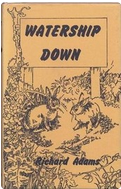 Maybe Richard Adams was more on the mark and gave us a clue with 'Fiver', the prescient rabbit, in his 1972 novel 'Watership Down'. Ooh er! Its coming. Look to the future!
In real terms of risk: Watership Down was rejected seven times before it was accepted by Rex Collings, a one man publisher. Collings had little capital and could not pay an advance but his colleague wrote in an obituary: '.... "he got a review copy onto every desk in London that mattered."
Like Richard Adams and Rex Collins, I am interested in the future; how I can be prepared for it, and even profit from it. It has never been about money for me though, never.
I really do need to read the difficult books on my list sooner rather than later, especially 'The Black Swan', which is not about swans or ballerinas.