

All my posts: https://learn1.open.ac.uk/mod/oublog/view.php?u=zw219551
or search for 'martin cadwell -caldwell' Take note of the position of the minus sign to eliminate caldwell returns or search for 'martin cadwell blog' in your browser.
I am not on YouTube or social media
 Mental Health
[ 8 minute read ]
I want to swap places
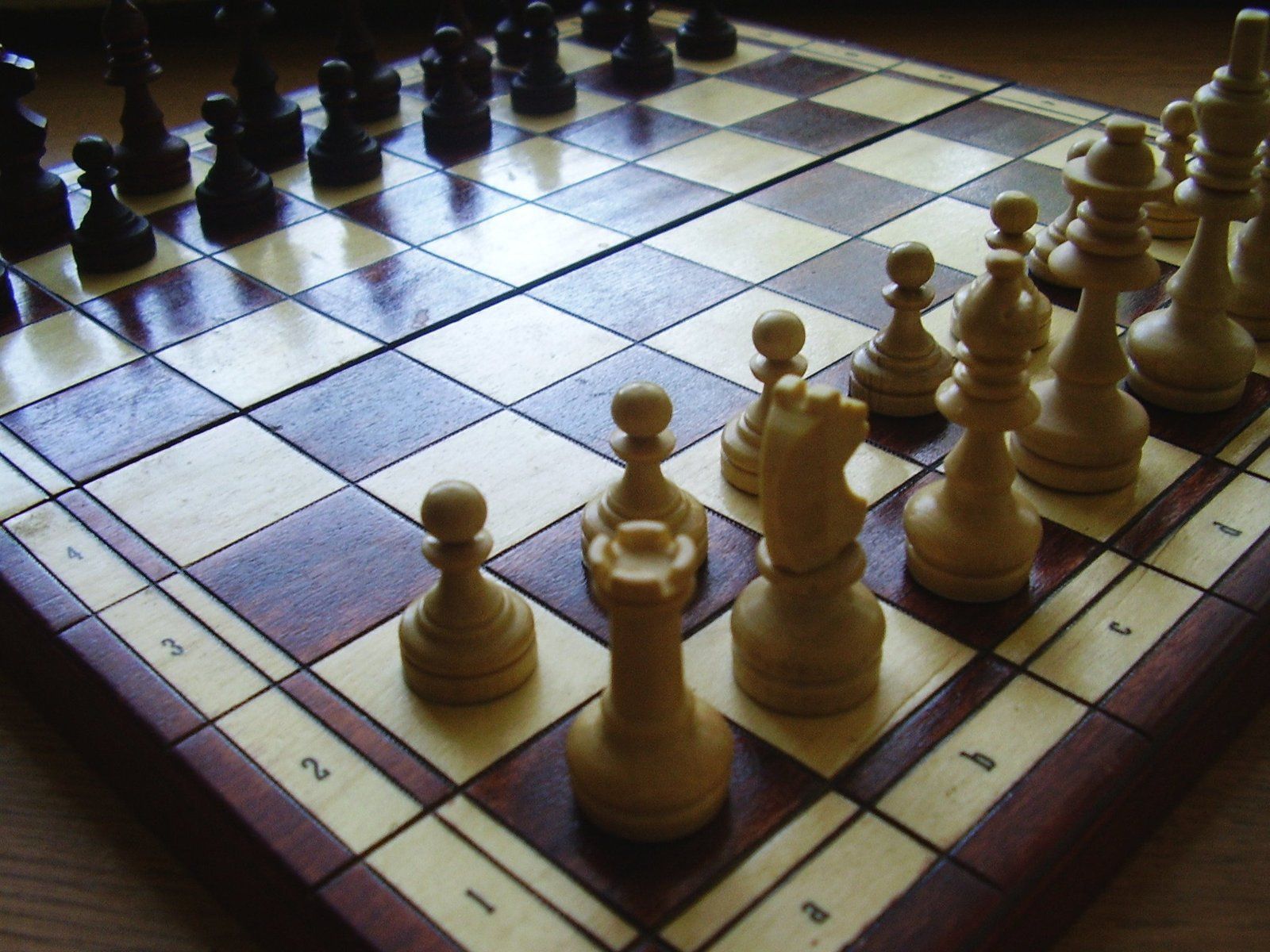 Ah! The chess game that is life. Depending on where we are placed on the board before the game starts determines how we will move, even think; at least for a while. There is, however, one place on the board that determines what we will be and if we were placed there, we can never change; except in the most exceptional circumstances. But it isn't a piece we recognise because it has no form, no shape.
From our milieu grows our habitus. Like mycellium it spreads its tendrils within us and there is nothing we can do about it. We are not even aware we have anything called, or like, an habitus because we are absorbing patterns of behaviour from our youngest days. Even if we are told, when we are in our most impressionable childhood years that we can be anything we want, this is still determined by where we were placed on the chessboard before the game commenced. Sounds pretty fateful, doesn't it? I think it is.
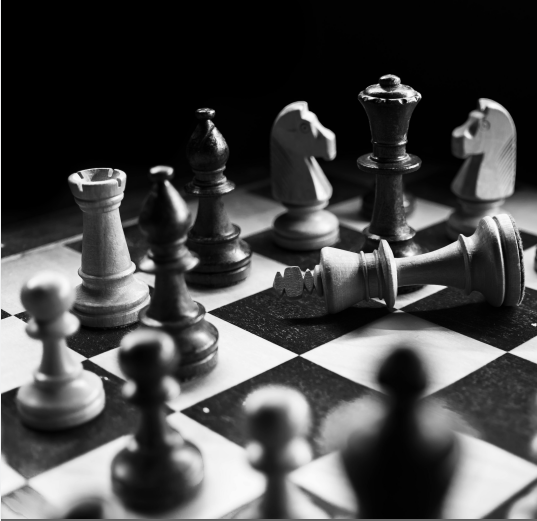
In chess, just as in checkers or draughts, any pawn that gets to the opposite side of the board gets to change into a piece with different qualities, or move capabilities. In checkers, any piece gets to be able to leap almost everywhere, as in, it is no longer bound by having to leap only forward to attain a goal.
I eschew teams and teamwork and that is why I have never been more than a pawn and never will be able to be anything other than a pawn. Yet, I am not a pawn, as we shall see. That though, has nothing to do with where I was born on the chessboard or the social and cultural milieu that conducted an orchestra of influences into my habitus. Unusually, my habitus is largely closed and circuitous. If you imagine a hollow ringed doughnut rolling within itself, that would be my habitus. It is an old-fashioned smoke ring or a ring of bubbles blown by a scuba diver. But like these rolling rings there is movement. A fish swimming into the bubbles will disrupt the form and there is chaos. What once was held to be attractive, is in fact useless in nature, and nature will claim everything.
Simply Psychology says 'habitus shapes how we see and act - without us noticing.' and, 'These patterns become so familiar that they feel like common sense.'
I might be ruthlessly blunt and concatenate a bit onto the end: We gravitate to type.
'You can reach the stars' and 'You can be who[m]ever and whatever you want.' Do you believe that? Truly?
Without even considering mental acuity, is it not the case that most of us are of our milieu and our time. My neighbour is also my neighbour's neighbour. Our surroundings are the same. But look at the differences. I grew up in a wealthy village, one of my neighbours did not. I was taught to read and write before I attended primary school. One of my neighbours was taught only at school. I was born twenty and thirty years after two of my neighbours were.
The opportunities that were, and are, open for my neighbours are significantly different to the opportunities that were, and are, open to me. Yet, these are my neighbours. One might assume from this that we do not live in mansions. One may also assume that we do not live in caravans alongside the road. One can be sure that as checkers pieces we were not once crowned and have now gravitated to type. One can be sure, that either in a team, or acting as a singularity, in a game of chess or checkers, we did not get to the opposite side of the board and permanently become something else.
Why? or Why not? I grew up in a wealthy environment wanting for nothing. I started life in an environment and with a position that most people work their whole lives to attain. I have a very high IQ (this is not always a good thing so don't think I am boastful) that is a result of early and intense stimulation at home. Yet, I did not change into something else. In a game of chess I was not a pawn that could change. I was one of the pawns that was sacrificed or was carelessly lost by a bad player (I shall leave that as cryptic because the explanation detracts from the intent).
While many people might rise up in revolt to that last sentence in the paragraph above, it is with a pitchfork and not a scroll that they might do so.
'We make our own lives!'
'You can't blame others for how you are!'
and my favourite, which comes from psychologists across the world:
'You are responsible for your own behaviour.'
Well, habitus does influence behaviour, since it is a sense of what is 'right' and what works, in each of us. I can't help thinking that we make excuses for ourselves all the way through life and it is only if we actually attain our dearest goal that we stop hiding from ourselves.
Life, for me, is not a game that I own and can pack up whenever I want.
'It's my ball and I am going home!'
Many times, I have not liked the players and many times the players have not liked me.
The thing I find most interesting is that I was never a pawn or a checker-piece. I was a pre-formed castle, or a knight or bishop. If I got to the opposite side of the board I could never metamorphose into another character (like me) or become the almighty Queen (promoted pawn or checker-piece) that moves in almost every way. My milieu after I left that village were poorer areas with lots of pawns. I could freely move forward and back and across the board from left to right. In checkers, I was already 'promoted'. I had everything that the pawns around me wanted and they could only move in one direction. They were defenceless against a scything attack. They could be swept from the board because they were stymied by a blocking pawn equally stymied by them. I could dodge failure, or any mortal cessation, if there was ground for me to go to, but I could never be anything other than what I am, or become anything that what I already am.
I might ask someone why they want to be something or someone else, though the question would not be pitched like that.
'What do you want to be...do in life?'
'I want to be a doctor... no, a solicitor or lawyer.....no, a zoo-keeper.....no, a stockbroker....no, an engineer...'
We all know that all of those jobs require adequate training and certification, right? What is common among them, excepting the vocational zoo-keeper, is likely to be a desire to be different to their milieu. Of course, Doctors marry Doctors and beget little doctors, but in the main, the Doctor we see in an hospital has parents who were, I suspect, not Doctors.
We get our habitus from our milieu and then want to change into something else. Isn't that sad?
'You can be who[m]ever you like, and whatever you want [you just have to work really hard and never, ever give up].'
No. You can't. You don't own the game and can't take it home whenever you are losing. You have to be playing with players that don't cheat, or are not mean or just plain weird.
'If you are lucky and you concentrate on your game-play and have a good team around you at all times, you can be an imagined version of yourself, whom you will come to believe is your true self. From there, my young one, you will never be able to go back to how you are now. I am sorry, my love, you are not immutable and cannot keep changing; you do not own time.'
I have still not gotten to the kernel of what I am trying to say. You see, I, like most people am trying to find a way to convince others that I have not failed, or my failures are because someone else took the ball home when it was my turn to take a penalty against an open goal with no goal-keeper to stop my effort.
Given the keys to success I somehow didn't use them in the right vehicle. Those keys fitted every vehicle in the garage, but I liked the green and yellow one with red wheels and a blue roof. It was the same as my friends had, although a little more comfortable.
When you have the keys to any vehicle to be anything you want, through academic study no doubt, you have already become the owner of the 'all'. There is nothing to attain that resembles congratulation for achieving a goal that signifies ability or capability (mental acuity and focus) when you think you could easily do a PhD in practically anything. So, one sets to thinking why would I want to have that position (moving on from the metaphor of vehicles and keys representing mental acuity and IQ) or that position as a doctor or astronomer? I did fancy being a barrister but that got put aside when a 'friend' asked me to look after his marijuana plants because he feared detection. I didn't take drugs, but got convicted. Bad actors meant no future for me in the legal profession.
Helping others or helping myself. I couldn't decide. I have made a significant amount of money and my family was wealthy anyway, so changing into something else just never occurred to me. Believe me, having a high IQ, and knowing it, is akin to the immortality that a teen feels. But that is what makes me, 'me'. It is the most dangerous tool I have ever had to use. Unsharpened, it will grind away at its housing, and sharpened, it will destroy others if it is not handled with empathy and care. Would I give it away and start afresh a game of chess as a pawn with a strong chance of being swept from the board? Probably.
The epithet on my gravestone, 'Nobody knows who he is but we called him Feckless'
Habitus - 'Influences what we believe is possible or realistic' - Simply Psychology
Milieu is a French word meaning surroundings, location, or setting. It can refer to the social or cultural environment of a person or group.
References
Simply Psychology, https://www.simplypsychology.org/pierre-bourdieu-habitus.html