

My brother photographed this Lapwing with one of its chicks.
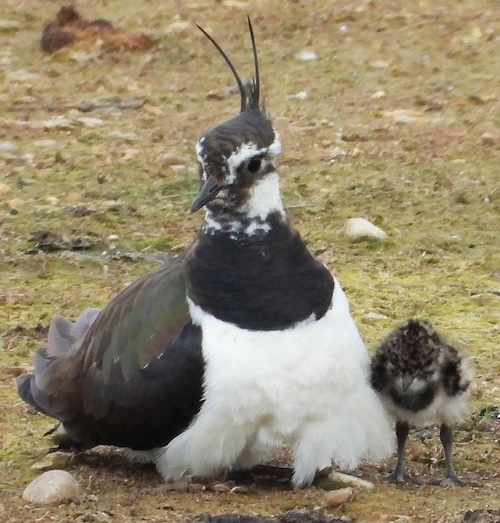
The Northern Lapwing (Vanellus vanellus) is also called the pewit or tuit, from the sound it makes; or the green plover. Seen close up, they have iridescent plumage, but at a distance they appear black and white.
As you see they are ground nesting birds and if they see a predator that might threaten their brood they famously try to draw the predator off, by moving away from the nest while pretending to have a broken wing and so looking like easy prey. I always was told that they are called lapwings for that reason, that lap meant something like folded or flopping.
But it's not true; in Old English the bird was a hleapewince (pr. leap-wince), something like 'leap-flutter', so called from the bird's distinctive manner of flight. I think the Latin name of the bird, vanellus, similarly relates to the way the bird's fluttering, vanellus meaning something like 'little fan'.
The modern form of the name is an example of folk etymology, the reinterpretation of an unfamiliar word in terms of more familiar elements that seem to explain the word's origin.
When I was young our family sometime took in injured birds and one of them was a lapwing with (ironically perhaps) a damaged wing. We looked after it for a few days until had recovered, and were able to see its extraordinarily beauty. It seemed quite friendly, not frightened of us, and was easy to feed and look after until ready to be released.
Years ago I saw huge flocks of Lapwings on the fields, hundreds of birds, but I have not seen such numbers for a long time now. The bird has been in decline, with the population down by around 50% and is on the red list in the UK.