All my posts: https://learn1.open.ac.uk/mod/oublog/view.php?u=zw219551
or search for 'martin cadwell -caldwell' Take note of the position of the minus sign to eliminate caldwell returns or search for 'martin cadwell blog' in your browser.
I am not on YouTube or social media

[ 14 minute read ] 195 words per minute
Wait, What?
Faced with the controls of a spaceship when all I can do is ride a bike
It is not really my bent to write about anything that requires heavy editing, citing and referencing, or new research for that matter. However, I am deeply concerned about losing my identity.
I shan't write too many posts like this; it takes too long and is not really much fun. It also only acts to improve my ability to write academic essays; which I am not aiming for. All the links open in a new page.
This sort of post will be posted on my alternative blog site in future.
Elsewhere, in a much safer place, on an online learning platform, I have enjoyed a fun conversation with a professor of Linguistics. Sadly, we fell into discussing an issue that interests me greatly. It is sad because the question I asked her resulted in a disappointing, though no doubt accurate, answer.
 I listen to James O'Brien on LBC, a UK national phone-in radio show. He likes to ask particular callers what EU laws they don't like that the UK was subject to prior to Brexit. I never hear any of the callers being able to offer a good reply to this.
On the 09th January 2026 'Euractiv' published an online article 'EU countries gear up to let US tap their citizens' biometrics'.
https://www.euractiv.com/news/eu-countries-gear-up-to-let-us-tap-their-citizens-biometrics/
Washington demanded access back in 2022 as a condition for continuing visa-free travel for EU citizens – which it grants to all EU countries except Romania, Bulgaria and Cyprus. The scheme is referred to by the US as "Enhanced Border Security Partnerships" (EBSP).' (Henning 2026).
I have a Tesco loyalty card and a Co-op member card. Millions of UK citizens have loyalty cards solely for the discounts we can get when we shop in the right stores. I have a Tesco mobile SIM, but I will come back to that in a while.
However, you don't get something for nothing. The loyalty card scheme is within a marketing and logistics strategy. In logistics and supply chain management we learn that keeping inventory (warehousing) can make up as much as 25% of the total cost of sales. No large supermarket chain wants to store slow-selling goods. In marketing, we learn about being agile, or adapting to sudden changes in retailing trends.
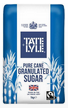 In supply chain management we learn about the KanBan system, which though you may come across a number of ways to describe it (Chinese Whispers) it is ostensibly this: When a bag of sugar passes through a Tesco checkout someone in a warehouse, hopefully not too far away, puts a bag of sugar on a pallet; or more closely; in ALDI, when a pallet of sugar goes through a checkout, one by one, the number of bags of sugar is automatically counted, and when a specific number is reached someone replaces the pallet of sugar on the shop floor.
The free loyalty card is not free; you give up your identity and shopping habits to the associated business and its subsidiaries. Shop online with Argos, and Sainsbury's will email you with a survey. Which indicates a breach of the GDPR in that Argos, or any other entity, can only use your personal details for the sole purpose of carrying out the specific reason you gave them your details. No business that falls within the coverage of the GDPR (and this includes the UK) can ask for more details than are necessary for them to carry out any activity; neither may they pass your details to a parent company or associated business. This means that asking for your email address or telephone number when you have provided a delivery address for a package to be delivered is illegal. The reason they want to alert you that a package will arrive is bipartite.
1) It is an added customer service under the umbrella of an expansion of the idea of maintaining good customer relations. In Marketing, this is known as Customer Relationship Management (CRM). It makes customers feel as though the business cares. But you don't get something for nothing; from this added service customers are unconsciously increasing their brand loyalty towards the business - The real reason.
2) By alerting customers of an impending, and usually accurate, delivery time there is a hope that the customer will be at home to let the delivery driver into the high-rise flats, or past your security gates. This means they do not have to re-deliver the package or, in more recent times, store the package at their depot. Un-delivered packages are a logistics nightmare for businesses.
If you get a survey or texts notifying you of the whereabouts of your package from a delivery company it is because the shipper gave away your personal details (email address) in breach of the GDPR. No-one needs to know anyone's email address to deliver a package to a geographical address.
A supermarket loyalty card, innocuous as they once were, told supermarkets about specific groups of shoppers. Martin is of this age and shops for guinea-pig food every Friday. Martin never buys straw, pet bedding, soup or broth mix. Ipso Facto, Martin is poor.
Seriously, it is so supermarkets know how much Hot Chocolate or cocoa powder to buy in Summer or ice-cream in Winter. In marketing, age groups are targeted, as are socio-economic groups. Your loyalty card gives large supermarket chains knowledge that allows them to source products at favourable rates before there is a run on them. In addition, no supermarket ever wants to have empty shelves; it ruins customer confidence and brand loyalty.
Now, I said that it was once innocuous. Times are changing, and rapidly. Now we have self-service tills that ONLY accept card payments. Each of these tills or checkouts have a camera aimed, not at the products passing the scanner; at your face! When questioned why people's faces are filmed the answer is to prevent theft. The true intent is to link your name with your face. Why? Facial recognition.
The price of price tags on shelves can be digitally controlled from the office or even from head office. Realistically, if you was the only person to enter a supermarket, every single price could be tailored to your budget or marketed to you. Great! No, it isn't, because there are two ways that this can happen.
a) your face was recognised as you walked in
b) the debit / credit card in your pocket or purse has been scanned.
In either case, you are identified by name and your profile is known and is about to be added to.
As an explanation for b): the card reader at the checkout has a range of up to six feet. Its range is attenuated in order that the person standing behind you doesn't pay for your shopping. It could seek the strongest return but if you don't carry a card someone else would pay of your shopping.
There is no reason that a supermarket should record people's faces. Your face is a personal detail and is supposedly protected by GDPR as much as any biometric personal details such as your fingerprints, retina, or DNA. The problem lies in the public, who has largely ignored having their photo taken because they have been lulled into a false sense of security from their own desire to post their own faces online.
So far, I have outlined that we still have a choice, even though we have to work hard at it. If you don't use a loyalty card or debit card in Tesco they don't know what YOU bought. They don't really care they can still make forecasts. If you don't want your photo taken in the Co-op you can pay with cash. The cameras throughout the store that actually DO record theft captured you anyway, though. But it is the close up photo of your face that they need for facial recognition.
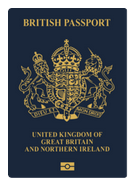 In case you are wondering: Passport and driving licence photos used to allow the wearing of glasses; they no longer do because the lenses distort the sides of the face and mess up face-recognition analysis. Not a real problem because it is only the Government that has those photos, right?
And here is where James O'Brien comes in: 'What EU law do you not like?' he asks the people who voted to leave the EU.
Today an answer could be the one that allows the U.S.A. to access all my personal and biometric details, including my religion, and political and spiritual leanings, AND access to the last five years of all my social media posts and contacts. The United States of America is not covered by the GDPR and will share any information with whomever it likes. Effectively, the business in your European home town can get all your personal details from the USA when they can not get it from you, or any other entity in your country.
EU countries gear up to let US tap their citizens' biometrics
'Data on ethnic origins, political opinions, religious or philosophical beliefs, as well as genetic or biometric information, could be transferred under the framework agreement for EBSPs, according to a Commission document outlining its negotiating position...' (Henning, 2026)
The US is also reportedly considering requiring visa-exempt visitors to provide five years' worth of social media posts before being allowed to enter the country.'(Henning, 2026)
Now then, as I understand it, visa-free travel means you do not have to tell a country's authorities you are about to travel to it. However, if one wants to travel to the United States of America without a visa you must tell them you are coming so they can then request information about you from the EU. That is not visa-free travel because entry can be refused before you get there and that is both a cumbersome and time-consuming activity for the United States to conduct many, many times every single day. Of course, they have time to use A.I. assistive technology if you book a flight to the U.S. from an airport or travel on an ocean liner, but what if you drive from Canada or Mexico? You would be held up at the border crossing for quite a while until the border control and immigration officers pass you through after thoroughly checking you out. Too cumbersome for them to hold you and then request your information from the EU, I suggest.
Effectively, I propose it would work like this: Whether you intend to travel to the United States, or not, your details will be accessible to the United States whenever they decide to check on anyone in the EU. Even though each EU member state will allow differing levels of scrutiny, the overall conversation will go like this:
'Hello Europe. How are you doing?' Weak at the knees and swooning, Europe will respond:
'Thank you Donald, er, Mr President. You are a great leader and an inspiration to us all. Whatever you need, we have your back, thank you so much, sir.'
'Give me all your information on every person in your country you call Europe.'
'No problem, Sir. Shall we tell them that it is so they can be welcomed by the United States if they travel there?'
'Yeah. Let them think that it is like a loyalty card where they are getting something for nothing. Coupons, we all need coupons. I don't care. Give them coupons!'
James O'Brien, however, has researchers to hand and it would take only about five seconds for them to discover that Ireland and Denmark would not be bound by the 'framework' because 'Ireland is not part of the passport-free Schengen area', and most interestingly, Denmark has carved itself out of the EU treaties. (Henning 2026).
'It would never have affected Britain. Is it straight bananas you object to?'
If you are not worried enough, check out Claudie Moreau's piece, 'ChatGPT gears up to tap into users' health information' on Euractiv.
'OpenAI's plan for a health-focused version of the AI chatbot faces privacy law hurdles in Europe' (Moreau, 2026)
'The new service would allow ChatGPT to access users' health data by integrating with medical apps and connected devices such as smartwatches, with the aim of better personalising responses to health-related queries. (Moreau, 2026).
OpenAI says the chatbot would provide tailored advice on areas like diet, exercise and even suitable insurance options, based on its analysis of patterns in an individual's healthcare data.' (Moreau, 2026)
But what about the linguistics professor? She teaches a MA in English. I asked her, 'According to the CEFR (Common European Framework Reference for languages), what level of competence would someone be if they have an MA in English. Her reply was, 'It should be C1 [as an entry], but most of her class are at B1 or B2 so they are keen to use A.I. assistive tools.
I passed my forklift licence in the same class as a Palestinian man a few years ago. His English was pretty poor and he kept referring to an app that gave him translation into Arabic, I think. I mentioned to another English person that he won't learn English by doing that because it is too linear. Being a dictionary is not an English speaker and language acquisition is about the language dexterity utilised by a user of the language. The other English person cried 'He is translating into his own language!' However, the Palestinian's English was good enough to ask us what an English word meant; he should have done that. Pride or laziness, I suspect, prevented him from even trying to learn English. But he like the Ukrainian man, wasn't in England to stay. They were training on forklifts in England to rebuild their countries from a logistics position.
I have already spoken of personal signatures in writing that AI can detect and collate. these students would not learn English and at the same time provide a personal writing signature for AI to profile them with. If it becomes necessary to be covert in their lives they would definitely not be able to do it in English.
According to this CEFR self-assessment chart:
https://rm.coe.int/CoERMPublicCommonSearchServices/DisplayDCTMContent?documentId=090000168045bb52
Loosely, the difference between B1 / B2 (Independent user) and C1 / C2 (proficient user) is that B1 and B2 independent users cannot write essays to any level of significant competence. If you are keen to use, or use, AI assistive tools check out why, if you are a native speaker, your language skills are not proficient. If you look at the skills in C1 and C2 you might notice that writers can write essays and can write for a specific audience (Writing for a specific audience is taught at level 3 in English Language). That is FHEQ 3. Entry level Open University modules are FHEQ 4. Is it a false sense of belief or laziness?
I don't post on the OU forums any more because there are insufficient safety protocols, but a conversation on whether the OU has tripped up new students by not making it clear that a certain language proficiency is required, is available elsewhere. It extends into whether education bodies are forcing people to use AI because the students are floundering, simply because they are not taught effectively.
The Tesco mobile SIM for which I get eighteen Tesco Clubcard points each month is pretty cheap for unlimited data (£18 p/m). Most people use SIMs in mobile phones and put apps on their phones. Telephone service providers know what phone you are using (my service providers kept telling me my dumb-phone is incompatible with the Government enforced 3G shutdown and upgrade to 4G and 5G). Service providers also know what apps you have on your phone, as does Google and Amazon. Everyone wants to know where we spend our money. Did I donate to the Gaza appeal or the building of a mosque? Do I sponsor animals like donkeys or cats? Will the USA let me in if my language proficiency is low and I use AI assistive tools and so my personal signature is known and I prolifically post on social media sites? Will the USA let me in if I don't use AI assistive tools and never post on social media site? And so my personal signature is not known? Is being invisible a perceived threat to the USA?
References
Henning, Maximilian., 2026, Euractiv website article, 'EU countries gear up to let US tap their citizens' biometrics' Posted: 09 January 2026.
https://www.euractiv.com/news/eu-countries-gear-up-to-let-us-tap-their-citizens-biometrics/
Accessed 09:20, 09th January 2026
Moreau, C., 2026, Euractiv website article, 'ChatGPT gears up to tap into users' health information.' Posted 09th January 2026.
https://www.euractiv.com/news/chatgpt-gears-up-to-tap-into-users-health-information/
Accessed 05:05, 10th January 2026
CEFR
https://www.coe.int/en/web/common-european-framework-reference-languages/level-descriptions

