OU blog

Personal Blogs

Stylised image of a figure dancing

My best friend's loss

Visible to anyone in the world
Edited by Martin Cadwell, Tuesday 13 January 2026 at 07:24

All my posts: https://learn1.open.ac.uk/mod/oublog/view.php?u=zw219551

or search for 'martin cadwell -caldwell' Take note of the position of the minus sign to eliminate caldwell returns or search for 'martin cadwell blog' in your browser.

I am not on YouTube or social media

silhouette of a female face in profile  

My best friend's loss

[3 minute read ]

A long time ago, on a lonely planet in a quiet solar system where all the other planets had died, Maureen Lipman said, 'It is good to talk.' This was a time when talk was not about the moon landing only a decade ago. Instead, it was about the BBC MIcro home computer and the Sinclair ZX Spectrum (which had a Zilog CPU chip of 1 megaHz). My ten year old, cheap lap-tops have dual core 233Ghz CPU chips, which by today's standards is fast enough for me, but still incredibly slow by modern comparisons. 

Maureen Lipman was advertising the only land-line telecommunication system in the UK. It was B.T. which later became O2, the mobile service provider. If memory serves me right, it was the break-up of the monopoly that B.T. had on telecommunications that gave us Vodafone, Orange, and T-Mobile on our Nokia 3310 'bricks'. I didn't experience that break up; I read about it.

It is good to talk. A conversation I have been having with a linguistics professor has pretty much run its course on a topic we settled on. Don't get me wrong; I should very much like to continue comparing ideas with her but, as with every conversation, things come up as meaning develops, and there comes a time when we start to pull up the drawbridge to our castle of personal privacy. Yet, it is not personal privacy that I am thinking of, because I have a myriad of safety protocols that I can implement whenever I choose. No, for me, on this occasion, I am sealing the castle because, I have to stop myself giving away a crucial aspect in a particular story format that is developing in my mind. Interestingly, the professor thinks that if this aspect in a fantasy world is called upon the readers would get lost. I, however, wholeheartedly disagree; I see it as integral to a plot.

Yesterday, I talked about how we set a Table of Contents for our day, first thing in the morning. The difference between me and the professor is, she is an academic writer, teaching an M.A in English, and I am about as far away from academia as you can get. My first thoughts are not at all linear, and there is no introduction or conclusion that I care to write. There is no goal or end-strategy to consider. In fact, my first thoughts today were about what happened yesterday, which, once I encapsulated the day, I will use as a template to throw over today, except without any torn bits. Of course, I have tasks to complete but they are fairly routine and mun-nal and ba-dane.

Even writing about writing, about my garden, gave enough time for dendrites to form in my brain; and the links gave me sufficient motivation, in the form of reminders, to replant some hedge and accelerate my crop growing activities (I planted some garlic) and I briefly thought about digging up some strawberry plants so the Muntjac deer don't dig them up before me. They really are poor gardeners and leave them uncovered.

Just when a subject gets interesting I have to withdraw from it. It seems then that I am interested in the fine detail, and all the arguments I have on people with PhDs are arguments against myself.

Yet, the Linguistics professor thought that the fine detail I proposed, in a story, would lose the reader. Is there anything else more desirable than to fall into intrigue, and an idea that we have been given an exclusive free ticket to secrets and intimacy? Are we not jealous if our best friend has another best friend, or a new romantic partner that draws them away from us and less time is spent with us? Don't we want to belong to something?

Permalink Add your comment
Share post
Stylised image of a figure dancing

Mass calls to be honest

Visible to anyone in the world
Edited by Martin Cadwell, Sunday 11 January 2026 at 08:52

All my posts: https://learn1.open.ac.uk/mod/oublog/view.php?u=zw219551

or search for 'martin cadwell -caldwell' Take note of the position of the minus sign to eliminate caldwell returns or search for 'martin cadwell blog' in your browser.

I am not on YouTube or social media

silhouette of a female face in profile  

Mass calls to be honest

I am only a guinea-pig in my own laboratory

[ 9 minute read ]

It is not particularly surprising to me that whatever is the first thing my mind settles on, when I wake, dominates my thoughts for a while, until something else comes along to fascinate me.

Duck hatchlings will fix upon the first thing they see and call it mum. Of course, the 'thing' needs to move, have eyes and not look like itself. I don't think it needs to be alive though; 'imprinting' (Developmental Psychology and Ethology).
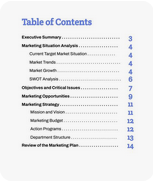
Is it the fixation on a subject while we are still waking that writes the Table of Contents for our day? Tomorrow, after I have washed and made a cup of tea and before I do anything else, perhaps I shall write a few words on flowers to see if I do more in my garden later in the evening - I have outside lights.

We all know that I don't need to let my thoughts dwell on my garden to recognise I have a desire to spend more time shaping it to my desire. But if I spend maybe the first twenty minutes from waking with a cup of tea and writing about farms and forests and flowers, I am fairly sure I will imprint my garden in my mind. And like the little ducklings following their mum, the imprinting will act to release the energy and motivation in me to actually pick up a fork and dig.

When I was fourteen, one of my friends said to me, 'To think you can, creates the force that can.' It was completely out of the blue, and apropos to nothing. It is sports psychology and may come under the chapter heading 'Visualise your Win' or something, but today it would be called 'manifesting' and that book is next to the one on Pilates and Yoga, but sometimes misplaced on the shelf on spirituality. Things are always better if we think they are new. He also liked to sing, 'Love is like oxygen, you get too much, you get too high; not enough, and you're gonna die. Love makes you high.'

My daughter, when she was a teenager was grumpy first thing in the morning. I told her to stick her head out her bedroom window when she got up and breathe all the air out of her lungs, until there was none left and then breathe in fresh air. Hold it for a few seconds, and slowly breathe all of it out until there was none left.  I said 'Do this three times and then come downstairs.'

Another trick(?) I had, was to laugh as soon as I woke up, for a few seconds. No particular reason, just laugh. It was a technique I used to calm irritated and frustrated workers in the flower bulb factories in The Netherlands. 

       'Bend over. Put your hands on your belly. Now straighten up and have a good rolling belly laugh. Bounce up and down a little like Father Christmas, but make sure you laugh.' The person felt better; the frustration gone, and the onlookers all smiled. I even became more attractive to some of the other workers.

Hume, the philosopher, believed that if we see someone laughing we are happy and if we see someone crying, it makes us sad. I am convinced that when there is a crisis a stable person makes the people caught up in the crisis feel more stable. I think Anne Heche in the film she made with Harrison Ford, 'Six Days Seven Nights' (1998) summed this up admirably when she said to him, something like, 'Don't fall apart because you are all that is holding me together.' It is a long time since I have seen it, so it is only a suggestion of what she said. I think the 'meat' of the sentiment is there though.

       'To think you can, creates the force that can.'

I had a conversation with someone a few days ago that puzzled me. He, the other guy, said that there is more mass in a human than in all of the space in space. I have no idea. He said he is interested in astronomy so I let it go because even if he is wrong I have nothing to counter anything he says, so it would be a monologue lecture. Either I listen or stop him pushing that idea, because either way I won't just accept what he says. 

The interesting thing is, he was trying to link the mass of a person with their force of authenticity or 'genuineness'. 

       'Children don't lie; they just say what they mean,' he postulated as though it is how much someone weighs that determines how their integrity is perceived by others; well, to him anyway.

I countered with 'Small children don't have blocks of information to sum together to make a coherent statement to outline their mental position', but in a much more conversational format with lots of sentences. Blah, blah, blah...heuristics!' But I was hooked on what he was saying.

I am open to all sorts of communication, telepathy, symbolism, words (spoken and written), tones and pitches in speech, images, and spiritual notions. I felt that this man might have something worth investigating, so I pursued it later in my head. Already I had been having discussions of mass-less fantasy creatures in fantasy stories so I was shaped for fitting through the narrow gates that led me to physics and gravity and magnets; attraction and repulsion.

A long time ago, I used to drink to oblivion when my PTSD got too much for me. I would drink for a few days just seeking unconsciousness. Eventually, I was temporarily 'healed' (?) and I stopped drinking. I always had money left and had food and stuff; it was just a alcohol-driven mental holiday. When you have spent a few days drunk, and only drunk, suddenly stopping drinking is dangerous. You have developed a physiological addiction and 'cold turkey' withdrawal is coming, and it is coming hard.

I could operate well after a day or so after the initial shaking and no sleep for three days and nights. One day though about a week after coming off the alcohol, I was in the local library writing some JavaScript code for my website and I thought I could hear an American radio show advertisement playing over and over again. Clearly, a bit of psychosis or auditory hallucination. The electric fans in the library were on because it was a warm Summer. I left the library and the American radio advert faded. 'Phew! that was nasty!' The library was in a cul-de-sac with no cars. When I got to a road with cars going along it, I noticed that the American radio advert came back in my head, got louder as they approached and faded as they passed away. Quickly, I sought an area away from roads, and sure enough where there were no induction motors or generators there were no American radio adverts in my head. I stored that episode in my memory. It has never happened again. However, in my tent in the woods and away from the roads I could hear the telephone wires nearby throbbing but not as a pulse, more as though they were sending Morse code. I thought at the time that the worlds power lines would make a good antenna for sending messages to alien ships in space or distress calls or something. I don't drink like that any more. With a creative mind though, the 'trips' were entertaining. I think it is more to do with sleep deprivation than the poisonous metabolised alcohol enzyme, acetaldehyde, which is then further metabolised into less harmful substances. You know, no dreaming means you 'trip' while you are awake. My jury is out on that because I am only a guinea-pig in my own laboratory.

Having recently been involved in discussions on fantasy creatures and mass; and having the experience of seemingly hearing electrical devices that give off either superfluous harmonics or electro-magetic fields; and understanding how gravity works to attract bodies of mass together; and learning that there is a type of fox that has to dive through snow to get to voles or small creatures which has a greater success rate when it aligns itself North Westerly; and learning that, that fox has a special protein in its eyes to be able to 'see' the Earth's magnetic field to align itself appropriately; when this man spoke of authenticity coming from the mass of someone, naturally I was intrigued.

Unfortunately, the man's shop manager came out to intimidate me because he was told by a young shop assistant that I was harassing the man with a weird idea. It wasn't me who started that conversation and I was only saying, 'Go on, I am intrigued' and 'I could argue that.' Do I give off something that makes people wary of me. I have been told that I also can be intimidating.

So, I gave the man my card and said 'Contact me because I want to continue this discussion.' He hasn't. Such a loss!

I am both fey and silly enough to believe that the shop manager is influenced by a malevolent spirit and has spiritually removed the man's tongue or his memory of talking to me, as he whipped my card from his hand. He might work for an intelligence agency. If I don't see the man again, it might be because they took him to work at GCHQ. Oooh! I hope so!

Permalink Add your comment
Share post
Stylised image of a figure dancing

Do spirits and Superheroes have mass?

Visible to anyone in the world
Edited by Martin Cadwell, Friday 9 January 2026 at 09:02

All my posts: https://learn1.open.ac.uk/mod/oublog/view.php?u=zw219551

or search for 'martin cadwell -caldwell' Take note of the position of the minus sign to eliminate caldwell returns or search for 'martin cadwell blog' in your browser.

I am not on YouTube or social media

silhouette of a female face in profile  

[ 6 ½ minute read ]  195 words per minute

Spirits unite against Laws of Physics

A placard I saw in a dream of a protest

A fun conversation I saw on an online learning platform is on researching fantasy. I noticed a comment that mentioned that the commentator is an academic writer and wonders about researching fantasy, ostensibly to assist her in writing fantasy novels. A while ago, I wrote a short story, on the fly, with almost no editing, as is my style. It was about visiting the spirit world. It never occurred to me that I might do any research before I wrote that.

It is easy to assume that one is fey or in some way connected or directly associated with some kind of spirituality, even having a direct link with a supreme being. It is not for me to make any argument as to whether anyone does have a link or is fey. I recognise that when we are alone in the dark and things rustle in hedges we might not be rational and momentarily think that it is a spirit or ghost or something. We might assume it is a rabbit or badger or rats. But, it is not rational to assume. Making assumptions is really using heuristics as adults, summing up blocks of acquired information to make a decision; which I suppose, is why the younger that children are, the more nightmares they have; they don't have enough experience to have built enough mental tools to allay confusion and fear.

It crosses my mind that as adults we might never see fairies and only see faeries. Good luck is much harder to discern than bad luck. While some of us might arrive at work early and cognisant that all the traffic lights were green, most of us, I believe, will only recognise that all the lights were green because we arrived early. If we are running late, and before we arrive somewhere, we tend to notice every red traffic light in real-time. My point is that we notice bad things more readily than good things. Finding a one pound coin or a dollar, is less impactful than losing one and not having enough to pay for our shopping. But, the thinkers among us will notice that there are other factors involved. In economics, the missing pound may have more value than an extra pound (its 'utility' is different). Not only that, green traffic lights have no impact on our driving, we just keep going, whereas red traffic lights have a consequential pattern of action that needs to be performed at every single one of them. Being early to work has little impact on our lives, but being late means having to catch up, or explain ourselves to someone (which means weakening our position).

Fantasy stories, I concluded from the safe discussion elsewhere, still abide by the Laws of Physics we are all aware of. When Superman punches a super-villain, the punch connects with a body of mass and force is definitely obvious as the mass hits a solid building; bits fall off the building. Flying without wings, however, means that there is either no mass or very little mass. When something with very little mass punches something else Newton's Third Law of Motion, which states that for every action, there is an equal and opposite reaction, tells us that the body of low mass should move away from whatever it has punched. Superman does not move away; so, the Laws of Physics are suspended. 

The spirit world, I suggest, is nothing like what we assume it to be. Even if we don't know, or have never heard of Newton's Third Law of Motion, we all know that there will always be consequences for everything we do, or don't do, and these go right down to every decision we make. In marketing, I came across a paper that stated that we make a decision about half a second before we realise we have, and we actually tell ourselves that a decision has been made. It is somewhere in one of my laptops and since I am not trying to convince anyone of anything, I am not going to hunt for it in order for me to cite it or reference it appropriately. However, a very quick online search gave me a paper in which the abstract matches my statement. I have set the link so it opens in a new page:

https://discovery.ucl.ac.uk/id/eprint/10001129/1/Wiliam2006Half-second71.pdf

Telling ourselves we have made a decision half a second after we have made a decision would fit into a fantasy story. A whole half a second to interrupt the message is a really long time to act. (Such is my wont to not edit, I am leaving the tautology of having a whole half right there). But interruption isn't outside of the realm of possibility in today's technological world; perhaps eye movement gives clues as to the decision-making process. In a fantasy story however, telepathy might be used to prevent a purchase being successfully conducted. 'No decision has been made!'

In Contract Law, there is an offer and acceptance. If the offer is made there is still half a second before the person selling something realises they have made a decision to accept the offer. If we sum the transaction up in terms of available time for thought interference, a nefarious entity would have a whole second to play with, to prevent the transaction being finalised. 

       'Hmmm, I don't know' while standing before a display of clothes in a clothes shop doesn't necessarily mean you haven't made a decision; it means you haven't told yourself that you have made a decision. If you are delaying in making purchases for too long (is there 'too long' in retail therapy?) you might want to look around for someone staring at you; but then you might not see something with no mass. It might only be a disappointed wisp that fell from someone who lost some money, who passed you by earlier. Their decision to buy, thwarted by the physical inability to complete a purchase.

From psychology: cognitive dissonance is the feeling we experience when we have bought something and are, quite soon after, disappointed by its use or aesthetic value, its utility. It is less valuable to us then we first thought it to be. 

Not being able to buy something because we thought we had enough money and then discovering we do not (disappointment), mirrors cognitive dissonance in that, from economics, the assumed utility (value to us) of the contents of our purse or pocket is less then it really is (we are disappointed by the utility of our available money). Because money is money, a single unit of currency can buy a number of things, so its utility does not change. It is when it cannot buy what we desire that its utility is considered to be inadequate. £10 (ten GB pounds) buys less than £9 (nine GB pounds), so it is the sum of the money and its utility that changes and not the individual unit of currency.

The indecision to buy something comes from experience of being disappointed and we use heuristics to help us decide what to do; in this case, empiricism. A young child sees something and buys it because they like it without knowing that they could be disappointed. How many parents notice that their children played with something for an hour and then never again? Young children, I suggest, find disappointment and cognitive dissonance difficult to process, so they make decisions to buy quite readily. 

Initially, I thought that the academic people who professed a desire to research fantasy [stories] were on a fools errand, but now I am not so sure. I can't decide.

Permalink Add your comment
Share post

This blog might contain posts that are only visible to logged-in users, or where only logged-in users can comment. If you have an account on the system, please log in for full access.

Total visits to this blog: 300724