This might be a project I regret committing to; there is no end to it. Death perhaps.
What began as a simple revisiting of old school diaries has evolved into a vast, long-term autobiographical archive project spanning more than half a century of recorded life. I am currently working through a sequence of contemporaneous diaries, letters, dream journals, photographs, and notebooks, reconstructing and publishing them exactly fifty years after their original dates.
As of 9th June 2026, I have worked through approximately four months of entries from my surviving five-year diaries covering 1975–1978. In practice, this means revisiting around 330–450 individual diary days so far, usually processing the same calendar date across multiple years together. Each entry is expanded from compressed teenage shorthand into reflective first-person prose, enriched with contextual memory, emotional interpretation, historical detail and, increasingly, accompanying visual material. It is intriguing to read what I was doing on a particular day at ages 13.7, 14.7, 15.7 and 16.7.
The archive itself expands dramatically beyond these early diaries. A second five-year diary covers 1979–1982, after which I moved into large A4 hardback notebooks written daily, eventually filling entire lever-arch folders with a single month's reflections. Alongside the diaries are dream journals, letters written home to parents and grandparents between the ages of seven and seventeen, and two substantial photojournals documenting school life, travel and family experience. Age 17.1, 18.1, 19.1, 20.1 becomes somewhat Henry Miller in topic and tone.
The project is intended to unfold slowly in real time. A diary entry from June 1976 appears in June 2026; June 1977 will appear in June 2027, and so on. If sustained, the archive will continue publishing into the 2040s, eventually bridging handwritten childhood diaries, adult notebooks and the emergence of my online writing life in the late 1990s. I'll be in my early 80s if I get to the end.
In general, I retain real place names because geography, schools, landscapes and social settings are central to the historical and autobiographical value of the archive. However, I routinely alter or fictionalise personal names, particularly where individuals are private citizens still living ordinary lives. In some cases, composite characters or pseudonyms are used.
I recognise that even altered names may not guarantee anonymity. Someone familiar with the events, relationships or social circles involved may eventually identify themselves or others through accumulated detail.
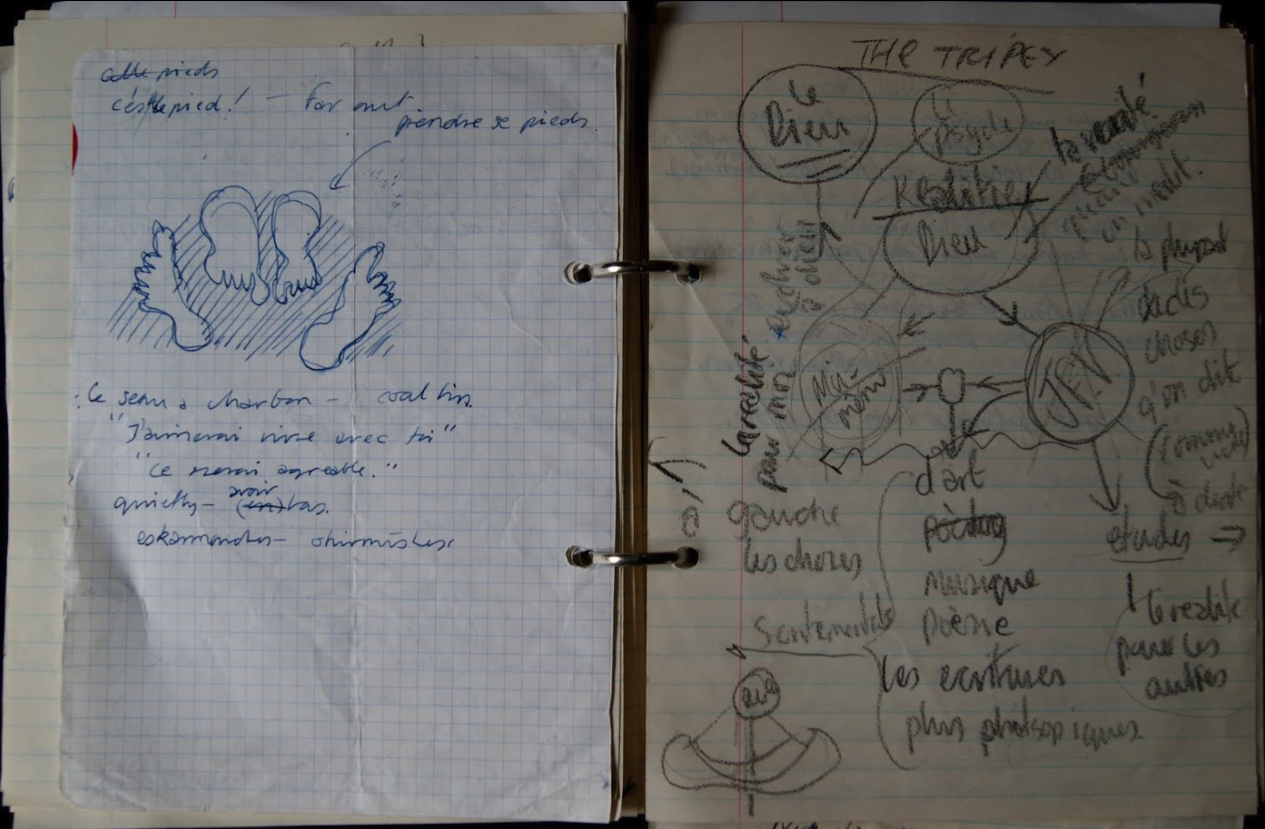
For this reason, I try to avoid material whose publication could cause unnecessary embarrassment, distress, reputational harm or renewed personal conflict, even fifty years after the original events. I am especially cautious with photographs of handwritten pages, as modern image enhancement and OCR technologies can recover more text than may initially appear legible. I delete anything if asked; it happened once in the first attempt at this project, fifteen years ago. How someone I met in France as a teenager identified themselves indicates how universal the internet has become.
My aim is not an exposé, revenge, or confession for its own sake, but the careful reconstruction of memory, atmosphere, social history, and personal development across time. Wherever possible, I seek to preserve the emotional truth of the archive while respecting the dignity and privacy of the people who unknowingly became part of it. In some instances, I will defend what I said or felt as a young person. That's life.