OU blog

Personal Blogs

Stylised image of a figure dancing

Forced Opinion

Visible to anyone in the world
Edited by Martin Cadwell, Friday 27 March 2026 at 13:58

All my posts: https://learn1.open.ac.uk/mod/oublog/view.php?u=zw219551

or search for 'martin cadwell -caldwell' Take note of the position of the minus sign to eliminate caldwell returns or search for 'martin cadwell blog' in your browser.

I am not on YouTube or social media

silhouette of a female face in profile mental health

[ 8 minute read ]

WARNING - evokes thoughts and ideas on bestial violence, division and hierarchy (dogs fighting)

This is about how the pen is mightier than the sword

Get a licence

'He should be on a lead!'

Throughout the whole of yesterday, inspired by a headline on one of the online news websites, I had a mind to show how evoking emotion can lead people towards a conclusion that can be cemented by confirmation bias; with conclusions that confirm an idea that has lain transparent, gossamer-thin, and nascent, but, through skillful nurturing, becomes more opaque; and as it does so, less open to good counter-argument. I 'hemmed and hawed' at how I would do it; whether I can do it, even whether I should do it. Can I pull it off? I had a theme in my head that I am certain would draw support even though I intended to present it in a surreal way; an oblique approach allows others to make their own minds up; I believe this is the strongest and most abiding force, that of being guided (tricked) into transmogrifying a narrative into something that fits one's own perception and interpretation of the world.

Such is my expectation that the drive of the subject, by dint of it being contentious, would evoke, what may indeed be biased agreement in a large segment of the world population, I, perhaps foolishly, made no attempt to even try to consider a different way to demonstrate the power of words and how they influence opinion. I was going to write a short story but I realised that I cannot control any after-effects. I decided that it is better to present the scaffolding and not the facade. Hopefully, this will cause some people to read a bit more objectively. So, make no mistake, I have an intention and an agenda, but it is an open one.

     'Did you hear? You have to get a licence now if you want a live-in boyfriend?'

A long time ago, people in the UK needed dog-licences if they kept a dog. The details of it are not really the point here. If dog-breeders needed the same licence is beyond my guess. I think the idea was born from a melding of bifurcated opinions that had emerged from both the dogs' perspective and from dog-bite victims. How can we protect the public?

I suppose many dogs were a bit wild and perhaps mistreated and were more than a little scared of strangers and defensive. I think a dog, as a pack animal, needs to assert its authority by it's fighting prowess. Annoy a dog and you can expect a warning snarl and then a nip, perhaps from lying down position, and then an aggressive standing stance with head lowered, and then a violent advance that will be something that you cannot extract yourself from. You must now fight it.

     'Did you hear? We no longer need to buy dog-licences because dog owners are better at understanding their pets' needs.'

That, if you got the connection and ran with it with your own thoughts, is how, by tapping into a long-standing, not yet fully fully considered, belief that men are brutes, gives us the idea that a comparison can be made between a woman's higher intelligence and reasoning ability and that of a less intelligent animal which presents itself (the animal) as though it acts solely on some kind of primordial instinct. People need a licence to keep a dog and women need a licence to keep a man. The point is a higher and reasoning intelligence is considered apt to be in a controlling position over a lesser more instinctive intelligence. Dodgy, huh?

Clearly the two speeches above are uttered from, first, a female perspective and then, from a universal perspective. Now a speech sentence from a male perspective.

       'Did you hear? We can now check to see if our girlfriends are sane by whether she has been granted a licence or not.'

What may first have appeared to be a device (a licence to keep a man) to protect women in my dystopian world as recognising and portraying men as 'cavemen' brutes; and as such need to be kept on a leash, is now a psychometric test as to the suitability of women as girlfriends, from a male perspective.

Now I have opened a can of worms. For many people, I have pulled the rug from under their feet. I expect the overriding thought, for them, is that I am a misogynistic brute. However, to some extent I have deliberately tried to make this happen. The task for me now is to be successful in assuaging (negating) that feeling. Instead of dampening the heat of a blaze though, I must take away the smoke of poorly consumed wood that I intentionally added to the fire, along with the dry tinder that acted as an accelerant.

I am a man. Like a dog, I sometimes act instinctively. And, like a dog, I am a pack animal. Just the same as a dog, I will have picked up bad habits right from birth, through childhood, adolescence, and into adulthood. But, even as an adult, because the world is changing, much of what once seemed proper behaviour, that arose from attitudes of a past time, is now 'deemed' to be inappropriate. Even the use of the word 'deemed' leaves opens the subject; just like a flare-up in a fire when a piece of paper is thrown onto embers. It offers an idea that I do not agree with an idea formed by others, of which I am contemptuous. But it slips quietly in because it follows the word 'seemed' in the same sentence.

There is now a burgeoning world view that social media has some kind of effect on children, social development and behaviour. There are moves and pilot studies to understand the effects and how to eradicate negative influence and effect from social media activity.

Psychologists debate which has more effect on an individual's behaviour; nature or nuture. Was the successful person pre-determined to be successful because they had good genes, or was the parenting and social education of the successful person influential in allowing a good academic education to be absorbed and implemented.

When dogs fight, the owners have their expectation that dogs will fight suddenly realised. The attitude, in the main, is to drag them apart and one owner will probably berate the owner who did not keep their dog on a leash. When men fight on a Friday and Saturday night in the UK, as long as no-one is not hurt too badly they are dragged apart by friends and bystanders and everyone gets to go home. The wounds remind the fighters over the next few days that they should be wary of a probability of future wounds if they act in a similar way. The police, if they deal with men fighting, are loathe to lock them up, but invariably do if they consider that a flaring up is inevitable, and then later release the fighters, after they have calmed down and sobered up.

You can see that, in the UK, men are indeed considered to be similar to dogs. Hence, there is a need for responsible people to register their men with the local authorities. Since dogs cannot be the owner of other dogs, it falls upon women to step up and claim men as their possessions. 

Here then I have introduced some ridicule into the subject. It is crazy to think that men need to be licenced right? What you may have missed in considering this comedic conclusion, is that I have inferred that women are a different species. Anyone who said to themselves, 'Yeah, he has a good point, men should be licenced, and who better than women to apply for those licences', no matter how briefly they held that weird thought, they unwittingly absorbed a potentially damaging concept by way of a back-door.

This post is not intended to create any long-standing ideas of any differences between males and female, or humans and animals. However, by highlighting animal behaviour, there is an expectation that many of the peripheral thoughts around supposed differences were illuminated in our minds, were momentarily considered, reshaped, and stored again. That is how opinion can be deliberately, and inadvertently, changed by both canny and poor writing, and of course, careless reading.

By the way, I would be grateful in knowing if a woman wants to claim me as being potentially useful to her. I am house-trained and have learned to use my hands to eat.

UK

Samaritans - phone 116 123  'Call us any time, day or night' - 'Samaritans works to make sure there's always someone there for anyone who needs someone.

https://www.samaritans.org/how-we-can-help/contact-samaritan/

Childline -  Open 24hrs & days a week. Contacting Childline Call us free on 0800 1111 or find out how to get in touch online. Whatever your worry, day or night, we're here for you. 

https://www.childline.org.uk/get-support/contacting-childline/

Permalink Add your comment
Share post
Stylised image of a figure dancing

Hatch your thought-progeny

Visible to anyone in the world
Edited by Martin Cadwell, Sunday 8 March 2026 at 08:25

All my posts: https://learn1.open.ac.uk/mod/oublog/view.php?u=zw219551

or search for 'martin cadwell -caldwell' Take note of the position of the minus sign to eliminate caldwell returns or search for 'martin cadwell blog' in your browser.

I am not on YouTube or social media

silhouette of a female face in profile

[ 8 minute read ]

My mind is an incubator

'All power of fancy over reason is a degree of insanity' Samuel Johnson (1709-1784)

I randomly opened one of the books on my floor; the place reserved for 'Books to randomly open at any page' or for ones that are likely to be referenced often, like my Roget's Thesaurus and 'Simply Psychology'.

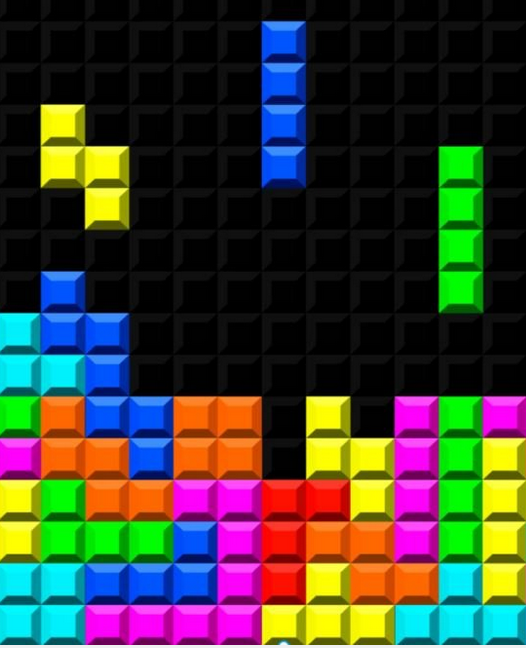
The quotation above, by Samuel Johnson is under the chapter heading, 'Is Mysticism a Kind of Schizophrenia in Disguise?' in 'Zen and the Brain' (James H Austin M.D., 1999, Massachusetts Institute of Technology - MIT)  I have long been fascinated in our febrile states when we dream, and the reasons given for why we dream by 'sleepologists', or at least people who have studied sleep and dreaming, as being so we can process the day's, and prior events, in our lives. I see it as a fountain of data thrown into the air and the brain catching bits as they fall in an attempt to make a coherent pattern or shape while using templates it has made in a similar way before; a bit like the old video game Tetris.

Anyone with a mental disorder, temporary or otherwise, I suggest, claims it as their own, and as it being a part of them. To make any statements on a specific mental state is likely to offend anyone who suffers from any of a myriad of mental illnesses. The chapter title I found in the book is as much an irritant to many people, as it is smack bang in the middle of my intrigue. I haven't read it yet, but I definitely shall. 

I suggest that just as a mental illness or disorder is claimed as being an integral part of someone, so are the templates or heuristics we make as a result of our febrile dreaming. If I am exposed to radical ideas in my days, my dreaming will shake up this information and other information stored in my head, and my brain will process it it like the old game 'Tetris' with falling (or suspended) pieces that need to be aligned and placed securely with no gaps between them. if there are any gaps they have to be thrown into the air again. Wake up before this has happened and we are not rested.

When I was about sixteen I had a fever. It lasted for at least three days. I had nightmares and lay in bed for those days and nights. One night I had a dream in which there were hundreds of wires that needed to be joined. There were an equal amount of red, blue and yellow wires (primary colours you might note) that needed to be joined to corresponding red, blue and yellow wires. The problem I faced in my lucid dream was that I could not test to see if the wires were joined to the right wires until I had joined them all up; then, and only then, could I test it, or 'turn the circuit on'. It seemed that I was 'doing' this for hours. If it was a real physical task it would have taken years. However, there is nothing so quick as the human brain, and dreams, lucid or not, are scripted to take a specified length of time so we can understand how we got to a result and formed a corresponding template, or new premise or heuristic, so it could have been only a minute; but I think my bedside clock told me it was actually three or four hours. 

As soon as the 'circuit' worked, meaning all the hundreds of unlabelled red, blue and yellow wires were correctly connected (in my dream) I fell asleep and woke much more rested than the previous nights of the fever. During the day, I improved as I moved around my home. The next day I was fine, just as if I had never been ill. Of course, as a teenager not eating for a day or two didn't really have any noticeable affect my energy levels, so things were good.

Anyone would have a hard time convincing me that I was unaware that my body was attacking a virus or whatever it was. I am convinced that different antigens were stuck to T cells that were marched out to battle and messages were sent back with intelligence on the enemy invader. My brain, I am certain, made changes to the antigens and stuck them to new T cells and mass produced a weapon that eliminated the virus threat. Because I was interested in electronics at the time my dream was of the complex and seemingly ever-changing conundrum of how to connect electronic circuits. (My understanding of biology and chemistry is sadly much limited and so no-one should believe that I know what I am talking about when it comes to immunology).

Because I fully believe I was prescient during the final battle in my body I cannot turn from considering that the chapter title, 'Is Mysticism a Kind of Schizophrenia in Disguise?' as being wholly relevant.

Many people believe different things. I believe that people are limited in what they believe, because they either lack mental acuity or the ability to focus it; because their mental development is still undergoing significant changes which require more shake-ups and vivid dreaming; or because they have formed a set of templates that negate either disparate or opposite suggestions. In a group this is an hegemony (Link opens a new window on my post about hegemony and doctrine) in that even the articulation of alternative ideas is inhibited.

I am disruptive; I can set aside my emotions in most scenarios. I am ruthless because in setting aside my emotions only reason and the truth is measured. People don't like this in me, and they don't like it in anyone else.

Imagine if an adult enters into a game that three, four and five year olds are playing. The adult may introduce ideas on mortgages and loans, and work, and fitting kitchens or fixing cars or booking flights and holidays and might try to get the little kids to play their own game but with the adult's rules and experiences. I strongly suspect that the kids will be confused and the enjoyment of their game will wane until it becomes only a boring bane to them, if the adult won't let them leave.

I forget every day that everyone is the centre of their own universe. I forget about 'Sonder'. (Link opens a new window with my post on sonder). I forget every day that everyone needs to feel secure in their thinking; that they are confident that they made the right choices, and confident that they listened to the right people. There are, however, persons who set themselves up as superior in knowledge and understanding who seek to create 'thought progeny' in others.

I might claim to be the first person to put 'Cool', 'Calm' and 'Collected' in a sentence decades ago. I might claim to be one of the leading persons who first put 'kind' before 'regards' at the end of letters. I might also claim to be one of the leading persons, if not 'the' leading person who thanked recipients of my letters 'for their patience and understanding in dealing with this matter'. Certainly, I had never heard or come across any of these devices prior to me inventing them in my personal world. Certainly, modern customer service follows this line of obsequious thinking but is not really clearly evinced. The 'Cool, Calm and Collected' I came up with when I was sixteen, and walking to the top of my road tossing the idea about that I should test my environment so I could understand it better by being 'prickly' that day, and then I thought, No! Cool, calm and collected might be a better approach to protecting myself my mental anguish.

It doesn't matter if I am correct in believing this. However, let's say I am correct on all three counts of being an initiator of consequent common action in the modern world. These actions that come from how people think in the modern world would stem from my 'thought-progeny' and a certain amount of pride could be felt and shown, if only that I happened to mention it in a paragraph, above.

Yet, everyone affects the world in some fashion. We just don't get to see it unfold because it takes decades, at least it did.

We should be mindful that a lot of people want to be influencers. What does this mean? 'Think like me!', and by inference, buy what I buy so you can be like me. This is, as I have mentioned a few times before, seeking validation. Someone's thoughts or understanding, no matter how many people share the same thought, either because it was born by immaculate conception as a leap of innovation, or a particular assembling of pieces of the day falling down in dreams; or through insemination by someone else's strong idea or belief, are not necessarily correct.
Once upon a time, the Romans thought it was a good idea to crucify people. They weren't the first to do this though. Today, Romans and their fellow country-people might not be so keen to nail people to wooden crosses. Yet, some people might consider it to be not good practice only because, to them, realistically, it is unhygienic, and some rotting fingers or toes might fall on the kids playing below. This is a prime example of weighting our thoughts.

When someone is in a position to influence my understanding of the world, I, like everyone else, hold hard to my own carefully considered beliefs. They are part of me. Tell me I am wrong and you insult me at the very core of my existence. To this end, I eschew strong opinion. I will listen to anything and adjust my thinking accordingly and appropriately, but zealots are brutes who seek to plants seeds in other people in a deliberate attempt to hatch thought-progeny. The action of seizing someone else's mind, throwing it to the ground and spearing an idea or thought or belief into it, is something that they are proud of. When they see the change in a person who has been thoroughly abused in this way they are pleased, and if there are enough of these changed people, zealots are able to confirm their own bias. 

'All power of fancy over reason is a degree of insanity' Samuel Johnson (1709-1784).

Permalink Add your comment
Share post
Stylised image of a figure dancing

Wait, What?

Visible to anyone in the world
Edited by Martin Cadwell, Sunday 11 January 2026 at 08:21

All my posts: https://learn1.open.ac.uk/mod/oublog/view.php?u=zw219551

or search for 'martin cadwell -caldwell' Take note of the position of the minus sign to eliminate caldwell returns or search for 'martin cadwell blog' in your browser.

I am not on YouTube or social media

silhouette of a female face in profile  

[ 14 minute read ]  195 words per minute

Wait, What?

Faced with the controls of a spaceship when all I can do is ride a bike

It is not really my bent to write about anything that requires heavy editing, citing and referencing, or new research for that matter. However, I am deeply concerned about losing my identity.

I shan't write too many posts like this; it takes too long and is not really much fun. It also only acts to improve my ability to write academic essays; which I am not aiming for. All the links open in a new page.

This sort of post will be posted on my alternative blog site in future.

Elsewhere, in a much safer place, on an online learning platform, I have enjoyed a fun conversation with a professor of Linguistics. Sadly, we fell into discussing an issue that interests me greatly. It is sad because the question I asked her resulted in a disappointing, though no doubt accurate, answer.

I listen to James O'Brien on LBC, a UK national phone-in radio show. He likes to ask particular callers what EU laws they don't like that the UK was subject to prior to Brexit. I never hear any of the callers being able to offer a good reply to this.

On the 09th January 2026 'Euractiv' published an online article 'EU countries gear up to let US tap their citizens' biometrics'. 

https://www.euractiv.com/news/eu-countries-gear-up-to-let-us-tap-their-citizens-biometrics/


Washington demanded access back in 2022 as a condition for continuing visa-free travel for EU citizens – which it grants to all EU countries except Romania, Bulgaria and Cyprus. The scheme is referred to by the US as "Enhanced Border Security Partnerships" (EBSP).' (Henning 2026).

I have a Tesco loyalty card and a Co-op member card. Millions of UK citizens have loyalty cards solely for the discounts we can get when we shop in the right stores. I have a Tesco mobile SIM, but I will come back to that in a while.

However, you don't get something for nothing. The loyalty card scheme is within a marketing and logistics strategy. In logistics and supply chain management we learn that keeping inventory (warehousing) can make up as much as 25% of the total cost of sales. No large supermarket chain wants to store slow-selling goods. In marketing, we learn about being agile, or adapting to sudden changes in retailing trends.

In supply chain management we learn about the KanBan system, which though you may come across a number of ways to describe it (Chinese Whispers) it is ostensibly this: When a bag of sugar passes through a Tesco checkout someone in a warehouse, hopefully not too far away, puts a bag of sugar on a pallet; or more closely; in ALDI, when a pallet of sugar goes through a checkout, one by one, the number of bags of sugar is automatically counted, and when a specific number is reached someone replaces the pallet of sugar on the shop floor.
The free loyalty card is not free; you give up your identity and shopping habits to the associated business and its subsidiaries. Shop online with Argos, and Sainsbury's will email you with a survey. Which indicates a breach of the GDPR in that Argos, or any other entity, can only use your personal details for the sole purpose of carrying out the specific reason you gave them your details. No business that falls within the coverage of the GDPR (and this includes the UK) can ask for more details than are necessary for them to carry out any activity; neither may they pass your details to a parent company or associated  business. This means that asking for your email address or telephone number when you have provided a delivery address for a package to be delivered is illegal. The reason they want to alert you that a package will arrive is bipartite. 

1) It is an added customer service under the umbrella of an expansion of the idea of maintaining good customer relations. In Marketing, this is known as Customer Relationship Management (CRM). It makes customers feel as though the business cares. But you don't get something for nothing; from this added service customers are unconsciously increasing their brand loyalty towards the business - The real reason.

2) By alerting customers of an impending, and usually accurate, delivery time there is a hope that the customer will be at home to let the delivery driver into the high-rise flats, or past your security gates. This means they do not have to re-deliver the package or, in more recent times, store the package at their depot. Un-delivered packages are a logistics nightmare for businesses.

If you get a survey or texts notifying you of the whereabouts of your package  from a delivery company it is because the shipper gave away your personal details (email address) in breach of the GDPR. No-one needs to know anyone's email address to deliver a package to a geographical address.

A supermarket loyalty card, innocuous as they once were, told supermarkets about specific groups of shoppers. Martin is of this age and shops for guinea-pig food every Friday. Martin never buys straw, pet bedding, soup or broth mix. Ipso Facto, Martin is poor.

Seriously, it is so supermarkets know how much Hot Chocolate or cocoa powder to buy in Summer or ice-cream in Winter. In marketing, age groups are targeted, as are socio-economic groups. Your loyalty card gives large supermarket chains knowledge that allows them to source products at favourable rates before there is a run on them. In addition, no supermarket ever wants to have empty shelves; it ruins customer confidence and brand loyalty.

Now, I said that it was once innocuous. Times are changing, and rapidly. Now we have self-service tills that ONLY accept card payments. Each of these tills or checkouts have a camera aimed, not at the products passing the scanner; at your face! When questioned why people's faces are filmed the answer is to prevent theft. The true intent is to link your name with your face. Why? Facial recognition.

The price of price tags on shelves can be digitally controlled from the office or even from head office. Realistically, if you was the only person to enter a supermarket, every single price could be tailored to your budget or marketed to you. Great! No, it isn't, because there are two ways that this can happen.

a) your face was recognised as you walked in

b) the debit / credit card in your pocket or purse has been scanned. 

In either case, you are identified by name and your profile is known and is about to be added to.

As an explanation for b): the card reader at the checkout has a range of up to six feet. Its range is attenuated in order that the person standing behind you doesn't pay for your shopping. It could seek the strongest return but if you don't carry a card someone else would pay of your shopping.

There is no reason that a supermarket should record people's faces. Your face is a personal detail and is supposedly protected by GDPR as much as any biometric personal details such as your fingerprints, retina, or DNA. The problem lies in the public, who has largely ignored having their photo taken because they have been lulled into a false sense of security from their own desire to post their own faces online.

So far, I have outlined that we still have a choice, even though we have to work hard at it. If you don't use a loyalty card or debit card in Tesco they don't know what YOU bought. They don't really care they can still make forecasts. If you don't want your photo taken in the Co-op you can pay with cash. The cameras throughout the store that actually DO record theft captured you anyway, though. But it is the close up photo of your face that they need for facial recognition. 

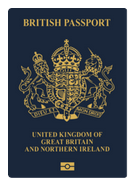
In case you are wondering: Passport and driving licence photos used to allow the wearing of glasses; they no longer do because the lenses distort the sides of the face and mess up face-recognition analysis. Not a real problem because it is only the Government that has those photos, right?

And here is where James O'Brien comes in: 'What EU law do you not like?' he asks the people who voted to leave the EU.

Today an answer could be the one that allows the U.S.A. to access all my personal and biometric details, including my religion, and political and spiritual leanings, AND access to the last five years of all my social media posts and contacts. The United States of America is not covered by the GDPR and will share any information with whomever it likes. Effectively, the business in your European home town can get all your personal details from the USA when they can not get it from you, or any other entity in your country.

EU countries gear up to let US tap their citizens' biometrics

'Data on ethnic origins, political opinions, religious or philosophical beliefs, as well as genetic or biometric information, could be transferred under the framework agreement for EBSPs, according to a Commission document outlining its negotiating position...' (Henning, 2026)

The US is also reportedly considering requiring visa-exempt visitors to provide five years' worth of social media posts before being allowed to enter the country.'(Henning, 2026)

Now then, as I understand it, visa-free travel means you do not have to tell a country's authorities you are about to travel to it. However, if one wants to travel to the United States of America without a visa you must tell them you are coming so they can then request information about you from the EU. That is not visa-free travel because entry can be refused before you get there and that is both a cumbersome and time-consuming activity for the United States to conduct many, many times every single day. Of course, they have time to use A.I. assistive technology if you book a flight to the U.S. from an airport or travel on an ocean liner, but what if you drive from Canada or Mexico? You would be held up at the border crossing for quite a while until the border control and immigration officers pass you through after thoroughly checking you out. Too cumbersome for them to hold you and then request your information from the EU, I suggest.

Effectively, I propose it would work like this: Whether you intend to travel to the United States, or not, your details will be accessible to the United States whenever they decide to check on anyone in the EU. Even though each EU member state will allow differing levels of scrutiny, the overall conversation will go like this:

       'Hello Europe. How are you doing?' Weak at the knees and swooning, Europe will respond:

       'Thank you Donald, er, Mr President. You are a great leader and an inspiration to us all. Whatever you need, we have your back, thank you so much, sir.'

       'Give me all your information on every person in your country you call Europe.'

       'No problem, Sir. Shall we tell them that it is so they can be welcomed by the United States if they travel there?'

       'Yeah. Let them think that it is like a loyalty card where they are getting something for nothing. Coupons, we all need coupons. I don't care. Give them coupons!'

James O'Brien, however, has researchers to hand and it would take only about five seconds for them to discover that Ireland and Denmark would not be bound by the 'framework' because 'Ireland is not part of the passport-free Schengen area', and most interestingly, Denmark has carved itself out of the EU treaties. (Henning 2026). 

       'It would never have affected Britain. Is it straight bananas you object to?'

If you are not worried enough, check out Claudie Moreau's piece, 'ChatGPT gears up to tap into users' health information' on Euractiv.

'OpenAI's plan for a health-focused version of the AI chatbot faces privacy law hurdles in Europe' (Moreau, 2026)

'The new service would allow ChatGPT to access users' health data by integrating with medical apps and connected devices such as smartwatches, with the aim of better personalising responses to health-related queries. (Moreau, 2026).

OpenAI says the chatbot would provide tailored advice on areas like diet, exercise and even suitable insurance options, based on its analysis of patterns in an individual's healthcare data.' (Moreau, 2026)

But what about the linguistics professor? She teaches a MA in English. I asked her, 'According to the CEFR (Common European Framework Reference for languages), what level of competence would someone be if they have an MA in English. Her reply was, 'It should be C1 [as an entry], but most of her class are at B1 or B2 so they are keen to use A.I. assistive tools. 

I passed my forklift licence in the same class as a Palestinian man a few years ago. His English was pretty poor and he kept referring to an app that gave him translation into Arabic, I think. I mentioned to another English person that he won't learn English by doing that because it is too linear. Being a dictionary is not an English speaker and language acquisition is about the language dexterity utilised by a user of the language. The other English person cried 'He is translating into his own language!' However, the Palestinian's  English was good enough to ask us what an English word meant; he should have done that. Pride or laziness, I suspect, prevented him from even trying to learn English. But he like the Ukrainian man, wasn't in England to stay. They were training on forklifts in England to rebuild their countries from a logistics position.

I have already spoken of personal signatures in writing that AI can detect and collate. these students would not learn English and at the same time provide a personal writing signature for AI to profile them with. If it becomes necessary to be covert in their lives they would definitely not be able to do it in English.

According to this CEFR self-assessment chart:

https://rm.coe.int/CoERMPublicCommonSearchServices/DisplayDCTMContent?documentId=090000168045bb52

Loosely, the difference between B1 / B2 (Independent user) and C1 / C2 (proficient user) is that B1 and B2 independent users cannot write essays to any level of significant competence. If you are keen to use, or use, AI assistive tools check out why, if you are a native speaker, your language skills are not proficient. If you look at the skills in C1 and C2 you might notice that writers can write essays and can write for a specific audience (Writing for a specific audience is taught at level 3 in English Language). That is FHEQ 3. Entry level Open University modules are FHEQ 4. Is it a false sense of belief or laziness?

I don't post on the OU forums any more because there are insufficient safety protocols, but a conversation on whether the OU has tripped up new students by not making it clear that a certain language proficiency is required, is available elsewhere. It extends into whether education bodies are forcing people to use AI because the students are floundering, simply because they are not taught effectively.

The Tesco mobile SIM for which I get eighteen Tesco Clubcard points each month is pretty cheap for unlimited data (£18 p/m). Most people use SIMs in mobile phones and put apps on their phones. Telephone service providers know what phone you are using (my service providers kept telling me my dumb-phone is incompatible with the Government enforced 3G shutdown and upgrade to 4G and 5G). Service providers also know what apps you have on your phone, as does Google and Amazon. Everyone wants to know where we spend our money. Did I donate to the Gaza appeal or the building of a mosque? Do I sponsor animals like donkeys or cats? Will the USA let me in if my language proficiency is low and I use AI assistive tools and so my personal signature is known and I prolifically post on social media sites? Will the USA let me in if I don't use AI assistive tools and never post on social media site? And so my personal signature is not known? Is being invisible a perceived threat to the USA?

References

Henning, Maximilian., 2026, Euractiv website article, 'EU countries gear up to let US tap their citizens' biometrics' Posted: 09 January 2026. 

https://www.euractiv.com/news/eu-countries-gear-up-to-let-us-tap-their-citizens-biometrics/

Accessed 09:20, 09th January 2026

Moreau, C., 2026, Euractiv website article, 'ChatGPT gears up to tap into users' health information.' Posted 09th January 2026.

https://www.euractiv.com/news/chatgpt-gears-up-to-tap-into-users-health-information/

Accessed 05:05, 10th January 2026

CEFR

https://www.coe.int/en/web/common-european-framework-reference-languages/level-descriptions

Permalink Add your comment
Share post

This blog might contain posts that are only visible to logged-in users, or where only logged-in users can comment. If you have an account on the system, please log in for full access.

Total visits to this blog: 448226