OU blog

Personal Blogs

Johanna Atsma-De Boer

Circle of the Good Life

Visible to anyone in the world

On the vegetable front: I had to lift all the carrots as many of them were split and also due to mice not only eating our young trees (see November’s newsletter), but also my carrots! The number of mice and voles are truly horrendous this year; both in our house and in the garden. Every single morning, we have at least one trapped mouse in our larder and as I said lots of damage too. I’m not sure why there is such an explosion of small rodents, since there are plenty of natural predators. Or maybe, there are plenty of predators because we have an explosion of rodents! Who knows, but usually in ecology, the predators follow the prey, so I guess we first had lots of mice which attracted owls, red kites and buzzards. The wildlife camera even filmed a fox walking around in our first new field named ‘Middle Earth’. The fox was wary of the red light at first before it decided it was okay and then it jumped on something (hopefully a vole!). You can just about see it jumping in the video which I published on YouTube. It’s interesting how animals seem to notice the camera and some even try to attack (?) or investigate (?) it like the magpies in the same video.

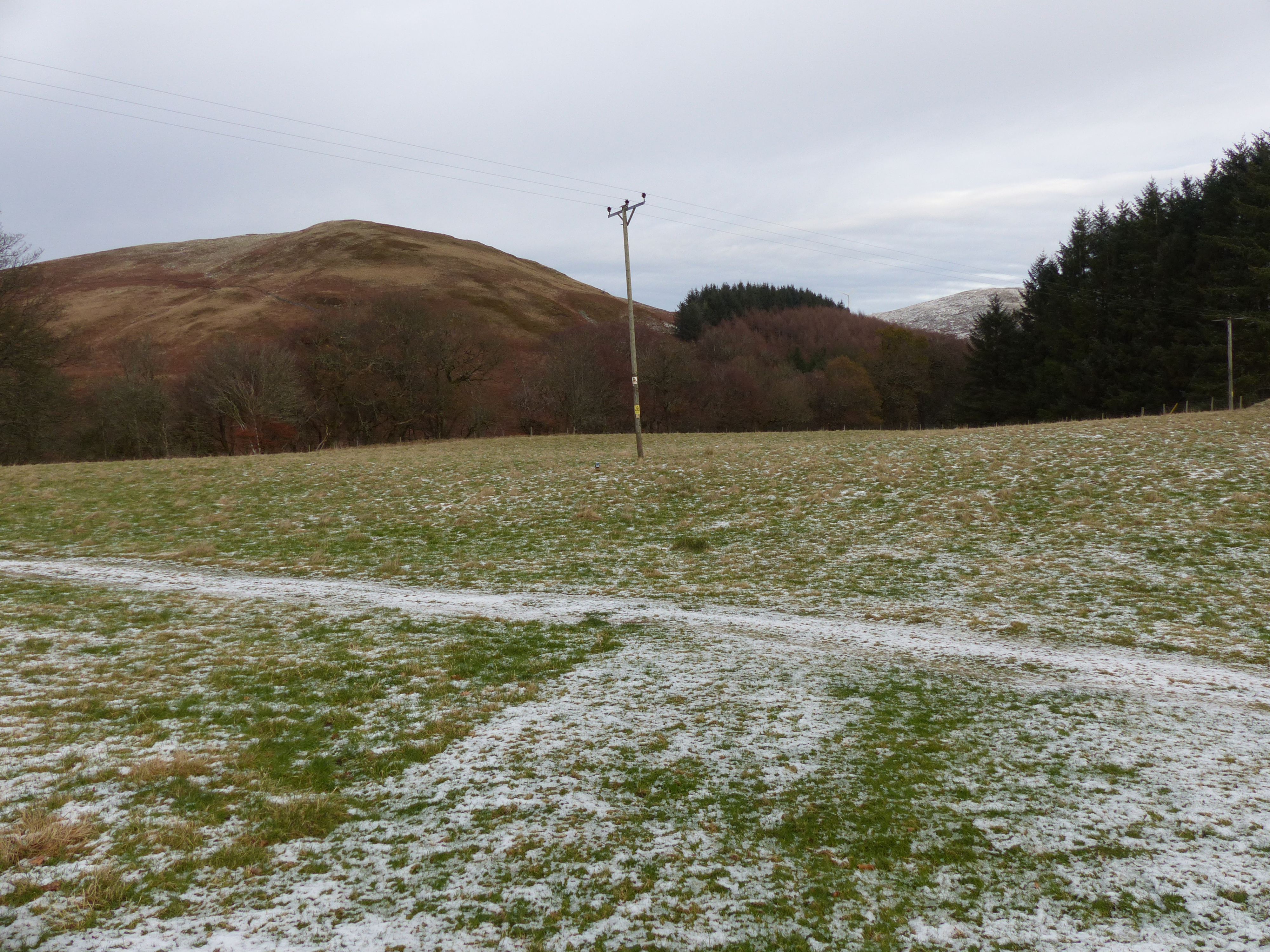
And it’s all happening in the new big field too! We had two tree consultants visiting to look at the site and discuss with us what our plans are and what options there could be. They estimated we could plant between 700 and 800 tree saplings! We discussed that we preferred native edible trees and some ‘non-edible but good for wildlife’ trees and we are hoping to see them arrive early in the new year. Of course, 700 tree saplings are a lot to plant for just two people and therefore we want to organise a ‘tree planting event’ once the trees have arrived. Those who come along can also name their own personal tree with a name tag and a dedicated website where you can register your interest in participation will be revealed nearer the time. It’s hard to imagine that the field in the picture will house 700 trees in just a few months’ time. empty field
In combination with bringing back nature to Glensherup, JP and I have started a new project called ‘Circle of the Good Life’ where we hope to inspire people to embrace nature in all its aspects and enjoy being outdoors away from technology. Technology has slowly taken over our lives and many feel frustrated and anxious by the way technology is always there, but it doesn’t need to be. It’s key that you leave your phone at home (or out of sight in the car) when you are reconnecting with nature.
So, I have created a dedicated YouTube channel on which I share how JP and I embrace nature, what nature you can find in Scotland and how trees can be beneficial to us (this last one is not out yet). Some may have already watched the first two short videos, but 4 more videos have been added:

‘Meet Glensherup’s wildlife’ – pheasants, a fox, jackdaws and misbehaving magpies

‘A snapshot of wildlife in Glendevon’ – footage from my wildlife camera over a number of years

‘Buzzards closeup near a carcass’ – footage from buzzards feeding (it’s not that gruesome)

‘Traditional Celtic pagan handfasting’ – a summary of JP’s and Josine’s renewal of vows in June

All these can be watched (and subscribe) Circle of the Good Life
Permalink
Share post
Johanna Atsma-De Boer

Animal behaviour?

Visible to anyone in the world

After a red squirrel literally crossed my path and ran up one of ‘our’ mature trees, I got the idea to behave like a squirrel and plant the acorns one of my customers gave me the way squirrels do. So, I made various small holes in the ground and buried a small handful of acorns in each. This mimics the caching behaviour of red squirrels where they bury acorns for sustenance later in the season. Only.. they forget some of the places they used and the forgotten acorns will germinate and become a new tree. By burying several acorns in one spot, the strongest oak will outcompete the weaker ones which in the end increases resilience for the entire forest. Mimicking animal behaviour is one of the things I am very interested in and another one we are trying to do is behave like wild boars. Not literally though! On holiday in the Netherlands, we noticed an awful lot of disturbed soils next to cycle lanes and forest walks, signs that wild boars had been rooting there looking for food. This opens up the soil giving seeds a chance of germination. So, in our smaller field we have done the same and will go even further by making shallow dips in the field in which rainwater collects as a source of water for various animals. With no wild boars living in Scotland, I feel we should at least try to imitate their behaviour. I’ll keep you updated on how this approach works (or not!).

More good news on the new very large field: my application at the Woodland Trust has been approved! This means that a tree expert will come and visit the site to discuss with us which trees we wanted to plant, how many we can get funding for and where it’s best to plant them. This has all been set in motion and we should see someone in the next couple of weeks.

By the way, my continuous contributions to iNaturalist (a website where you can submit wildlife sightings) has paid off when I read in the Woodland Trust’s development plans for Glendevon that the rare Blaeberry Bumblebee had been found at Glen Sherup, which is very likely to be my observation! I was even more chuffed to read that this species is listed as a conservation-priority species due to it being threatened by rising temperatures. At least some of my efforts into increasing biodiversity are paying off.

Permalink
Share post
Johanna Atsma-De Boer

Garden Blog January 2023

Visible to anyone in the world

2022 seems to have been the year of the number 17:

17 jars of stewed pears (from our own Dutch pear tree)

17 bottles of apple wine (from apples very kindly given to me by various customers and friends)

17 bottles of grape wine (from Scottish grapes given to me by a very kind customer, who got 100kg from a friend and aptly named ‘Grapeheart’)

17 tonnes per hectare of fruit & vegetables

‘Tonnes per hectare’ is a measurement used in agriculture to value the productivity of a farm. We don’t have a hectare and we didn’t grow 17 tonnes (which is 17 000 kg), but I’ve converted my own kilos to tonnes and the size of my vegetable garden to hectares.
I think this is pretty good considering that I don’t use any artificial fertilizers or pesticides.

I like working with numbers and keeping track on how much I’ve grown and to compare it with previous years and there definitely is an increase in our yields over the years. Adding compost to the soil every year, not digging too much and also growing green manure (an overwinter crop meant for leaving to die back) improves the quality of the soil massively and thus increases the yields. This is confirmed by various studies which all looked into different aspects of soil and yields of food. I am just obsessed with soil and thankfully I can experiment endlessly in my own back garden (I took 32 soil samples last year as part of my Natural Sciences study).

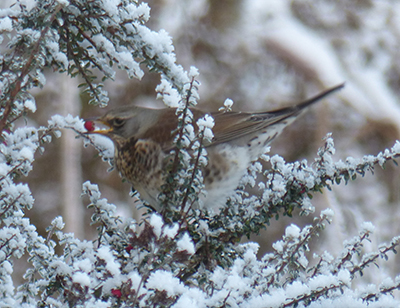
fieldfare feeding on berries

Another thing I’ve been keeping track on is the variety of birds seen in my garden and that has also been increasing over the years: we had 18 different bird species in 2015, but in 2022 we had 30 different species! Furthermore there is an index used by biologists to measure the biodiversity of an area (Simpson’s Diversity Index, should you be interested) and when I calculated our index value using my previous RSPB bird watches, I discovered that this too had increased and is now a very healthy 0.91, where the maximum value can only be 1. You see just by cutting out pesticides, leaving a couple of wild areas and planting some shrubs and small trees you can do your bit to help nature.

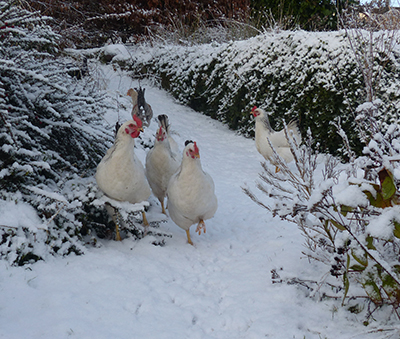
The chickens have been allowed in our back garden (they normally only roam the fields) and they loved it! I my naivety I thought that they would eat overwintering pests and fertilise the soil at the same time, but I forgot that they can also be little white feathered bulldozers! One of the white chickens could not leave the rhubarb plant alone and I watched as she purposely set out to dig up the entire plant. I couldn’t let that happen of course and had to put some wire over it, after which she tried to continue but discovered that standing on hard wire was not very pleasant and the was plant saved.

white chickens in snow

Harvey, the young cockerel, is losing his boyish peeps and his voice is starting to break. In other words, he will soon start crowing and the first couple of times are quite funny as he looks startled and he doesn’t know himself what is happening. As it so happens, on the last day of the year he stood at our back door, showing off his newly discovered crowing! It is quite cute, until he starts crowing at 4 am in the middle of summer.

The chickens are all back in the fields again, because, well, let’s just say that our sitting area is well fertilised!


Permalink Add your comment
Share post
Johanna Atsma-De Boer

Garden Blog January 2020

Visible to anyone in the world

Now that the days are getting longer again (and colder), it’s time to start planning for the new growing season. Not that I can start sowing outside just yet, but it isn’t too far off now... perhaps late January or maybe early February I will be able to sow my sweet peppers and chilli peppers indoors. It’s always exciting to think about what to grow. I’ve decided I might not grow as many onions this season; not that they are hard to grow, but to be able to store them over winter, you have to dry them properly and with Scotland’s changeable weather this can be quite bothersome. Try getting at least 4 consecutive sunny days with no chance of rain at all - it isn’t easy! Anyway, organic onions from the supermarket are not that expensive to buy - and let’s face it, who needs the stress?

But what I’ll do with the empty onion beds I really don’t know yet, perhaps I’ll sow some green manure. Green manure is a way of preventing soil lying bare; basically you sow special plants which have a purpose. For example, you can sow field beans which restore nitrogen (a very important nutrient) to the soil, or you can sow mustard which keeps wireworm away (those same beasties which have been munching on my tatties last month!).

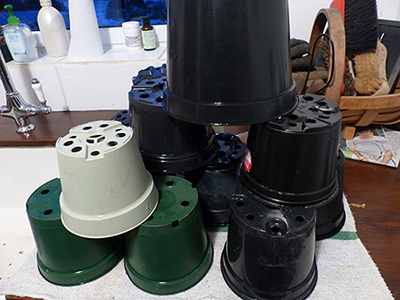
upside down plastic pots

My half-hour-a-day gardening routine hasn’t stopped just because it’s winter; I have started washing all the used pots from last summer. Again, by doing just one bucket full in my half hour, it seems a lot less work and I am actually amazed that I have found the time to clean up and be ever-so-slightly better organised this year. It’s important to keep the greenhouse clean, but sometimes you simply just don’t have the time. Although I am now faced with a pile of pots in which my large, eight legged friends might reside, I have my brave husband JP on hand to evict these unwelcome squatters so I can clean the spider-free pots.

Remember how I created a bird border bursting with berry producing bushes to attract birds? Well, attract them they have! Birds of all shapes and sizes love them! I even spotted our resident pheasant, Cedric, munching on the berberis berries which grow slightly higher up than the other berries. At first I had mixed feelings about this non-native bird eating the berries, but after all it’s not his fault that he has been released by us humans, and I suppose technically he is a bird so why not let him gorge himself in the bird border? The more the merrier, I say. There have been partridges as well close to our home, but so far I have only seen them outside our garden, maybe the fence is too high for them to fly across?

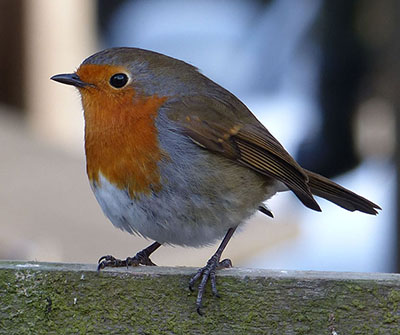
robin

Speaking of birds; Robinto has returned! Well, to be honest, it probably isn’t the same Robinto who first graced our garden with his presence in 2018, because robins only live for a maximum of 2 years. Who knows, this new robin (‘Robinto Mark II’), may be the offspring of the original Robinto. He waits in the chicken coop for me to give him a few tasty titbits and even pecks at the chicken food while Tufty is right next to him. He’s a bold one, this robin! When Tufty gets too close for comfort he quickly hops onto the chicken swing, clever bird!


Permalink 1 comment (latest comment by Judith McLean, Saturday 3 February 2024 at 14:21)
Share post

This blog might contain posts that are only visible to logged-in users, or where only logged-in users can comment. If you have an account on the system, please log in for full access.

Total visits to this blog: 5874