OU blog

Personal Blogs

Jim McCrory

The Puppet on a String: What Will We Leave Behind?

Visible to anyone in the world
Edited by Jim McCrory, Sunday 26 July 2026 at 15:21

sketch.png

The Puppet on a String: What Will We Leave Behind?

Henning Mankell had a rare gift for uncovering profound truths in the ordinary. In The Puppet on a String, he reflects on an archaeological discovery in the Czech Republic: the remains of a human being who lived some 25,000 years ago. Beside the skeleton lay something unexpected. Not a weapon. Not jewellery. Not a monument to power. Instead, archaeologists found 'a doll. A marionette. A puppet on a string.'

Mankell is deeply moved by this fragile object. To him, it is more than an artefact; it is a greeting across centuries.  A simple toy survives to whisper that the people who fashioned it laughed, imagined stories, entertained their children, and delighted in creativity. The puppet becomes a testimony that humanity has always been more than a struggle for survival. It reveals that even in the harsh world following an ice age, human beings made room for play, imagination and affection.

This is where the essay becomes profoundly existential. Mankell asks us not simply to admire the past but to confront the future. Every generation leaves something behind. The question is not whether we shall have a legacy, but what kind of legacy it will be.

His conclusion is deliberately unsettling. 'Those of us living today will not be sending puppets on a string into the future. Our legacy is nuclear waste.'

The contrast is devastating. One civilisation leaves behind evidence of its humanity. Another leaves behind evidence of its destructive power.

Whether one agrees entirely with Mankell's conclusion or not, the challenge is impossible to ignore. Modern society measures success by technological achievement, economic growth and scientific advancement. Yet the object that moves us most from prehistory is not an invention that conquered nature but a humble puppet that reminds us of the human heart. Progress has given us extraordinary abilities, yet it has not necessarily enlarged our wisdom.

Mankell's observation raises questions that lie at the heart of existential philosophy. What gives a human life significance? Is our purpose merely to consume, build and dominate, or is it found in the relationships, imagination and beauty we pass on? Long after our names have disappeared, what silent testimony will remain of the kind of people we were?

As a writer, I find these questions deeply personal.

If I were asked what I hope to leave behind, it would not be wealth or possessions. It would be words. Essays that encourage someone to think more deeply, to appreciate beauty, to wrestle honestly with truth, and perhaps to draw nearer to God. Unlike the puppet discovered beside that ancient skeleton, words leave no physical trace in the soil. Yet ideas have always possessed a strange resilience. They travel through books, conversations and memories, often outliving the buildings and empires that once appeared permanent.

There is, however, another dimension that Mankell leaves unexplored. The Christian Scriptures suggest that our greatest legacy is neither objects nor achievements but the influence our lives have upon other people. The apostle Paul spoke of believers themselves as 'letters... known and read by everyone' (2 Corinthians 3:2). Our character, our kindness and our faithfulness become a living message long before they become a written one.

The puppet on a string reminds us that people have always sought meaning beyond mere existence. The fact that a toy could survive centuries of burial and  touch modern hearts suggests that humanity possesses an enduring hunger for beauty, creativity and relationship. These are not accidental features of our species. They point to something woven into our very nature.

Mankell's final sentence is intentionally pessimistic. Yet history is not finished. Every generation still chooses what it will leave to those who follow. We may indeed leave behind polluted landscapes and dangerous technologies, but we can also leave behind compassion, wisdom, courage, truth and hope.

The ancient craftsman who carved that little puppet could never have imagined that people twenty-five thousand years later would smile at his work. In the same way, none of us knows how far the quiet influence of a thoughtful book, an act of kindness, or a life lived with integrity may travel.

That may be the deepest existential lesson of Mankell's remarkable reflection. Our lives are always speaking to the future. The only question is what they will say.


Permalink Add your comment
Share post
Jim McCrory

What I'd Like Every Young Person to Know

Visible to anyone in the world
Edited by Jim McCrory, Saturday 1 August 2026 at 11:16

sketch.png

What I'd Like Every Young Person to Know

It was New Years Eve many years ago. I had spent the day in Glasgow doing my shopping for a party I was not invited to. Before catching the train home, I wandered underage into a small bar and ordered a pint. It wasn't really the beer I wanted. I simply wasn't ready to go back to a lonely house.

As I sat there, a melancholy song drifted from the jukebox. Under other circumstances I might scarcely have noticed it, but that afternoon it seemed to find every lonely corner of my heart. Around me people laughed, wished Hogmanay  greetings and hurried away to get ready for parties, family gatherings and warm homes. Everyone, it seemed, had somewhere to belong.

I remember staring into my glass and wondering, Where is life taking me? Why do I feel so unnoticed? Why am I so shy? Why do girls not notice me?

It is a strange thing to feel lonely in the middle of a crowd.

Thankfully, life did not remain that way. Things changed. More importantly, I changed. Looking back now, I realise that what I experienced is something many young people quietly endure. Loneliness. Uncertainty. The feeling that everyone else has found their place while you are still searching for yours.

After many years of living, despite still feeling young inside, people sometimes ask what wisdom those years have brought. Well, if I could sit down with every young person for half an hour, I don't think I would begin by asking what career they hoped to pursue or what grades they achieved at school. Those things have their place, but they are not the deepest questions. We are not our grades.

I would want to know what kind of person they hope to become.

The world speaks endlessly about success. It tells you to be noticed, to gain followers, to build a reputation and to stay ahead of everyone else. Yet history has a curious habit of remembering something else. Long after fame has faded and fortunes have disappeared, people are remembered for their courage, their honesty, their kindness and the quiet way they treated others.

Never underestimate the value of character. It is built in small decisions that no one else sees. Every truthful answer when a lie would be easier, every act of kindness that goes unnoticed, every temptation resisted and every promise kept is shaping the person you are becoming.

You may sometimes feel that your examination results define you. They do not. Work hard, by all means. Learn eagerly and give your best. Education opens doors, but your worth has never depended upon the marks written at the top of a page. Some of the wisest people I have met would never have called themselves academic, yet they possessed qualities that no examination could ever measure: compassion, perseverance, humility and integrity.

Do not be afraid to be different. It takes little courage to drift with the crowd. It takes real strength to stand quietly for what is right when others laugh at it. Every generation needs people who are willing to say, 'No, I cannot do that,' even when they stand alone.

There is another gift you possess that deserves careful protection: your conscience. It is that quiet voice which sometimes speaks when everyone else is silent. It urges honesty when dishonesty would be easier. It troubles us when we have acted unfairly and gives peace when we have done what is right. Never make the mistake of silencing it. A clear conscience is worth far more than a guilty success.

Be generous with kindness. You may never know how deeply a simple word of encouragement affects another person. Many adults can still remember a teacher who believed in them, a neighbour who showed unexpected compassion or a stranger whose brief kindness arrived on a difficult day. You have the ability to become that person for someone else.

Guard your attention carefully. The phone in your pocket is a remarkable invention, but it was never meant to own your thoughts. Look up from the screen from time to time. Watch the sunrise. Walk beneath a sky full of stars. Read books that stretch your mind. Sit with your grandparents and ask about the world they grew up in. The richest experiences in life rarely arrive with a notification.

Do not run away from difficult things. Almost everything worthwhile begins as a struggle. Learning a language, mastering an instrument, understanding mathematics, writing well, building lasting friendships, finding God in private prayer, and developing wisdom all require patience. Difficulty is not always a sign that you are on the wrong road. More often, it is evidence that you are growing.

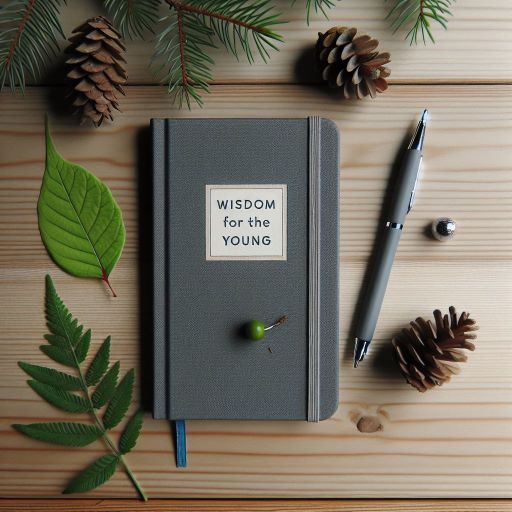
Never lose your sense of wonder. Keep asking questions. Why does mathematics describe the universe so beautifully? Why does music move us to tears? Why do we find beauty in a sunset or a field of wildflowers? Why does our conscience insist that some things are truly right and others truly wrong? Curiosity is one of the greatest companions of wisdom. The person who never stops asking, 'Why?' never really stops learning. Write down your thoughts in a notebook. One day it may be a book that helps others.

You will fail from time to time. Everyone does. Failure need not become your identity. Some of the strongest, wisest and most compassionate people are those who have stumbled, learned, risen again and kept walking. Your mistakes need not write the final chapter of your story.

Choose your friends carefully. Character has a remarkable way of spreading from one life to another. The people you spend time with will quietly influence the person you become. Seek out those who encourage honesty, wisdom, faithfulness and generosity. As Proverbs reminds us, 'Walk with the wise and become wise.'

Read great books. They allow you to spend time with minds that lived centuries before you. Within their pages you will find companions, teachers and friends whom you may never meet in this life. Books enlarge our world, challenge our assumptions and remind us that every generation wrestles with the same great questions of truth, love, loneliness, suffering and hope.

Above all, remember this: your value does not depend upon your popularity, your appearance, your achievements or the approval of strangers. According to Scripture, every human being is made in the image of God. That means your dignity is something you were given, not something you must earn. Before you accomplish anything remarkable, you already matter.

When I sat in that Glasgow bar all those Christmases ago, I could never have imagined where life would lead me. I did not know the people I would meet, the joys I would experience, the sorrows I would endure or the faith that would anchor me through it all. If I could speak to that younger man now, I would simply tell him, 'Hold on. Life is not finished with you yet.'

That is the greatest encouragement I can offer you.

The world does not simply need more clever people, beautiful people or more successful people. It needs men and women of integrity. It needs people who tell the truth when lying would be easier, who show mercy when anger would be applauded, who remain humble when success arrives and who quietly leave every place a little kinder than they found it.

Years from now, people may forget what qualifications you earned, how much money you made or how many people followed you online. But they will never forget the way you made them feel, the example you set or the goodness you brought into their lives.

"Never be afraid to trust an unknown future to a known God."

Corrie Ten Boom

Permalink Add your comment
Share post
Jim McCrory

What Does Peter Rabbit Tell Us About a Higher Power?

Visible to anyone in the world
Edited by Jim McCrory, Wednesday 4 February 2026 at 16:20

Updated at The Garden, the Warning, and the Way Home | learn1

"My son, do not forget my teaching, but keep my commands in your heart, 

for they will prolong your life many years and bring you peace and prosperity."

Proverbs 3:1-2
Permalink Add your comment
Share post
Jim McCrory

Good Morning to The Scottish Islands: I Like That Proverb

Visible to anyone in the world
Edited by Jim McCrory, Thursday 26 September 2024 at 11:24

"Chan ann leis a’ chiad bhuille thuiteas a’chraobh."

"It is not with the first stroke that the tree falls."


 Portree Harbour by https://unsplash.com/@breebuddy


I was watching Billy Collins on a YouTube podcast answering the question, “How to be a Poet,”

Oh dear, you may not like the answer; ten thousand hours of reading poetry including the heavies like Milton.

I have an MA Creative Writing Degree, but I have not indulged much in poetry although I like to read it. But like any other endeavour in life like learning a language or playing an instrument or tennis, you need to discipline oneself and do the hours.

The Gaelic proverb reminds one that discipline, persistence and engagement are involved in accomplishing your goals.


Billy Collins: https://www.youtube.com/watch?v=eP9reBY7EwM


Permalink Add your comment
Share post

This blog might contain posts that are only visible to logged-in users, or where only logged-in users can comment. If you have an account on the system, please log in for full access.

Total visits to this blog: 2375948