

Unexpected Honour
Sometime in September, I received a wonderful surprise in an email sent by my PhD research supervisor, Prof. Umut Erel. In it, she said that my research has won the 2026 AOUG Chancellor Baroness Boothroyd Award for Citizenship, Identities and Governance, an academic award presented by the Association of Open University Graduates (AOUG). I had no idea that my work was nominated by my amazing supervisors (Prof. Umut Erel, Prof. Parvati Raghuram and Dr. Gunjan Sondhi) so it was completely unexpected.
The award, named after former Open University Chancellor and first female speaker of the House of Commons Baroness Betty Boothroyd, “recognizes outstanding doctoral or higher-degree research that falls within the scope of Citizenship, Identities, and Governance” (AOUG, 2026). For sometime, I was sat unmoving holding my mobile, joyfully shocked at the unexpected honour.
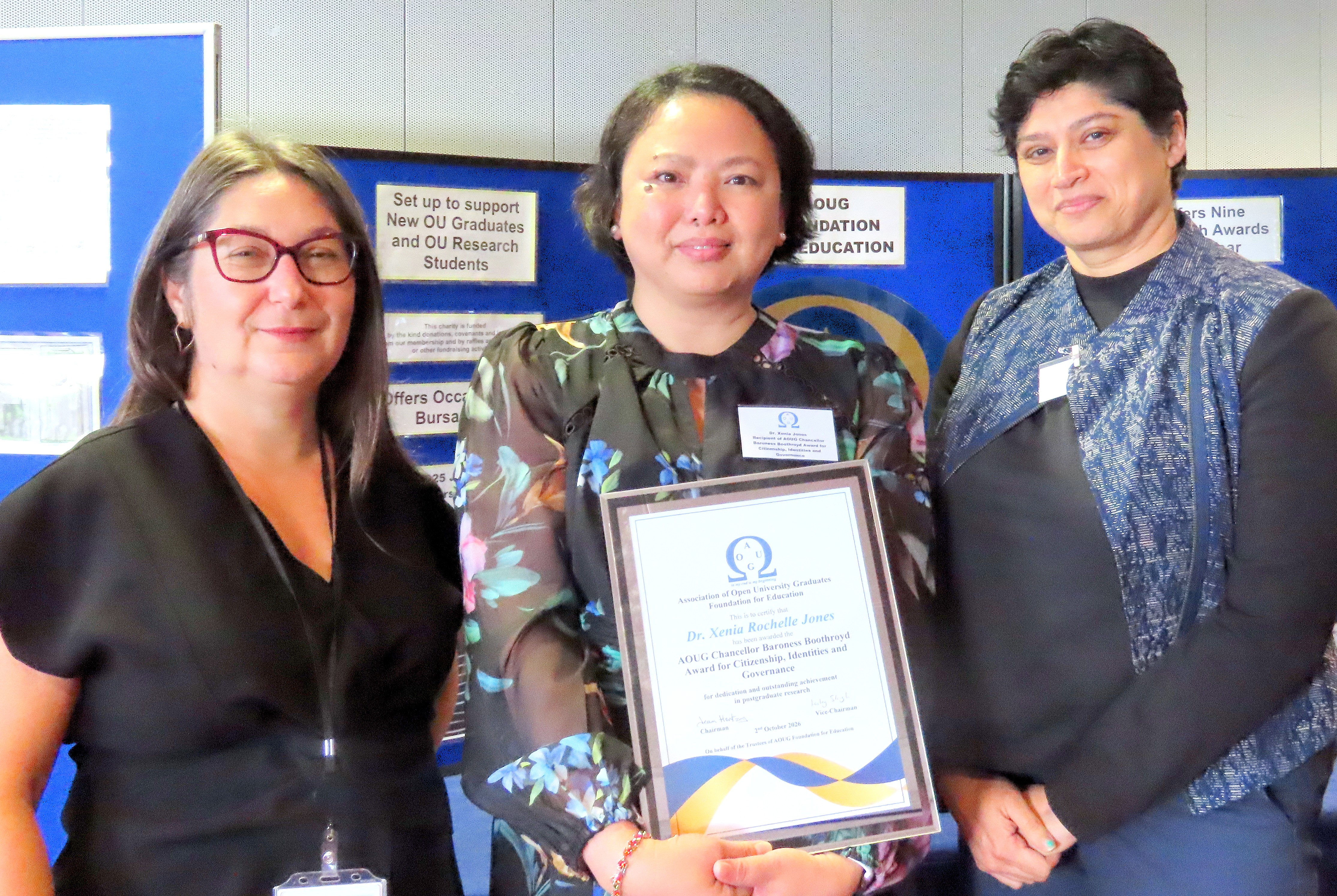
(with my Research Supervisors Prof. Umut Erel and Dr. Gunjan Sondhi)
My Research
My PhD research is a labour of love. Not just mine, but a village. My husband with his unrelenting support over the years, friends and family who cheered me on, my supervisors who believed in the work that I did from the very beginning, and from whose wisdom, experience and unrelenting patience I received guidance, that academic compass much needed in making my body of work come into it’s own. And my doctors and nurses at Kettering General Hospital who supported me through my operations and procedures as I went through the early stages of my cancer treatment where I wrote, from my hospital bed, quite a hefty part of my thesis.
My work is drawn from being part of a generational Filipino family with members strewn across the globe due to contracted work in the field of healthcare. Since the 70’s, the Philippine government drafted bilateral agreements with partner countries to send their citizens abroad for contracted work, primarily in construction (the Middle East) and reproductive work (healthcare, domestic work – the Middle East, Global North, Japan, Singapore, Hongkong, Taiwan) as an economic policy due to the absence of industries for domestic employment. Concurrently, the country has become one of the world’s biggest source of contracted workers, with Overseas Filipino Workers (OFWs) in the millions contributing around 9% to 10% of the Philippines’ GDP through remittance (around $38.4 billion in 2024) (Mendoza, 2026). So relevant is the OFW sector to the Philippine society (economic, social) that it has it’s own government department/ministry – the Department of Migrant Workers (DMW) (DMW, 2026) and are hailed as ‘bayani’ (heroes).
My work sought to address a gap in the literature – focusing on Filipino women working in Taiwan’s manufacturing sector. Almost half of the 170,000 OFWs in Taiwan are women and most of them are/were recruited en-masse by Taiwan’s global tech factories through an arrangement with the Philippine government. These women are behind the production and assembly of computer parts and peripherals, laptops, smartphones chips and IT products that power our ever connected and digital world. Some of them come from far flung ‘tech-absent’ villages. I undertook a critical digital ethnography I adapted from the Filipino practice of ‘eyeballing’. Since web 1.0, Filipino OFWs have utilised accessible technologies to ‘get together’ and be part of each other’s lives despite the separation from their families and friends back home. Through this method, I was able to ‘get into’ the daily lives of my participants as migrant factory workers. Using their smartphones, they ‘took me’ to their sites of work and living, both as a participant and observer. Through this, I came upon a realization that via digital hybridity, they are able to exert agency that extended beyond the limitations of distance and resources, allowing them to become more than just spectators (Chouliaraki, 2026), mediating and augmenting, maximising their agency and reach.
(My work can be found here - https://oro.open.ac.uk/107482/)
Hope and Aspirations
It had always been my hope that my work – especially the digital ethnographic ‘eyeballing’ method and my theory of digital hybridity – would find relevance and use in digital social research and in addressing social issues related to transnational migration, poverty, inequalities, gendered work and the digital society.
Receiving this award is a wonderful honour and an inspiration. I am humbled. Thank you so much to the AOUG and their leadership, especially Jean Herzog (AOUG Chairman) and Lesley Sleigh (AOUG Vice Chairman) for making the AOUG academic awards aspirational for researchers like myself through the years. Together with my fellow awardees from the fields of literature, computing, maths, natural sciences and engineering, you gave us a life-changing Oct. 2 ceremony that will inform our practice moving forward.
I share this award with my research participants, my amazing supervisors, my husband, my nurses and doctors, my family and dear friends and to the One above whose presence and grace bless me beyond what I pray for. Thank you. Maraming salamat sa inyong lahat.
References:
AOUG. (2026, Oct 28). AOUG Chancellor Baroness Boothroyd Award for Citizenship, Identities and Governance-20. Retrieved from AOUG Awards: https://www.aoug.org.uk/aoug-awards/aoug-chancellor-baroness-boothroyd-award-for-citizenship-identities-and-governance/
Chouliaraki, L. (2026). The Spectatorship of Suffering. London: Sage.
DMW. (2026, Oct 2). Department of Migrant Workers. Retrieved from Department of Migrant Workers: https://dmw.gov.ph/
Mendoza, T. C. (2026, Oct 2). Behind the remittances: The social cost of the OFW economy. Retrieved from Inquirer.net: https://globalnation.inquirer.net/340221/behind-the-remittances-the-social-cost-of-the-ofw-economy
---------------------------
Images from the Awarding Ceremony, Oct. 2, 2026 held at the OU's Michael Yang Building, Milton Keynes Campus
(taken by J. Jones, G. Sondhi and AOUG Staff/Members)
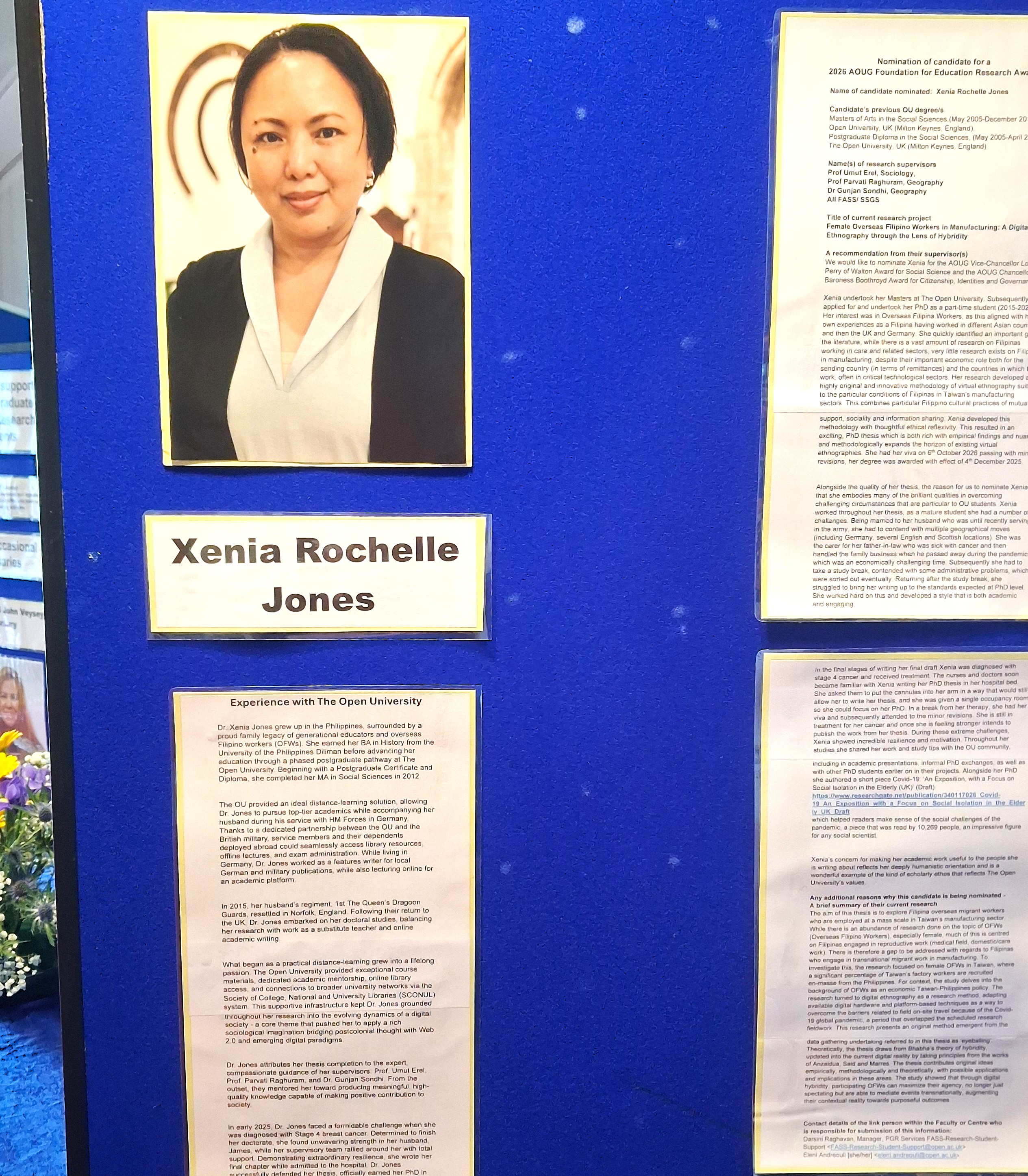
Research work Information Wall
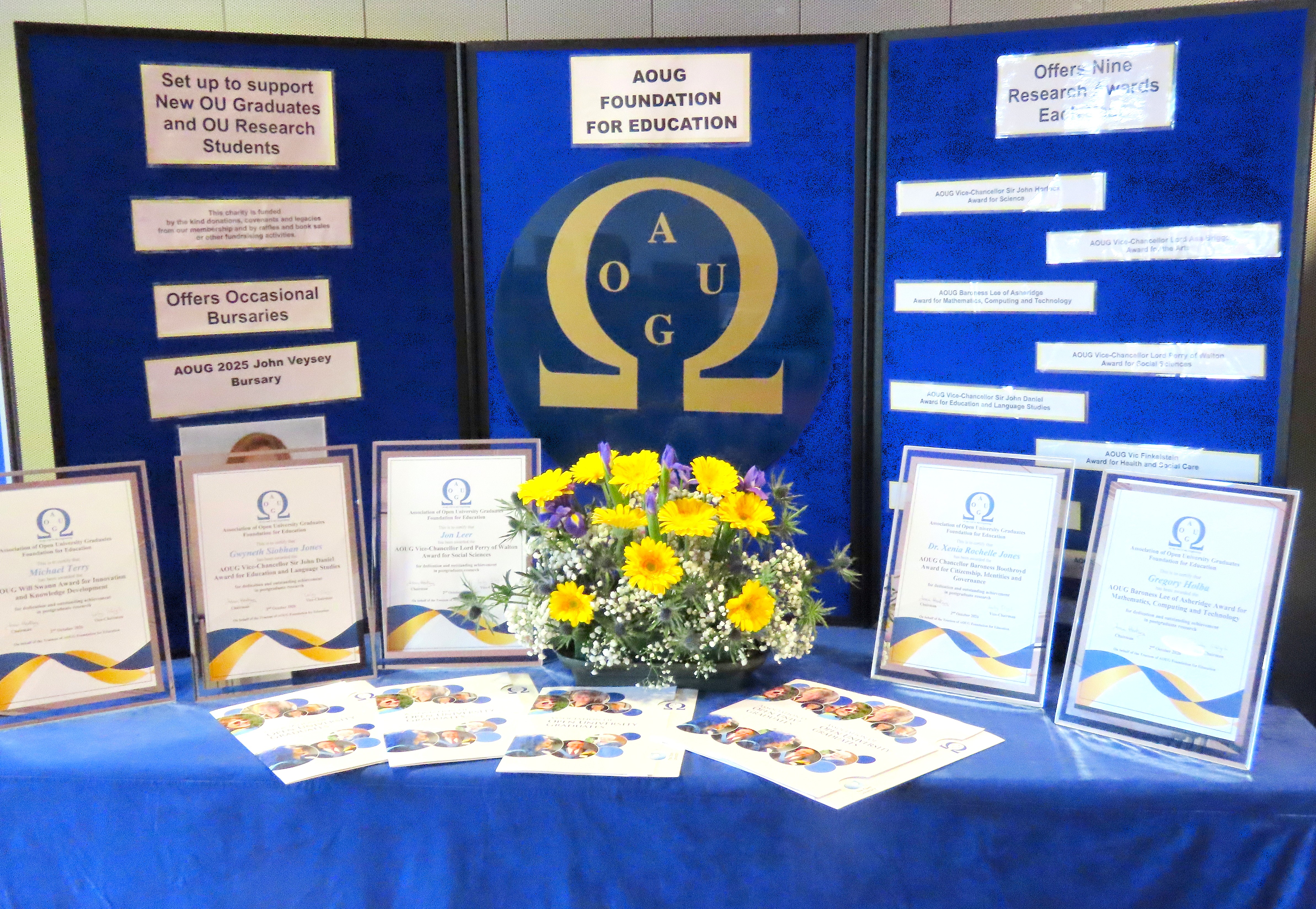
The 5 Academic Awards for 2026
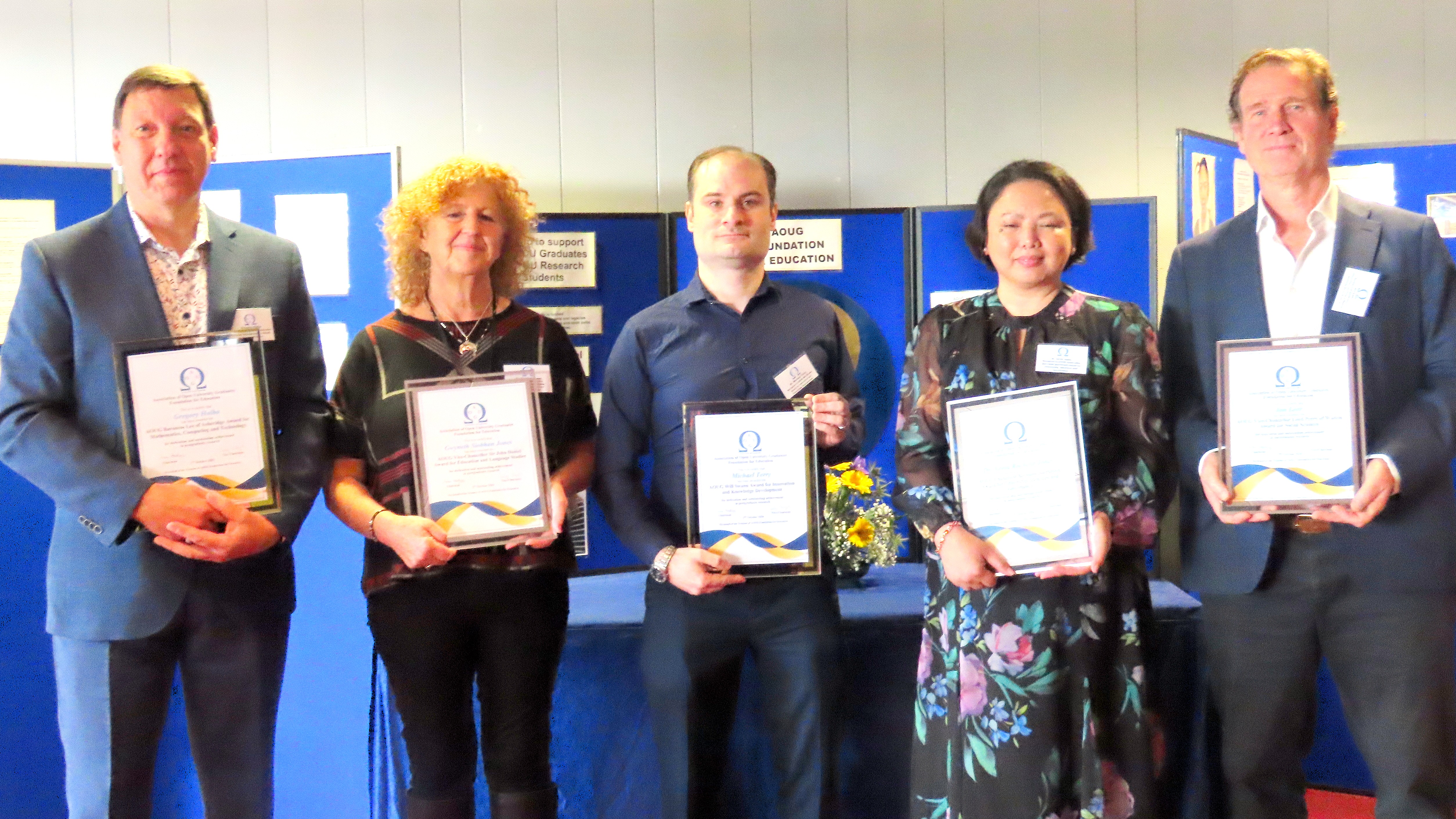
With my fellow AOUG 2026 Academic Award recipients for 2026 from different fields - History, Literature, Maths and Computing, Social Sciences and Identities/Governance (me)
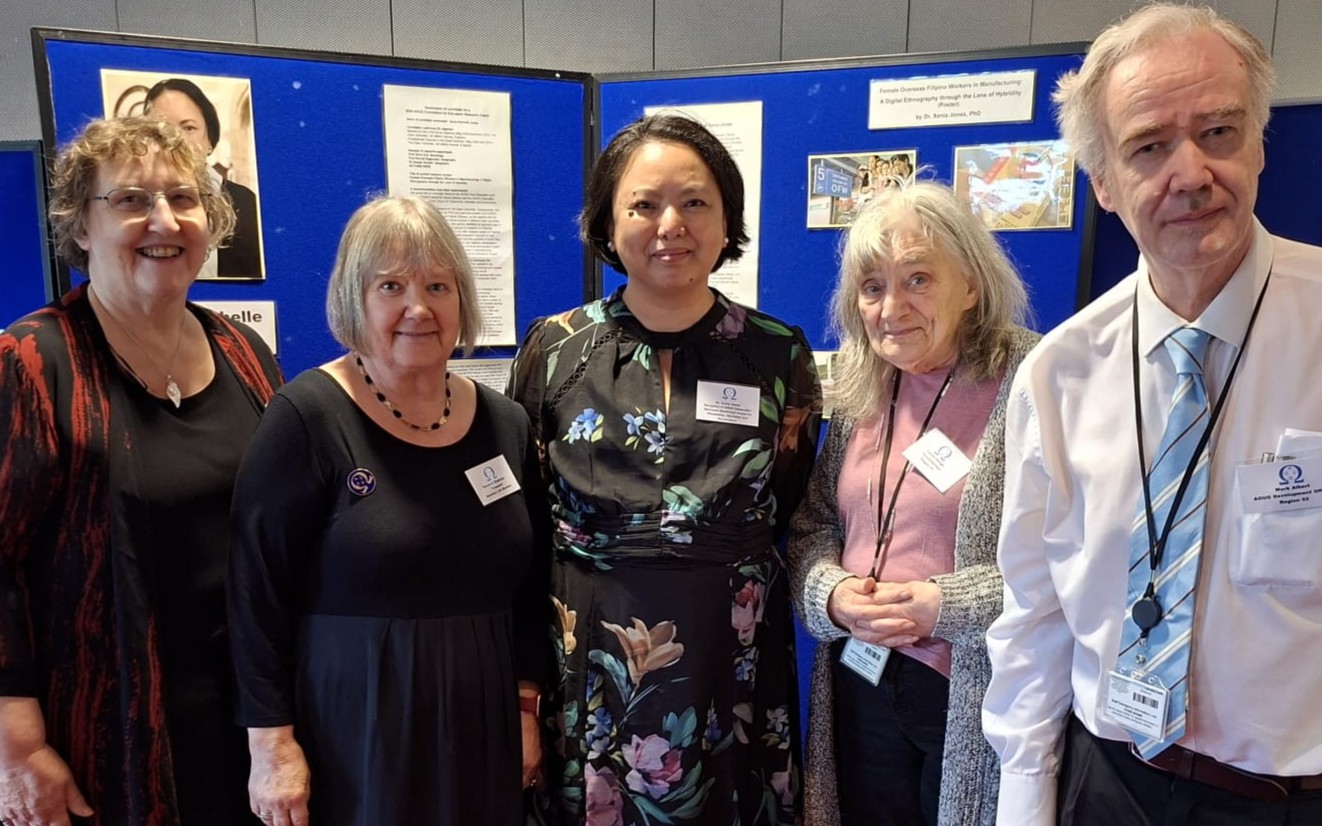
With the AOUG Board including Chairman Jean Herzog (far left) and Vice Chairman Lesley Sleigh (In pink, next to me on the right)
