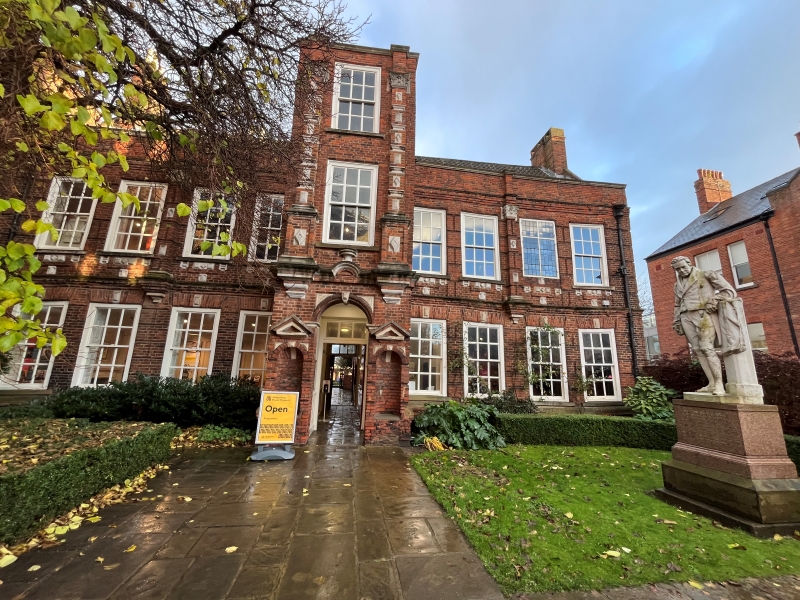
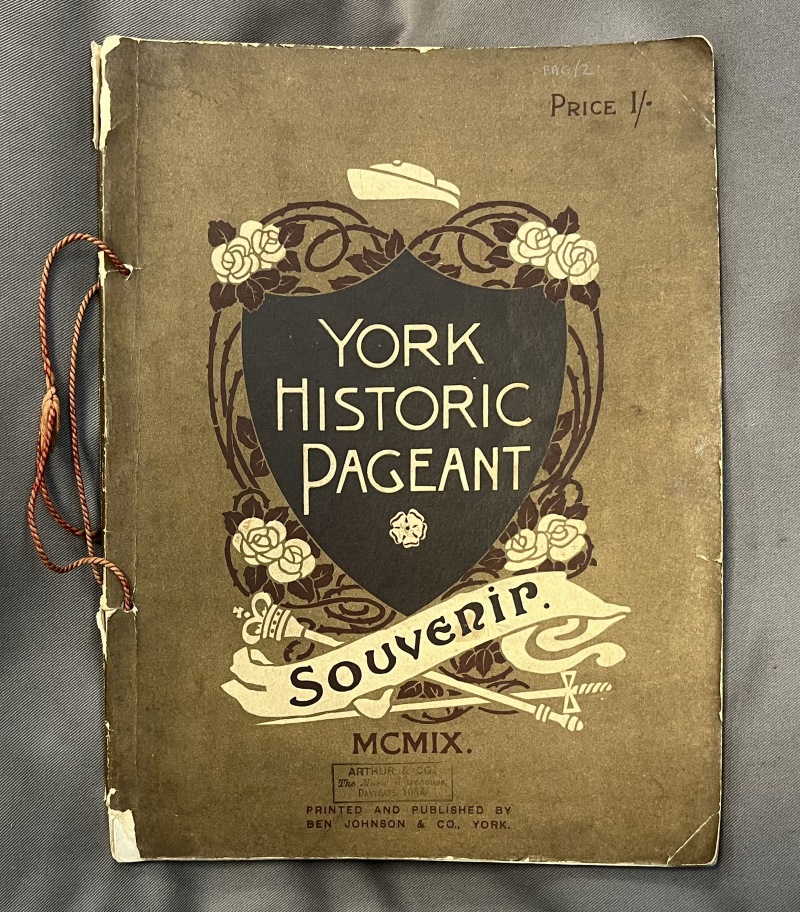
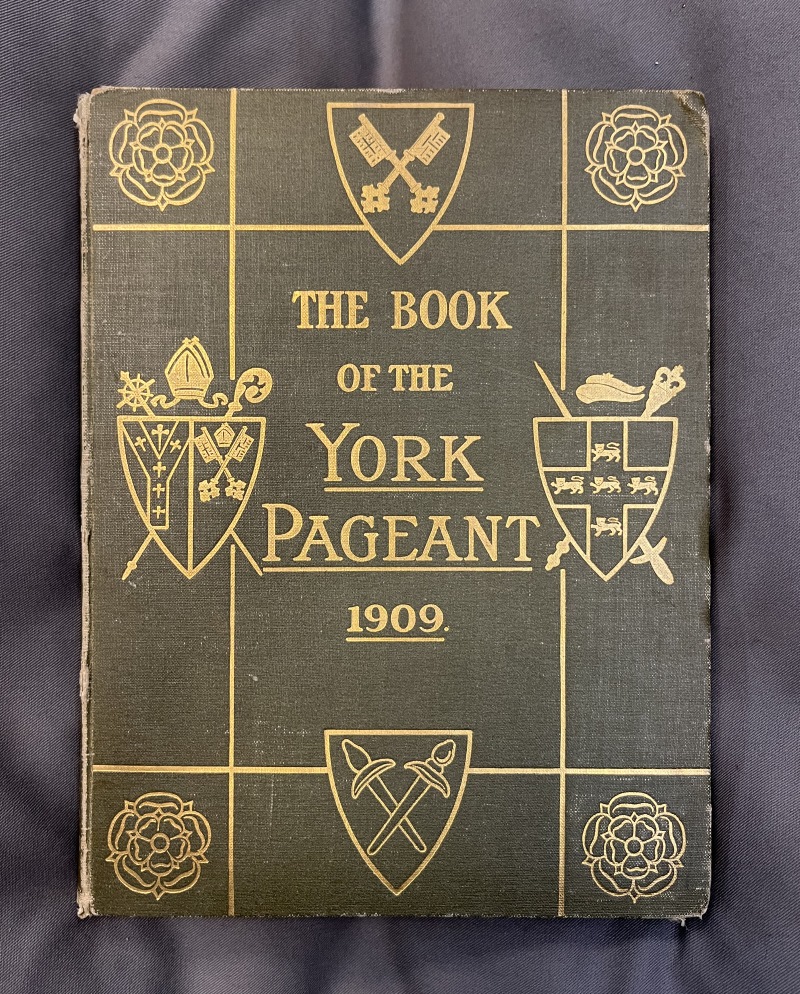
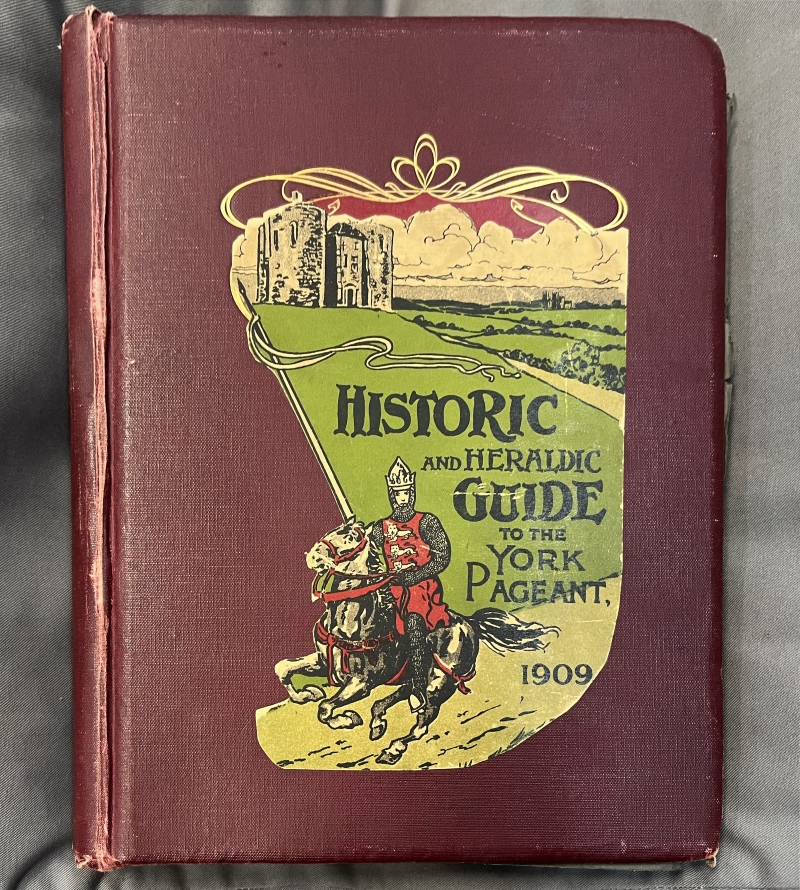
Had a couple of hours in York City library and archives today looking at the records they hold on the York Historic Pageant of 1909. This was the last of a sequence of Edwardian public pageants that ran between 1905 and 1909 in different locations and that we study in the final A225 chapter.
There is an fantastic and detailed account of the York Pageant in the The Redress of the Past: Historical Pageants in Britain website
Angela Bartie, Linda Fleming, Mark Freeman, Tom Hulme, Alex Hutton, Paul Readman, ‘The York Pageant’, The Redress of the Past, http://www.historicalpageants.ac.uk/pageants/1354/
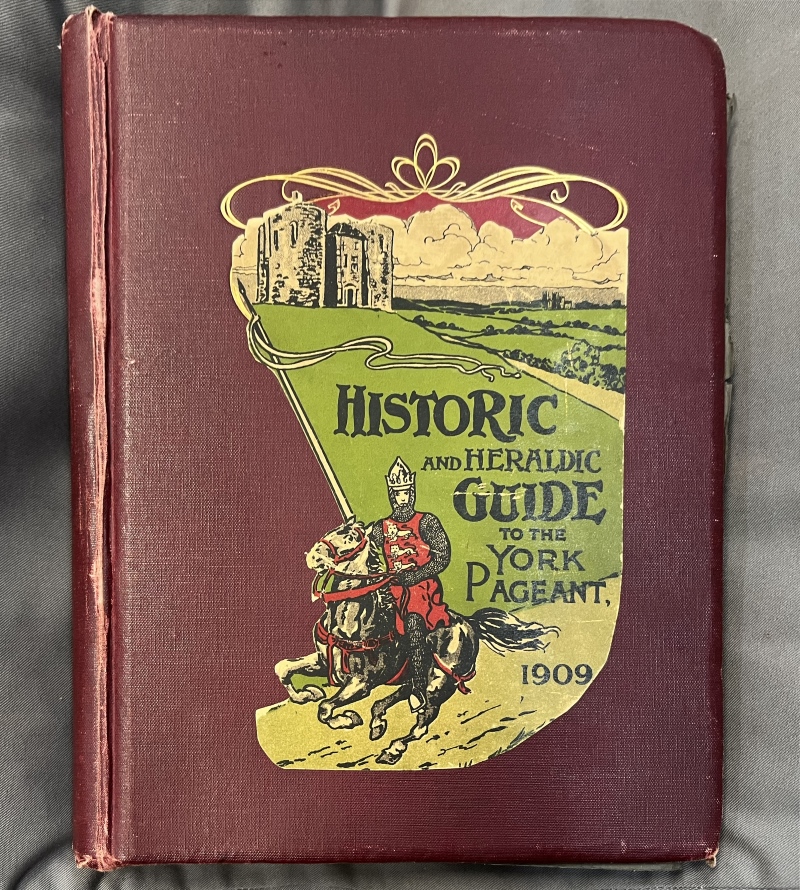
The archive holds a scrapbook that someone (the provenance isn't recorded) kept of the event. It is stacked full of press cuttings, postcards and pictures from the various souvenir brochures.
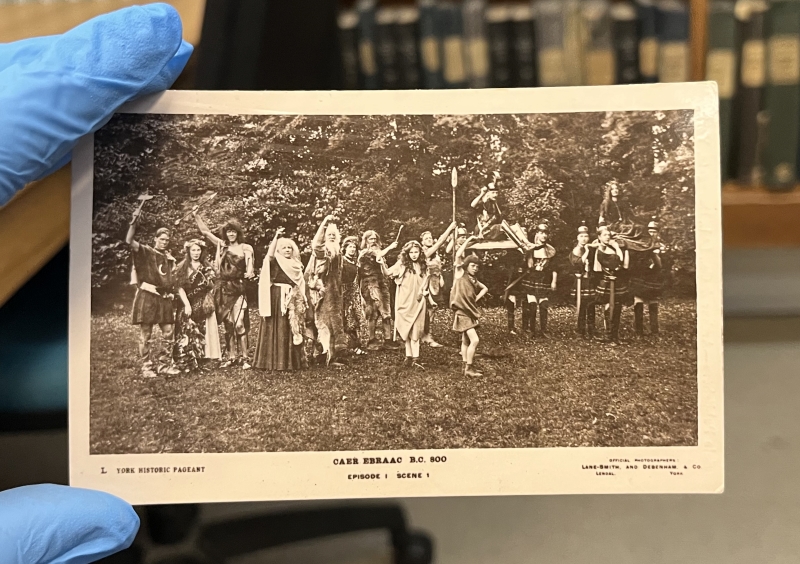
There is also a collection of postcards, showing some of the key scenes.
Like the examples from Dover and St Albans in the module materials. there was plenty of local 'ancient' history (however Robin Hood also made a showing!) but the pageant didn't entirely shy away from some of York's darker past, there was a scene depicting the massacre of Jews in the city in 1190.
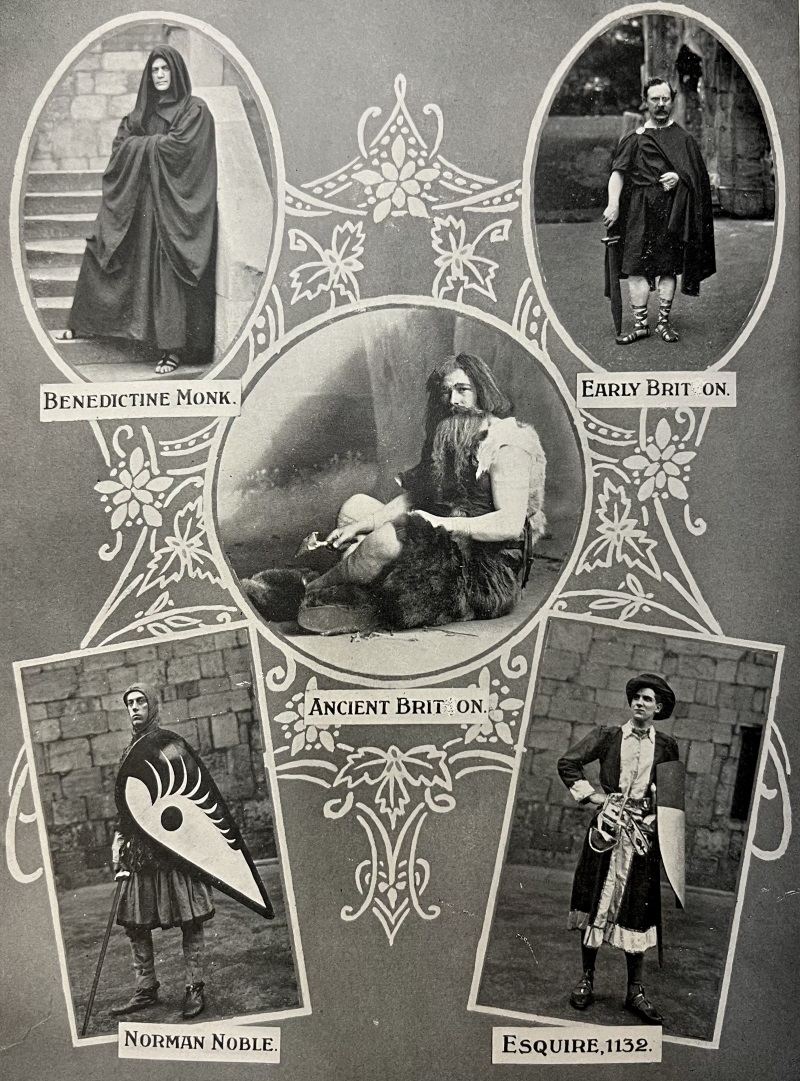
I particularly liked these fearsome ancient Yorkies.
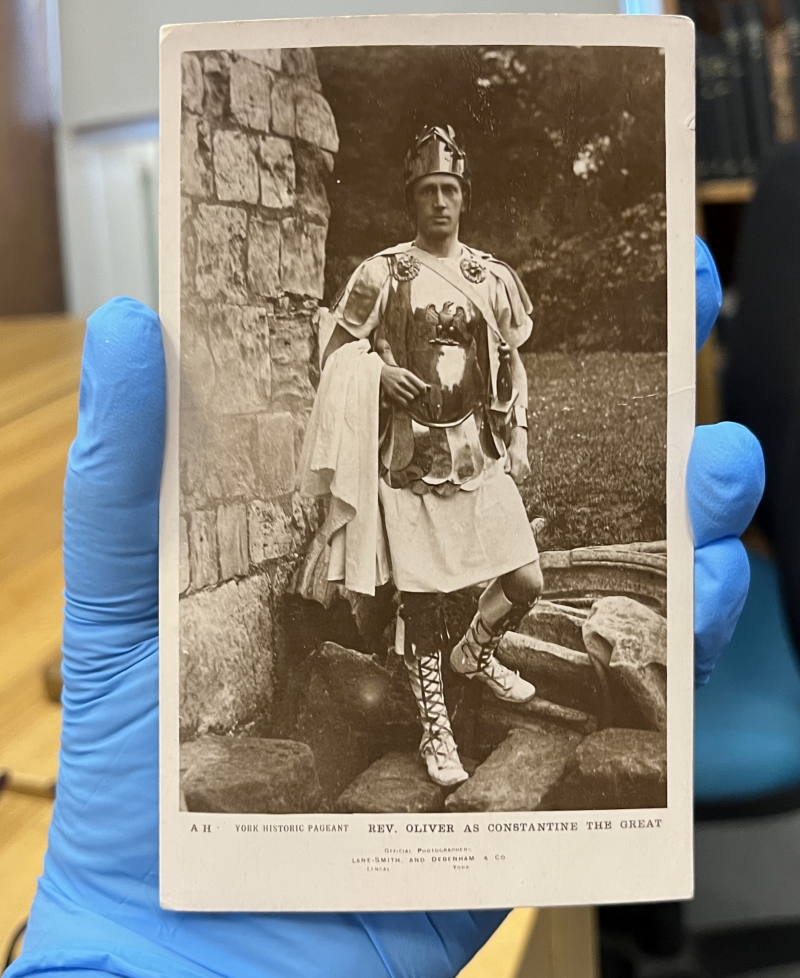
The Reverend Oliver (no relation) here looking suitably imperious as Constantine - the pageant took place in the York Museum Gardens amongst the ruins of St Mary's Abbey.
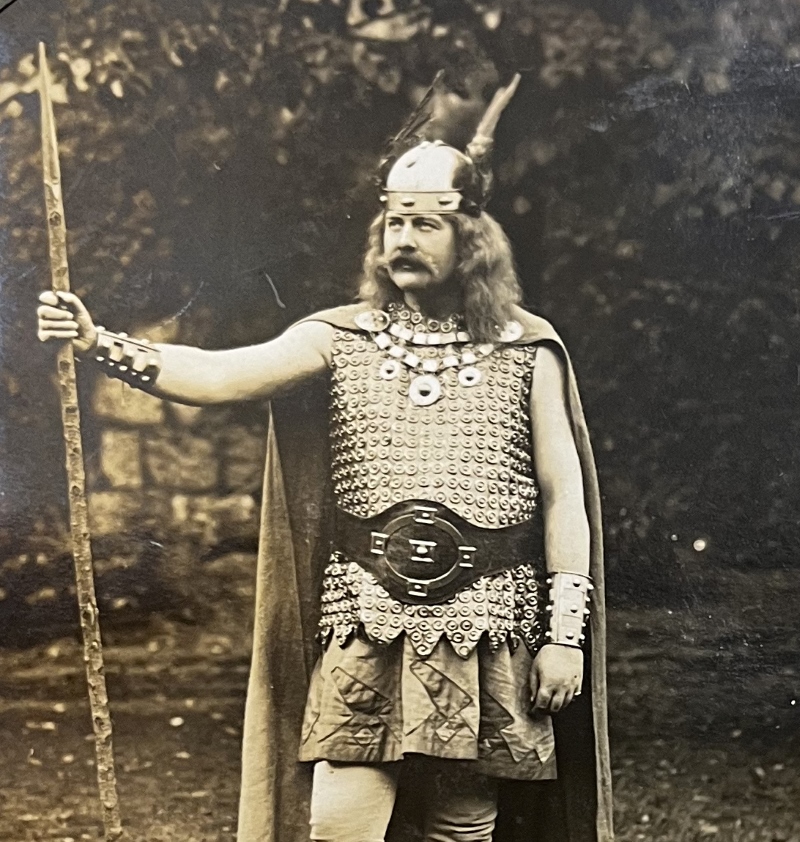
The current Jorvik centre would no doubt despair that viking King Harald Hardrada's helmet has wings on it (it seems their main purpose in life to disabuse visitors of this fallacy) - but Mr Jackson who was playing him looks happy enough!
The costumes look pretty fabulous - as do the hair and beards!
This year the medieval York Mystery plays are on, they run on a four year cycle. Whilst the current sequence of performances didn't start in 1909, there was a scene in the pageant representing the guilds enacting one of the plays.
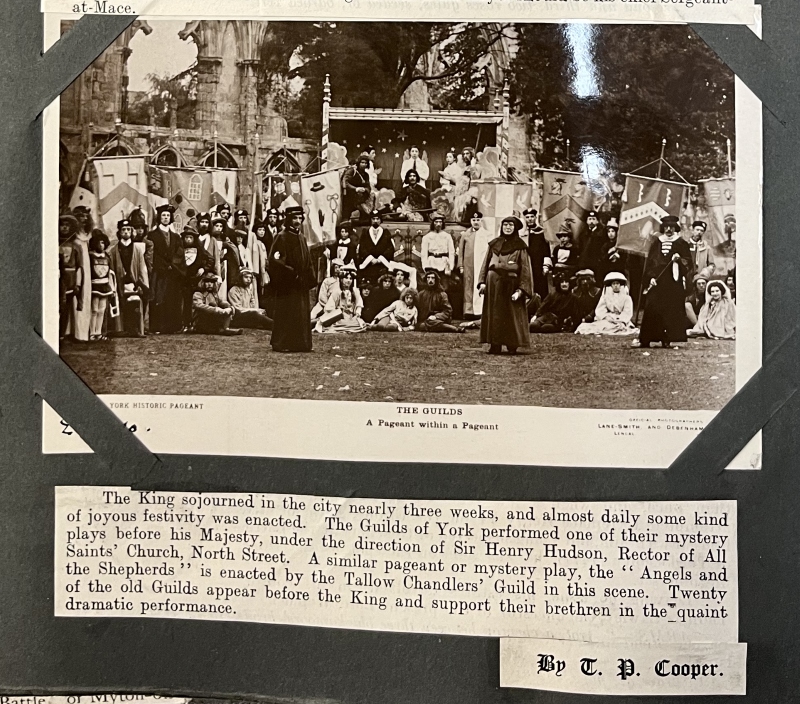
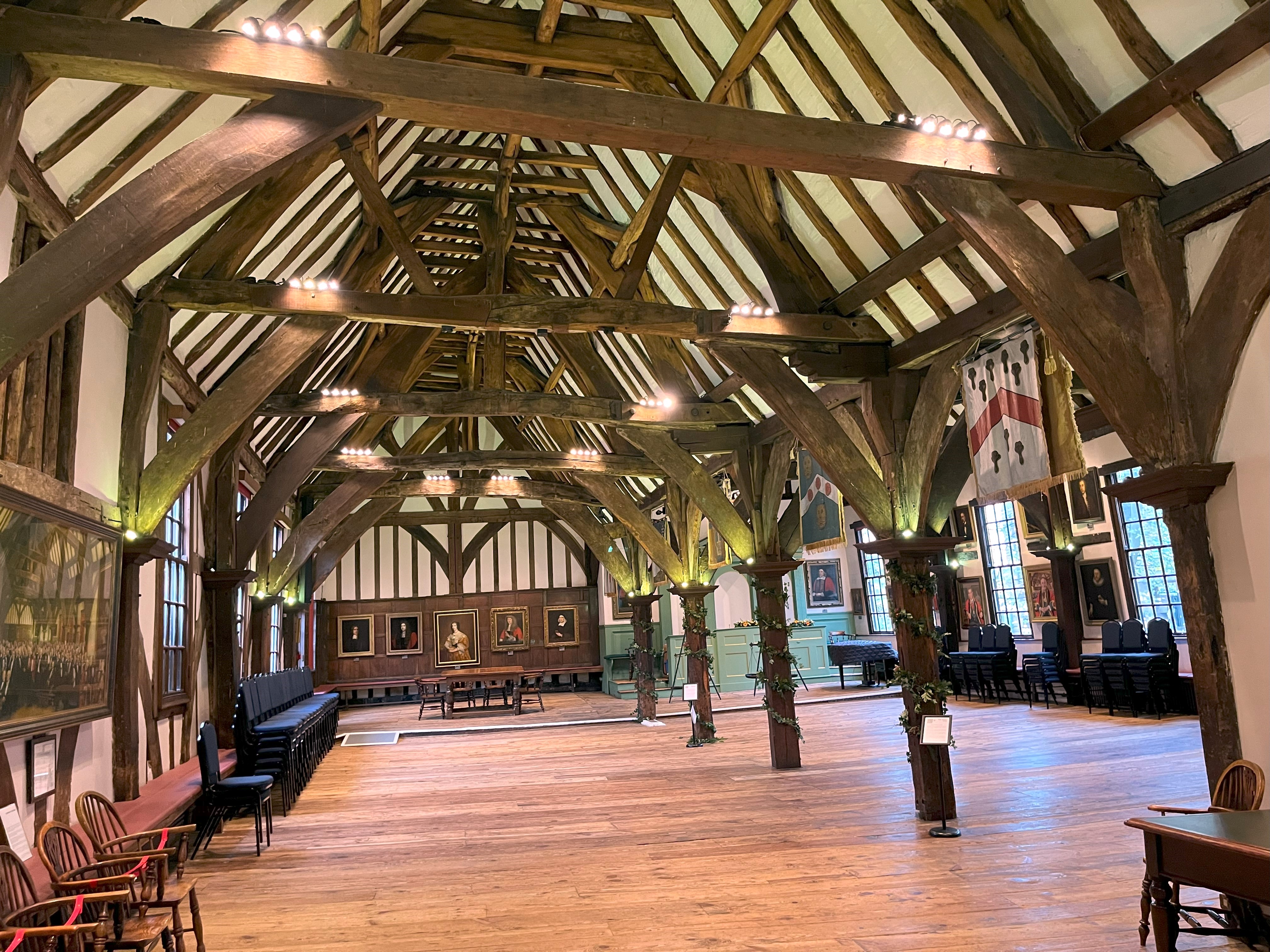
The guild banners that were made for the 1909 pageant now hang in the Merchant Adventurer's Hall in the city, adding yet another layer of historical 'recreation'.
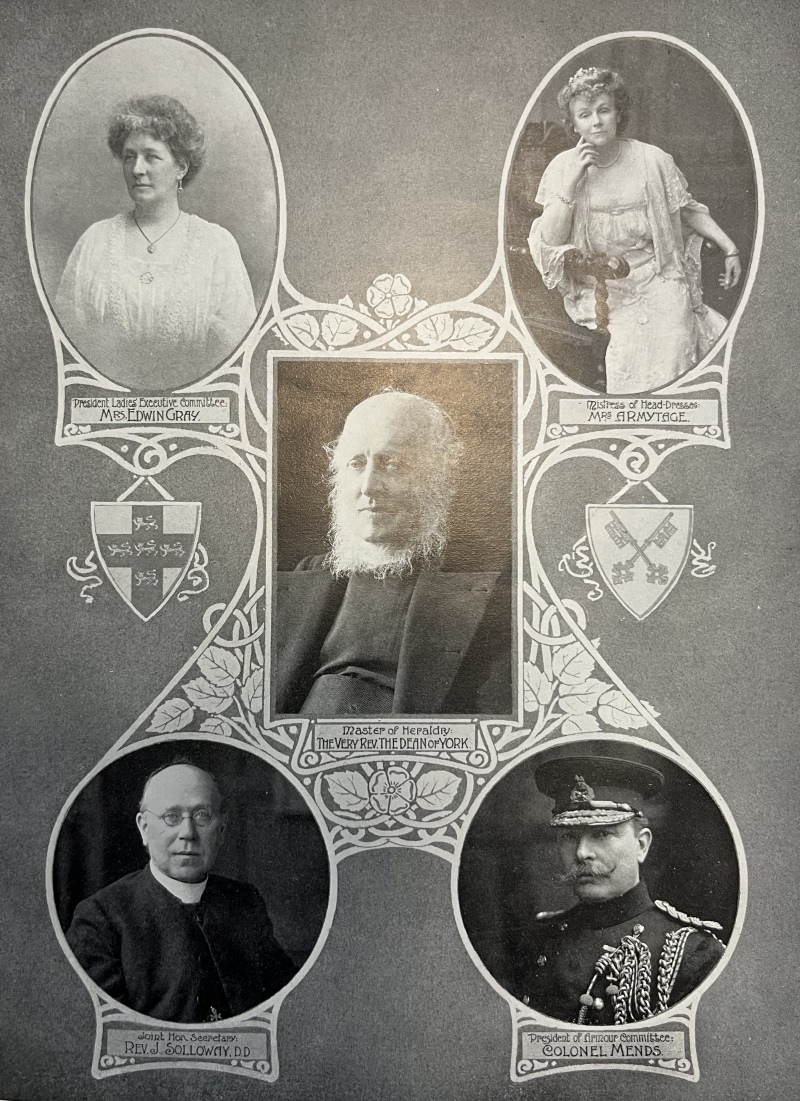
The commemorative brochures were keen to promote the pageant sponsors and various committee members. You can't help feeling everyone was having a grand time.
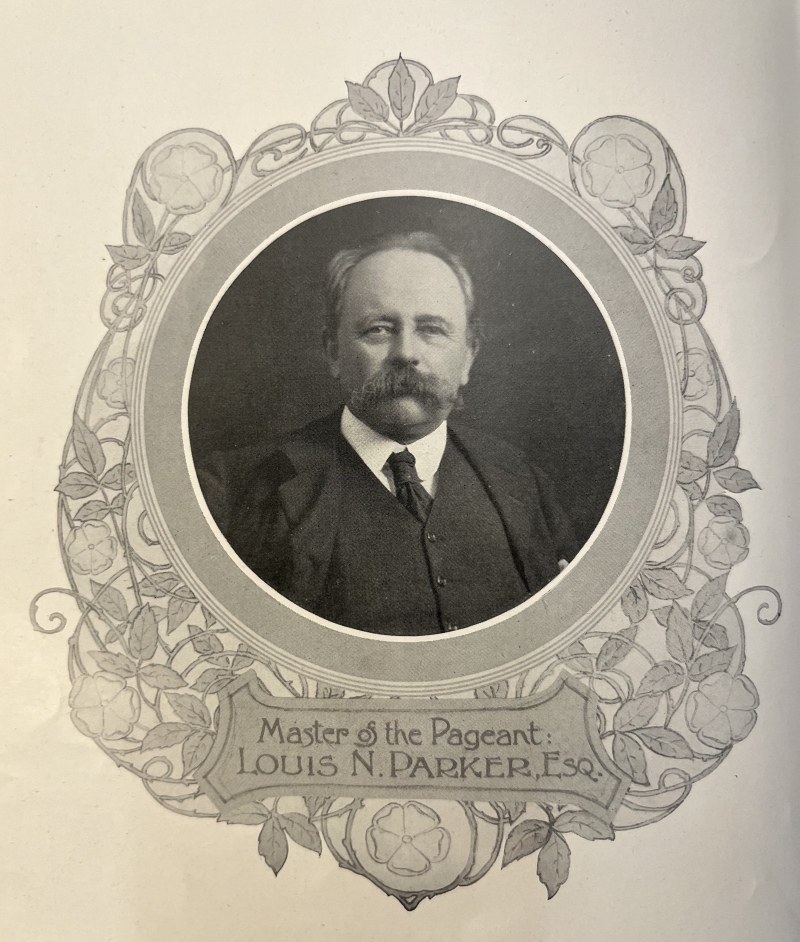
This was Louis Napoleon Parker, the 'Pageant Master' - who had played a big part in launching the craze for community Pageants when he had created the Sherborne Pageant in 1905.
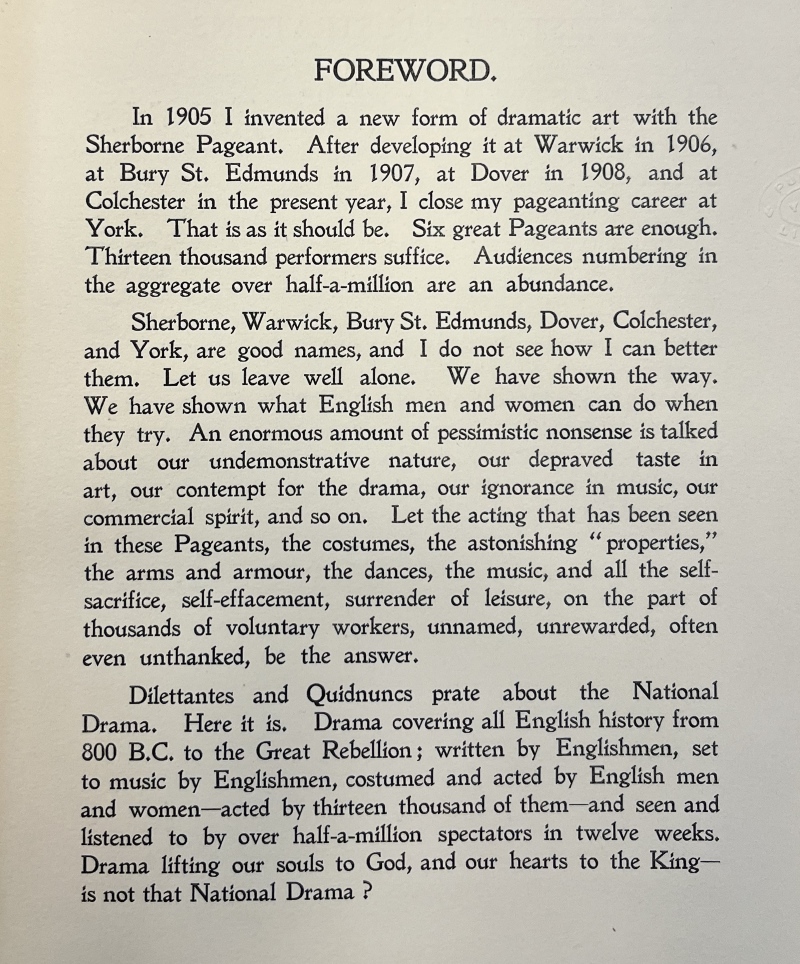
This was his view on the York Pageant...
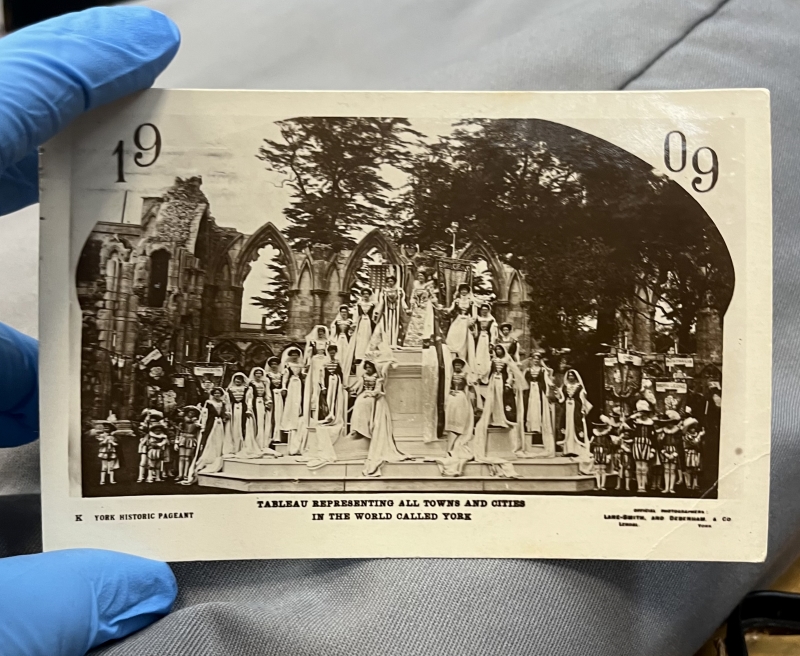
I thought I'd finish with this postcard, which shows the finale of the show in which York was celebrated by figures representing all the other global 'Yorks' (including 'New York'), I think there were about 17 in total.
Not just an example of the 'looking back' that the chapter emphasises - but also, I think, an attempt to foster ideas of a (very white!!) 'Greater Britain', linked together by common culture and roots.