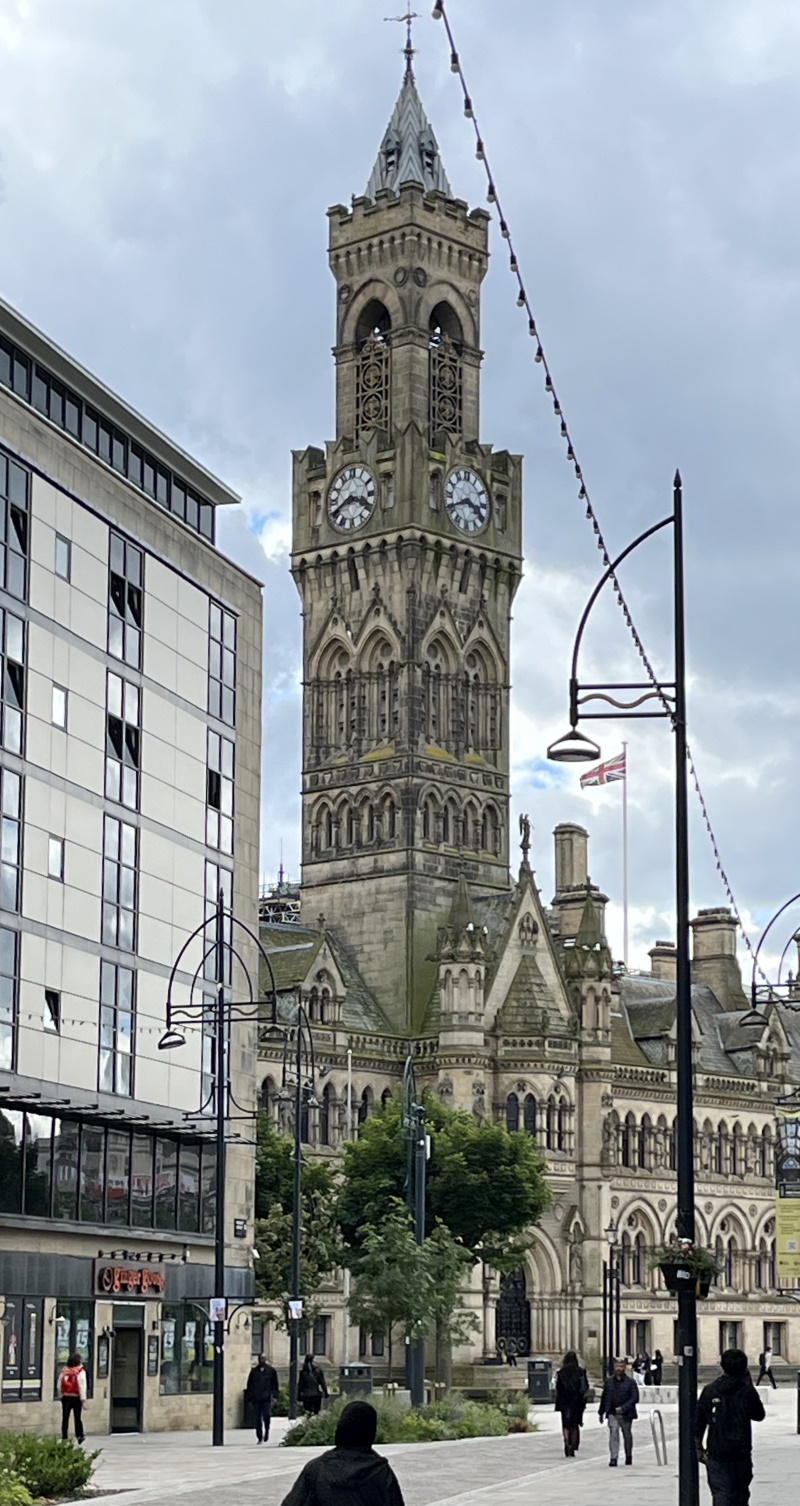
The stimulus for a new political force within Bradford was a large scale strike at the Manningham Mill, run by the Lister family. This dispute had lasted for about five months, but won little for the striking workers - one conclusion drawn from its failure was that the working classes had lacked any dedicated political voice. In response the Bradford Independent Labour Party (ILP) was formed in 1892, and in 1893 the movement had become a national one, with the national ILP holding its first meeting in Bradford in January that year.
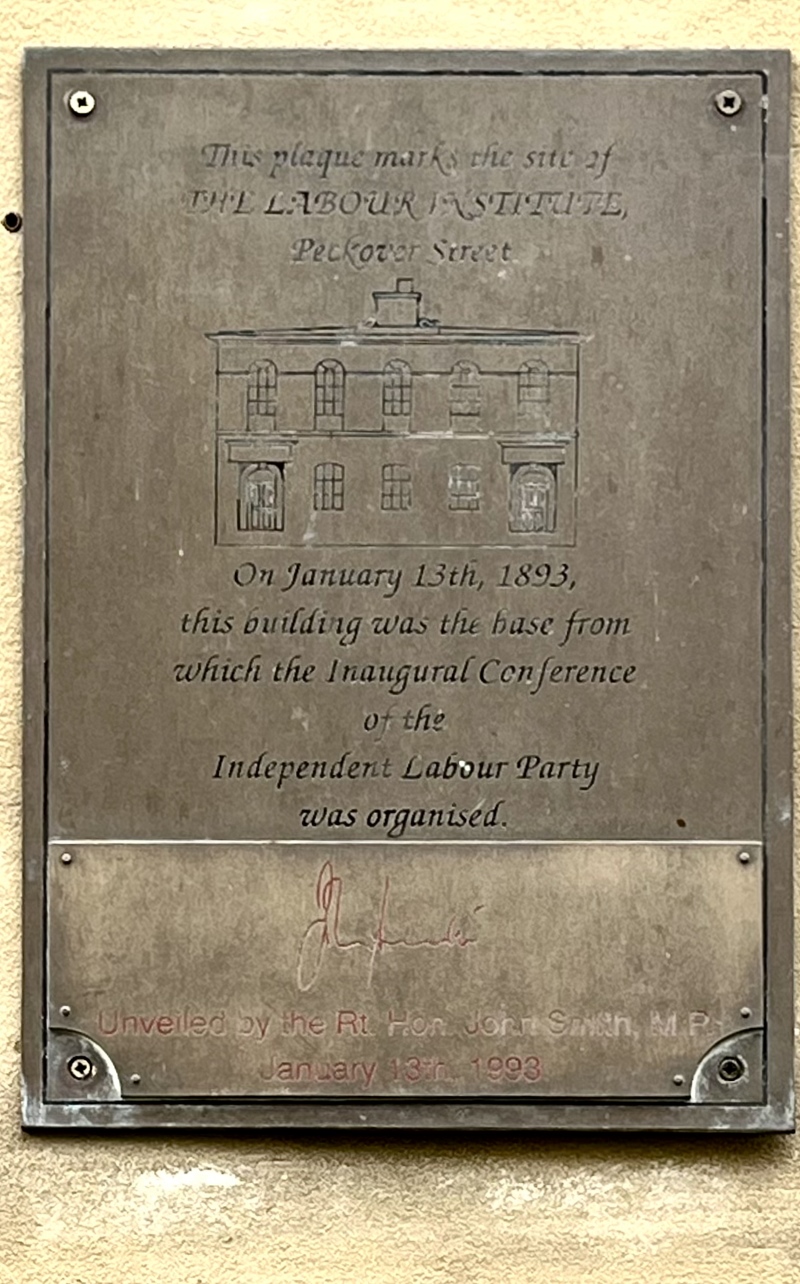
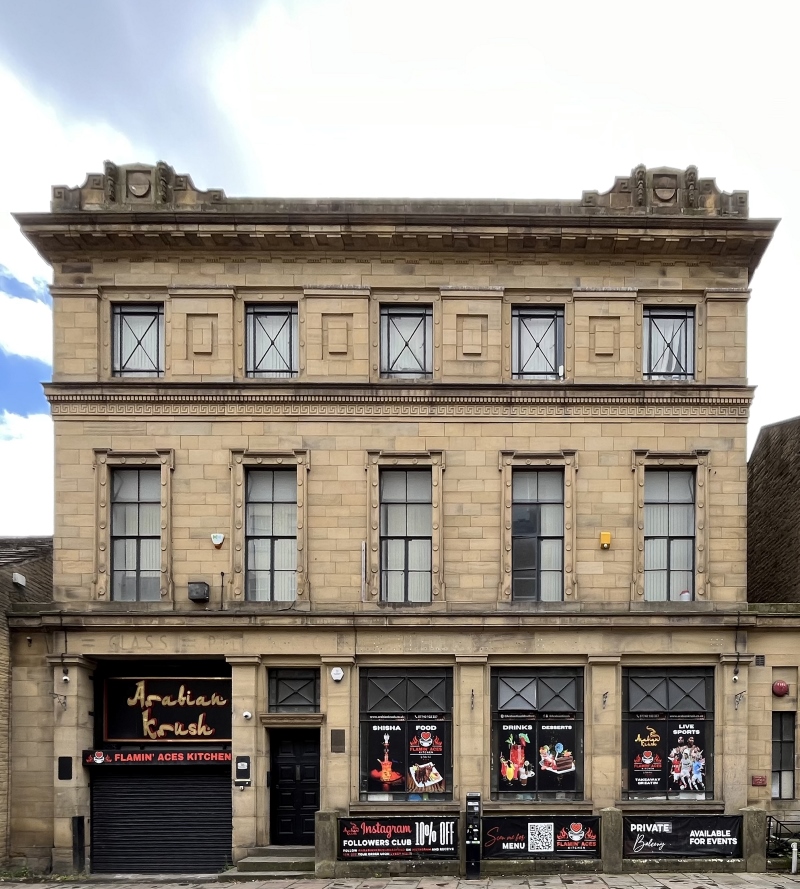
The location of the first Bradford ILP meetings is currently sealed off in an inaccessible court within a shopping centre. But there is a marker for the location of the first national conference of the Independent Labour Party, unveiled on its centenary (it's tempting to imagine there was something else under the superimposed plate bearing John Smith's signature - he'd only become Labour Party Leader the previous July). The original meeting was held on 13th and 14th January 1893, in what was then the Labour Institute on Peckover Street in Little Germany, and was chaired by Keir Hardie. The current building facade dates from the 1920s when it was a glass warehouse (it is currently a Turkish restaurant).
The meeting is also memorialised in a colourful mural on the walls of the local playhouse, derived from an ILP poster of that time .
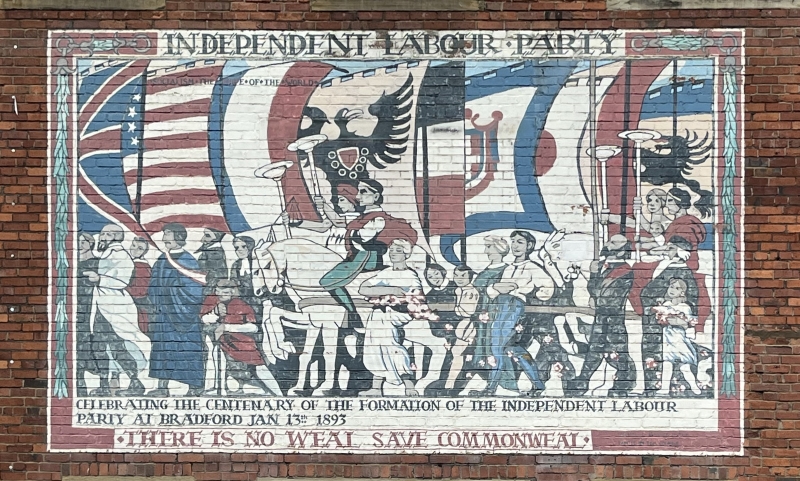
The ILP would affiliate with the Labour Party when this formed in 1906 and then have an 'on/off' relationship with the larger party over the 20th century - often disagreeing over positions on pacifism (which the ILP supported).
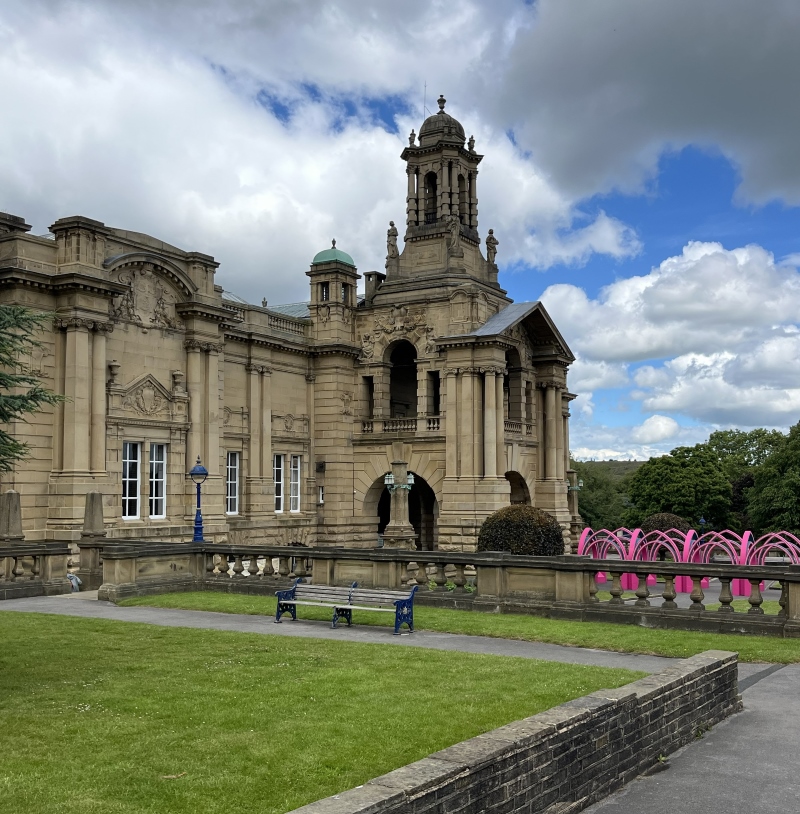
My next stop was a two mile walk away - Cartwright Hall, which houses Bradford civic art gallery. This site was also linked to the Lister family of industrialists (it stands in Lister Park), their wealth was channelled into the 'cultural life' of the city and funded the building. The Hall was opened as part of the 1904 Bradford Great Exhibition, and it was a distinctive aspect of this event that had led me to the gallery.
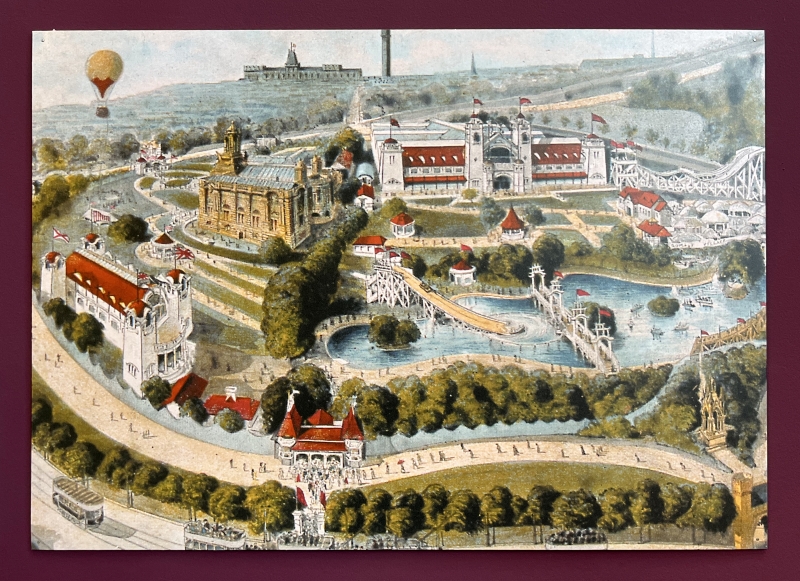
The illustration below gives a contemporary 'birds-eye' view of the Exhibition, which sought to showcase industrial developments (in a temporary 'Industrial Hall'), provide entertainment ('high-brow' in the Concert Hall, lower brows could enjoy waterslides and roller-coasters) - and contrast these highlights of British Imperial culture and technology with a more 'primitive', if exotically fascinating, society - exhibited within a 'human zoo' in the park. This was the 'Somali Village', just visible in the picture below the roller-coaster on the far right.
There was an excellent exhibition in the Cartwright Hall exploring the history of the 'Somali Village' which had featured in an episode of the BBC archaeology series 'Digging for Britain' (there had been excavations in the park at the site).
The site in the park grounds where a 'native village' had been constructed is shown in the map below, labelled at that time as the 'Ashantee Village' as plans changed late in the day as to the group recruited to 'perform' in the exhibit.
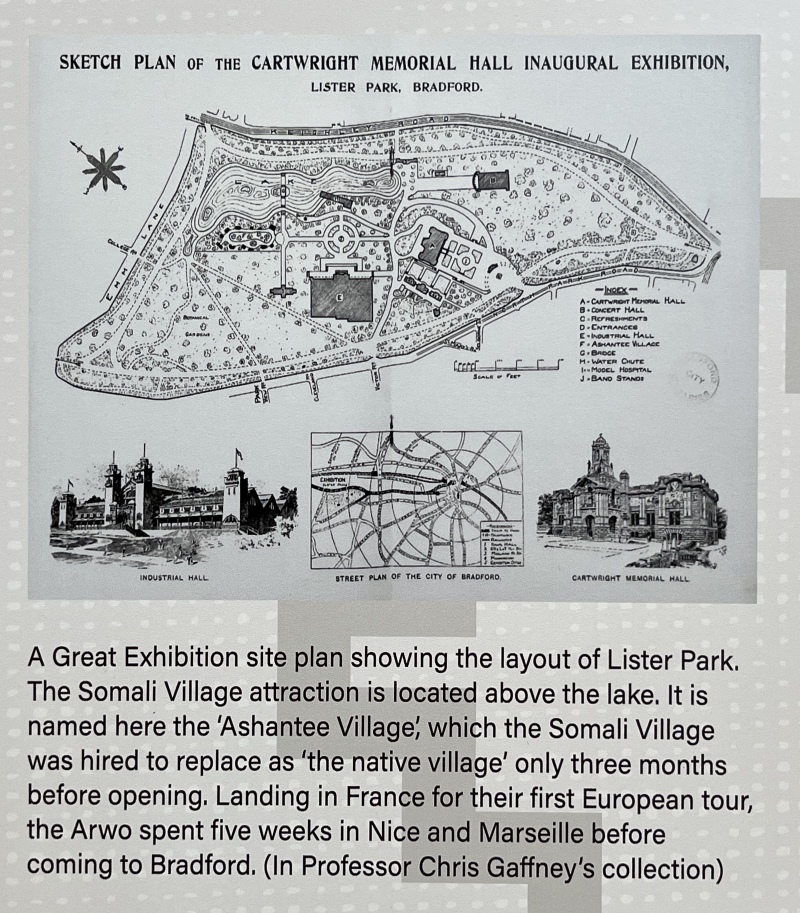
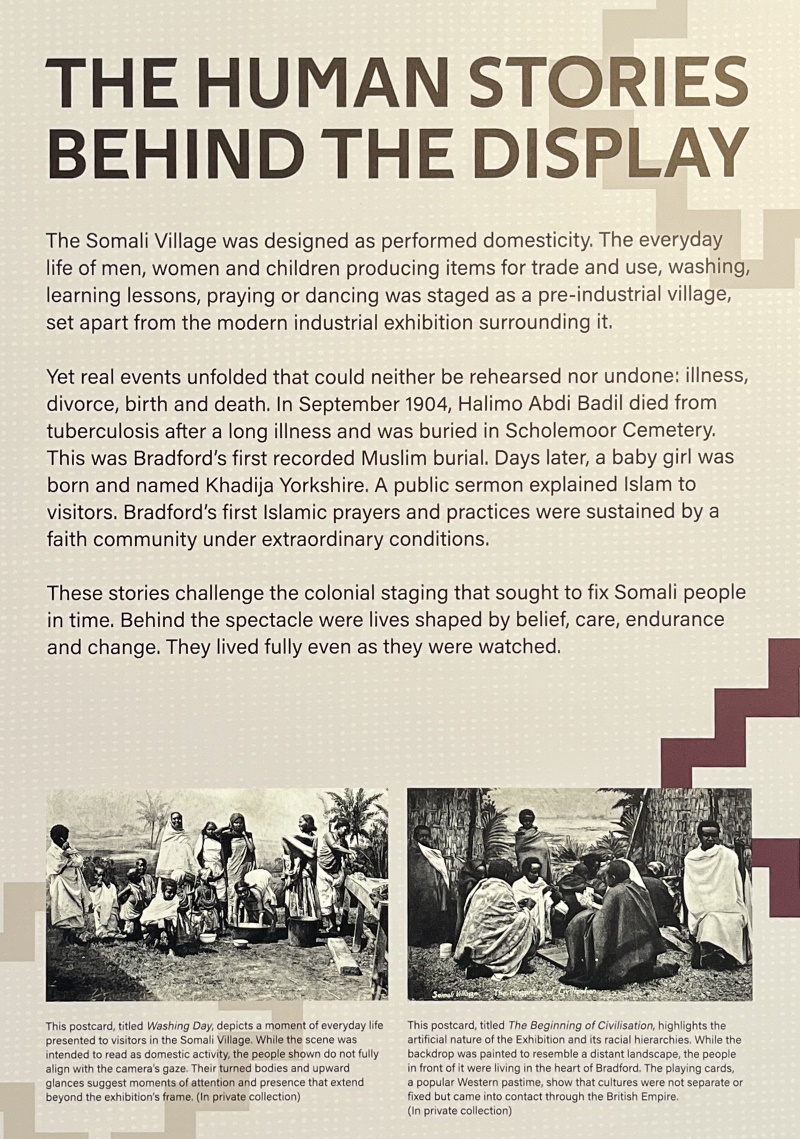
I've included pictures of the main exhibition display boards, as I think they do an excellent job in showing how this really challenging event was presented and explored. The A225 module includes a section on human exhibition and this was a fascinating opportunity to think more about how ideas of race and difference were presented to Edwardian Bradfordians.
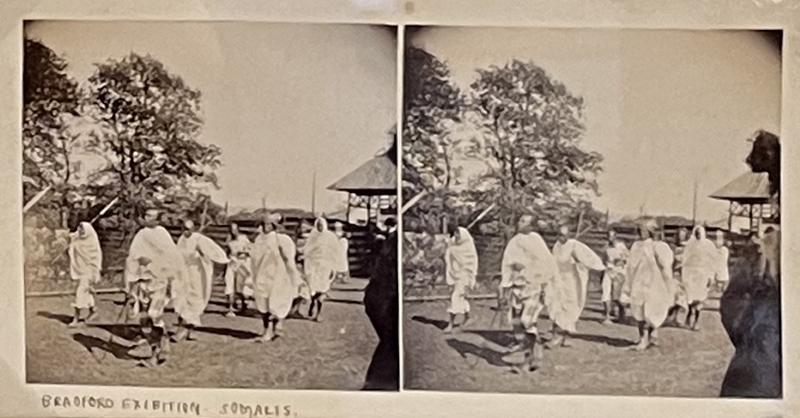
The exhibition included some examples of 'high-tech' souvenirs - this was a stereoscopic slide, showing a 3D image of the Somali group (an Edwardian 'immersive experience'!)
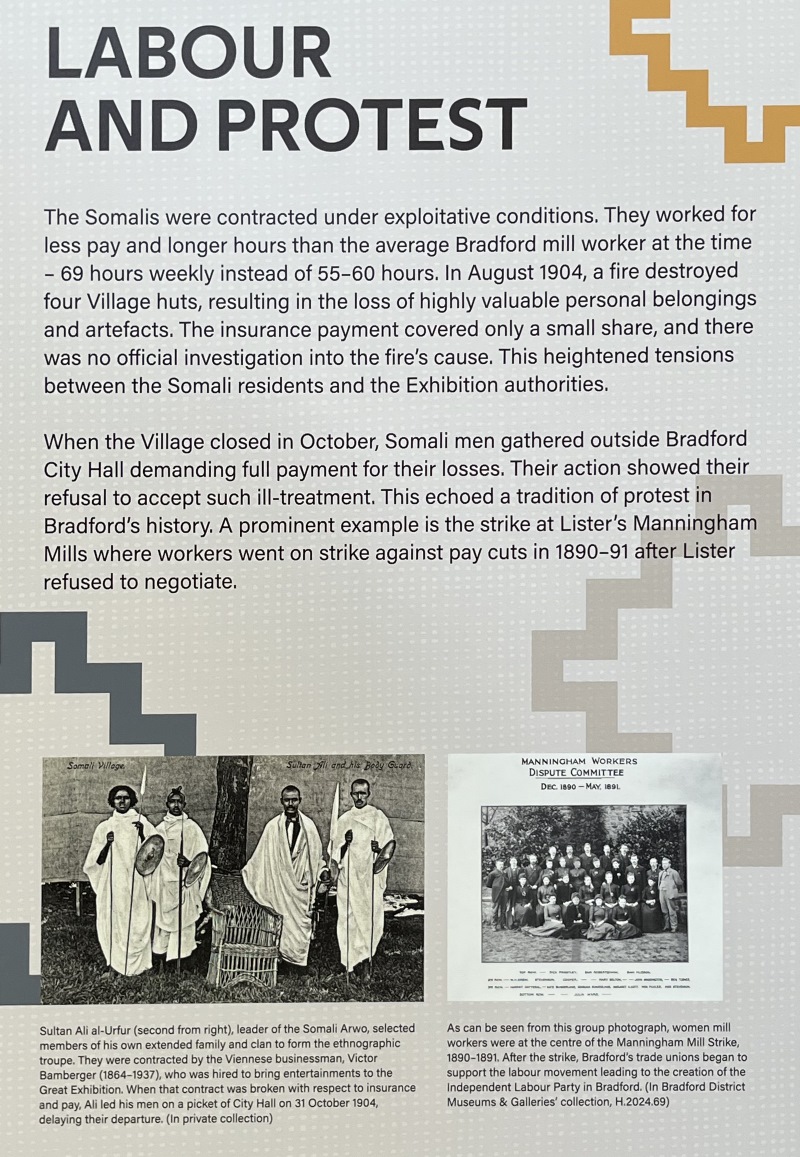
The exhibition explored the agency available to the Somalis, both in protest against their conditions and also in the expression of their religion.
Whilst there is of course much here on display that is terribly saddening, it was also a chance to reflect on who now 'viewed' the past of the British Empire and how a diverse 21st century Yorkshire could mean a much richer understanding of that time.
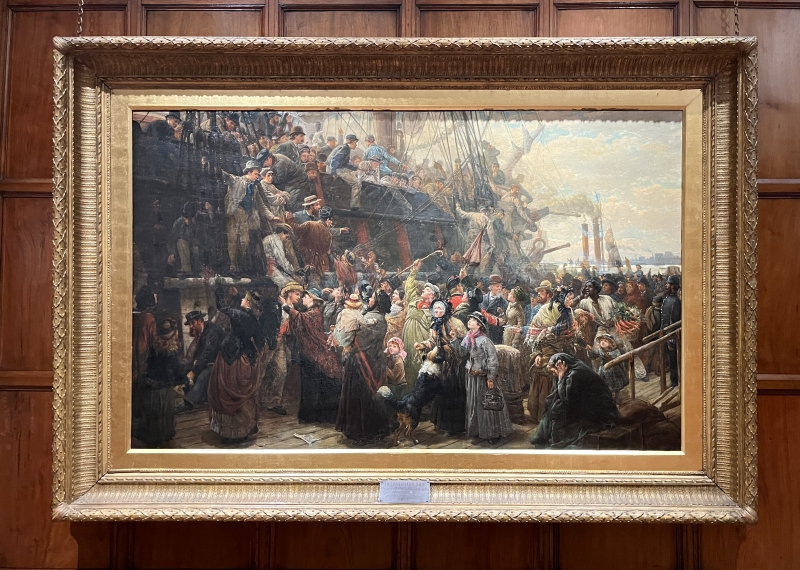
The last thing which caught my eye in the galleries was this painting by a Hull-born artist, Charles Joseph Staniland 1838-1916, 'The Emigrant Ship' or 'Goodbye' painted c.1878. It too was focused on the movement of people across the British Empire, this time though presumably the migrants were going to populate Dominions and Colonies. So much of our modern world shaped over that busy century!
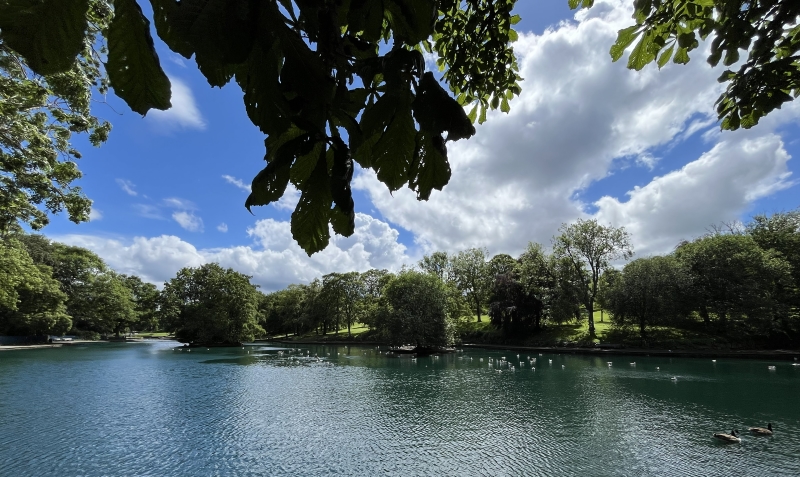
I took a final walk through Lister Park in the afternoon sunshine, trying to imagine the 'Somali Village' on the lawns rising to the right of the lake - and the packed crowds engaged in that strange 'cultural encounter'!
The trip back to the railway station took me past no less than three Northern Victorian social and political entrepreneurs, each with a different claim to fame. William Forster - promoter of education, Richard Oastler - campaigner for the 10-hour day, Richard Cobden - free-trader and anti-Corn Law Leaguer.
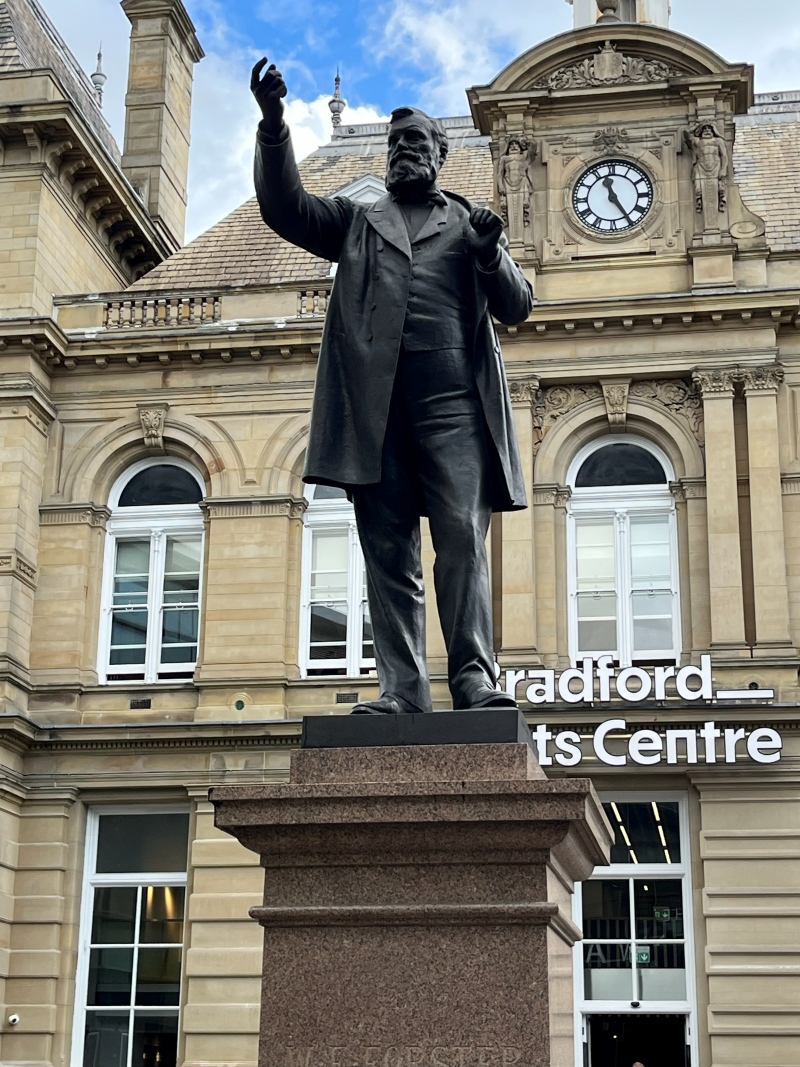
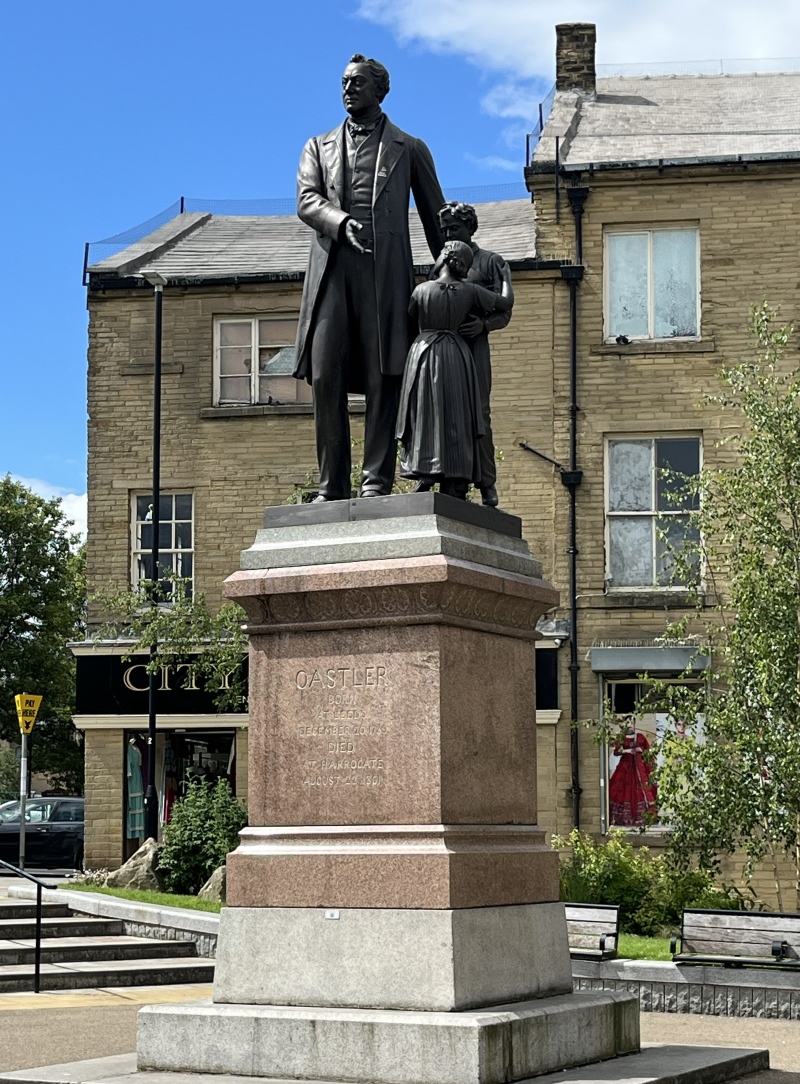
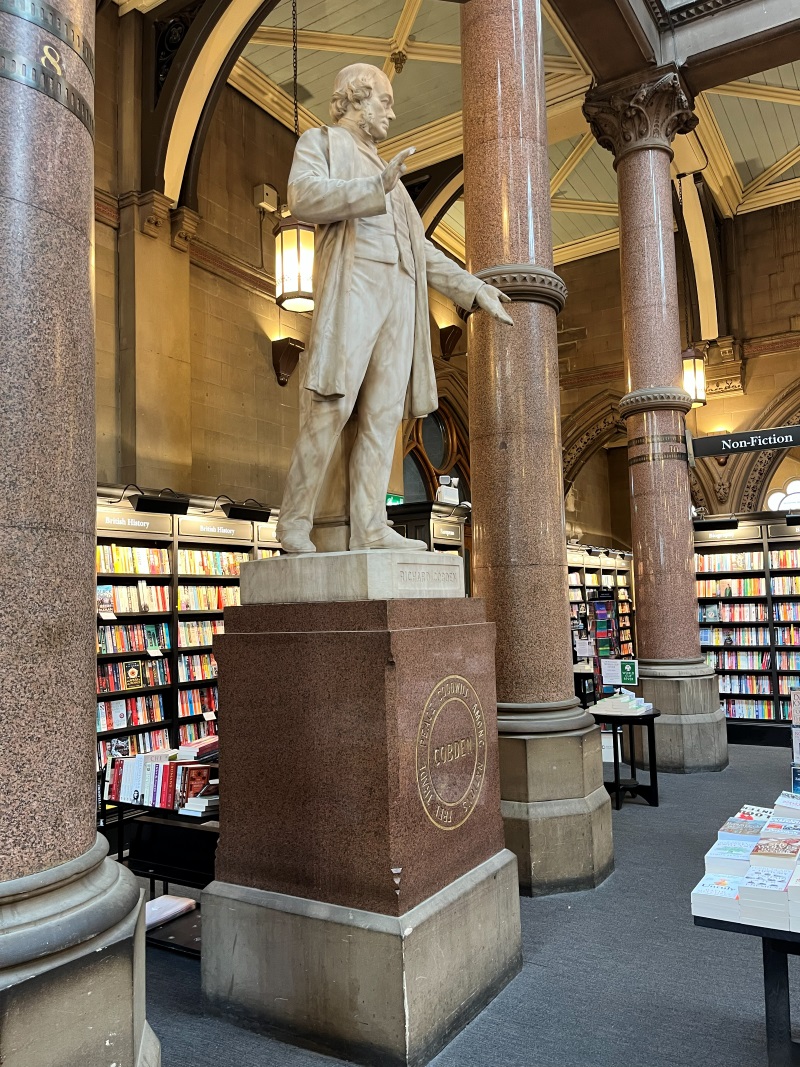
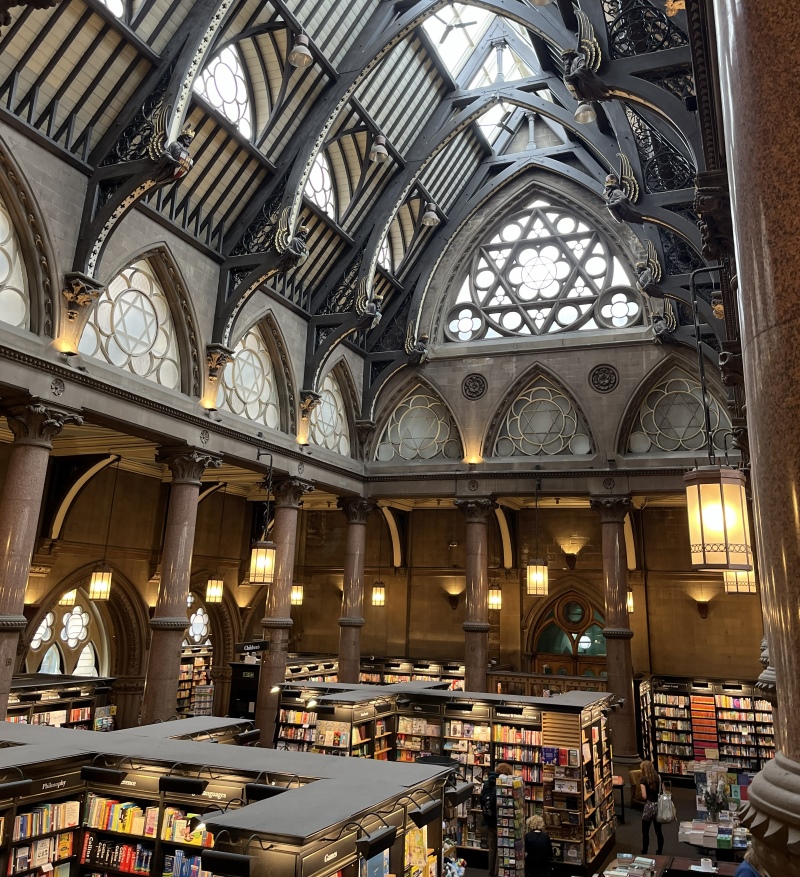
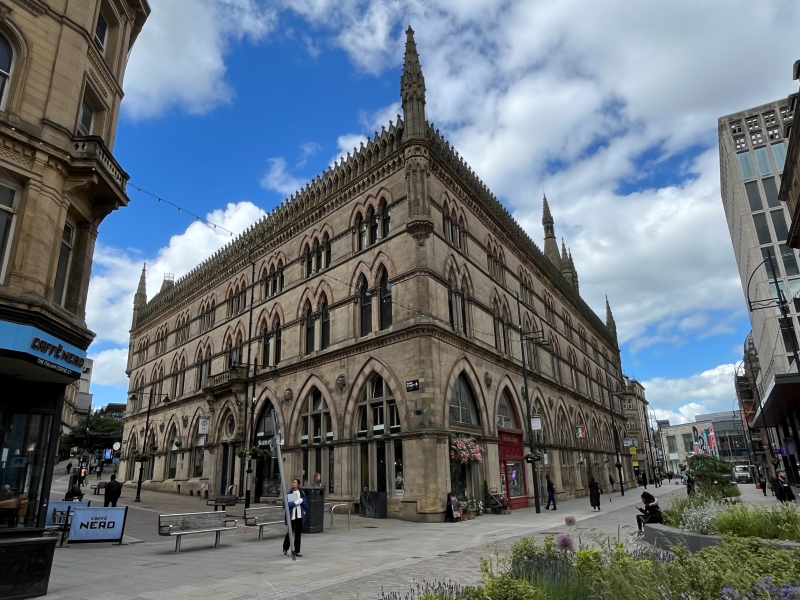
Richard Cobden was addressing shoppers in what may now be my favourite Waterstones - certainly the most architecturally impressive. It is housed in part of Bradford's stunning gothic revival Wool Exchange, a brilliant place for a final coffee and a celebration of all things A225!