I use ChatGPT not as a novelty or shortcut, but as smart assistance —like Google on speed—a structured thinking environment that helps me synthesise the many strands of my life.
Writing & Long-Arc Fiction
In my fiction, I use ChatGPT as a narrative laboratory. I test openings. I interrogate character arcs. I compress dialogue. I examine voice. I compare stylistic approaches — Szalay’s restraint, Nicholls’ tonal warmth, Follett’s structural propulsion — and then decide what serves the story best.
I use the tool to stress-test architecture, chronology, and emotional clarity. It helps me see the scaffolding. I then set myself a three-hour written exam to compose the story.
Diaries, Memory & Psychological Integration
Because so much of my work draws on real diaries, dreams, and memory, I use structured prompts to explore meaning and unearth details. I kept a diary from January 1976 to the early 1990s, and then took up blogging in 1999. For example, my 14-year-old handwriting looked like it said I bought an £8 Splash Patch from the Kard Bar in Newcastle in February 1976. Actually, it was an E 8 Splash Patch (I have an image of one), and it probably cost 65p.
Coaching & Performance Planning
As a senior IoS swim coach, I use it in a very different way. Here it’s a systems engine.
I build macrocycles and microcycles. I convert whiteboards into formal session plans. I align my thinking to Swim England criteria. I refine communications to parents. I examine progression logic and race preparation. I plan the details of sessions for different age group squads.
Health & Physical Regulation
When I was dealing with a viral chest infection (I spent the first two weeks of January coughing my guts out), I used AI to check in, report to my GP surgery and consider what medications I was put on - and as an asthmatic, what plans to regulate that. It's taken six weeks to feel close to 100%.
Mental Health & Cognitive Calibration
I have used AI as a calm, structured thinking partner during an intense family crisis, translating a psychosis into clear language, practical scripts, boundary plans, and escalation thresholds. I used it to align with psychiatric frameworks and discussed it with our key worker, who responded positively. In short, I am using AI as a reflective stabiliser, decision-support tool, and structured crisis companion.
Visual Identity & Imagination
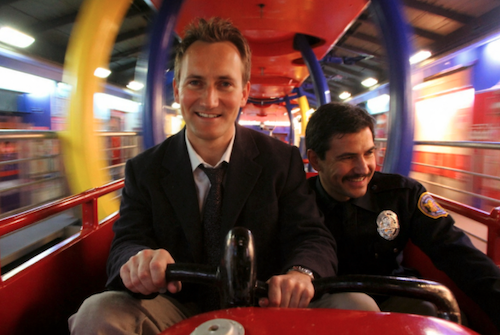
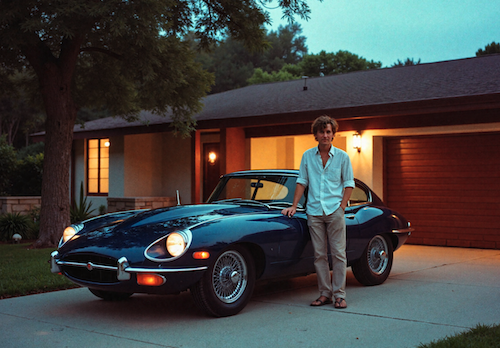
Then there’s the playful side: generating visual prompts for a JV AI model across eras, reconstructing 1970s foyers, boarding schools, and woodland streams. It helps me externalise memory and myth—to make the past and my inner narrative visible.
I use it for trivial matters and major deals. It works. I set up projects and populate these with background notes. I will ask for sources in some cases. I have learnt to write prompts.
Here is a dream revisited.
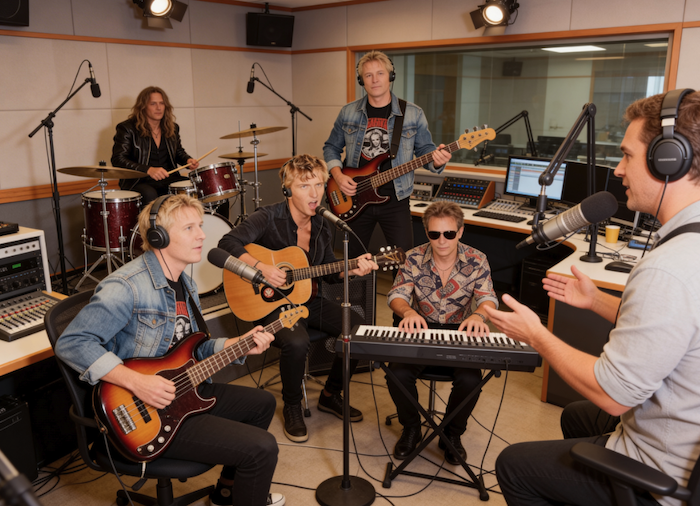
The Dream’s Picture: What’s Happening
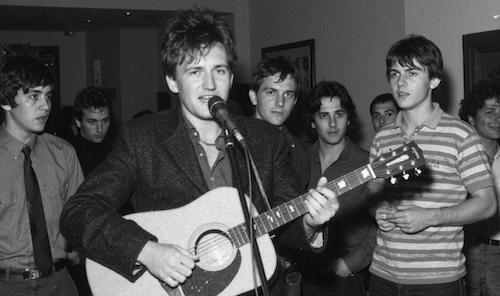
I am recruited into a band because the original singer—an archetypal “huge figure”—is incapacitated and unlikely to return. The group is already a living organism with its own streetwise mythology and practical tricks: the percussionist’s “kitchen spatula” technique; the keyboardist’s portable kit; the guitarist’s recycled interview lines. Their origin story is pub-rough, busking-born, labourer-raucous, held together by shared fun and grit.
Into that organism I arrive not as a pretender but as a new morph, the way bands historically change identity without “ending”—Pink Floyd to Genesis, a continuity-through-metamorphosis. You’re nervous the way you’d be before a technical/dress rehearsal: butterflies, but the good kind—your nervous system preparing to deliver. The first gig is a gentle onboarding: a basement, a friendly crowd, and contained. I hang back, let others field questions, and have a blast. Relief and delight: I belong here.
Now the stakes rise—a BBC-type setting. You will take questions. You will front the public story, not just the performance. The band performs its “chat-show persona” deliberately—reusing lines and checking consent for the act—suggesting a mature understanding that performance includes social theatre, not just music.
I hold drumsticks—not as a drummer, but as a time-keeper: you count the band in. A small prop, like a tambourine or paintbrushes: not essential, but symbolic. I am the carrier of lyrics, the voice, the meaning, the centre. I’m older-ish, but that’s not the point. The point is that I am not a fluke: I have earned my place through rehearsals and auditions. The band sees my work ethic and potential. They’re not asking me to imitate a dead icon—they’re blessing me to become a new version of the band, and a new version of myself.
And I wake charged: not mere permission, but an injection of perfectly timed adrenaline—showing me the way and insisting: this is possible.
I ask ChatGPT to generate a set of Jungian Prompts to seek the meaning of the dream. The project files include details from Carl Jung’s ‘Man and hHisSymbols’. 31 Prompts are produced. These take a couple of hours to answer and are summarised here.
Jungian Interpretation: The Dream’s Core Claim
1) The “Singer Who Is Gone” is a psychic vacancy—your psyche is reallocating authority
In Jungian terms, when a “huge figure” becomes unavailable, something in the psyche has lost its old centre of gravity. This is rarely about literal death; it’s about a mode of being whose time is over.
Your feeling that the old singer is incapacitated rather than dead is psychologically important: it suggests you’re not repudiating the past—you’re outgrowing its dominance. The dream frames this as succession-with-continuity, not rebellion: the past is honoured, but the future must be voiced by someone else.
In plain terms, the psyche is transferring the right to lead your creative life from an internal “legend” to the living you.
2) The band is an inner collective—your “creative committee” is finally in alignment
You describe the band as supportive and characterful, not hostile. That’s a huge diagnostic marker: the inner figures are not undermining you; they are backing you. Jung would read this as a sign that an inner coalition has formed.
-
Guitarist = the competent social narrator who knows what “lands.”
-
Bouncer/percussionist = grounded masculinity, embodied rhythm, working-class ingenuity, but also ethical (he checks you’re okay with the act).
-
Keyboardist = portability, technique, the mind’s ability to carry tools and make music anywhere.
These are not enemies. They are functions.
And you, as a singer, are the integrator: the one who turns the functions into meaning, tone, and story.
3) The basement-to-BBC shift is the psyche staging your development: safe container → public authority
This is a classic developmental move in dreams: a private initiation followed by a public test.
Basement = rehearsal-space psyche; BBC = culture, audience, judgement, legitimacy.
Your joy + “first-day butterflies” is exactly what you’d expect when the unconscious is saying:
You are ready for the next arena. You won’t be killed by visibility.
And crucially: you don’t feel exposed. You feel delighted. That’s not compensation for low confidence; it’s a calibration of readiness.
4) The drumsticks are a quiet symbol of leadership: you set the tempo; you count the life in
You don’t use them for drumming. You use them to count the band in. That is symbolic authority without domination: initiating, timing, beginning.
It also bridges your waking life: you’ve learned that you thrive when “counted in” by a brief, prompt, deadline—when your catherine-wheel mind is corralled. The dream hands you the drumsticks: you may now count yourself in.
This is the psyche moving you from “needing an external cue” to “becoming the cue.”
5) Your creativity is shown as alchemy: humble tools → sound; old diaries → living myth
You already see the alchemical operation:
-
kitchen spatulas → percussion method
-
portable keys → music anywhere
-
diary milked → scene with jeopardy, tension, myth
That’s not “fake.” That is transformation—the psyche’s favourite operation. In Jungian terms, this is individuation’s craft side. You are not being asked to be original ex nihilo; you are being asked to be original by transmuting what you have.
6) The deepest theme is authenticity without perfectionism
You explicitly say perfectionism is your downfall, and that you’ve shied away from big talks (Jim Henson / Watersprites) because of it. The dream’s name—Boomzuki/Booski—not quite nailed—is medicine:
The thing can be real before it is perfect. The name can come later.
Your unconscious is giving you a culture where rough edges are part of credibility: pub-born, raucous, labourer-fun. That culture is a corrective to “privilege paralysis” and over-refinement.
7) The “persona precedes integration” question resolves surprisingly: you refuse the frame—and the dream agrees with you
Your answer to 23 is decisive:
“Not at all… It is the quintessence of who I am.”
That is not a denial of persona; it is a claim that the persona is no longer merely a mask. In Jungian terms, you are arguing that the role has become ego-syntonic and integrated.
And the dream supports that: you do not feel like an impostor, you feel like a rightful successor who has earned it. So the dream is not saying “fake it till you make it.” It is saying:
You have made it internally; now act as if that is true publicly.
This is a big difference. Persona-first would be: “try on frontman.”
Your dream is: “you are frontman—stop treating it as hypothetical.”
The Interpretation in One Sentence
This dream is an initiation into public creative authority: your psyche shows an inner band that trusts you to lead, not as an impersonator, but as the next evolutionary form of your own voice—provided you stop letting perfectionism and age-timidity delay the moment you count yourself in.