OU blog

Personal Blogs

Design Museum

How AI has greatly enhanced  the way I coach age group County, Regional and National swimmers 

Visible to anyone in the world

How AI has greatly enhanced  the way I coach age group County, Regional and National swimmers 

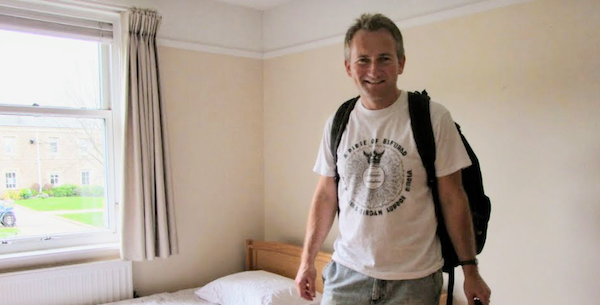
An AI-generated image of the author staying away at a swimming gala

If you’d asked me a few years ago what coaching swimming looked like, I’d have said: stopwatch, laptop, whiteboard, instinct, and experience. That was the craft. And it still is, at its core.

But now?  AI has fundamentally reshaped how I coach, not by replacing me, but by amplifying everything I do. It's like having the most eager, brilliant and insightful assistant coach at my side. 

From Seasonal Guesswork to Precision Planning

One of the biggest shifts has been in annual and macro planning.

I now map out the season with far greater clarity, aligning training blocks to competition demands, physiological development, and athlete readiness. Using structured calendars and planning tools, I can see exactly how a swimmer progresses from 

September aerobic work to a championship taper.

That long-term structure used to live partly in my head. Now it’s explicit, dynamic, and constantly refined with eqse. I can connect a Tuesday night session in October directly to a race in May—and justify every metre in between.

Even something as detailed as training zones is no longer just theoretical knowledge. I actively apply models of aerobic capacity, threshold, and lactate tolerance to ensure sessions hit the intended physiological targets. And I do this with charts using 

Designing Better Sessions, Faster

Session planning has become sharper and more purposeful.

Take a typical P2 session: I’m designing sets that deliberately target A2 aerobic development, pacing discipline, and skills under fatigue—not just “a hard set,” but a clearly defined outcome.

AI helps me:

  • Generate variations of sets aligned to specific energy systems

  • Check progression across a week or cycle

  • Balance volume, intensity, and skill focus

What used to take hours of manual thought, I can now iterate quickly—and more importantly, improve. I’m not starting from scratch each time; I’m refining a system.

Individualisation at a Completely New Level

Where technology has really transformed my coaching is in individual athlete work.

I can now build detailed profiles of swimmers that go far beyond times. Using structured frameworks like the Person → Athlete → Performer model, I’m looking at:

  • Behaviour and mindset

  • Physical and technical development

  • Race execution under pressure 

For example, when analysing a swimmer who is a National Qualifier, I’m not just noting that they have strong IM and butterfly. I’m identifying:

  • Aerobic gaps in distance freestyle

  • Opportunities to convert near-miss qualifying times

  • Behavioural patterns like consistency and training habits 

AI helps me synthesise all of that into clear, actionable priorities.

It’s like having an assistant coach who can process everything instantly—yet the decisions remain mine.

Solving Problems More Effectively

Coaching is constant problem-solving.

Why is a swimmer plateauing?

Why are they dropping stroke length under fatigue?

Why are they missing race execution?

Previously, those answers relied solely on experience and reflection. Now, I can interrogate those problems more deeply:

  • Compare training data against expected adaptations

  • Generate hypotheses quickly

  • Explore alternative approaches

Even reflections—like when a session doesn’t quite land—become more useful. I can analyse what happened, adjust communication, or redesign sets with more clarity.

Race Planning and Performance Detail

Race planning has also evolved massively.

Instead of vague instructions like “go out strong” or “build the back end,” I now create detailed race models:

  • Split targets

  • Stroke-specific cues

  • Tactical intentions

For a swimmer, that might look like:

  • Controlled fly → build back → precision breast → aggressive free

  • Exact split expectations across each 50

This level of detail transforms how swimmers understand performance—and how consistently they can execute it.

Supporting Younger Swimmers More Effectively

Technology hasn’t just helped with top swimmers—it’s arguably even more impactful with younger athletes.

For 10–12-year-olds, I can design structured progression plans where:

  • Every session has a clear objective

  • Skills are reinforced consistently

  • Confidence is deliberately built

For example, an 18-session gala preparation plan ensures that every swimmer understands starts, turns, and race skills—not just fitness.

That level of consistency is hard to maintain without support. AI helps me stay disciplined in my own coaching.

Becoming a Better Learner Myself

Perhaps the most important change is how technology has affected me as a coach.

I’m no longer limited to what I already know.

Alongside formal learning through the Institute of Swimming, I’m constantly:

  • Exploring new coaching ideas

  • Testing different physiological models

  • Reflecting on my own behaviours and decisions

The expectation now is continuous development. The Optimal Coach Development Framework reinforces that coaches must be students of the sport, always evolving and refining.

AI accelerates that process. It challenges my thinking, fills gaps, and sharpens my approach.

The Balance: Technology + Coaching Instinct

Despite all this, one thing hasn’t changed.

Coaching is still about people.

It’s about:

  • Reading a swimmer on the poolside

  • Knowing when to push and when to hold back

  • Building trust and belief

Technology doesn’t replace that. It enhances it.

The best way I can describe it is this:

AI gives me better questions, better structures, and better options. I learn on the fly; just in time, at the point of need. 

But the coaching—the judgement, the relationships, the environment—that’s still human.

And always will be.

Permalink Add your comment
Share post
Design Museum

Learning Online once more

Visible to anyone in the world

I started distance learning with the Open University on 2001. I’m a better student than I am an employee sad ADHD and assorted challenges probably having something to do with it - I’m unduly suspicious and untrusting of people and easily bored. A happy working life for me means juggling three or four part time jobs and paid or paying hobbies.

Meanwhile I’m back in Coursera and onto the third of five modules on Project Management. I’m impressed with the content and the pedagogy. It’s pleasing to see how learning online has evolved and how practices that become apparent in my time have been adopted. Technological advances, relentless improvements and experience means that the science of learning is understood - you are made to listen, take note, struggle, be tested and as a result the knowledge being shared slowly accrues. I want to apply practical tips on project management into my Town Council work, maybe in a task & finish group for the swimming club and perhaps even getting myself back into video production which I so loved in the 1980s and 90s. On verra.

I have up social media a month ago. No X, Facebook or Instagram, no doom scrolling. If the BBC doesn’t stop quoting Elon Musk every time he makes an arse of himself on X I am going to ditch BBC news as well. 

Permalink
Share post
Design Museum

New blog post

Visible to anyone in the world

The end of year does this to me. 

I come into it with ideas to achieve a few things, change behaviours, get better, be better. 

I'm forever in my late 20s mentally so I don't give a flip about my age even if others do. There are roles and jobs for people in their 60s and 70s. Volunteer work is a pushover, but being a Town, District or County Councillor requires 'putting yourself out there' and in competitive seats being a 'known as a contributor and pragmatist who gets things done solving problems and dealing with challenges'. I can do this. I do this anyway. 

This can tie in with my interest in the environment and trees, an interest in 'youth' and sports development, my interest in the arts and the power and joy of creativity.

I could have been marking 15 years at the Open University. 

There's a story. We're just back from that part of the world ... almost. I could never have moved the family from our lovely Lewes in East Sussex to Milton Keynes, but we may have forged a new life in somewhere like Banbury. 

Another life, another time. All that counts is the next hour (the introduction to the Project Management Course I have signed up to on Coursera); the rest of the morning on some DIY in our leaky shed/workshop at the top of the garden; a woodland walk (if the rain stops), and hopefully some art (the large pen and ink drawing or relief print I am doing of Dover House, Barton on the Heath before making supper, watching a movie and settling down to a second reading of Ely Green's autobiography 'Too Black, Too White'.

And so a plan is made.


Permalink Add your comment
Share post
Design Museum

My only link to postgraduate learning

Visible to anyone in the world

Online providers have developed, and potentially stumbled if AI interferers. For now, I cannot see anything less than human engagement from a tutor/tutors, and fellow students as a motivation to stay the course. That said, I can totally see how the trials and tribulations over six months or more to get a dissertation out of me from a tutor could have been dealt with over a weekend by Chat.AI. It was a case of de-scrambling my multiple, mass ideas and references from soup to a spaghetti with coherent lines of argument. 

Meanwhile, if you Google 'Lewes District Council' you will find where and what I've been at for the last 9 months. I've learnt that for all my love of digital nothing beats a piece of paper through the letterbox, and a conversation tipped to listening to the resident with a problem, complaint or an idea. 

Permalink Add your comment
Share post
Design Museum

Learning Online!

Visible to anyone in the world

Here's something rare? Something about e-learning, or learning online, or simply 'doing a course online'.

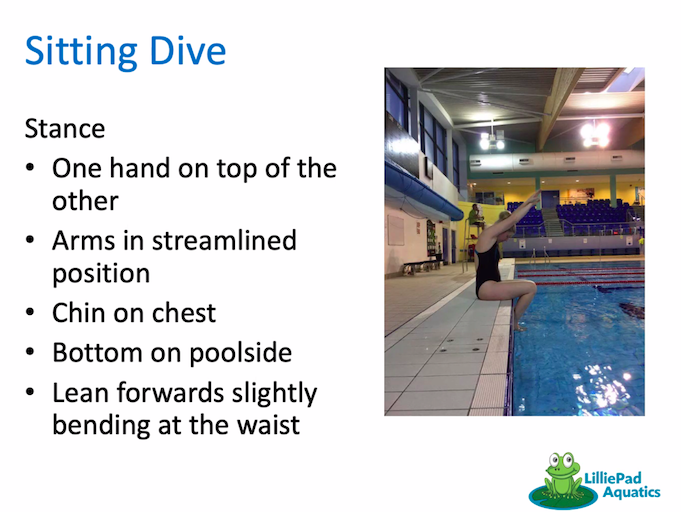
A slide from a presentation by Hollie Fields on 'How to teach diving'

I have done two of them recently, both for Swim England, both a speaker online with a set of slides, Zoom and break out rooms. No assessment included at all, so I could just as easily had the camera off and watched telly. 

Both were show and tell slide presentations, one better than the other, both perfectly informative. I didn't have to take notes, I did. I didn't have to take screenshots, I did. I didn't have to write one of them up on 'How to teach diving', but I did. And I'll write a 'poolside guide' too.

Anyone with enthusiasm for a topic and a nifty line in Slides/PPT skills can teach online. A lesson is a meeting online; we've all done hundreds of those now.

It's no longer e-learning is it? Or even distance learning.

It's why I orientated towards teaching (I have a Cert.Ed) - my first year towards a PGCE, Teaching online is simply a skill that teachers should have in their toolkit. The class could be small, or large, anywhere in the world, and at anytime. A recording and a set of questions in a quiz are easy enough to conjure up. 

Game over? Is the MAODE still taught.

Me? I'm after a course on Environmental Sustainability to go with my Green councillor and activist credentials, maybe something more to keep me up to date on creating and managing content for websites and social media. I attend classes on life drawing and printmaking. 

Permalink Add your comment
Share post

This blog might contain posts that are only visible to logged-in users, or where only logged-in users can comment. If you have an account on the system, please log in for full access.

Total visits to this blog: 20399400