OU blog

Personal Blogs

Jim McCrory

Where No Good Meeting Ends in Goodbye

Visible to anyone in the world
Edited by Jim McCrory, Sunday 11 October 2026 at 13:15

“If the brief meeting of a stranger can awaken in us a longing that this world has no time to satisfy, perhaps we were made for a place where no good meeting ends in goodbye.”
sketch.png


Where No Good Meeting Ends in Goodbye


My wife and I were wandering around Princess Square in Glasgow with that pleasant little problem familiar to anyone surrounded by restaurants: too much choice. We looked at one menu, then another. Perhaps Italian? Maybe something light? Possibly somewhere we had eaten before? All the while, I am balancing these ordinary decisions with the reality of pancreatic cancer, so choosing what and where to eat can sometimes feel like a decision of rather more than ordinary importance.

Then, quite unexpectedly, lunch ceased to be the most interesting thing happening.

We met a family from Lahore in Pakistan who were visiting Glasgow. There was nothing dramatic about the encounter, no great event to report; we simply began talking. Yet almost immediately there was a warmth about them that caught my attention, one of those difficult-to-define moments when strangers somehow cease to feel entirely strange.

I have a custom when I leave home each day: I often pray that God will bring someone across my path. I realise that may sound unusual to some people, but I have done it for years, and remarkably often someone appears. Not necessarily someone who needs anything from me, nor someone to whom I have something profound to say. Sometimes it is simply another human being whom, for reasons I cannot entirely explain, I am glad to have met. This family was like that.

What particularly moved me were the son and daughter. They were respectful and attentive while we spoke. There was none of that sense that the younger members of the family were merely waiting impatiently for the adults to finish. They were present; they listened and participated in that quiet way. When eventually we parted, every member of the family shook our hands.

It was such a small thing: a handshake, a smile, a few words exchanged between people whose lives, until that moment, had been unfolding thousands of miles apart. Yet something had happened. For a few minutes, the categories by which we so often arrange humanity became unimportant. Pakistani and Scottish, visitor and resident, Muslim and Christian perhaps; whatever our differences might have been, they did not need to disappear for us to recognise something more fundamental in one another. Here was another family: parents who loved their children, young people being raised with courtesy and dignity, human beings making their way through the strange and beautiful business of life, just as we were.

Then came the part of such encounters that has always troubled me a little. We said goodbye, they walked one way through Princess Square and we walked another, and within moments the crowd had swallowed them up. It is one of the peculiar sorrows of human life that we can sometimes feel an immediate affection for people we are almost certain never to see again. For a few minutes two stories touch, and then they separate.

They will return home carrying their memories of Scotland, while my wife and I will return to our own life. Their children will grow older. Years will pass. There will be birthdays and joys, disappointments and discoveries, marriages perhaps, children perhaps, and all the unexpected turns that make up a human life. Whole chapters will be written in their story of which we shall know absolutely nothing. And yet, for those few minutes in Glasgow, our stories crossed.

Why should that affect us? Why should someone who was a stranger only minutes before leave behind a faint sense of loss when they disappear? Perhaps there is something within us that protests against the brevity of human connection. We are forever meeting people for whom there is not enough time. We discover a kindness just as the conversation must end. We glimpse something admirable in another person just as the train arrives, the holiday finishes, the meal ends, or somebody glances at the clock and says, “Well, we must be going.” In a curious way, we spend our lives beginning relationships that time does not allow us to finish.

For those of us who believe in God, there is another possibility; some encounters are not meant to be possessed or prolonged; they are simply meant to be received. A stranger does not have to become a lifelong friend for the meeting to have meaning. God may occasionally allow two human lives to touch briefly so that each might carry away a little evidence of the goodness in the other.

That family from Lahore gave me such a gift in Princess Square. They reminded me that goodness does not belong to one nationality, one culture or one corner of the earth. We encounter it in parents and children, in courtesy and attentiveness, in hospitality and humour, and in the simple willingness to stop and recognise the humanity of someone whose life may be very different from our own.

I am convinced that strange sadness we sometimes feel when good people disappear into the crowd is telling us something. If the brief meeting of a stranger can awaken in us a longing that this world has no time to satisfy, perhaps we were made for a place where no good meeting ends in goodbye.

I cannot know whether I will ever see that family again, and in the ordinary course of things I probably will not. But my belief  has taught me to be careful with the word never. There is something wonderfully unfinished about the Christian understanding of human life: goodbye need not necessarily mean the end of the story.

For now, I am simply grateful that among all those people moving through Princess Square that day, our paths crossed. My wife and I had gone in looking for somewhere to eat, studying menus and wondering what might satisfy our hunger. Yet we came away having received something that was never written on any menu: a brief encounter with strangers who, for a few precious minutes, did not feel like strangers at all.

Written by Jim, with editorial assistance from ChatGPT.
Permalink Add your comment
Share post
Jim McCrory

Home, Stars, Milkmaids and Bedouin Shepherd Boys

Visible to anyone in the world
Edited by Jim McCrory, Monday 7 September 2026 at 13:37


sketch%20%281%29.png

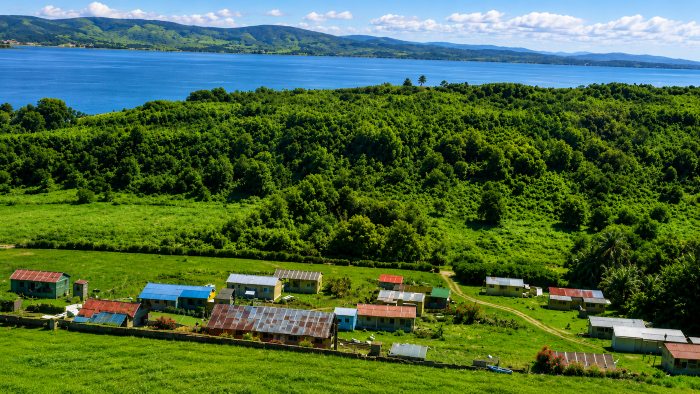
The  "Huts", Bogany Farm, circa 1960s AI enhanced

Home, Stars, Milkmaids and Bedouin Shepherd Boys 

Some songs seem to accompany us through life without ever asking to be noticed. We hear them when we are young, carry them somewhere beyond conscious memory, and then, years later, they return. When they do, they bring more than melody. They carry people, places, rooms, weather, and versions of ourselves we had almost forgotten.

Clifford T. Ward’s Home Thoughts from Abroad has always been such a song for me. There is something wonderfully restrained about it. It never reaches for grandeur, yet somehow finds it. Ward, an English schoolteacher before music brought him wider recognition, had a quality that made his songs feel less like performances and more like confidences. When I first heard him, I was young, and although I could not have articulated it then, I sensed that he was not singing at me. He was sharing something, and somewhere between his experience and mine we met.

The title reaches further back, of course, to Robert Browning and his poem Home-Thoughts, from Abroad. Browning writes of England from elsewhere, noticing the things absence has made precious: blossom, birdsong and the coming of spring. It is an old human experience. Distance alters our vision. We begin to see the ordinary things we once overlooked, and a place that scarcely announced itself while we inhabited it can acquire an extraordinary power once we have left.

Maybe that is because home is not merely geography. It is emotional ground. It is the place, or sometimes only the memory of a place, where something within us once settled and said, without words, I belong here.

I found myself thinking about this one Saturday evening while sharing a meal with friends. Among us was a friend from Mongolia, and as she spoke about home, I sensed that she meant something larger than the country marked on a map. It led me afterwards to the Mongolian expression нутгаа санах (nutgaa sanakh), commonly translated as homesickness or longing for one’s homeland. Yet “homesickness” seems too slight a word for what I heard in her conversation. This was closer to a tether: an attachment to homeland that survives distance because the landscape itself has somehow become part of the person.

I found myself envying that certainty. Not Mongolia itself, but the knowledge of where one belongs.

I have never really possessed it. There are places I love deeply. My heart is drawn to the Hebrides and to Norway, and to another place I shall come to, but I did not grow up in any of them. The landscape of my childhood was the heartland of the Clydeside shipbuilding industry, a world shaped more by labour than romance. It was soot, tenements, industry and function. Beauty existed, but you had to know where to look for it.

For me, one of the places where it revealed itself was across the water.

We had a cabin on the Isle of Bute, between Rothesay Golf Course and Bogany Farm, and when the summer holidays arrived, I would spend the full six weeks there. The distance from Clydeside was not enormous, yet to a child it might as well have been another country. Loch Ascog lay on one side, quiet and watchful, while the Firth of Clyde opened towards a horizon that seemed impossibly wide.

Then there were the stars.

City darkness is never truly dark, but on Bute the night seemed to reveal what the city had been hiding. The stars did not merely appear; they cascaded.

My days were spent fishing and wandering with the extravagant aimlessness available to children before we discover schedules. Friendships formed quickly because summer demanded it. We knew, without dwelling on it, that most of us would disappear from one another when the season ended, so we belonged intensely for the little time we had.

The cabin had neither running water nor electricity. One of my daily jobs was to take containers to the communal well. Cows would wander towards me with that peculiar combination of suspicion and curiosity that cows seem to have perfected. The smaller ones sometimes ventured closer, studying me as though I were the unusual animal in the field.

When evening came, we lit paraffin lamps. I can still remember their soft, sibilant sound and the warm, imperfect light they cast across the cabin. My father would read aloud to us: Heidi, Tales from 1001 Nights, Chinese folk stories. We ate pancakes with jam and were given small glasses of stout, which seemed to me less like a drink than participation in some ancient ceremony of adulthood.

As the kerosene burned down, the light softened and the cabin became quieter. Sleep did not arrive abruptly. It gathered around us.

I would lie in bed and look through the window at the stars. The stories my father had read were still alive in my imagination, and I wondered whether somewhere far away a Chinese farmer boy, a Bedouin shepherd or a milkmaid among the Swiss mountains might be looking upwards at the same sky.

I did not have theological language for such thoughts. I was simply a boy staring into the immensity of things. Yet I remember a sense of presence, a feeling that the world was greater, deeper and more mysterious than the visible things immediately around me. Looking back, I think those were among my earliest intimations of God. Nothing was spoken. Nothing needed to be. The stillness itself seemed full.

Then came the part every summer had been quietly moving towards: leaving.

There were bags to pack, the ferry to catch and school waiting on Monday. The wide skies disappeared and the tenements of Clydeside closed around us again. I remember a heaviness that I could not explain. It was not ordinary disappointment at the end of a holiday. It felt more like grief, as though I had left something of myself on the island.

Only by leaving did I begin to understand that the cabins near Bogany Farm had become home.

Not home in the conventional sense. We did not own the landscape and our lives there were temporary. Yet something about those summers felt complete. We needed very little. A paraffin lamp, a fishing rod, a campfire, pancakes, stories, friends and six weeks that seemed capable of lasting forever.

Many years later I encountered a word coined by John Koenig in The Dictionary of Obscure Sorrows: kenopsia, the eerie atmosphere of a place that was once bustling with life but is now abandoned and quiet.

I knew the feeling immediately.

When I return to Bute and walk the stretch between Bogany Farm and Canada Hill, the world I remember has largely disappeared. Once there were fifty or sixty cabins scattered across the land. Now there is overgrowth. Nettles have reclaimed paths once made by human feet, and the outlines of our little summer civilisation are difficult to find beneath everything that has grown in its place.

The cows still look at me, though now they seem to have a stronger claim on the land than I do. In fairness, they are probably right. I am the visitor now. The landscape continued living while I was away.

Yet I can still populate that empty field.

I can smell barbecue smoke and burnt toast carried on the sea air. I can hear songs around campfires and children calling to one another through the dusk. I can see adults sitting outside their cabins, leaning into the last of the evening sunlight as though unconsciously storing it against the darker months ahead.

Memory cannot be trusted as a perfect historian. It edits, rearranges and softens. It illuminates one corner while leaving another in shadow. The people I remember may not have been quite as carefree as memory makes them, nor every summer day as golden. Childhood was no more immune to disappointment then than it is now.

But memory's failure to reproduce the past exactly does not make it false. Memory tells another kind of truth. It tells us what mattered.

Something about those summers made people seem more open to one another. Time moved differently. Nobody appeared to be measuring every hour for its productivity. There was space to wander, to talk, to sit beside a fire, to watch the sea or to do nothing of consequence at all. For a few weeks each year, ordinary people seemed permitted to inhabit their lives rather than constantly hurry through them.

The cabins are gone now, and most of the voices I associate with them have long since fallen silent. Still, when I walk through that landscape, absence does not feel entirely empty. Places absorb our stories. A path remembers us in its own way, even when grass eventually covers it. A field once filled with laughter cannot literally retain the sound, yet we retain it on the field's behalf.

This is one of the strange gifts of landscape. We imagine ourselves passing through places, but places also pass through us. They become part of our interior geography, and years later a smell, a quality of evening light, a bird call or an old song can suddenly open the door.

Time is cruel in that it takes away the world we knew, but it is generous in another sense. Only after something has gone do we sometimes understand what we were given.

That has changed the way I think about home.

I once imagined home should be the place from which you came, a homeland capable of producing the deep certainty I heard in my Mongolian friend's voice. I do not think that way now. Some people inherit a profound sense of homeland, while others discover home in fragments. It may be scattered across landscapes and years, held in people, rituals, sounds and moments of inexplicable peace.

For me, part of it will always lie on Bute: in the walk to the well, in the suspicious cows, in my father's voice reading by paraffin light, in pancakes and jam, in campfire smoke and in a little boy staring through a cabin window wondering whether children on the other side of the world were looking at the same stars.

I could return to the exact coordinates, but I could never return to that place. Not really. The place I long for exists at the meeting point of landscape and memory, and time has closed the road back to it.

Yet I no longer think that makes it less real.

Home may not always be somewhere we can remain. Sometimes we recognise it only after leaving. Sometimes it survives as a collection of moments in which, for reasons we barely understood at the time, life felt whole.

And sometimes it returns as an old song, heard in youth, carrying us across the years to somewhere we thought we had lost.

One final, rather lovely footnote: five years ago, I met a woman who had been taught English by Clifford T. Ward. Somehow that small connection pleased me enormously. A man whose song had accompanied my memories of home had once stood in an ordinary classroom, teaching English to someone I would eventually meet.

Permalink Add your comment
Share post
Jim McCrory

Speak — That I May See Thee

Visible to anyone in the world
Edited by Jim McCrory, Sunday 15 February 2026 at 08:19

“Stranger, why do you not speak?
Speak — that I may see thee.”

— Walter Savage Lander

Arran 14 Feb 2026

The Island of Arran from the North Ayrshire Coast

Speak — That I May See Thee

Like many early mornings, the coast summoned me. Five degrees below zero, the air thin and bracing, the beach washed gold by a reluctant winter sun. I stood at the shore and looked across to The Island of Arran on Scotland’s west coast, its mountain crowned with snow, steady and austere. Something about that view loosens memory. Faces return. Voices follow.

On that mountain, some years ago, I climbed beside a family from Israel. They were making for the summit to camp beneath the wide, indifferent sky. We fell into step together. It did not begin with theology or history, only with courtesy. A shared breath. A careful footing. Yet as the path steepened, so did our conversation. I had read the Bible most of my life and often wondered what a modern family from Israel would be like in the plainness of daily life. I found no abstraction that day. I found a kind, considerate and generous family; that is if generosity of time is a gift and I am sure it is. They made space for this stranger. They asked about Scotland and about the rhythm of my days which I reciprocated. I listened. I answered. We parted close to the top as I returned for the Ferry home. I returned with smiles warmed by more than the climb. That is how life ought to be.

Another ascent brought a Norwegian family into my story. I had once lived briefly in Stavanger, and hearing their accent felt like opening an old letter. Familiar cadences. Quiet warmth. We spoke of fjords and long winters, of the sea’s mood and the discipline of light in northern lands. In their company, nostalgia became a companion rather than a burden. Yet even as I admired their homeland, my heart settled again on Scotland’s west coast, the place where I am most at ease and most awed. Home sharpens when contrasted with another’s home. Conversation does that. It teaches us what we love without diminishing what others cherish.

Still, we do not need summits to meet good people. This morning by the shore, as Arran held its silent vigil, I found myself speaking with a family from Birmingham. A mother, a father, two daughters bright with curiosity and a father returning to his homeland on this west coast for a time. We spoke of the view, of reading, of their daughter who loved to read and write creatively. There was nothing monumental in my exchange with this family, no shared pilgrimage, yet it was rich. I walked away wishing I had known them longer. I wished not to intrude upon their time spent as a family. Some meetings are gifts precisely because they are brief.

But what draws people to the sea in winter. It depends who we are I suppose. I was brought up in the Maritime city of Glasgow where I always looked out to faraway lands. That’s why I was gifted a Grundig Satellite World band Radio in the seventies. A gift that helped me explore the world albeit unilaterally.  I guess Robert Louis Stevenson was drawn to the coast due to his father’s business of designing light houses which marked the writer’s career and destiny in many ways. But I digressed.

There is a peculiar virtue in these encounters, any encounter. A stranger speaks, and suddenly you see them. Not as a headline or a stereotype. Not as a theory. You see patience in the way someone ties a bootlace or offers their last caramel wafer or get all passionate when you ask them their favourite book. Words open the door, but presence lets you step inside.

When we remain silent, we remain unseen. Suspicion fills the space where speech might have been. Yet when we risk a greeting, when we ask and answer with simple honesty, something shifts. We discover that beneath accents, flags, and histories, there is a shared longing to be understood and welcomed. It does not require grand speeches. Often it begins with a remark about the weather, the climb, the cold. Now, my wife and I keep in touch with these chance encounters we have met in life's highway.

So, if you will indulge me, I shall lift the book resting at my side. In its pages I have come to know many people whose conversations have shaped centuries. There is one meeting in particular, unplanned it seemed, that changed grief into recognition and despair into burning hope. Two travellers on a road, joined by a stranger who listened before He spoke. You can read along with me if you wish,

Luke 24:13-35 VOICE - Picture this: That same day, two other - Bible Gateway

Permalink Add your comment
Share post
Jim McCrory

“Silent night, holy night… all is calm, all is bright.”

Visible to anyone in the world
Edited by Jim McCrory, Monday 22 December 2025 at 09:49

The race is not to the swift…  For time and chance happen to all.”

Ecclesiastes 9:11 (BSB).

sketch.png

“Silent night, holy night… all is calm, all is bright.”


It was winter, 2010; close to the end of a very difficult year. I was returning from Oban, on Scotland’s west coast, weary from a speaking engagement. I am watching white darkness slide past the train windows. Snow had been falling heavily across the Highlands, thick and unrelenting, the kind that bends time and progress. Somewhere near Crianlarich the journey faltered and stopped for hours. Snow piled up on the rails and the time that passed was measured in patience. By the time we reached Glasgow it was close to midnight.

The station was hushed in that peculiar way only large places become when the crowds have gone—vast, echoing, half-asleep. Footsteps sounded louder than they should. Breath steamed in the cold air. And then, tucked away in a shadowed corner, I heard it.

A lone piper.

He stood almost hidden, the lamplight catching the curve of the pipes, the notes rising softly into the cavernous dark. He was playing Silent Night. Not loudly. Not for applause. Just letting the melody breathe into the space, as if the night itself had asked for it.

It was one of those moments that cannot be planned—only received. A gift given by delay, by snow, by circumstances that refused to hurry. The world slowed enough for wonder to slip in.

Silent Night itself began like that—quietly, almost unnoticed.

A century earlier, in a small village called Oberndorf, near Salzburg, peace was something people longed for but scarcely trusted. In that fragile stillness, a young priest named Joseph Mohr walked his parish with a poem in his pocket—a simple meditation he had written years earlier about the birth of Christ. No triumph. No thunder. Just calm. Just trust.

That evening he carried the poem to Franz Xaver Gruber, the village schoolteacher and organist. There was a problem: the church organ was broken. Silent. Useless. Whether mice or damp winter air were to blame hardly mattered. The grand instrument had failed.

So they turned to something smaller.

Gruber set the words to a gentle melody for guitar—an instrument of kitchens and firesides, not sanctuaries. And that night, by candlelight, the song was born. Two voices. One guitar. No choir. No ceremony. Just a fragile offering of peace.

“Silent night, holy night… all is calm, all is bright.”

I cannot help think that God moved these two men to bring comfort to these weary souls during that difficult time in human history. And to the world; for no one there imagined the song would travel far. And yet it did.

It passed from village to village on the lips of wandering singers. It crossed borders and languages, found its way into palaces and barns, into churches and prison camps. It was sung in times of joy and in the long shadows of suffering.

Once, on a frozen Christmas Eve during the First World War, it drifted across trenches—enemy voices meeting in the darkness, a brief and holy ceasefire born of melody.

And still, it comes to us like that.

In stations at midnight. In broken journeys. In unexpected corners of the world where the noise recedes and something gentler dares to speak.

The power of Silent Night has never been in its volume. It does not shout. It does not rush. It reminds us that Christ, the Saviour,  entered the world the same way the song entered history—not with spectacle, but with a child, a mother, and a night heavy with promise.

It began in silence.

And sometimes, if the snow is deep enough, and the train runs late enough, and the heart is quiet enough, we can still hear it.

 Image by Copilot

Permalink Add your comment
Share post
Jim McCrory

When It's Dark Out There, You See Stars and Dream

Visible to anyone in the world
Edited by Jim McCrory, Monday 23 December 2024 at 06:53


"For my part I know nothing with any certainty, but the sight of the stars makes me dream."

Vincent Van Gogh


Image generated with the assistance of Microsoft Copilot


I suppose it must have been the late summer of 1962; Telstar by the Tornadoes had been playing on the radio. I had been spending my entire summer on the idyllic Island of Bute on Scotland’s west coast. We had a cabin sandwiched between Canada Hill and Bogany Farm.

 It had no running water or electricity. My job was to go and fill up the water containers from the communal well. Cows would cautiously approach and stare curiously whilst the smaller ones would shuffle through for front-row viewing.

At dusk, we would light paraffin lamps to illuminate the nights. My father would read children’s books. We were all ears as he read Heidi, Tales From 1001 Nights and Chinese Folk Tales. We ate freshly made pancakes with homemade jam and washed down with small glasses of sweet stout.

The lamp caused a sibilant sound as it burned up kerosene. It flickered and fostered sleepiness. It finally slumbered for the evening, and we would retire.

I lay there in my bed watching the stars cascading through the window; every one of them. And I wondered if the Chinese farmer boys, or the Bedouin shepherd boys or the milk maids in the Swiss mountains were seeing and feeling the sense of awe that I felt in my heart as the universe entered in.


Permalink Add your comment
Share post

This blog might contain posts that are only visible to logged-in users, or where only logged-in users can comment. If you have an account on the system, please log in for full access.

Total visits to this blog: 2996543