

Personal Blogs
Wise about mistakes
Saturday, 19 Aug 2023, 15:08
Visible to anyone in the world
Edited by Richie Cuthbertson, Saturday, 19 Aug 2023, 15:10
Conceit
Saturday, 19 Aug 2023, 13:13
Visible to anyone in the world
“ The
equality-conceit (thinking of oneself as the same as others).
The
inferiority-conceit (thinking of oneself as lesser than others).
And
the superiority-conceit (thinking of oneself as better than others).
This three-fold conceit
should be overcome.
One
who has overcome this,
through
the full investigation of conceit,
is
said to have put an end to suffering.”
~ A 6.49
Investigation of the
conceit: ‘I am’
Can feel like trying to split a hair with a pin.
It can be very subtle
Hard to see.
Anatta (not-self) is a negation tool used in Buddhism to reveal what is not the self,
like the practise of neti neti (not this, not that).
Anatta investigates the five khandhas (skandhas in Sanskrit), these are: the body; feelings; perceptions; mental
formations; consciousness (of
the six senses: sight, sound, smell, taste, touch, and mental objects).
The khandhas (also known as the five aggregates of clinging) are conditioned
phenomena, uncertain, unstable, fragile. Changing. Interdependent. And largely
outside our control. Their impermanence causes attachment to them to be bound
up with the pain of wanting, frustration, dissatisfaction, stress and
sorrow.
There is some gratification in them otherwise we wouldn’t cling to them. But
that gratification is transient and when it goes, we suffer and thirst for
more, feel pain at loss and separation.
Still, it's not all bad, because some of the aggregates are within our ability to change, we
can make a path out of them that leads to the end of suffering: the noble
eightfold path.
Seeing the skandhas do not last, are empty of self, and bound up with suffering. One becomes less attached to them, less
enthralled by them. One feels dispassionate towards them and stops identifying with them. Stops taking things personally.
Knowing the khandas are not me, not mine, not self, one lets go, stops clinging to them –
and what remains then is the deathless.
It is not meant to be depressing. If done correctly this will bring rapture and
peace to the mind. Bliss. The relief of letting go, of relinquishment, of releasing it
all. Liberation. Freedom. It's not a dry unemotional experience.
To think of nibbana or nirvana as annihilation is incorrect. If
this were the case, it wouldn't be called the deathless.
Nibbana is a conscious experience. Said to be the finest experience that any
being can have. If it was about annihilation, it would not be an experience.
…
Just this
Wednesday, 16 Aug 2023, 16:16
Visible to anyone in the world
Edited by Richie Cuthbertson, Wednesday, 16 Aug 2023, 16:36
Sitting here
Sounds all around.
Seagulls sqawking,
Dogs barking,
Cars trafficking.
People talking.
Construction work
and the odd chainsaw.
Cars scrunching the gravel
as they come and go.
I meditate.
Investigate.
The Buddha's teaching to Bahiya.
To let a sound be just a sound.
To let that which is sensed
be only that which is sensed.
Awareness and knowing,
being just that.
Without adding any more to it.
Without the 'I' making.
The story of
the person.
Neither here, nor there, nor inbetween the two.
This, the Buddha said, is the end of suffering.
It's the longing, the loathing, and conceit.
The impatience.
The angst.
The getting stressed
and taking it personally.
That's what gets in the way.
That's the problem.
That's what I need to let go of.
Without that there is just this.
And when there is just this.
there is no subject, no object.
The self disappears.
And when that happens there is peace.
...
-Asoka
The wishing jewel
Monday, 14 Aug 2023, 09:09
Visible to anyone in the world
If there is to be just one desire, just one wish, let it be this:
May all beings be free from suffering. Free from sorrow.
Me included. I also am a being.
All of us wherever we are.
Every being in every direction.
Of all different kinds, shapes and sizes, in all places, in all worlds.
If I was to be granted only one wish.
Let it be the wish that all beings be happy.
May we all be free.
May we all have peace of mind.
May we all be safe.
May we all be well.
May we all be at ease.
May we all feel loved.
May we all be golden.
May we all be radiant.
May every single being everywhere experience bliss.
May we all be serene
May we all be boundless.
Free of sorrow and unhappiness.
- Asoka.
That is my wish.
Teaching given to Bahiya
Sunday, 13 Aug 2023, 18:30
Visible to anyone in the world
Edited by Richie Cuthbertson, Wednesday, 16 Aug 2023, 17:41
The Buddha to Bahiya:
' In the seen there is only the seen,
in the heard, there is only the heard,
in the sensed there is only the sensed,
in the cognized there is only the cognized:
This, Bahiya, is how you should train yourself.
When, Bahiya, there is for you
in the seen only the seen,
in the heard only the heard,
in the sensed only the sensed,
in the cognized only the cognized,
then, Bahiya, there is no 'you'
in connection with that.
When, Bahiya, there is no 'you' in connection with that,
there is no 'you' there,
When, Bahiya, there is no 'you' there.
When, Bahiya, there is no 'you' there.
then, Bahiya, you are neither here
nor there
nor in between the two.
This, just this, is the end of suffering. '
--- Ud 1.10
Five strategies for mastering the pathways of thought
Wednesday, 9 Aug 2023, 17:21
Visible to anyone in the world
Edited by Richie Cuthbertson, Wednesday, 9 Aug 2023, 17:22
' Just as a skilled physician has different medicines for different ailments, so the Buddha has different antidotes for the different hindrances, some equally applicable to all, some geared to a particular hindrance.
(N.b. The five hindrances are: 1. craving, 2. ill will, 3. dullness and drowsiness, 4. restlessness and worry/remorse, 5. doubt.)
In an important discourse the Buddha explains five techniques for expelling distracting thoughts.
1. The first is to expel the defiled thought with a wholesome thought which is its exact opposite, analogous to the way a carpenter might use a new peg to drive out an old one. For each of the five hindrances there is a specific remedy, a line of meditation designed expressly to deflate it and destroy it. This remedy can be applied intermittently, when a hindrance springs up and disrupts meditation on the primary subject; or it can be taken as a primary subject itself, used to counter a defilement repeatedly seen to be a persistent obstacle to one’s practice.
For craving a remedy of general application is the meditation on impermanence, which knocks away the underlying prop of clinging, the implicit assumption that the objects clung to are stable and durable.
For craving in the specific form of sensual lust the most potent antidote is the contemplation of the unattractive nature of the body.
Ill will meets its proper remedy in the meditation on loving-kindness (metta), which banishes all traces of hatred and anger through the methodical radiation of the altruistic wish that all beings be well and happy.
The dispelling of dullness and drowsiness calls for a special effort to arouse energy, for which several methods are suggested: the visualization of a brilliant ball of light, getting up and doing a period of brisk walking meditation, reflection on death, or simply making a firm determination to continue striving.
Restlessness and worry are most effectively countered by turning the mind to a simple object that tends to calm it down; the method usually recommended is mindfulness of breathing, attention to the in-and-out flow of the breath.
In the case of doubt the special remedy is investigation: to make inquiries, ask questions, and study the teachings until the obscure points become clear.
Whereas this first of the five methods for expelling the hindrances involves a one-to-one alignment between a hindrance and its remedy, the other four utilize general approaches.
2. The second marshals the forces of shame (hiri) and moral dread (ottappa) to abandon the unwanted thought: one reflects on the thought as vile and ignoble or considers its undesirable consequences until an inner revulsion sets in which drives the thought away.
3. The third method involves a deliberate diversion of attention. When an unwholesome thought arises and clamours to be noticed, instead of indulging it one simply shuts it out by redirecting one’s attention elsewhere, as if closing one’s eyes or looking away to avoid an unpleasant sight.
4. The fourth method uses the opposite approach. Instead of turning away from the unwanted thought, one confronts it directly as an object, scrutinizes its features, and investigates its source. When this is done the thought quiets down and eventually disappears. For an unwholesome thought is like a thief: it only creates trouble when its operation is concealed, but put under observation it becomes tame.
5. The fifth method, to be used only as a last resort, is suppression — vigorously restraining the unwholesome thought with the power of the will in the way a strong man might throw a weaker man to the ground and keep him pinned there with his weight.
By applying these five methods with skill and discretion, the Buddha says, one becomes a master of all the pathways of thought. One is no longer the subject of the mind but its master. Whatever thought one wants to think, that one will think. Whatever thought one does not want to think, that one will not think. Even if unwholesome thoughts occasionally arise, one can dispel them immediately, just as quickly as a red-hot pan will turn to steam a few chance drops of water. '
- by Bhikkhu Bodhi (from, The noble eightfold path: the way to the end of suffering ) available for free at: https://www.accesstoinsight.org/lib/authors/bodhi/waytoend.html
'Herein the disciple rouses his will to overcome the evil, unwholesome states that have arisen and he makes effort, stirs up his energy, exerts his mind and strives. He does not retain any thought of craving, ill will, or harmfulness, or any other evil and unwholesome states that may have arisen; he abandons them, dispels them, destroys them, causes them to disappear.' - The Buddha
...
Five and Seven
Saturday, 5 Aug 2023, 18:53
Visible to anyone in the world
Edited by Richie Cuthbertson, Friday, 25 Aug 2023, 20:19
Craving
Ill-will
Sloth
Agitation
Doubt
These are the five hindrances. The enemies of rapture.
When these five are dissolved, there is an upwelling of relief.
This relief produces joy and pleasure in the mind.
The Buddha then advises one to spread that joy and pleasure throughout the entire body. Till it is saturated with it.
But this is hard to do when the hindrances are present. So one needs the seven enlightenment factors:
Mindfulness --> Investigation --> Energy (aka effort) --> Joy --> Calmness --> Samhadi --> Equanimity.
These seven are the nemesis of the five, working together to seclude the mind from their influence.
The five hindrances and the seven factors of enlightenment are mutually exclusive.
Only one of them can occupy a single mind moment at a time.
The five hindrances and the seven factors of enlightenment are mutually exclusive.
Only one of them can occupy a single mind moment at a time.
We don't actually multi-task, we just have very fast discrete moments of consciousness.
Each mind moment is a bit like an old fashioned movie projector, that reads one slide at a time, but goes so fast as to seem like it is all happening at once.
Each slide of the movie projecter is like a single mind moment. A mind state.
With perseverance and effort, one keeps bringing mindfulness back to the meditation object and sustaining attention to it. This recreates the same mind moments over and over. Which steadies the mind and creates a perception of stillness. This isolates consciousness from the five hindrances. Which brings relief from the emotional stress that comes from those states of mind.
Joy is an important ally, it uplifts us. Joy brings good energy which can help stop one getting drowsy in meditation.
We naturally generate joy when we become interested in something. When we find something interesting, we get absorbed in it. How does one generate interest in something as simple as the breath, so that the mind wants to stay with it contentedly and doesn't wander off anyplace else?
Joy naturally leads to serenity (calmness), which is still joy but a calmer more refined joy. The excitement has settled but everything still feels very pleasant.
Samhadi is when the mind becomes unified, all of it gathered together, collected, composed, centred. It is whole-hearted. All of you is present. The mind is happy to be meditating, and doesn't want to be anywhere else.
The unification of samhadi naturally leads to the different energies of the mind becoming balanced in a state of equanimity. Which is an exquisite expansive state of mind. A wonderful coolness, spaciousness, emptiness, freedom, clarity. It is not dull and unemotional, far from it, it is perhaps one of the most beautiful states of mind one can experience in this life. Hard to get to though, which is a shame, because it is so useful for us. It is the mind tuned into beautiful harmony, no longer clinging. Non-attachment feels like freedom.
This state of equanimity persists for a time after meditation. Whereupon one can direct the mind towards anything and the mind will see it all clearly.
One simile the Buddha uses is of someone looking at their reflection in a pool of water. The water symbolises the mind. Desire is like dye on the water which distorts the reflection; ill-will is like boiling water; sloth is like stagnant water; restlessness is like water agitated by the wind; and doubt is like water that is clouded with mud making it hard to see anything. Each of these stop the person being able to see their face clearly in the water. When the five hindrances are no longer present, the water becomes clear and still, and then the person is able to see themselves clearly.
One thing I have found helpful to do sometimes after meditation, or sometimes before is to listen to a dhamma talk.This can bring insight and also rouse up the desire to practise when the inclination isn't there.
Meditation for me is a mix of walking, sitting, standing, and lying down. It is good to remember that one can meditate in any of those four postures, because it can become uncomfortable to stay in the same posture for too long. Changing postures is helpful.
...
To be outstanding
Thursday, 3 Aug 2023, 23:09
Visible to anyone in the world
" When dealing with the demons of defilement, you have to look for both their good and their bad points. Only when you see both sides can you be said to be discerning and wise. When you can take bad things and make them good, that's when you're really outstanding. If you take good things and make them bad, that's no good at all. Even when you take good things and make other good things out of them, that's not really special. There are three levels of goodness: good, excellent, and outstanding. A good person does good. An excellent person takes something good and makes it better. That's excellent, but not outstanding. An outstanding person takes bad things and makes them good. "
- Ajahn Lee
...
One excellent night
Tuesday, 25 July 2023, 10:09
Visible to anyone in the world
Edited by Richie Cuthbertson, Tuesday, 25 July 2023, 10:21
' Let one not revive the past.
Nor upon the future build one's hopes.
For the past has been left behind.
And the future's not yet reached.
Instead with insight let one see,
Each presently arisen state.
Let one know that and be sure of it,
Invincibly, unshakeably.
Today the effort must be made.
Tomorrow death may come.
Who knows?
No bargain with mortality can keep him and his hordes away.
But for one who dwells thus ardently.
Keeps at it, does not give up.
Practises by day, by night ---
It is those the peaceful sage has said
Who have had one excellent night. '
-- poem attributed to the Buddha
And the future's not yet reached.
Instead with insight let one see,
Each presently arisen state.
Let one know that and be sure of it,
Invincibly, unshakeably.
Today the effort must be made.
Tomorrow death may come.
Who knows?
No bargain with mortality can keep him and his hordes away.
But for one who dwells thus ardently.
Keeps at it, does not give up.
Practises by day, by night ---
It is those the peaceful sage has said
Who have had one excellent night. '
-- poem attributed to the Buddha
Resilience
Monday, 24 July 2023, 23:45
Visible to anyone in the world
Sometimes we make poor choices. Bad kamma happens, some of it delayed, some of it instant. It is painful.
One has to just bear it up. There's nothing else for it. The past can't be changed. Take responsibility for your actions. Learn from the experience. See what mental dispositions led to the suffering and abandon them.
It comes from within us. The greed, hate, and delusion comes from within. It is not something outside us. We ourselves are the source of it and the end of it.
Resilience is important. Because one will fall over time and time again whilst learning how to walk.
It is important to not give up.
To pick oneself up after failure and keep going, this too is part of the path. Learning how to fall. Because greed, hate, and delusion will not go easy on you.
Just remember we're all human.
We all make mistakes, we all make poor choices that lead to bad kamma.
Part of the journey is learning from our mistakes. Seeing what led to them. Reflecting wisely and growing from them.
Some of our most potent spiritual lessons can come from humiliation and defeat.
Be kind to oneself.
It is important.
Hate is poison.
Don't be afraid.
You are not alone.
There is grace out there too.
Friends who support you.
Both human and deva, ancestors too.
But they can't do the work for you.
Only you can do the work.
None but ourselves can free our minds.
...
Psychic weather front
Monday, 24 July 2023, 14:55
Visible to anyone in the world
Sometimes I feel alive, enthusiastic, full of excitement and wonder. Other times I am like a flat battery that can't seem to hold its charge or see much hope in anything. Other times there's an odd mix of brain chemistry that is so horrible I can't put it into words.
It is helpful for me to remember the brain is the body. It is dependent on conditions largely outside my control, meaning it will change. It won't always function in the way I wish it would, and eventually it will cease when the conditions it depends on cease.
That is the way of things with dependent origination. Conditioned phenomena is impermanent. It isn't gloomy to think this way. It can be a helpful tool to bring some equanimity to the mind. It helps me let go of the clinging and aversion towards things, and to stop taking it personally. Which decreases the suffering somewhat.
Sometimes difficult things happen that are outside our control. And sometimes it’s our own fault, we behave in unskilful ways and reap the kamma for it. Whatever it is, we then go and add more suffering to the situation with the longing, aversion, and taking it personally. This is the mental pain we add to physical and worldly difficulties. This is what makes us suffer.
I remember one night I got stranded on the mainland after missing the last boat back to the island. I had just completed a lengthy 10-hour journey coming back from my dad’s funeral. And I arrived at the ferry terminal late due to a delay with the coach. I felt exhausted and a bit unwell. There was nowhere to stay, and a long wait till the next ferry in the morning. So I went to sit on the beach, tried to roll a joint to make myself feel better. And I'd almost finished rolling it, when there was a huge gust of wind that blew it all away, and then it started raining. I felt like the person off the Hamlet advert, but without the cigar.
Then the day of the funeral all came back to me, and I burst into tears. It all just gushed out. I felt so lonely.
Then I saw my dad’s face in the sea. And I said I was sorry for not getting chance to speak to him before he died. I wished him well and told him he was loved.
Then the wind and rain became unbearable, so I went to find some shelter. I spent the rest of the night alternating between walking, standing, and sitting meditation.
I went through so many mood swings in that one night. Like the mind was changing, morphing into all sorts of different shapes and patterns. I was even seeing things that weren't there. It was challenging.
Through it all I tried to remain still and not get disturbed by the changing psychic weather. I just kept bringing my attention back to the breath and body to calm and centre the mind. Not engaging with anything else. Meditation felt like a refuge. There were strange eerie sounds at times like banshees wailing. (They turned out to be seabirds, the tunnel making their calls echo in ghostly ways).
Eventually after many hours of this, the mind converged into a oneness, and it all disappeared. The psychic weather passed. Leaving behind a stillness and beautiful emptiness that I can't put into words.
I was greeted at sunrise by a friendly pigeon watching me intently with smiley eyes. Then it vocalised a set of patterns, and some moments later another pigeon responded in the distance with a different set of vocal patterns.
The pigeon flew away.
The wind and rain outside had stopped. It also dependent on conditions.
I went to get a coffee and my card was declined by the reader. I laughed, and the cashier laughed as well. She said that happens to her all the time, and that she keeps a supply of cash with her just in case.
Luckily, I had a few coins on me and managed to buy the coffee.
...
Formations
Saturday, 22 July 2023, 10:18
Visible to anyone in the world
Edited by Richie Cuthbertson, Saturday, 22 July 2023, 10:18
Where is all this happening?
Sense impressions.
Feelings.
The body is in the mind.
The mind is in the body.
But what is in the heart?
The centre of
These changing dhammas.
Sankharas
Built by
A thirst that's
Never satiated.
This empty existence
I cling to.
...
The noble eightfold path
Saturday, 15 July 2023, 21:59
Visible to anyone in the world
Edited by Richie Cuthbertson, Saturday, 15 July 2023, 22:47
This is a succint and concise summary of the noble eightfold path as I currently understand it (-:
Right view
Bad kamma comes from actions of greed, hate, and delusion.
Good kamma comes from actions of generosity, kindness, and clarity.
If you can't help another being; then at least have the intention to cause no harm.
Honour your mother and father.
To realise the paths and fruits of the different stages of enlightenment, one must accomplish the instructions given in the four noble truths.
The four noble truths are:
1. Knowledge of suffering (which is to be understood).
Birth, ageing, and death is hard to bear. Loss and separation from what we love is also hard to bear. Associating with what is disliked is unpleasant. Being apart from what is liked is unpleasant. Not getting what one wants is unpleasant. Identifying with the five aggregates of clinging (body, feelings, perceptions, mental formations (thoughts), sense-consciousness) is also dissatisfying, because they are always changing. The aggregates (khandas) are insubstantial, impermanent, uncertain and empty of self. This is what needs to be understood.
Birth, ageing, and death is hard to bear. Loss and separation from what we love is also hard to bear. Associating with what is disliked is unpleasant. Being apart from what is liked is unpleasant. Not getting what one wants is unpleasant. Identifying with the five aggregates of clinging (body, feelings, perceptions, mental formations (thoughts), sense-consciousness) is also dissatisfying, because they are always changing. The aggregates (khandas) are insubstantial, impermanent, uncertain and empty of self. This is what needs to be understood.
2. Knowledge of the origin of suffering (which is to be abandoned).
The cause of suffering is craving. The Pali word tanha (thirst) is used for this. And it is important to note that there is such a thing as chanda (right desire). Not all desire is to be abandoned. Chanda is the word used to describe right desire (desire that helps to put an end to suffering); and tanha is used to describe wrong desire, that which causes suffering.
The cause of suffering is craving. The Pali word tanha (thirst) is used for this. And it is important to note that there is such a thing as chanda (right desire). Not all desire is to be abandoned. Chanda is the word used to describe right desire (desire that helps to put an end to suffering); and tanha is used to describe wrong desire, that which causes suffering.
Three aspects of tanha (craving) are:
Thirst for sense pleasures (kama tanha);
Thirst for existence (bhava-tanha);
Thirst for non-existence (vibhava tanha).
This is what needs to be abandoned.
3. Knowledge of the cessation of suffering (which is to be realised).
The fading away and cessation of craving is what ends suffering. With wisdom one stops following the craving, and clinging to that which is insubstantial. The involuntary movements of the mind stop and there is an unshakeable peace. One is no longer harrassed and driven by craving and the worldly winds, which brings relief and freedom to the mind.
The fading away and cessation of craving is what ends suffering. With wisdom one stops following the craving, and clinging to that which is insubstantial. The involuntary movements of the mind stop and there is an unshakeable peace. One is no longer harrassed and driven by craving and the worldly winds, which brings relief and freedom to the mind.
The abandonment of the second noble truth is what realises the third noble truth.
4. Knowledge of the way leading to the end of suffering (which is to be developed).
The way to accomplish the abandonment of craving is through the practise of the noble eightfold path: right view, right intention, right speech, right action, right livelihood, right effort, right mindfulness, right samhadi. This is what needs to be developed, when this path has been cultivated the third noble truth is realised.
Right Intention
Intention of non ill-will;
Intention of renunciation (non-greed);
Intention of non-cruelty;
The Buddha listed the three right intentions above as being thoughts that he did not regret having, these intentions do not lead to unwholesome actions, they lead to good kamma and to nibanna.
The Buddha before his enlightenment divided his thoughts up to those that he regretted having (unwholesome thoughts); and those that he did not regret having (wholesome thoughts). He worked to abandon the unwholesome thoughts, dismissing them until they no longer arose. And he encouraged and cultivated the wholesome thoughts till they happened naturally, automatically without him needing to apply any more effort. He said the experiment worked and eventually his mind was filled with thoughts he didn't regret having. This made it easier then to settle into meditation.
The Buddha listed the three right intentions above as being thoughts that he did not regret having, these intentions do not lead to unwholesome actions, they lead to good kamma and to nibanna.
The Buddha before his enlightenment divided his thoughts up to those that he regretted having (unwholesome thoughts); and those that he did not regret having (wholesome thoughts). He worked to abandon the unwholesome thoughts, dismissing them until they no longer arose. And he encouraged and cultivated the wholesome thoughts till they happened naturally, automatically without him needing to apply any more effort. He said the experiment worked and eventually his mind was filled with thoughts he didn't regret having. This made it easier then to settle into meditation.
Intention is the generator of kamma. It is what leads to verbal thoughts, speech and actions.
Right speech
To be honest.
To refrain from malicious divisive or contentious speech.
To refrain from harsh unkind speech.
To refrain from pointless time-wasting speech.
Right action
To refrain from killing any living being.
To refrain from stealing.
To refrain from sexual misconduct.
Right livelihood
To make a living that does not cause harm to oneself or others.
Right effort
Needs to be tuned so it is neither too tight, nor too loose. I.e. don't burn yourself out, but also don't get lazy.
The four right efforts are:
1. prevention of unwholesome states of mind from arising. (By avoiding unwise attention to the fault; and unwise attention to the beautiful.)
2. abandonment of unwholesome states of mind should they arise.
3. generating wholesome states of mind.
4. sustaining those wholesome states of mind.
Unwholesome states of mind are the five hindrances: greed, aversion, sloth, restlessness, doubt.
Wholesome states of mind are the seven factors of enlightenment: mindfulness, investigation of phenomena (dhamma), energy (effort), joy, calmness, samhadi, equanimity (balance).
To make a living that does not cause harm to oneself or others.
Right effort
Needs to be tuned so it is neither too tight, nor too loose. I.e. don't burn yourself out, but also don't get lazy.
The four right efforts are:
1. prevention of unwholesome states of mind from arising. (By avoiding unwise attention to the fault; and unwise attention to the beautiful.)
2. abandonment of unwholesome states of mind should they arise.
3. generating wholesome states of mind.
4. sustaining those wholesome states of mind.
Unwholesome states of mind are the five hindrances: greed, aversion, sloth, restlessness, doubt.
Wholesome states of mind are the seven factors of enlightenment: mindfulness, investigation of phenomena (dhamma), energy (effort), joy, calmness, samhadi, equanimity (balance).
Right mindfulness
This is the four foundations of mindfulness.
Mindfulness of the body.
Mindfulness of feelings. (pleasant, neutral, or unpleasant).
Mindfulness of mental states.
Mindfulness of dhammas (teachings).
This is the four foundations of mindfulness.
Mindfulness of the body.
Mindfulness of feelings. (pleasant, neutral, or unpleasant).
Mindfulness of mental states.
Mindfulness of dhammas (teachings).
Right samhadi
Sometimes translated as concentration, but concentration can give me the wrong idea, so I prefer to use the word samhadi. Samhadi is the gathering of the mind together into absorption, a unification of mind. Sustained mindfulness to a meditation object leads naturally to samhadi. It is a whole-hearted experience, which includes the body. The body can feel very pleasant and comfortable in samhadi. There may still be aches and pains in the physical body, but these don't bother one. One is absorbed in the experience of the body as it feels from within, the subtle body.
Emotions such as joy can be a whole body experience.
The body is in the mind.
A meditation object is used to calm and centre the mind, gather it together and bring it into unity and balance. Common meditation objects used are the breath, natural elements, primary colours, perception of light, or the emotion of goodwill (metta).
The Buddha classifies right samhadi as the four jhanas.
The body is in the mind.
A meditation object is used to calm and centre the mind, gather it together and bring it into unity and balance. Common meditation objects used are the breath, natural elements, primary colours, perception of light, or the emotion of goodwill (metta).
The Buddha classifies right samhadi as the four jhanas.
Here are some verses from the suttas that describe the four jhanas.
'Having gone somewhere quiet, away from distractions. Having removed longing and dejection in regard to the world, setting mindfulness before one.
'Having gone somewhere quiet, away from distractions. Having removed longing and dejection in regard to the world, setting mindfulness before one.
Quite secluded from sense-pleasures and unwholesome states of mind. One enters and abides in the first jhana. Which is accompanied by applied and sustained thought (or attention). And has the joy and pleasure born of seclusion (from unwholesome states).
With the subsiding of applied and sustained thought. One enters and abides in the second jhana. Which is accompanied by self-confidence and unification of mind. Is without applied and sustained thought, and has the joy and pleasure born of samhadi.
With the fading away of joy. One abides in equanimity. And mindful, clearly comprehending, still feeling pleasure with the body. One enters and abides in the third jhana. On account of which the noble ones say: 'one has a pleasant abiding, who has equanimity and is mindful.'
With the fading away of pain and pleasure. And the previous disappearance of sadness and joy. One enters and abides in the fourth jhana. Which has neither pleasure nor pain. And has mindfulness purified and born of equanimity.'
Once the mind has been made malleable and peaceful from samhadi. There is an afterglow, where unwholesome states of mind can remain absent for some time. In that state, the mind has the capacity for wise reflection, and it is easy to work with and train. It can be pointed towards something you want to understand and learn more about, or a truth you want to penetrate and gain insight from, such as the four noble truths. This investigation can lead to the liberating knowledge that brings about the end of suffering.
The continuous practise of jhana gradually weakens the hold of greed and hatred on the mind until eventually those defilements fall away for good and never return. When this happens one becomes a non-returner, (the third stage of enlightenment) and is never again born into this world.
Full enlightenment (fourth and final stage) is the realisation of nibanna, and the complete end of the conceit 'I am' and delusion.
***
Walking
Saturday, 15 July 2023, 14:22
Visible to anyone in the world
Sensations of feet connecting with the ground, and the feeling of the body moving through space from one point to the next. The flow of air all around, touch of it on skin and clothes. Eyes half-closed, with a soft gaze. Mind centered with the body and the experience of walking. But aware of what is happening in peripheral awareness. Knowing where I am. What I am doing.
With walking there is that sense of working through stuff. Perhaps it is the forward motion of walking which brings a feeling of making progress, pushing through it, the sensations of movement and change.
I can get into a flow sometimes when walking. The self disappears and everything becomes energy. There's a feeling of oneness, absorption, a blissful feeling of freedom from the unpleasant feelings that come from longing, aversion and conceit.
Sometimes I stop and look at the sky. And feel a sense of awe, that there is even such a thing as sky. The clouds pass by over the blue background, and the cool breeze feels pleasant, the plants swaying, all of it is changing.
...
Thought herding and samhadi
Friday, 14 July 2023, 12:21
Visible to anyone in the world
Edited by Richie Cuthbertson, Friday, 14 July 2023, 13:37
I have been noticing when the mind gets absorbed in anger, greed, conceit, and delusion, how difficult it can be to let go of these negative states. They can be sticky and it takes real effort and determination to come out of them and become absorbed in something wholesome instead.
Training the mind is not easy.
In Buddhism, mindfulness is the first of the seven factors of enlightenment:
1. mindfulness -> 2. investigation of phenomena -> 3. energy (effort) -> 4. joy -> 5. calmness -> 6. samhadi -> 7. equanimity.
Mindfulness is a wholesome state of mind, and the beginning, the first step. Even in the deepest states of samhadi, mindfulness is still present. And it is sustained mindfulness to a meditation object that leads to samhadi.
Samhadi is unification of mind, where all the mind is brought together into convergence. A lucid stillness. Wholeness, oneness. There are different levels of depth to samhadi, known in Buddhism as the four jhanas. I won't go into the jhanas in any depth here, but there's loads of resources online about them for interested readers.
Sometimes with negative thoughts, one can simply dismiss and replace them with wholesome thoughts. Such as replacing thoughts of ill-will to ones of friendliness, compassion for example. Or one can reflect on the Buddha, dharma, sangha. Contemplate the Buddha's teachings. Recite a poem, a chant, a mantra, something that reminds one of beautiful states of mind and emotions, reminds one of the way of peace.
Then one tries to sustain the wholesome thoughts, so they grow in strength, become more habitual and deepen. In time with persistent practise, the wholesome thoughts will take up a momentum of their own and become automatic, then the mind will incline towards those rather than the negative thoughts.
Sometimes though there are difficult thoughts that are hard to work with and dismiss. Racing thoughts, or obssesive thoughts that just won't stop. It can be hard to let go of these. In this situation it can be helpful to gradually calm the thought processes down. It is easier to generate wholesome thoughts then. Mindfulness of the breath can help with this. When the mind is calm and centred, it is easier to work with, more malleable and yieldy. And one can then direct it better and get results, bring into being a wholesome state of mind.
The way I practise breath meditation is I don't worry too much about where I watch the breath. I focus the centre of attention wherever in the body the breath feels comfortable and soothing. Sometimes it is at the nostrils, the mouth, the chest, the abdomen, lower belly, the hands, the feet, even the neck. Sometimes I can be aware of the breath, or air element in the space around the body and that feels pleasant. I keep the attention fixed there, but it is not a tunnel vision focus, like a laser beam. Everything else is still going on in peripheral awareness. Nothing in awareness is pushed away or blocked out. I simply let it all be there, and breathe through it. Sometimes it can feel like the whole field of awareness is breathing with me which calms the mind.
We have two different types of awareness that correspond to the different hemispheres of the brain. One is holistic and open, providing context to a situation, and the other is more focused and attentive to detail. They both work together.
The attention to detail is neither too tight nor too lose, it is a bit like focusing a pair of binoculars.
Or like holding a little bird in your hand. If you hold it too tight you will hurt the bird, i.e. give yourself a headache. But if you hold it too loose, the bird will fly away. I.e. the mind will wander, daydream or drift off into sleep.
The attention becomes more whole-hearted and more stable as one keeps engaging with the meditation object, and sustaining attention to it. Eventually the difficult parts of the mind begin to settle down, and the whole of the mind (which includes the body) gathers together around the meditation object. One feels relief and a lightness in the body and the mind, a feeling of contentment and not wanting to be anywhere else. One is absorbed then and in a flow.
When one has mastered this, one can let go of applied and sustained attention to the meditation object. Take one's hands off the steering wheel, remove the stabilizers. And just glide on the energetic momentum, that has been built up from the repeated effort to sustain attention to the meditation object. The ego can now take a backseat and be a passenger. The mind is unified at this point and goes deeper into stillness and samhadi. Words and thoughts subside, but mindfulness is still present. It is a whole body experience, and the body will feel very comfortable and at ease.
It is not a hypnotic trance though, one knows what is happening, one is lucid and aware. A helpful guide to use to see whether you are going in the right direction. Is to notice if the five hindrances: longing, aversion, sloth, restlessness, doubt and delusion are getting weaker or are no longer present in the mind. When this happens, the mind stops feeling harrassed, and there is relief and happiness. The mind becomes still and centred, energised, calm and lucid.
There are many different meditation objects one can use to get into samhadi. But for simplicities sake I am writing about the breath. But there are times when other meditation objects are useful for me. It depends on the situation and circumstance, what feels good in a particular moment. It is all learning and experimentation.
I use the brahma viharas a lot as well. These are emotional states that can be used as meditation objects. With these, one can use phrases to bring up the feelings of loving-kindness, compassion, joy when other's are happy, or equanimity. Praying can also do it, praying is a way one can centre the mind and bring up wholesome states.
As one becomes absorbed in the words and phrases, it will have an effect on the body. For me the sign that it is working is a warm feeling that centres around the area of the heart. The words and phrases will bring up that warm feeling of goodwill. When it is strong enough, I then drop the words and phrases and focus exclusively on the feeling of warmth in the heart area and spread that pleasant feeling throughout the whole body and radiate it outwards, fill the whole field of awareness with feelings of goodwill.
Sometimes the natural elements feel good as meditation objects, such as the earth element, water, fire, air, space, consciousness, interdependence. The perception of light can sometimes be helpful, or the primary colours: blue, yellow, red. The feeling of the inner body, the subtle body, the life force can be interesting as well. Being mindful of any of these and sustaining attention to them can lead to different kinds of samhadi.
One should experiment and see what works in a given moment. Take what comes natural and turn it into something supernatural.
Everyone has to find their own way in. Samhadi is what happens when the mind is gathered together, unified, in flow.
Use meditation instructions as a guide, they are not rules. They are flexible and it is okay to tweak meditation instructions to suit your own individual preference, one should investigate and explore what works, we are all unique, and we have all been conditioned differently, there isn't a universal one size fits all when it comes to meditation techniques. It is a bit like learning a musical instrument. You learn lots of repetitive stuff: notes, chords, scales, timing, songs, before it finally clicks. Then one is able to start making music, and create their own songs.
Also like learning a musical instrument. It is helpful to find a good teacher, if you can. Not always easy, thankfully there's tonnes of videos, talks and articles out there to help you teach yourself.
Also like learning a musical instrument. It is helpful to find a good teacher, if you can. Not always easy, thankfully there's tonnes of videos, talks and articles out there to help you teach yourself.
But one on one instruction will save you a lot of time and frustration. A good teacher will work with you, adapt their instructions to suit your personality. And their wisdom and experience can steer you away from dead-ends and cul-de-sacs, as well as away from the dangers.
I am not a teacher. This blog is a diary that I decided to make public. I am a lay follower of the noble eightfold path. I like the eightfold path because it is simple and practical, and suits me well.
I am not a teacher. This blog is a diary that I decided to make public. I am a lay follower of the noble eightfold path. I like the eightfold path because it is simple and practical, and suits me well.
Whatever I write here is just my perspective and experience.
This is just how I practise dharma in my daily life. I decided to share it in case it may help or inspire someone else out there, either presently or one day in the future.
This is just how I practise dharma in my daily life. I decided to share it in case it may help or inspire someone else out there, either presently or one day in the future.
There is currently a huge mental health crisis in society and it is going to get worse. As someone who suffers with mental illness, I want to share what helps me. One does not have to be a prisoner of mental illness. Getting well again isn't easy, it takes effort and perseverance, practice, patience, kindness and gentleness, but one can break free of negative mind states I am discovering. The practise of the noble eightfold path has helped me a lot.
...
Suffering
Monday, 10 July 2023, 10:10
Visible to anyone in the world
Edited by Richie Cuthbertson, Monday, 10 July 2023, 10:10
'The search for a spiritual path is born out of suffering. It does not start with lights and ecstasy, but with the hard tacks of pain, disappointment, and confusion. However, for suffering to give birth to a genuine spiritual search, it must amount to more than something passively received from without. It has to trigger an inner realization, a perception which pierces through the facile complacency of our usual encounter with the world to glimpse the insecurity perpetually gaping underfoot. When this insight dawns, even if only momentarily, it can precipitate a profound personal crisis. It overturns accustomed goals and values, mocks our routine preoccupations, leaves old enjoyments stubbornly unsatisfying. '
- Bhikhu Bodhi
Grief
Friday, 23 June 2023, 21:57
Visible to anyone in the world
My father's death has hit me quite hard today. It has been a struggle. I am not sure how long grief takes. I still seem to be processing it and finding it hard to concentrate on much. It is hard to get anything done.
Perhaps it is because it will be his funeral next week. I feel this sinking feeling in the pit of my stomach, part of me doesn't want to go. But there will be family there, so that will be good, and I want to be there for them. Perhaps my Dad's consciousness will be there also in some form. He might be watching us all and listening to what we say. I want to be there for him too.
I keep remembering a story, I can't remember for the life of me where I heard this, or what sutta it is from. But there's a story where one of the Buddha's lay disciples was very sick with a horrible illness and he was struggling with pain and contemplating suicide. The Buddha went to see him and kept encouraging him to live. It was said that his presence brought comfort to the disciple and he felt at peace. But eventually the Buddha had to go and travel somewhere, as a Buddha has to keep their word when it comes to honouring invitations they have accepted.
When the Buddha left, the pain of the illness came back and the lay disciple committed suicide. When the Buddha heard about this he went back to the village to attend the funeral. And afterwards he stayed in the village with the relatives and offered them comfort and support while they grieved.
It is a side of the Buddha one doesn't often hear about, but it moved me.
Dark night III
Friday, 23 June 2023, 12:00
Visible to anyone in the world
Edited by Richie Cuthbertson, Friday, 23 June 2023, 12:03
Just seem to be coming out of another dark night of a very unpleasant state of mind. I was fine most of yesterday, my mood seemed to be great. Then in the evening I got triggered by something completely meaningless and suddenly went into an irrational rage. It was like my nervous system was on fire, and I didn't know how to put it out. My skin was crawling with agitation, and no matter what I did I couldn't soothe it or find any relief. It was Hell. I couldn't meditate, couldn't sit still, couldn't lie still, couldn't even bear walking. No posture felt comfortable. I honestly at that point wanted my life to end, I had had enough. Thoughts of self-harm and suicide raced through my mind. And it was hard to endure. I have been trying so hard to keep my moods balanced and stay composed, and I seemed to be doing well. But suddenly this mood came upon me out of seemingly nowhere and I felt powerless.
The three poisons greed, hate, and delusion were making their presence felt and gave me a kicking last night.
It lasted all night, and was still there this morning. It is only now that it seems to be finally subsiding. I am not joking when I say the mood nearly killed me. It was unbearable. I feel ashamed. No matter what I did, what I tried, the strategies of right effort, the reasoning, the wisdom, the bringing it down in stages, mindfulness, samhadi - it all failed.
I am writing this to try and help myself understand what happened. What can I do to prevent that mood arising in the first place? What triggered it? Prevention is all about avoiding unwise attention to the fault, and avoiding unwise attention to the beautiful. What is wise attention?
I now have this self-loathing that hangs over me like a fault-finding shadow. A cloud of midges constantly reminding me of what a crappy useless human being I am.
Despite this, I will keep practising, but I feel afraid. Not afraid of people, or the world. I am afraid of the three poisons within me: greed, hate, and delusion. This spiritual path is not to be taken too lightly, be careful, especially if practising alone. Those three poisons, the kilesas/kleshas are real, they're no joke, and they don't want to be purified. They will resist you, and sometimes when your mindfulness is weak, they will make you do stupid stuff, say things you regret, lock you in a Hell of your own making. They will kill you if they get a chance, they are not your friends. They would rather you died than got enlightened, if that's what it takes to keep you in Samsara.
The crazy thing is, they are empty, empty of self, just like everything else. But still they put up a fight and it isn't pretty, and sometimes on the spiritual path one must be prepared to fall, and sometimes fall hard, get up all cut up and bruised. It happens. For me right effort at the moment seems to be about acknowledging my failure, picking myself back up, brushing myself off. Trying to learn what I can from the painful experience. Then the hard part, let go of it. Because if I don't let go of it, if I keep holding onto it, replaying it over and over in my mind. I will struggle to move on and become stuck in the quagmire of regret and remorse.
Next time that mood comes. I will try very hard not to speak, not to talk at all, to endure it in silence, and practise the parami of patience. Wait for that which arises to also cease. Isolate myself somewhere quiet away from the world and the energy of others and try very hard to be still. Will that work? I don't know. It sounds reasonable now that the mood has passed, but when I am in the grip of it, I often find these plausible-sounding strategies don't work. I can't bring myself out of the mood, it is really hard.
Anyway all I can do is try. And if I fail again. I will do another review, adjust the strategy, keep tweaking it until it works. If I get knocked down, I'll get back up again. Get knocked down, rinse and repeat.
The crazy thing is, they are empty, empty of self, just like everything else. But still they put up a fight and it isn't pretty, and sometimes on the spiritual path one must be prepared to fall, and sometimes fall hard, get up all cut up and bruised. It happens. For me right effort at the moment seems to be about acknowledging my failure, picking myself back up, brushing myself off. Trying to learn what I can from the painful experience. Then the hard part, let go of it. Because if I don't let go of it, if I keep holding onto it, replaying it over and over in my mind. I will struggle to move on and become stuck in the quagmire of regret and remorse.
Next time that mood comes. I will try very hard not to speak, not to talk at all, to endure it in silence, and practise the parami of patience. Wait for that which arises to also cease. Isolate myself somewhere quiet away from the world and the energy of others and try very hard to be still. Will that work? I don't know. It sounds reasonable now that the mood has passed, but when I am in the grip of it, I often find these plausible-sounding strategies don't work. I can't bring myself out of the mood, it is really hard.
Anyway all I can do is try. And if I fail again. I will do another review, adjust the strategy, keep tweaking it until it works. If I get knocked down, I'll get back up again. Get knocked down, rinse and repeat.
Finding the sweet spot
Thursday, 22 June 2023, 13:48
Visible to anyone in the world
Edited by Richie Cuthbertson, Thursday, 22 June 2023, 13:54
There's a sweet spot I experience sometimes, where there is a convergence of the mind and it becomes unified and still. It feels like bliss when it happens, but it is not always easy to get into that state and maintain it. My practise edge just now is learning how to bring my mind into that state of convergence and maintain it for longer and longer.
But without straining the mind or taking it all too seriously. Finding a middle way with the effort.
It is hard some days to keep trudging. The dark side of the mind, the kilesas (greed, hatred, and conceit), have been fighting back. They do not want to be transformed into generosity, kindness and clarity, and within my heart there is a conflict. Sometimes the whirlwind within feels like it will kill me. But there is grace I am finding. A kind being always comes to my aid from either the human or the deva realm and their loving energy keeps me steady and brings some warmth and joy to the heart which encourages me to keep going onward on this spiritual journey. The refuge of the sangha.
Buddhist cosmology describes many different worlds, and all of these can be mapped to states of consciousness. Apparently a skilled meditator is able to visit any of these different worlds, i.e. experience these different states of consciousness.
Awareness can become a refuge from invasive thoughts. When the unpleasant involuntary thoughts appear. I turn my attention away from them and anchor it with some other aspect of awareness. Can be different parts at different times. Sometimes it's my feet, my lower belly, my heart area, my neck, my scalp, my spine, my legs, my hands, the touch of clothing on the skin or the atmosphere, a breeze, a sound, a sight, the breath, the feeling of the whole body together as one, the sense of being embodied. Fluidity, warmth, solidity. The feeling of presence. I can be aware of any of these, whatever feels good at that time. The hard part is keeping the attention anchored there, as it wants to wander and is so easily distracted; before I know it I am back in the head again.
But I know it just takes time and patience, this is the work, and if I keep practising, eventually the mind will be trained to stay centred with the body in the present moment and not get carried off by the thought processes. Then I can think when I want to think, and stop thinking when I want to stop thinking.
Sometimes there are moments when the centre of my attention becomes empty and my consciousness is content to be anchored in that emptiness while everything else continues around me, but I am not making a story about any of it, just watching the arising and ceasing of the present moment. This can happen sometimes when I am in the midst of an activity. I am still aware of the activity, but I am centred in stillness and emptiness. Flowing, while anchored in the inner cave.
Sometimes I will have an inner mind-generated sound, perhaps some musical notes that I can make clearer, and stronger by focusing on them, and this can help to pacify the thought energies. The sound grows louder than them.
Sometimes chanting a poem or a teaching that I have memorised can quieten down the thought energies and bring them into a state of composure.
Sometimes I will have an inner mind-generated sound, perhaps some musical notes that I can make clearer, and stronger by focusing on them, and this can help to pacify the thought energies. The sound grows louder than them.
Sometimes chanting a poem or a teaching that I have memorised can quieten down the thought energies and bring them into a state of composure.
When the mind is chilled out and calm, it becomes easier to think more about kindness and generosity, and to see things clearly.
Sometimes the mind finds it hard to detach from thoughts. So I have to make effort and practise bursts of single-pointed attention to compose the mind. When it becomes calmer I then reflect on the four noble truths. And insight can arise from this, which brings some joy and gladness to the mind, which in turn makes it easier to settle into meditation.
Sometimes I have to settle the mood down in stages, gently, gradually, and review each stage, make adjustments if need be. If I am feeling even just a little bit better at each stage, then it is working and I am making progress. One has to be patient and kind to oneself on this journey, and avoid unwise attention to the fault-finding mind. Endure, keep putting in the causes and conditions.
It is a gradual training, it is hard work, can take a while, and it is not always pleasant. Some days it feels impossible. But I know if I keep making effort, keep up the momentum, practise consistently, eventually it will click and the mind will re-wire itself. Old conditioning will fall away, and what I have practised often will become my new automated behaviour and conditioning, then it will get easier. This is something I know from experience, it is true when learning any skill in life.
...
Be a light
Tuesday, 20 June 2023, 00:36
Visible to anyone in the world
Edited by Richie Cuthbertson, Tuesday, 20 June 2023, 00:38
I know the world feels like a dark place at the moment. The doomsday clock ticking closer to midnight.
I am struggling to live in it. It is heartbreaking witnessing the intense suffering of this time. So many beings in pain just now. The greed, hate and conceit of the world is turning it into a Hell realm.
But remember, this life is brief. And it isn't all there is. It is a tiny moment compared to the length of an aeon. A bubble in a stream.
Maybe there's no hope at this time, perhaps we are heading toward a dark dystopia, and maybe the world is about to end. Perhaps we will go extinct, who knows?
The best thing to do now, is not let these dark times take away your virtue.
Practise kindness, generosity, and the way of peace, develop those tendencies of the mind. That is what will lead to a good rebirth, to a good destination in the next life, that's how to become a deva. It's what's in the heart that counts, that is the currency of the heavenly realms.
Just because the world is getting more and more depraved and crazy doesn't mean we have to be that way. We can choose to practise the opposite. To love. To be different. To be a light in the darkness.
We all have both good and bad tendencies in the mind. And it's these tendencies that lead to our karma. It is better to die with a heart filled with loving-kindness and generosity than one full of hatred and stinginess.
When we die it is the tendencies of the mind we have cultivated and developed in this life that decide where we end up in the next one. This is the only thing we take with us when we die. That is what will greet us on the otherside.
...
Mind web
Sunday, 18 June 2023, 21:24
Visible to anyone in the world
Edited by Richie Cuthbertson, Sunday, 18 June 2023, 21:40
Some cool air and rain at last. The breeze feels good.
It is pleasant converging the mind on the air around me and the feeling of it going through me. The whole body becoming filled with its cooling energy from head to toe.
The breath has become my favourite meditation object now. I practise breathing with any part of the body. Sometimes I will breathe through the feet, the hands, the spine, the lower belly, the back of the neck, the nostrils, the scalp. it doesn't matter. Whichever area of the body feels good at the time becomes my initial focal point and from there I then spread the breath energy throughout the body, going over each part in turn, till the entire body feels light and at ease. Then there is a feeling of relief, where joy and pleasure seems to naturally arise.
The focal point for the breath is a bit like a spider on a web. The spider is at the centre and sensitive to everything else happening on the web. The body and awareness of the present moment being like the web.
Every time I notice thoughts of longing, anger, or conceit. I immediately label and drop those thoughts and centre with the breath. I label the thoughts, because labelling them as either longing, anger, or conceit helps to put some space between me and them, and also trains the mind to spot them faster, which helps it get better at recognising and knowing when those states are present.
Every time I notice thoughts of longing, anger, or conceit. I immediately label and drop those thoughts and centre with the breath. I label the thoughts, because labelling them as either longing, anger, or conceit helps to put some space between me and them, and also trains the mind to spot them faster, which helps it get better at recognising and knowing when those states are present.
It is getting easier to abandon unwholesome thoughts now, I can do it quite quickly. Which is amazing when I remember what I used to be like. I struggled so much with my thoughts. I got so absorbed in them and imprisoned by them, they used to cause me so much suffering. It is empowering to be able to just drop them now as soon as I notice them and not be so in the head anymore.
The challenge at the moment is keeping the wholesome states of mind going. It is like a game. I quickly swipe away the longing, aversion, and conceit. And re-converge with the breath. If I am feeling thoughtful and reflective I will incline the mind towards thoughts of love and equanimity, or contemplate the dharma. But if I don't want to think, (sometimes thinking feels tiring and unpleasant). I remain focused on the breath, and the feeling of embodiment, or on the natural elements (earth, water, fire, air, space).
It is a relief to switch thinking off sometimes and to just experience feelings as they arise and cease in the present moment without the internal dialogue about them.
I am trying to train myself to only think when I want to think. And to only use my thought processes when they are at their best. There's no point in thinking otherwise. As thinking when I am mentally fatigued, anxious or stressed is counter-productive and just makes things worse. Thinking isn't necessary to solve every problem. The heart doesn't need to think.
My main practice edge at the moment is maintaining applied and sustained attention to the meditation object for as long as I can. I make a relaxed light-hearted game out of it to keep the mind interested and engaged. Try to see if I can beat my own personal best before the mind wanders off again and starts daydreaming, then the game is how quickly can I notice the mind has wandered and bring it back to the meditation object. It can feel good to get a flow going, and it feels like it is really good for the mind to do this. I notice the difference on days when I don't meditate. Meditation really does help.
A meditation object is used to calm and centre the mind. Once one has got good at converging the mind round a meditation object and can keep it there indefinitely. The next stage is to let go of applied and sustained attention to the meditation object, and remain in the serene state of composure without needing the meditation object. From there one becomes stiller and goes deeper into samhadi. The meditation object is like a key that is needed to unlock and open the door to samhadi, but once inside one can put the key down.
Have been seeing my Dad's face a lot today in my mind's eye. Perhaps because it is Father's day. I keep sending him metta as often as I can, and sharing merit with him. I am fairly sure he is no longer in the ghost realm, which is good to know. I feel certain that he has moved on now. I also have a feeling he hasn't taken a human rebirth and may possibly be a deva now, but I am not sure. I think he might be a deva because it feels like he has gone to a good destination, but I still feel his presence from time to time, and when he visits it feels different than before. He doesn't feel like a ghost anymore, he feels like he is full of light, clear, his presence surrounded by good energy and there is peace.
Have been seeing my Dad's face a lot today in my mind's eye. Perhaps because it is Father's day. I keep sending him metta as often as I can, and sharing merit with him. I am fairly sure he is no longer in the ghost realm, which is good to know. I feel certain that he has moved on now. I also have a feeling he hasn't taken a human rebirth and may possibly be a deva now, but I am not sure. I think he might be a deva because it feels like he has gone to a good destination, but I still feel his presence from time to time, and when he visits it feels different than before. He doesn't feel like a ghost anymore, he feels like he is full of light, clear, his presence surrounded by good energy and there is peace.
In any case, my Dad was not someone who liked to procrastinate, he liked to be busy. He would not want to remain stuck in the greyhound station between lifetimes (the ghost realm). He would have been keen to move on to whatever comes next. I think once he saw where the exit was, and after perhaps a farewell to us all, he would have moved on. Bless him.
I miss my Dad.
I miss my Dad.
May he be safe, well, happy and peaceful.
Calm and cool
Friday, 16 June 2023, 00:21
Visible to anyone in the world
Edited by Richie Cuthbertson, Friday, 16 June 2023, 00:23
I am catching up with the studying, only two weeks behind now. My plan is to get slightly ahead if I can, so that I can have some time off for Dad's funeral at the end of the month.
Grief takes a while, I am finding. It can feel lonely as well. Social situations can feel awkward at times. The world around continues, but I feel the need for time and space alone. I guess to process it all, reflect on it, meditate, find some peace in it all.
Sometimes the tears fall, then stop. Arise, flow, and cease. I wipe my eyes and get on with the day. Rinse and repeat. Sunglasses are helpful when out in public.
Is it heart-break or heart-opening? I don't know. I guess it's both. Perhaps heartbreak opens up the heart. It reminds us of what really matters in the end.
I feel okay though. Not depressed. Just flowing with it. Accepting it. Seeing the dharma in it. Trying to hold it all with kindness, friendliness. Gently, with love, compassion and equanimity.
If I notice myself getting absorbed in thoughts about greed, anger, or conceit I immediately drop them, and re-centre with love and equanimity. It feels good to be with the feeling of embodiment. The breath. The elements. Converge the mind around that. Experience life as it is without words. Sometimes it is nice not to think. To just feel.
I think he's alright, he let me know. I felt something shift in his transition whilst out walking in the woods, a strong knowing came to me that he had found peace, it felt like truth, and I felt reassured.
It feels like he's transitioned now. He feels both really near and really far.
...
Pea Souper
Monday, 12 June 2023, 21:51
Visible to anyone in the world
Edited by Richie Cuthbertson, Monday, 12 June 2023, 22:02
I am a tired one today.
High humidity and
brain foggier than pea soup.
Energy is a distant memory.
Body aches and grumbles.
The mind struggles to converge.
Would rather lay in the netherworld of sleep.
Can't face the world, let me be.
But there are things to do,
And effort must be made.
Albeit reluctantly...
Three weeks behind in my studies and it is hard to get back into them. Keep staring out of the window. Remembering things from my childhood. My father's face.
Albeit reluctantly...
Three weeks behind in my studies and it is hard to get back into them. Keep staring out of the window. Remembering things from my childhood. My father's face.
It feels like he has had a peaceful transition at last. When I was in the woods the other day I felt this incredible peace like something had changed, and it felt like he was saying he is alright.
Later that day, an old message he sent me popped up unexpectedly when I logged into a social media account. The message from my Dad contained just one word: 'Thankyou'.
It felt like a message from the other side. There was a warmth in my heart, and the tears fell.
Bless him.
My shoulder hurts. I have been carrying about 5 litres of water each day into the woods to help some tadpoles struggling in the drought, but alas they are all dead now. The water evaporated faster than I could keep up with.
Part of me feels relief that I no longer have to carry the water. Another part feels guilty for feeling that way. And another part encourages me by saying at least my heart was in the right place.
How complex the mind is, all these different selves, where do they come from?
It is like a committee sometimes, these different minds within minds. Like fractals.
Part of me feels relief that I no longer have to carry the water. Another part feels guilty for feeling that way. And another part encourages me by saying at least my heart was in the right place.
How complex the mind is, all these different selves, where do they come from?
It is like a committee sometimes, these different minds within minds. Like fractals.
How to gather them together and unify the monkey mind.
Meditation...
Bhāvanā
Bhāvanā
.. keep putting one foot in front of the other.
That's how we walk the path to freedom.
I take up the way of cultivating a clear mind
Saturday, 10 June 2023, 13:13
Visible to anyone in the world
Edited by Richie Cuthbertson, Saturday, 10 June 2023, 20:27
I find myself in tears every so often. I just let them fall without trying to resist them.
It is hard to think I will never see Dad again. I talk to him on my walks in the quiet of the woods. Some part of him lives on inside me.
It is a kindness to myself to give the grief space. To hold it all without judging it, or adding any more to it, or taking any of it personally. Just flowing with it, letting it be.
Life as it is, the only teacher.
I am learning it is okay to not know what to say at times. Sometimes being a silent presence is enough.
I centre with the breath, and let everything happening around me be as it is. I breathe through it, flood my whole field of awareness with the breath, so it feels like the whole cosmos is breathing with me.
When the mind is more serene I fill my awareness with love, with compassion, with peace, or equanimity.
When not in sitting meditation. I take refuge in what is known as sati sampajanna, mindfulness of the present moment. Knowing where I am, what I'm doing. Whatever activity I am engaged in, I try to stay centred with it and with the feeling of embodiment.
When I notice I am getting absorbed in thoughts to do with greed, aversion, or conceit. I label them as such and then brush them aside like useless rubbish. Nonsense. Not worth investing in, or wasting psychic energy on. I let them be in the background, but I stop engaging with them, and keep centering the mind with some aspect of mindfulness instead, that feels calming.
It isn't easy. Sometimes I can dismiss thoughts quickly. Other times I have to talk myself into a better state of mind. And sometimes I have to do it gently in stages.
Mindfulness, effort, samhadi they work together. Both in sitting meditation and in daily life.
It is difficult. But worth it in the end I am assured. Although not liberated yet, I am noticing benefits to dhamma practise, which keep growing steadily. Benefits in terms of increased peace of mind. So I am slowly but surely developing, and seem to be going in the right direction.
The problem can be narrowed down to just greed, anger, and conceit. These are what harrass the mind. And when those three psychic irritants are absent, there is a feeling of great relief. The mind stops harrassing itself and there is peace.
It just takes time to get there, perseverance, patience, sometimes endurance. But one day our future selves will be glad we took the time to train the mind - when it all bears fruit.
What we practise now grows stronger and is who we become.
It is exhausting being someone, being a person. Maintaining an identity. It is a heavy suitcase we carry around. Our moods change, as does the world. And one's ego inevitably falls apart. A fragile house of cards swept up by the worldly winds.
A lot of psychic energy is bound up in the story 'I am'.
When that psychic energy is released. It becomes unbound, limitless. Free.
Deathless.
An energy no longer subject to conditions. Something difficult to define and put into words. To define it is to attach conditions to it.
Anyway that's all I've got just now, and what I am currently working with in my practise.
Here's a poem attributed to the Buddha I have going through my head at the moment:
' Let not a person revive the past
Or on the future build one's hopes,
For the past has been left behind
And the future has not been reached.
Instead with insight let one see
Each presently arisen state;
Let one know that and be sure of it, Invincibly, unshakably.
Today the effort must be made; Tomorrow Death may come, who knows?
No bargain with Mortality
Can keep him and his hoards away.
But one who dwells thus ardently, Relentlessly, by day, by night
It is those, the Peaceful Sage has said, Who have had one excellent night. '
- the Buddha.
...
Happy birthday
Sunday, 4 June 2023, 15:15
Visible to anyone in the world
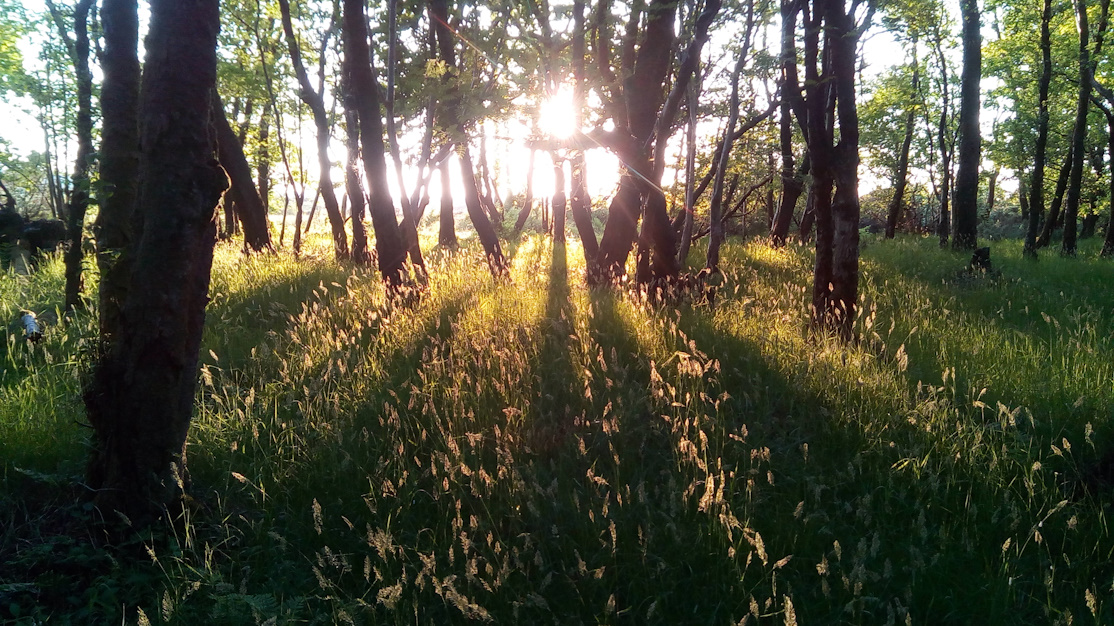
Grief is lonely.
World continues
Time
streams on
Waits for none.
But I can't face anything just now.
I sit alone.
Still
Quiet.
In deep transitions.
Your life taken so suddenly.
It affected many.
Abides within us still.
Such a beautiful moon tonight.
Take care
Wherever you are
May you be at ease
On a golden shore
Expansive
Sorrowless
Your mind at peace
Luminous
and
Free.
...
This blog might contain posts that are only visible to logged-in users, or where only logged-in users can comment. If you have an account on the system, please log in for full access.
Total visits to this blog: 800567