OU blog

Personal Blogs

Steven Oliver

Dressing up York's history

Visible to anyone in the world
Edited by Steven Oliver, Saturday 23 May 2026 at 17:05

Had a couple of hours in York City library and archives today looking at the records they hold on the York Historic Pageant of 1909. This was the last of a sequence of Edwardian public pageants that ran between 1905 and 1909 in different locations and that we study in the final A225 chapter.

There is an fantastic and detailed account of the York Pageant in the The Redress of the Past: Historical Pageants in Britain website

Angela Bartie, Linda Fleming, Mark Freeman, Tom Hulme, Alex Hutton, Paul Readman, ‘The York Pageant’, The Redress of the Past, http://www.historicalpageants.ac.uk/pageants/1354/

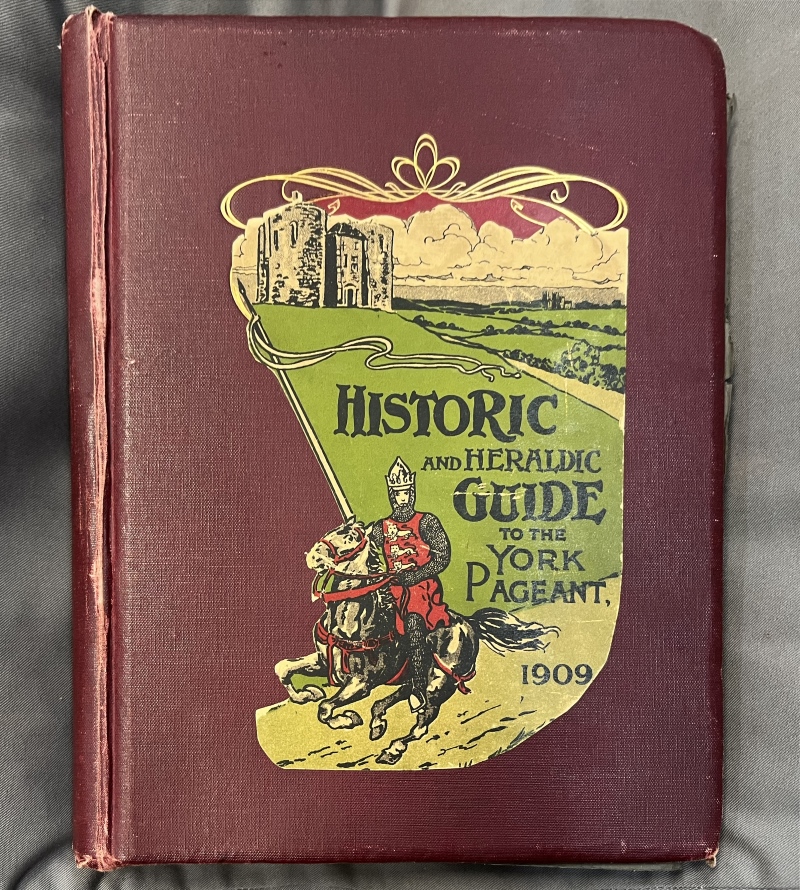
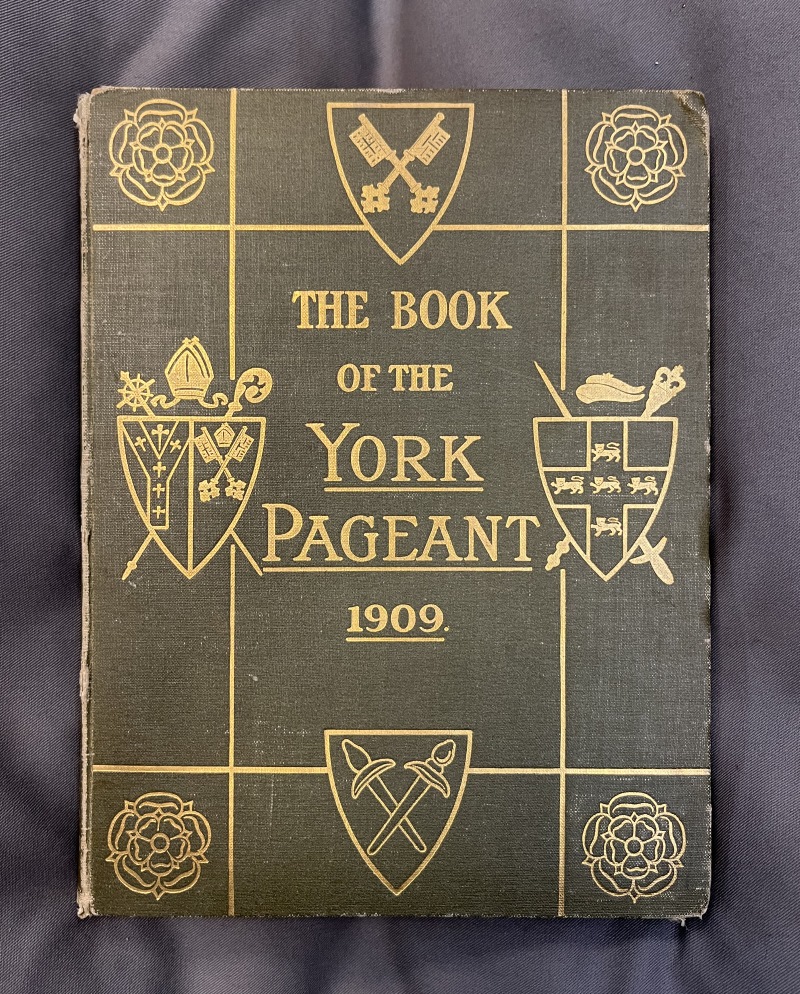
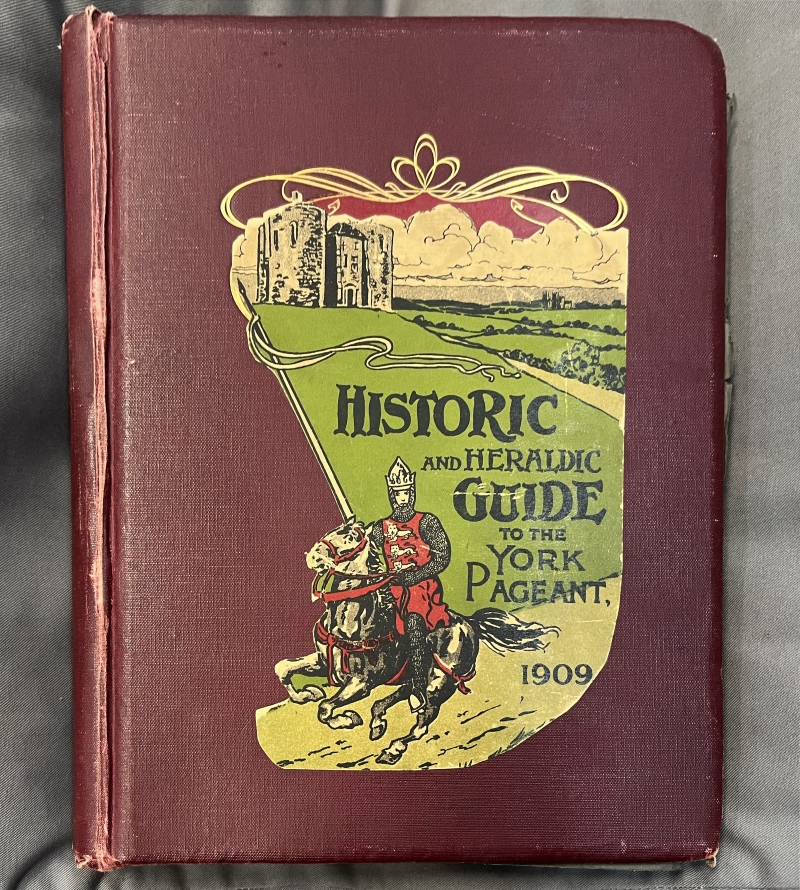
The archive holds a scrapbook that someone (the provenance isn't recorded) kept of the event. It is stacked full of press cuttings, postcards and pictures from the various souvenir brochures.
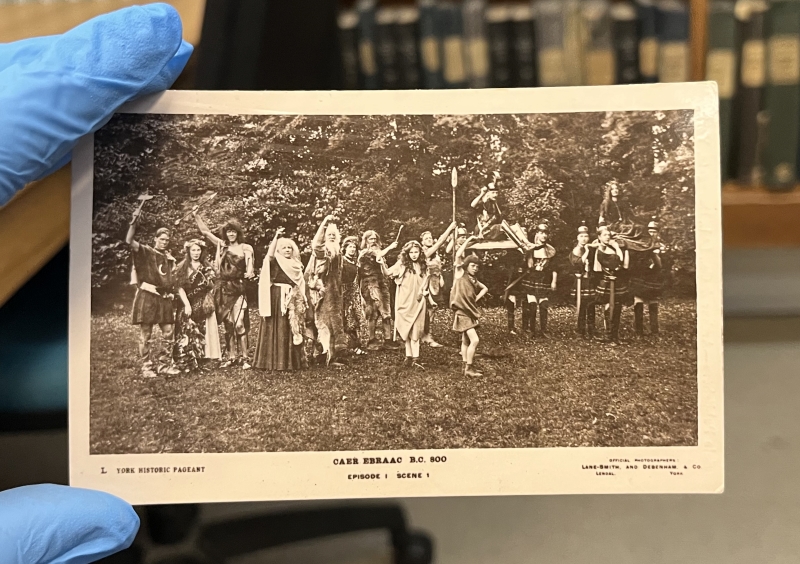
There is also a collection of postcards, showing some of the key scenes.

Like the examples from Dover and St Albans in the module materials. there was plenty of local 'ancient' history (however Robin Hood also made a showing!) but the pageant didn't entirely shy away from some of York's darker past, there was a scene depicting the massacre of Jews in the city in 1190. 

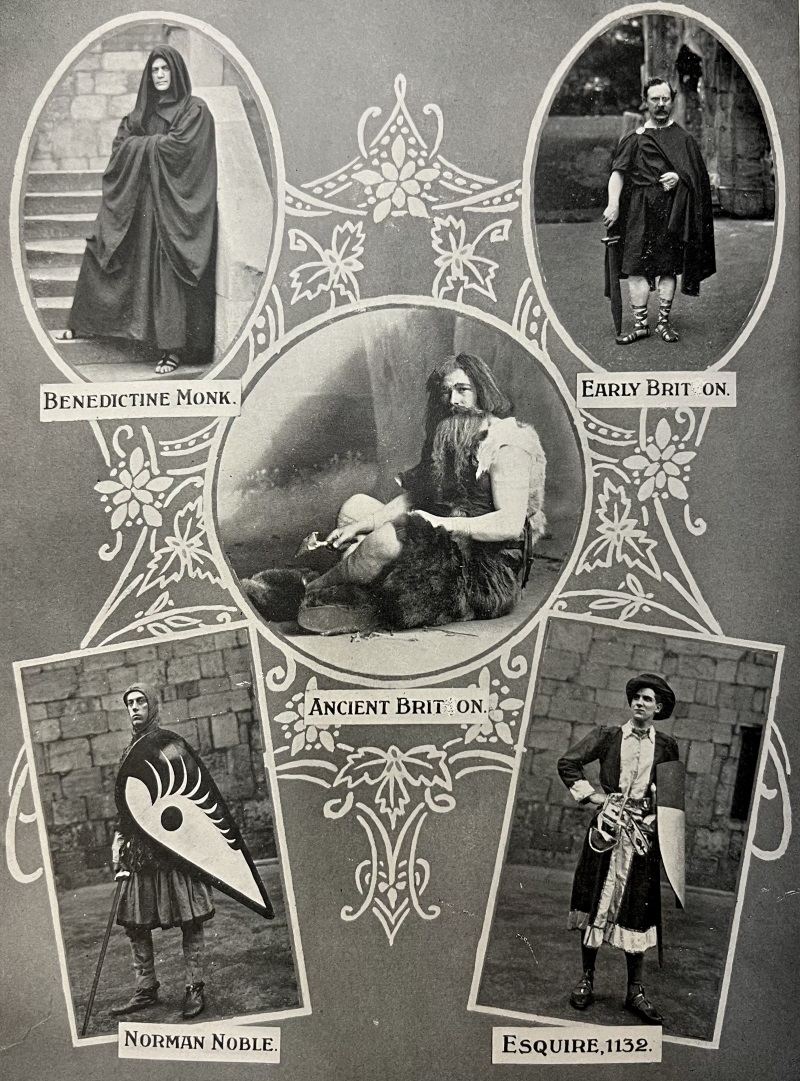
I particularly liked these fearsome ancient Yorkies.
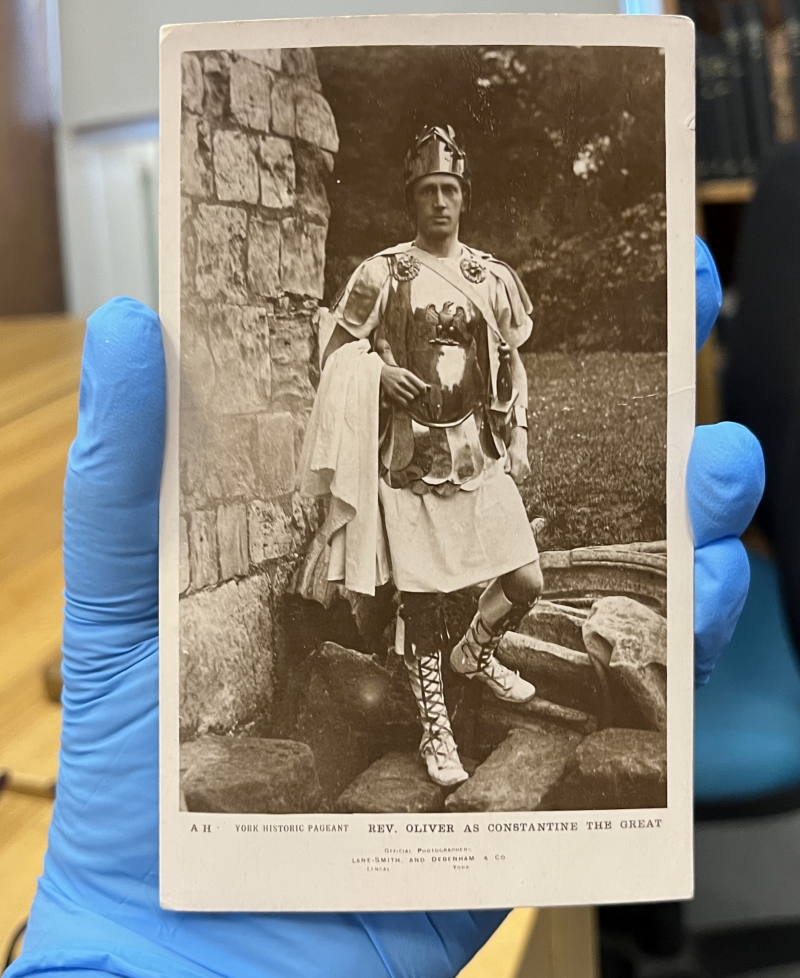
The Reverend Oliver (no relation) here looking suitably imperious as Constantine - the pageant took place in the York Museum Gardens amongst the ruins of St Mary's Abbey.
The current Jorvik centre would no doubt despair that viking King Harald Hardrada's helmet has wings on it (it seems their main purpose in life to disabuse visitors of this fallacy) - but Mr Jackson who was playing him looks happy enough! 
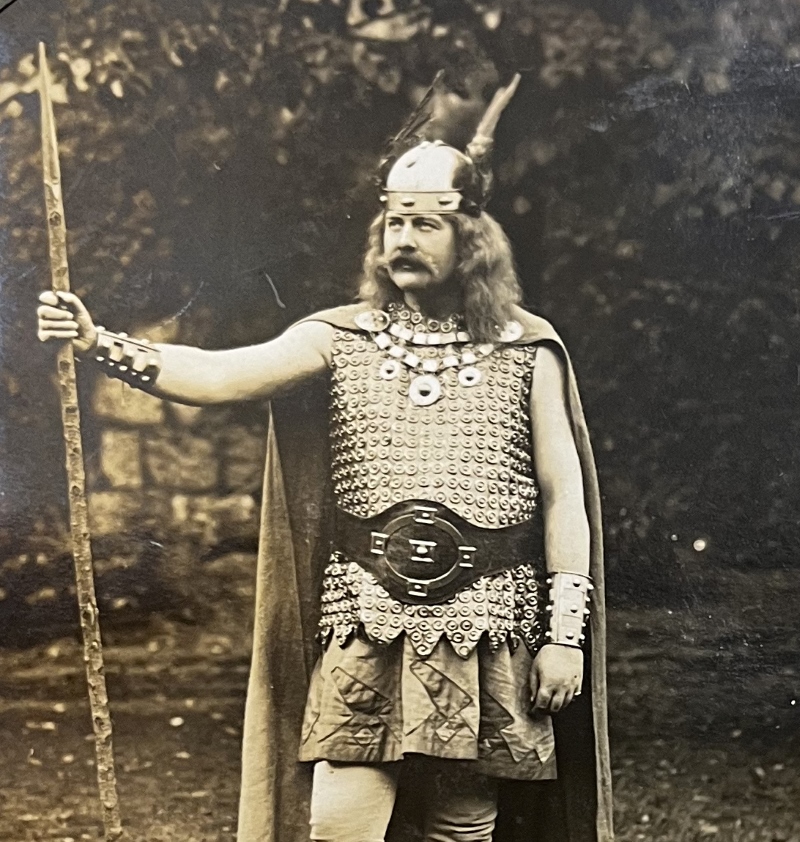
The costumes look pretty fabulous - as do the hair and beards!
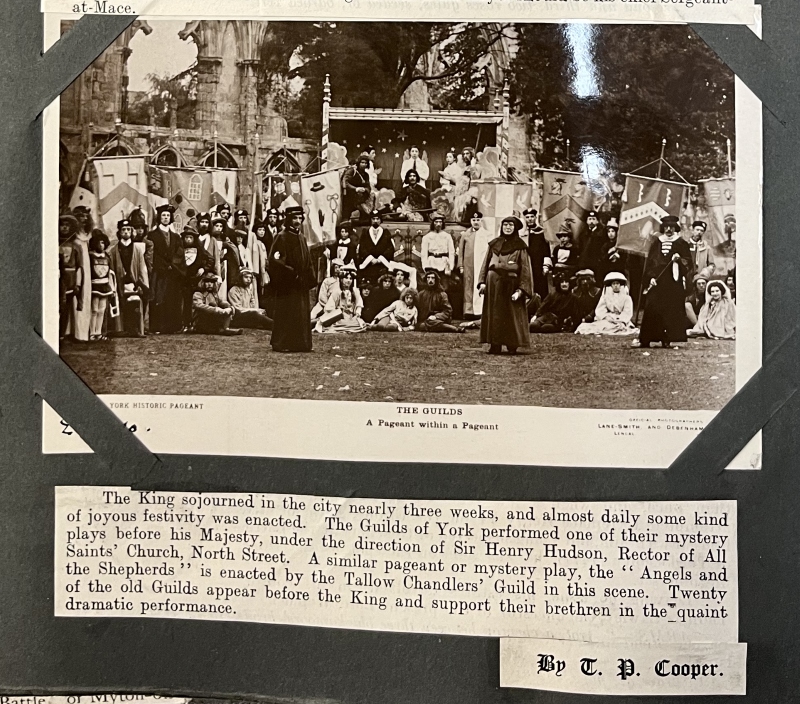
This year the medieval York Mystery plays are on, they run on a four year cycle. Whilst the current sequence of performances didn't start in 1909, there was a scene in the pageant representing the guilds enacting one of the plays.
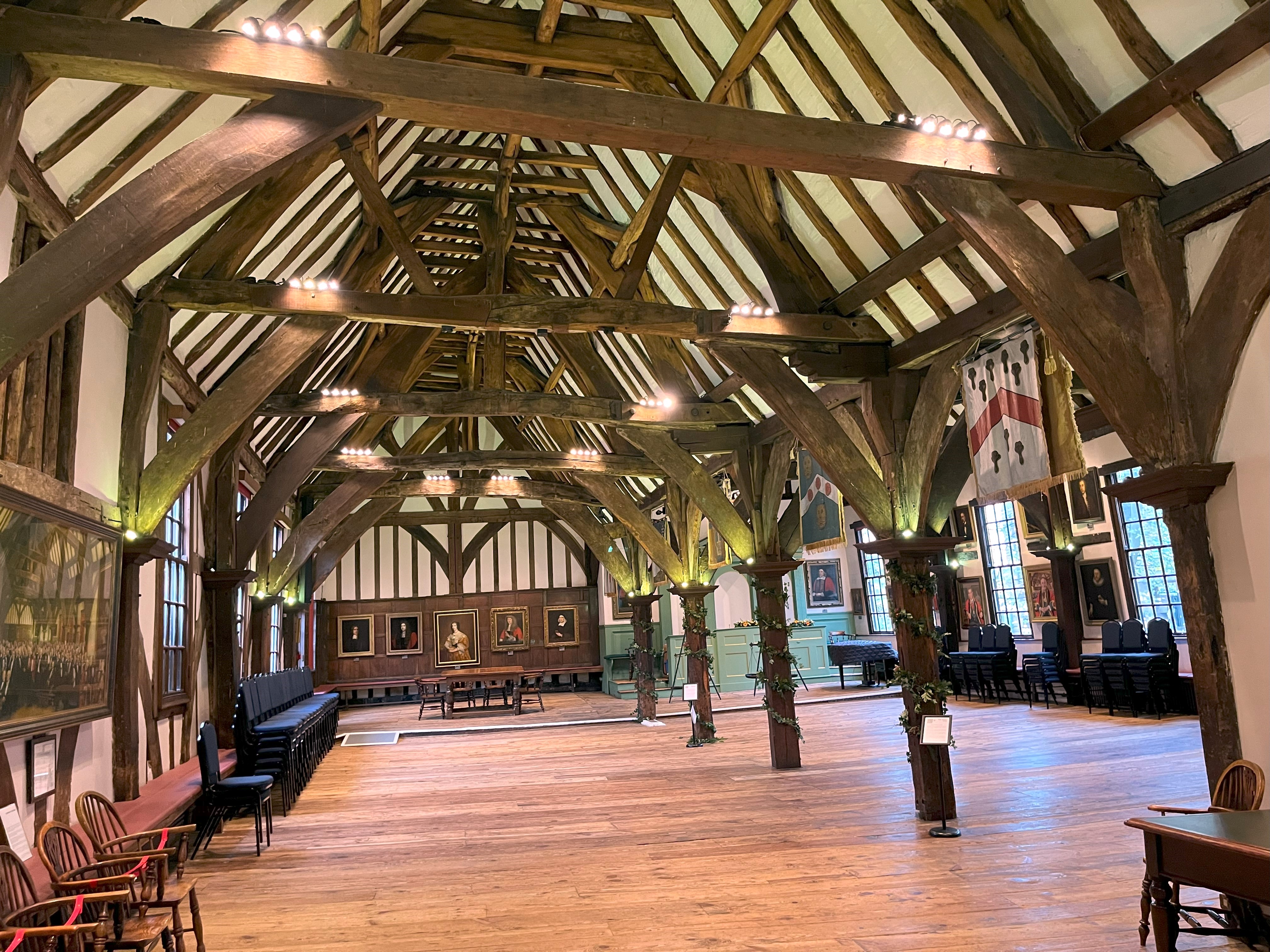
The guild banners that were made for the 1909 pageant now hang in the Merchant Adventurer's Hall in the city, adding yet another layer of historical 'recreation'.
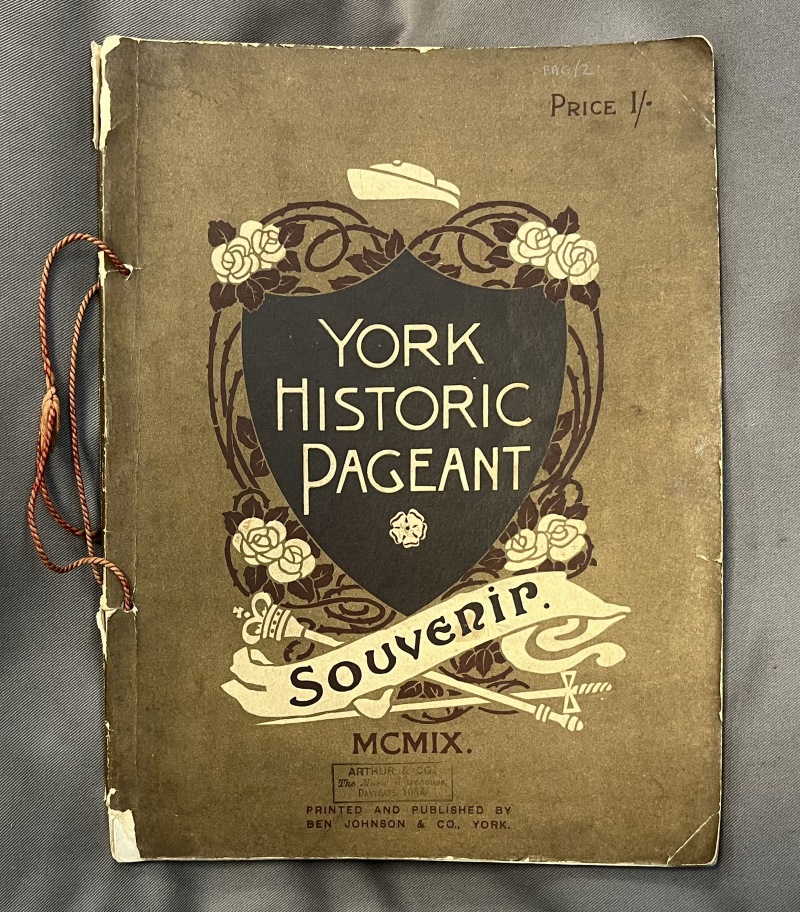
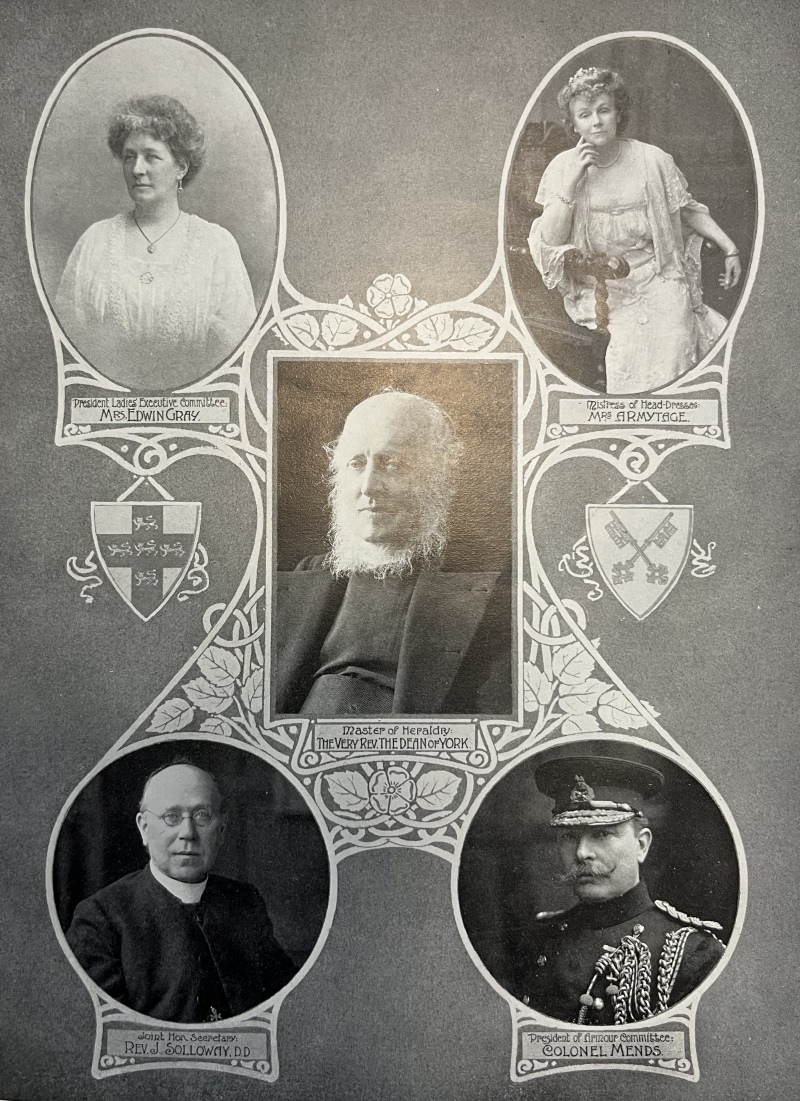
The commemorative brochures were keen to promote the pageant sponsors and various committee members. You can't help feeling everyone was having a grand time.
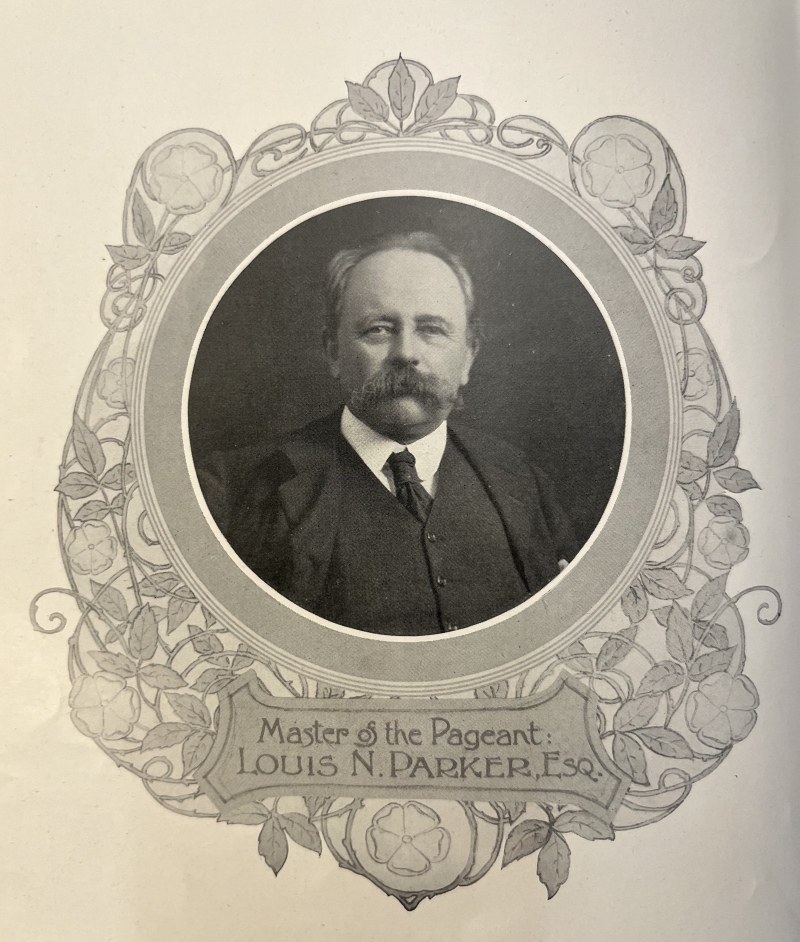
This was Louis Napoleon Parker, the 'Pageant Master' - who had played a big part in launching the craze for community Pageants when he had created the Sherborne Pageant in 1905.
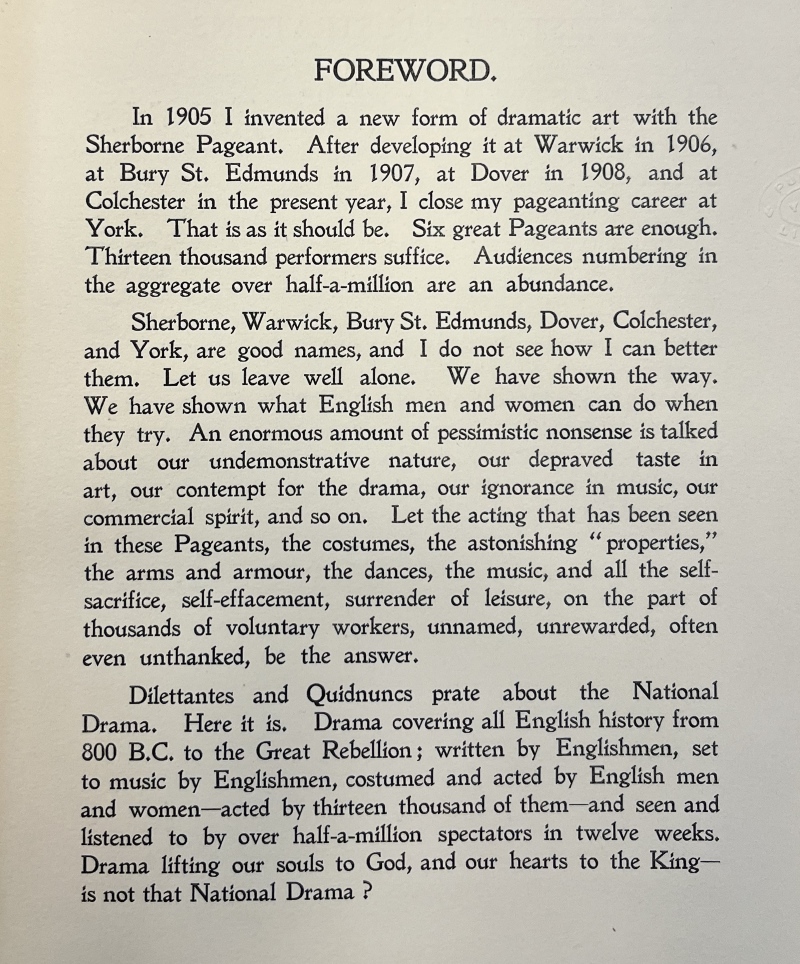
This was his view on the York Pageant...
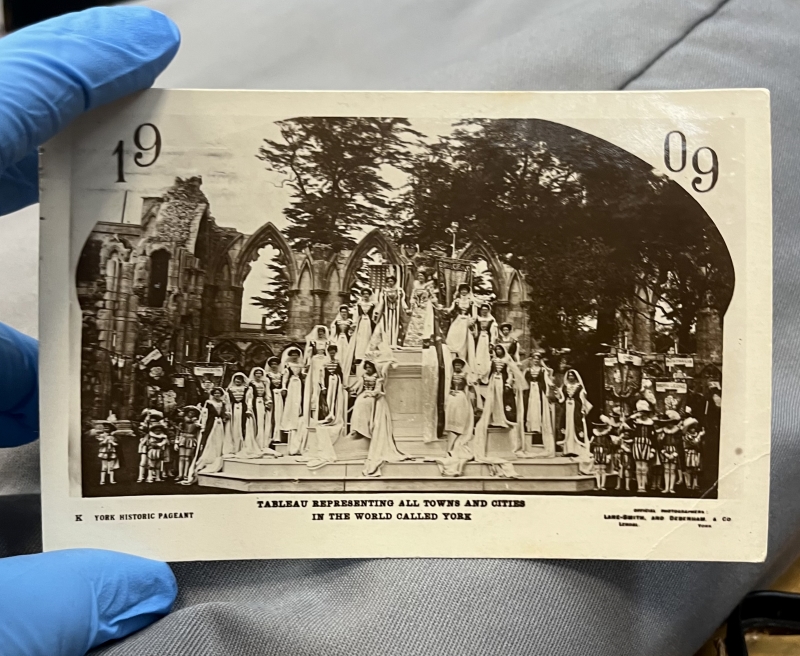
I thought I'd finish with this postcard, which shows the finale of the show in which York was celebrated by figures representing all the other global 'Yorks' (including 'New York'), I think there were about 17 in total.

Not just an example of the 'looking back' that the chapter emphasises - but also, I think, an attempt to foster ideas of a (very white!!) 'Greater Britain', linked together by common culture and roots.
[Home Page]
Permalink
Share post
Steven Oliver

The Five

Visible to anyone in the world
Edited by Steven Oliver, Tuesday 26 May 2026 at 16:31

The five : the untold lives of the women killed by Jack the Ripper

by Hallie Rubenhold

Published 2019, by Doubleday

ISBN : 9780857524485

Mary Ann “Polly” Nichols

Annie Chapman

Elizabeth Stride

Catherine Eddowes

Mary Jane Kelly

This was a chance encounter really, a book that was mentioned briefly in a tutorial on a different topic. It is a 'trade' history book that gives an excellent, if deeply depressing, account of what can be pieced together of the lives of the five women who died in the autumn of 1888, murdered by 'Jack'. It filled out a lot of the A225 material around lifecycle poverty and about the position of women in society. There is a good summary of many of the points made in the book in this review in the Guardian

[Home Page]
Permalink
Share post
Steven Oliver

Deeds not words

Visible to anyone in the world
Edited by Steven Oliver, Thursday 7 May 2026 at 15:01

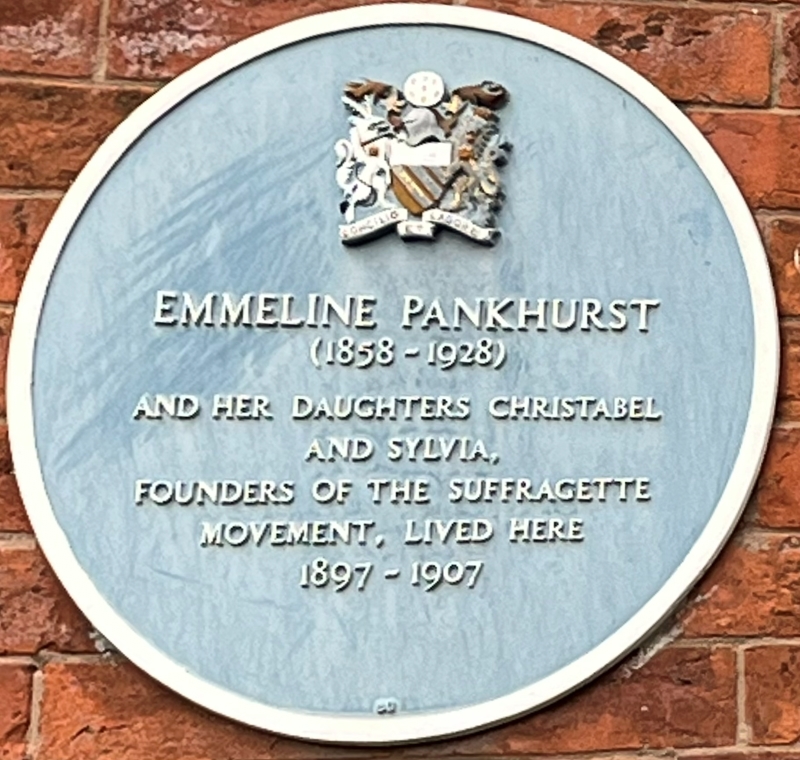
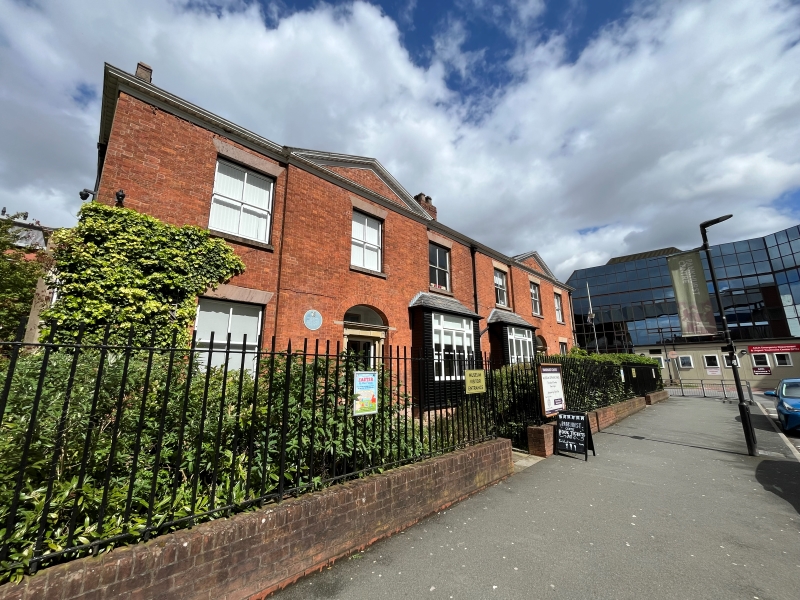
As 'reward' for saying goodbye to a TMA, I recently took the Transpennine Express and had an interesting morning at 62 Nelson Street in Manchester.

This was once the family home for the Pankhursts, and is now The Pankhurst Centre - saved from demolition by a campaign by women in the 1980s it sits rather incongruously within the grounds of Manchester Royal Infirmary (whilst I was visiting there were at least a couple of landings on the helipad immediately next door!). 

It houses a small museum and exhibition space and is run by volunteers, who are just so knowledgeable about aspects of the family, the suffrage campaigns and the women's movement more broadly.

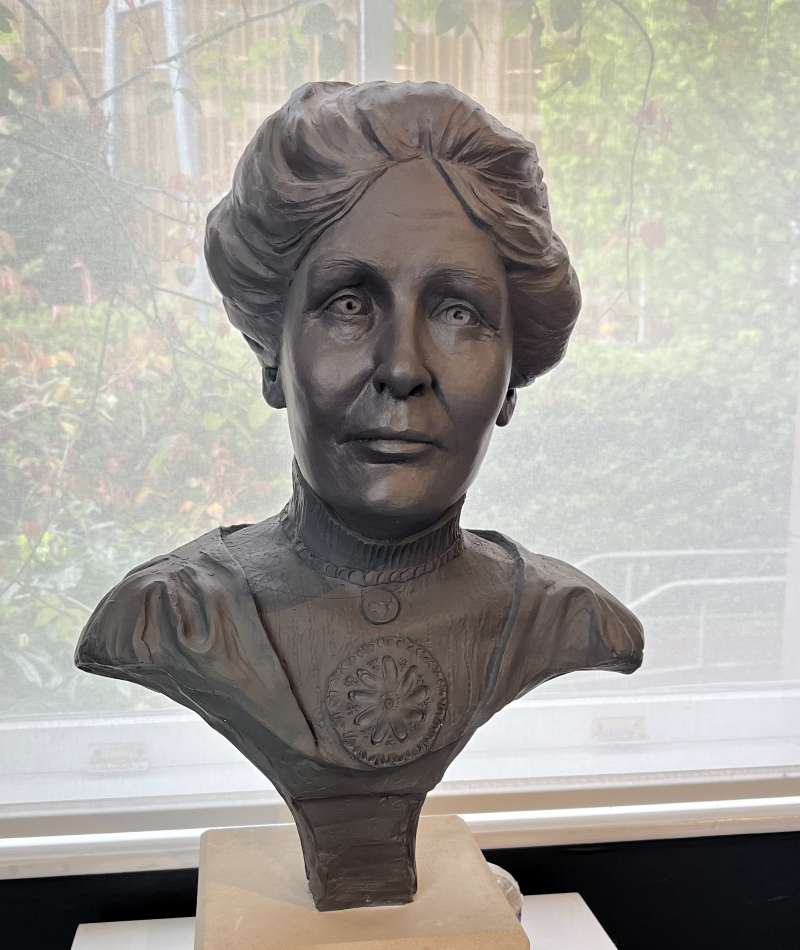
A bust of Emmeline looking suitably imposing, apparently she and her daughters fell out regularly and dramatically!

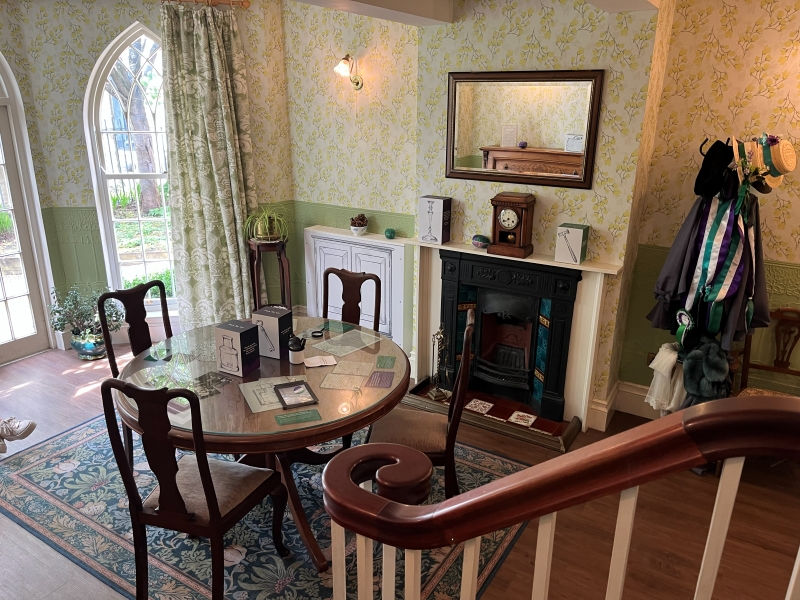
I'm sure this is many people's favourite part of the museum (although the commemorative gardens are also very nice - the Green/White/Purple is a great colour scheme for planting!) the parlour where the Women's Social and Political Union first convened on 10th October 1903. Apparently the invite included the following text... 'Women...we must do the work ourselves. We must have an independent women's movement. Come to my house and we will arrange it.' 💪

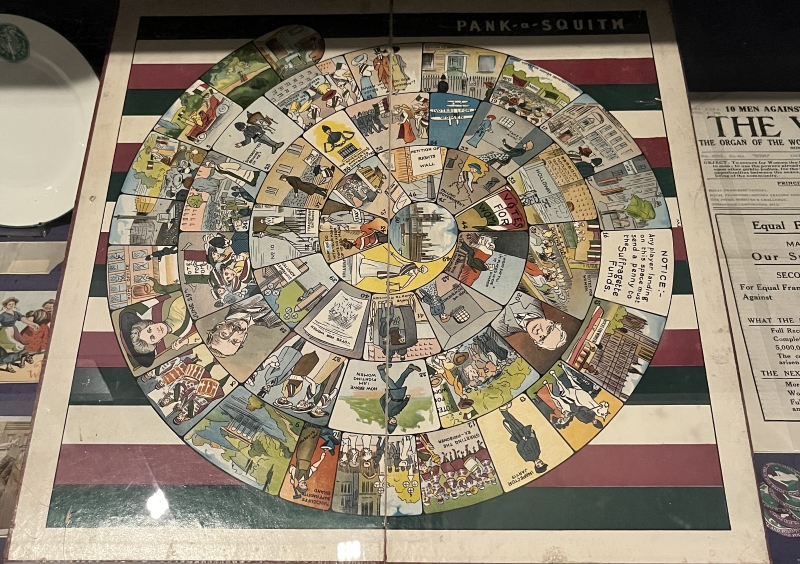
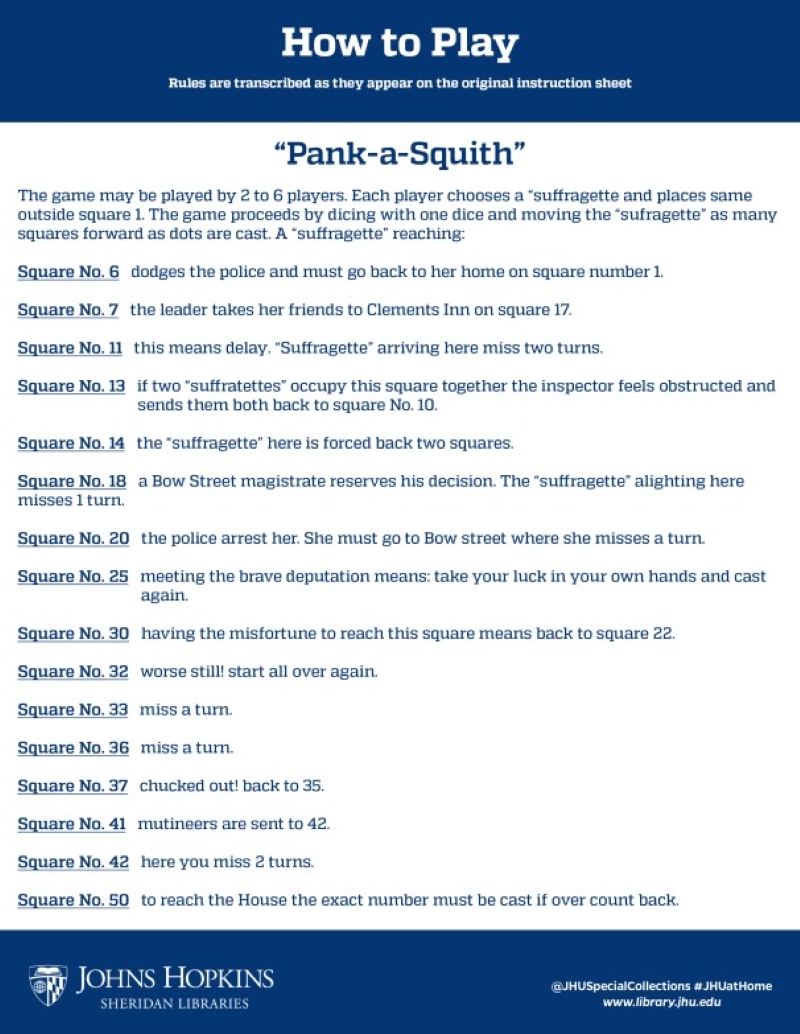
I also made a quick suffragette-focused trip back to the People's History Museum to remind myself of some of the things held there. Most loitered under photograph-resistant shiny glass cases 🙁, but I did get an almost passable image of the 'Pank-a-Squith' board game (I've also tracked down a transcribed set of the rules).

[Home Page]
Permalink
Share post
Steven Oliver

Pioneering spirit

Visible to anyone in the world
Edited by Steven Oliver, Wednesday 6 May 2026 at 09:07

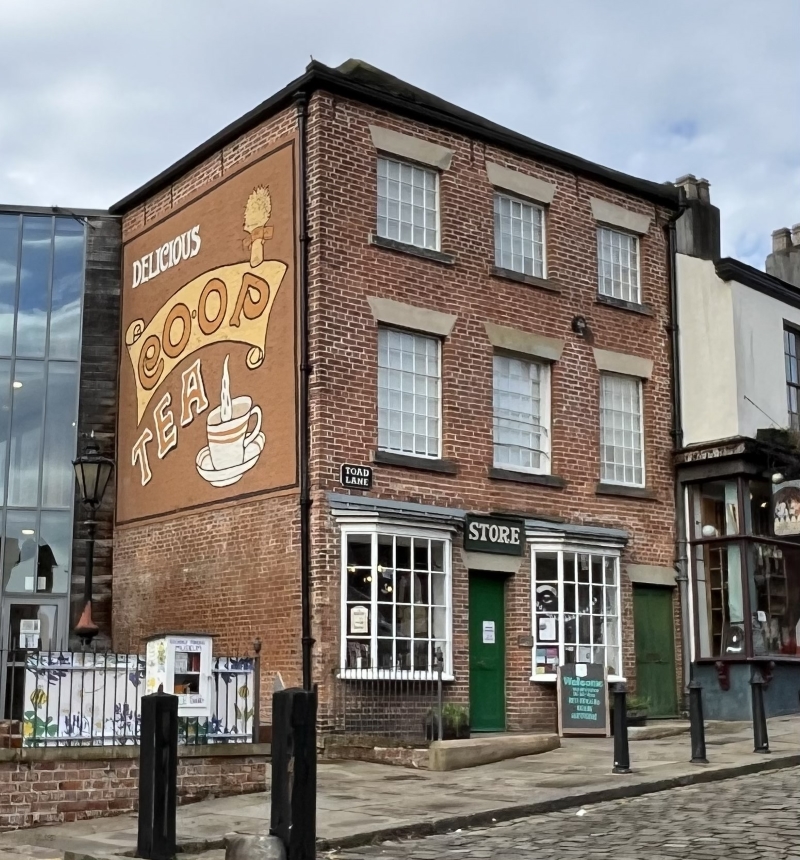
Way back in October my partner needed to get to Rochdale, and wasn't too shocked to discover my enthusiasm to take her was A225-related. We 'negotiated' a brief stop here, which is 31 Toad Lane - site of the first co-operative store run by the Rochdale Society of Equitable Pioneers. Opened in 1844 selling a limited range of goods (sugar, butter, oatmeal and flour) this wasn't the first co-operative - but it has ended up having iconic status in the wider movement. It was established as a museum in 1931 and has a small but fascinating exhibition about co-operatives from the industrial revolution onwards. It's taken until now for the module to catch up with me, but I can now celebrate late-Victorian working class association along with chapter 19!

We had a lovely welcome from the volunteer guide - who it transpires is currently doing an MA in History with the OU - my partner decided at that point that I needed to be removed from further temptation! 😂

[Home Page]
Permalink
Share post
Steven Oliver

Metropolis

Visible to anyone in the world
Edited by Steven Oliver, Saturday 23 May 2026 at 15:30

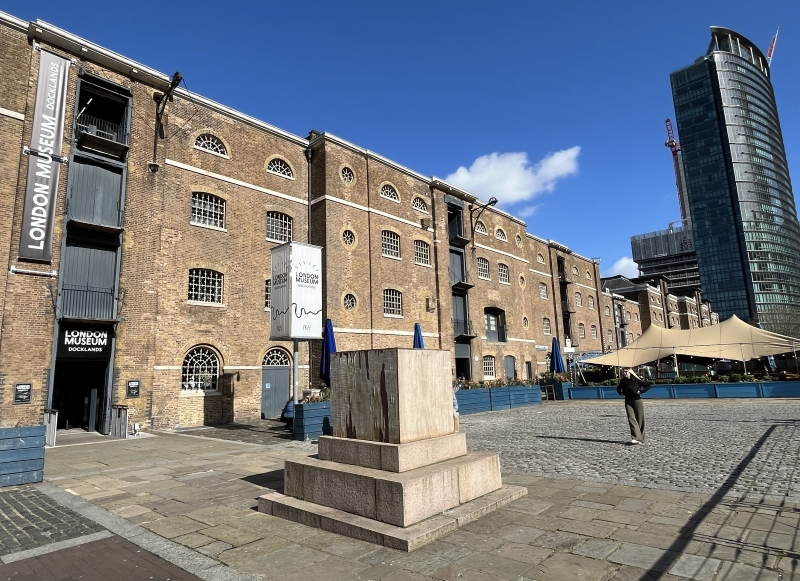
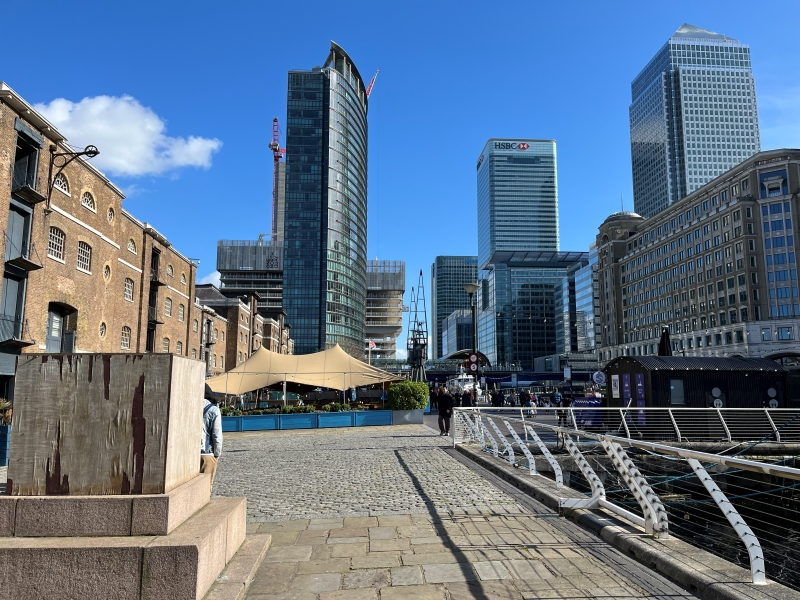
A mid-March trip to London allowed me a Sunday at leisure in the Metropolis and gave me a chance to visit the London Museum Docklands. This is sited on West India Dock right in the centre of London's historic docklands. I'd been interested in this site since attending this year's OU Arts and Humanities Day School, and listening to Kate Donnington's talk on legacies of slavery.

There's an interesting video here that she made whilst working with the London Museum, one thing worth noting is that this was filmed before a key change to the memorialisation which Kate discusses. 

The video was completed before 2020, at which point (the day after the Colston Statue was toppled) the statue of Robert Milligan that had been outside the Docklands Museum since 1997 was removed. There is a great blog about the Milligan statue, part of the 'Cast in Stone' project - which documents a range of statues commemorating empire in Britain and France.

On the day I visited the plinth outside the museum is all that remains, and the base is largely concealed behind wooden boarding.

Apparently 2027 should see work completed on the installation of a memorial to the victims of transatlantic slavery - named 'The Wake'.


Before entering the museum there's a chance to look back at the great successor to British exploitative trade .... global finance (just as much a legacy of empire and slavery!)

The museum is excellent with a range of galleries - including a powerful one on slavery and sugar. On the day I visited there was a tour focusing on women resisting and campaigning against slavery, including Elizabeth Heyrick, the organiser of the sugar boycott.

There were also galleries that covered the 1898 London Dock Strike - and some really interesting material on the 1980s and what will always feel like the 'Long Good Friday' period, when money started to flow into the decaying docklands.

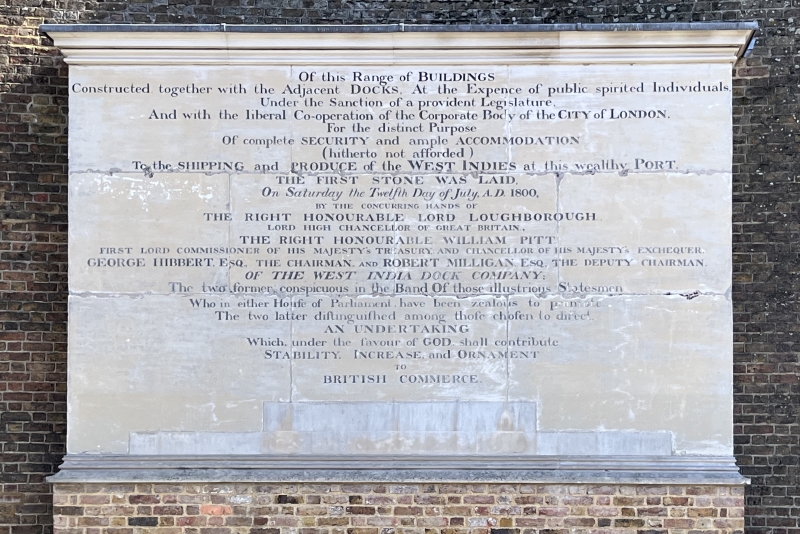
The picture below shows the dedication memorial highlighting both George Hibbert and Robert Milligan as leaders of the West India Docks Company - this currently doesn't have any additional contextual information.

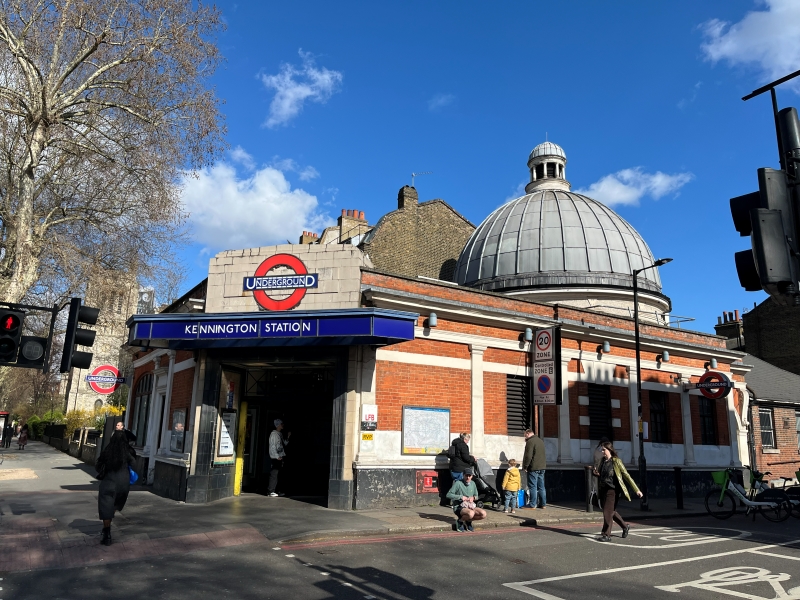
Whilst I was in London there was a chance to explore a bit of late Victorian urban technology, I took a ride on the Northern Line to Kennington Tube Station. The station is largely unaltered since it opened in 1890 as part of the first electric underground railway in the world. The original route was created by the City and South London railway and was the first to be tunnelled rather than digging a trench. It was originally going to be a cable-car, but this wasn't judged practical, so it was switched to an electric engine. The dome on the station building used to house a hydraulic lift.

[Home Page]
Permalink
Share post
Steven Oliver

Malthusians....Assemble!

Visible to anyone in the world
Edited by Steven Oliver, Thursday 7 May 2026 at 13:45

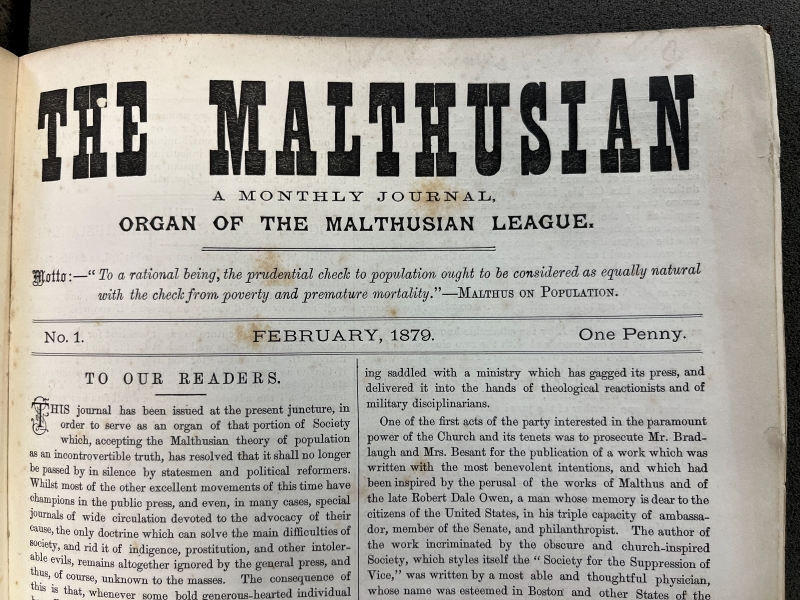
Exploring 19th and early 20th century concerns with population 'degeneration' was a fascinating aspect of unit 18 in A225. Whilst I don't have any great expertise, I've a little familiarity with the eugenics movement - but the 'Neo-Malthusians' and their 'Malthusian League' were a new group for me. So I was really interested to see that the Borthwick Archives held copies of their monthly journal... 

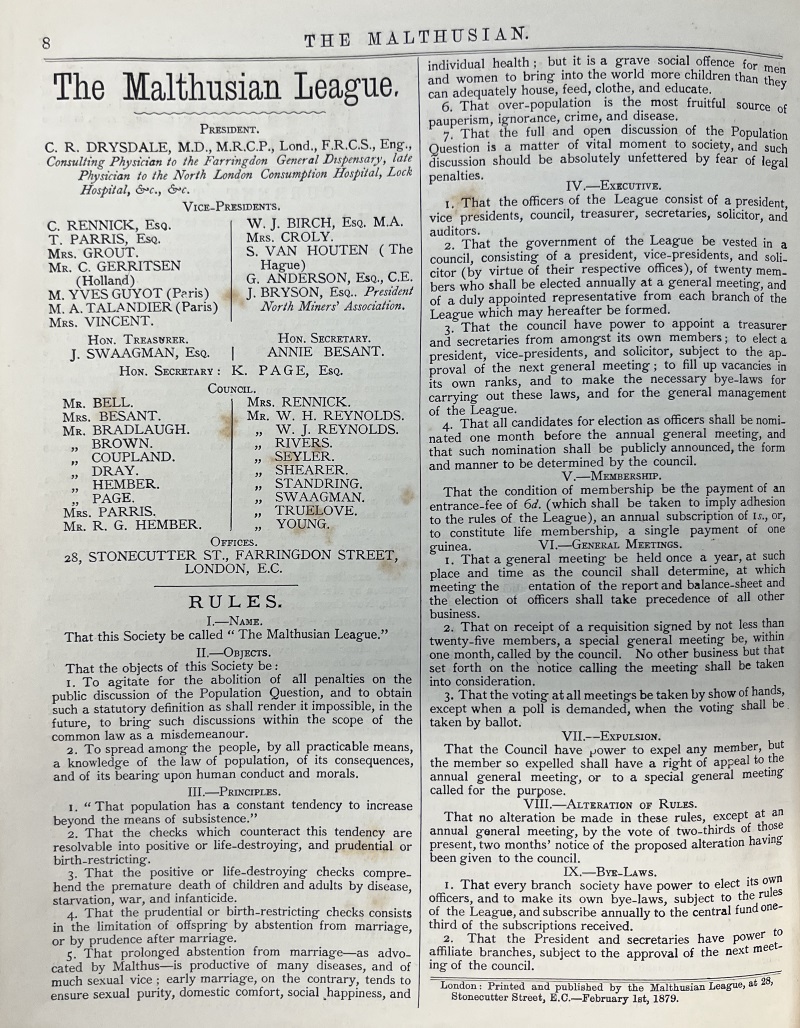
The Malthusian - organ of the Malthusian League 😃

The fundamental concern of the Malthusian League was 'family planning'. It was initially founded during the "Knowlton trial" of Annie Besant and Charles Bradlaugh in July 1877, when they were prosecuted by the state for publishing Charles Knowlton's 'The Fruits of Philosophy, or the Private Companion of Young Married People'. This pamphlet, written by an American physician in the 1830s, explained various contemporary methods of birth control - and (radically) was aimed at a general readership.

The principles of the League are set out after the first editorial (by Charles Bradlaugh), they present over-population as the primary source of poverty and most social woes, and promote the 'prudential' or 'birth-restricting' Malthusian checks as the only sensible route out of contemporary problems.

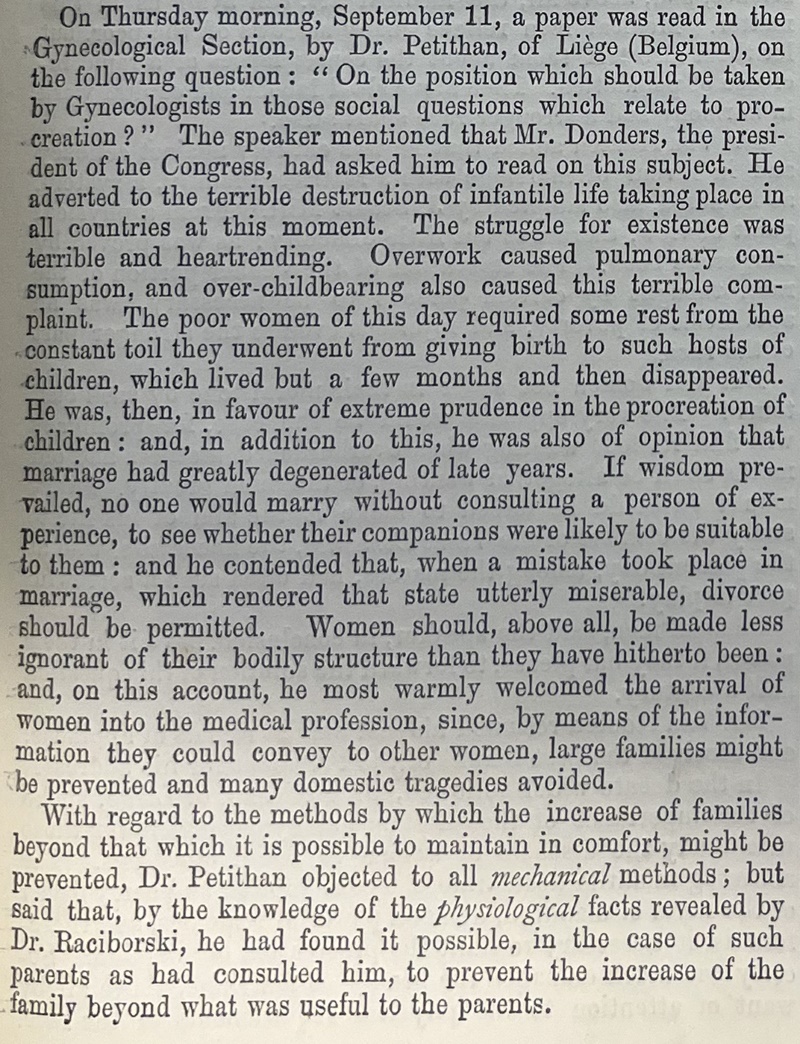
I only skimmed the first volume, but the recurrent themes in the contents were: discussions of Malthus and his written works; essays counselling against 'celibacy' as this actually led to 'vice' but to marry early but keep 'control' of family size; social and possibly legislative incentives for small families. There was minimal discussion of any of the practicalities of contraception, but I did come across the following account of a visit by representatives of the League to the International Medical Congress of 1879 held in Amsterdam.

The excerpt above is the closest I came to a discussion of methods of family planning - the physiological 'facts' linked to French physician Adam Raciborski was a variant on the 'rhythm method' trying to identify a 'safe period' for intercourse, other approaches discussed were 'withdrawal', presumably mechanical methods were sheaths.

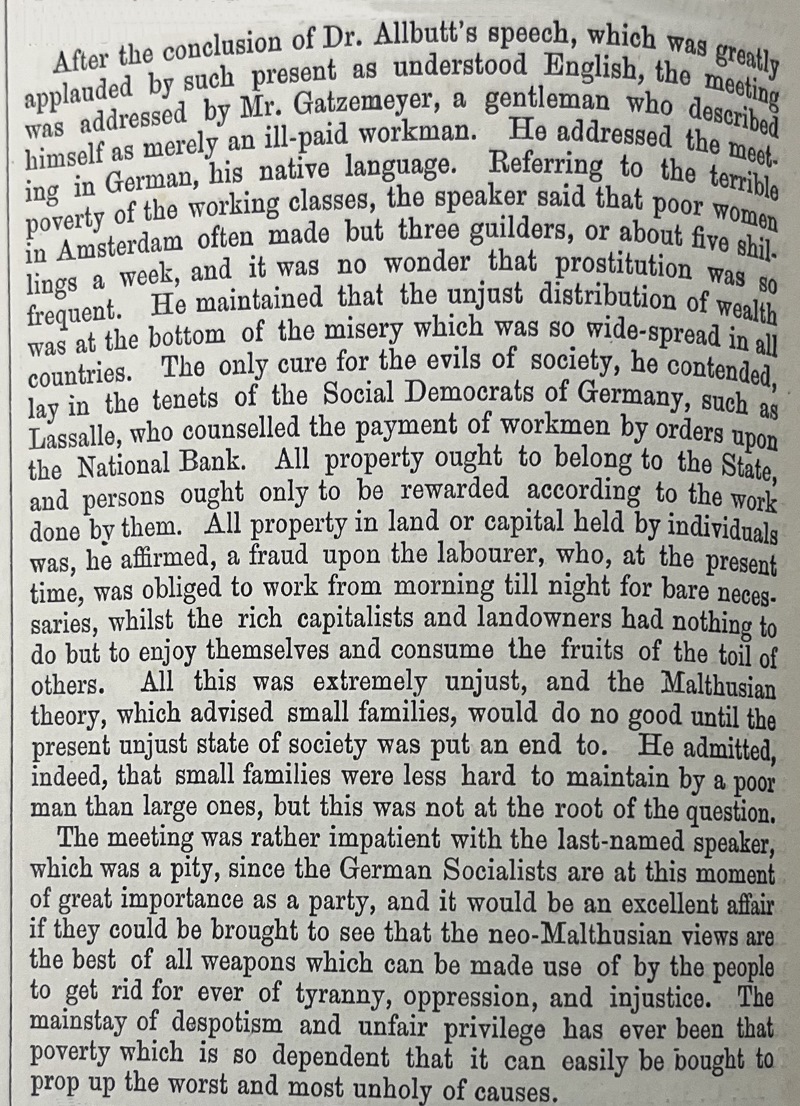
I was also interested in the following account of a very different, socialist, perspective on poverty. It looks like it got very short shrift at the conference!

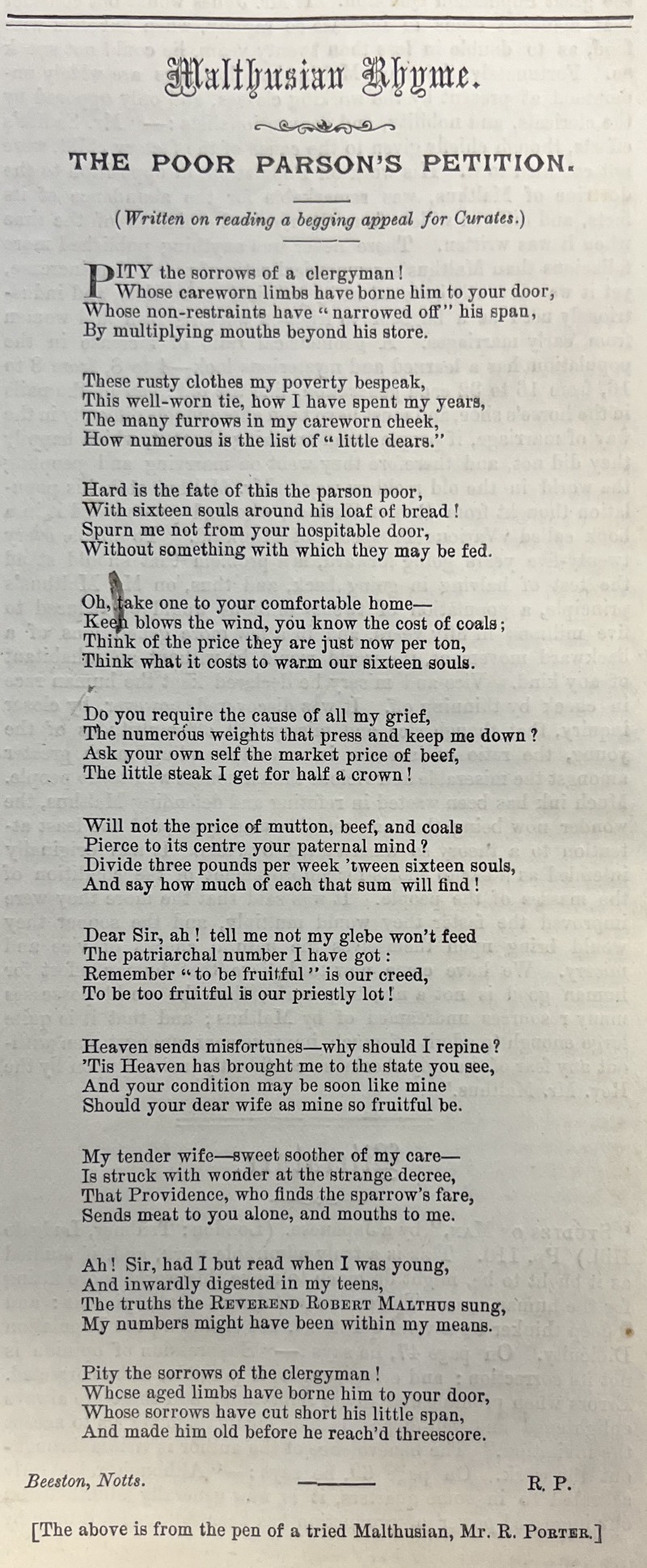
There were a couple of examples of 'Malthusian Rhyme' - this one picked on the 'Poor Parson' who had failed to take proper notice of the teachings of the Reverend Malthus!

He was now dependent on the charity of his parishioners because of his failure to take the 'prudential' route and the subsequent inevitable poverty.

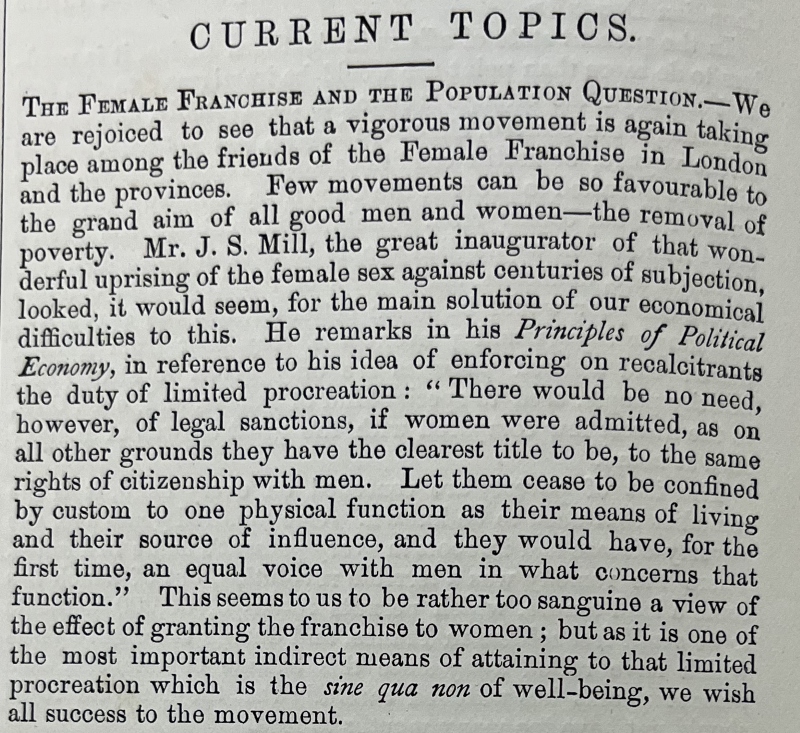
The final A225-related excerpt I picked out was on 'The Female Franchise' an important 'Current Topic'. The League were broadly supportive, specifically as they believed this would be an indirect route to 'limited procreation'. 

[Home Page]
Permalink
Share post

This blog might contain posts that are only visible to logged-in users, or where only logged-in users can comment. If you have an account on the system, please log in for full access.

Total visits to this blog: 73720