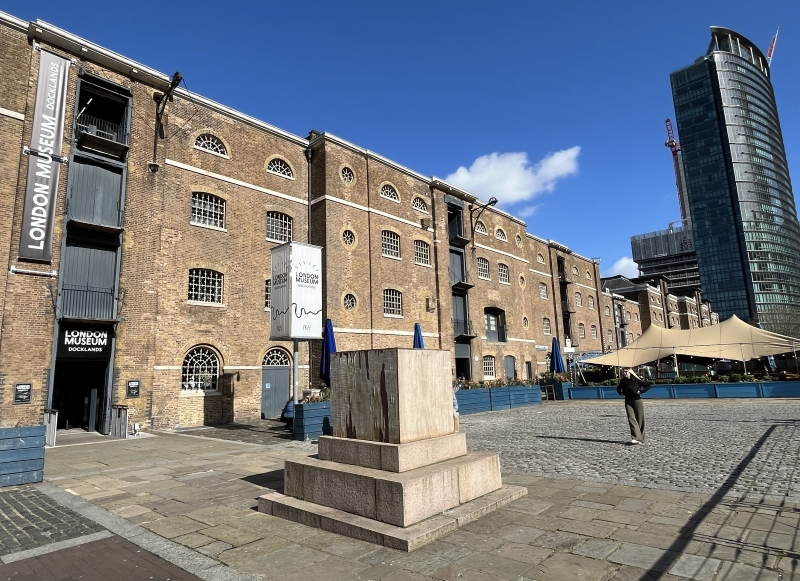
A mid-March trip to London allowed me a Sunday at leisure in the Metropolis and gave me a chance to visit the London Museum Docklands. This is sited on West India Dock right in the centre of London's historic docklands. I'd been interested in this site since attending this year's OU Arts and Humanities Day School, and listening to Kate Donnington's talk on legacies of slavery.
There's an interesting video here that she made whilst working with the London Museum, one thing worth noting is that this was filmed before a key change to the memorialisation which Kate discusses.
The video was completed before 2020, at which point (the day after the Colston Statue was toppled) the statue of Robert Milligan that had been outside the Docklands Museum since 1997 was removed. There is a great blog about the Milligan statue, part of the 'Cast in Stone' project - which documents a range of statues commemorating empire in Britain and France.
On the day I visited the plinth outside the museum is all that remains, and the base is largely concealed behind wooden boarding.
Apparently 2027 should see work completed on the installation of a memorial to the victims of transatlantic slavery - named 'The Wake'.
Before entering the museum there's a chance to look back at the great successor to British exploitative trade .... global finance (just as much a legacy of empire and slavery!)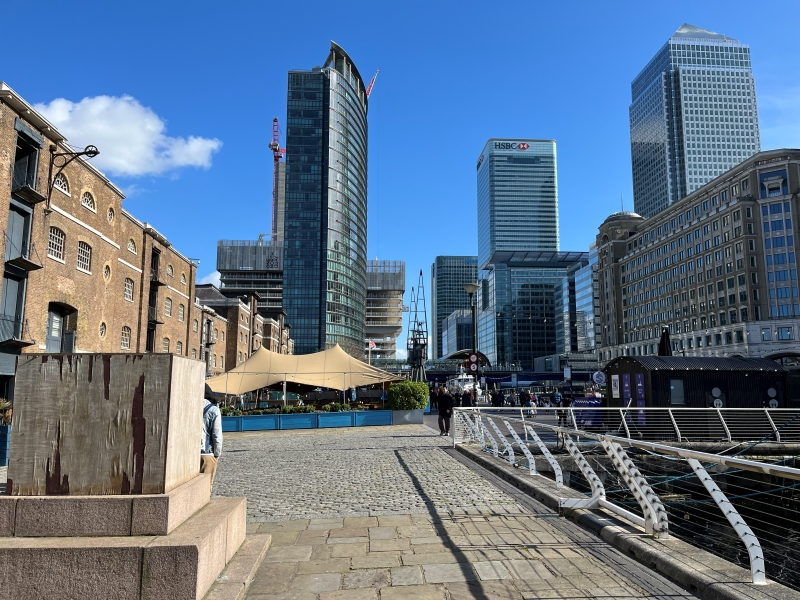
The museum is excellent with a range of galleries - including a powerful one on slavery and sugar. On the day I visited there was a tour focusing on women resisting and campaigning against slavery, including Elizabeth Heyrick, the organiser of the sugar boycott.
There were also galleries that covered the 1898 London Dock Strike - and some really interesting material on the 1980s and what will always feel like the 'Long Good Friday' period, when money started to flow into the decaying docklands.
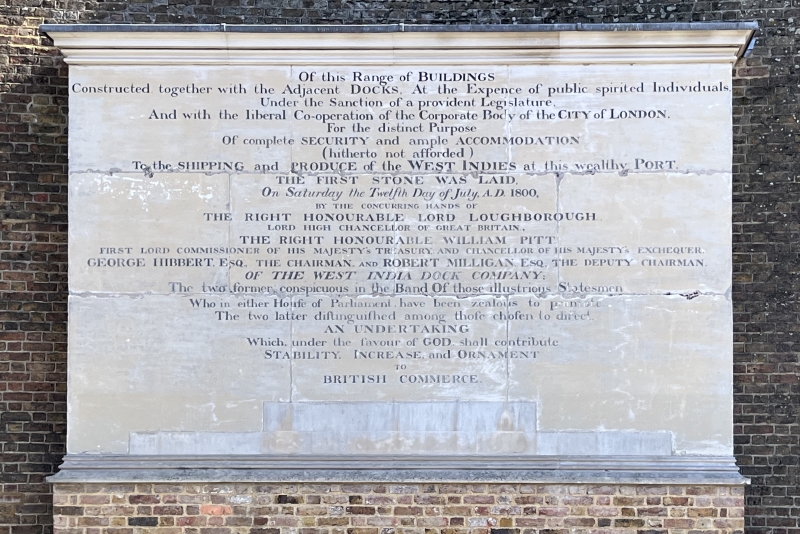
The picture below shows the dedication memorial highlighting both George Hibbert and Robert Milligan as leaders of the West India Docks Company - this currently doesn't have any additional contextual information.
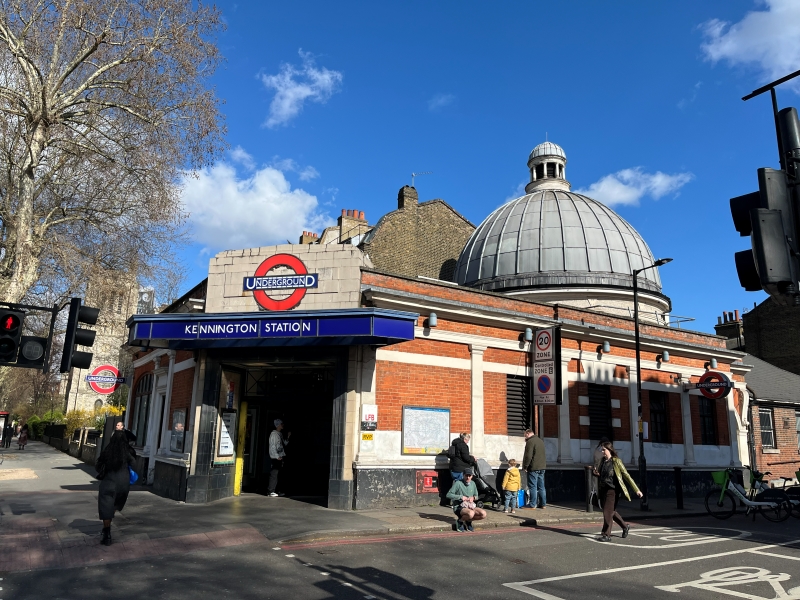
Whilst I was in London there was a chance to explore a bit of late Victorian urban technology, I took a ride on the Northern Line to Kennington Tube Station. The station is largely unaltered since it opened in 1890 as part of the first electric underground railway in the world. The original route was created by the City and South London railway and was the first to be tunnelled rather than digging a trench. It was originally going to be a cable-car, but this wasn't judged practical, so it was switched to an electric engine. The dome on the station building used to house a hydraulic lift.