The remains of the first WW1 'National Filling Factory' at Barnbow on the outskirts of Leeds was protected as a scheduled monument because it was: "a milestone of the First World War and the country’s engagement in ‘Total War’ with the large scale employment of women in dangerous work". So after an A337 tutorial drawing on ideas of 'Total War' it seemed the ideal place for an afternoon dog walk with my historical assistant Dexter.
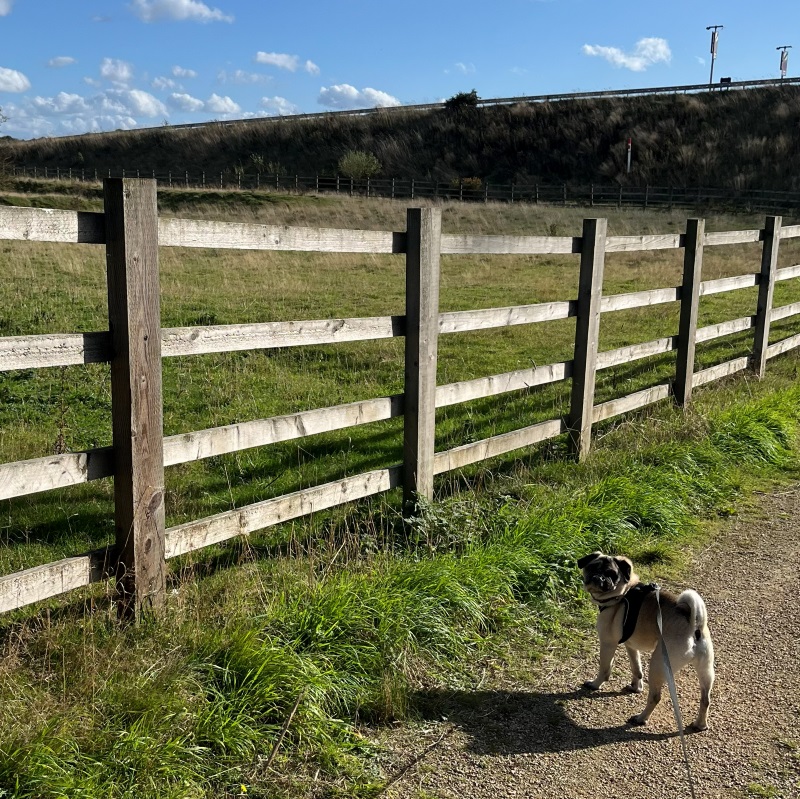
(Dexter's interest in history can be overstated 😆)
Barnbow is on the rural fringe of Leeds and a munitions factory was developed from a green-field site. The first purpose-built filling factory for high explosive shells, it opened in December 1915.
The factory became a major employer with up to 16,000 workers filling shells with TNT and AMATOL and packing them for transport to the front. It had dedicated rail lines both to shift the munitions and also transport the staff, who kept the site running 24 hours a day for 6 days a week. Over 90% of the workforce were women, locally referred to as 'Barnbow Lasses'.
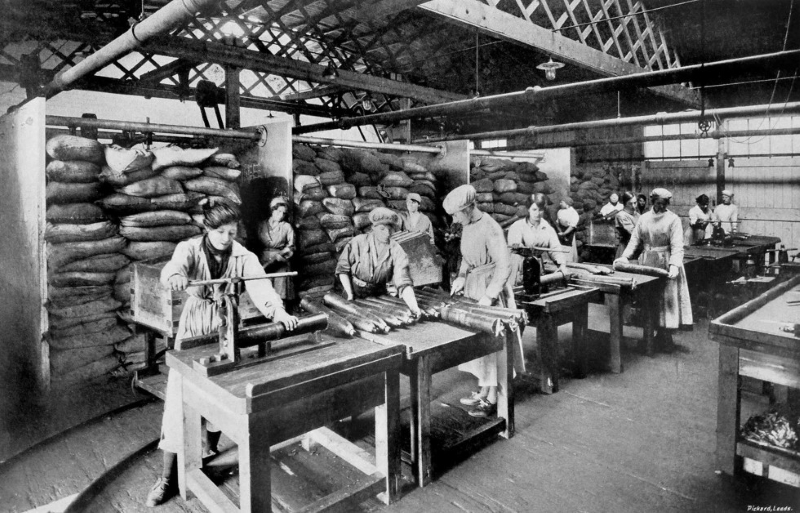
Fuzing shells, believed to be in hut 42, Barnbow National Filling Factory © The National Archives. MUN5/155.
Like so many 'ancient sites' I found it hard to make that much sense of the remains on the ground, but in the picture below you can probably make out several square blocks, these were the bases for shell storage buildings, located beside the railway line. Other remains now seem largely obscured by hawthorn copses that are growing across the site.
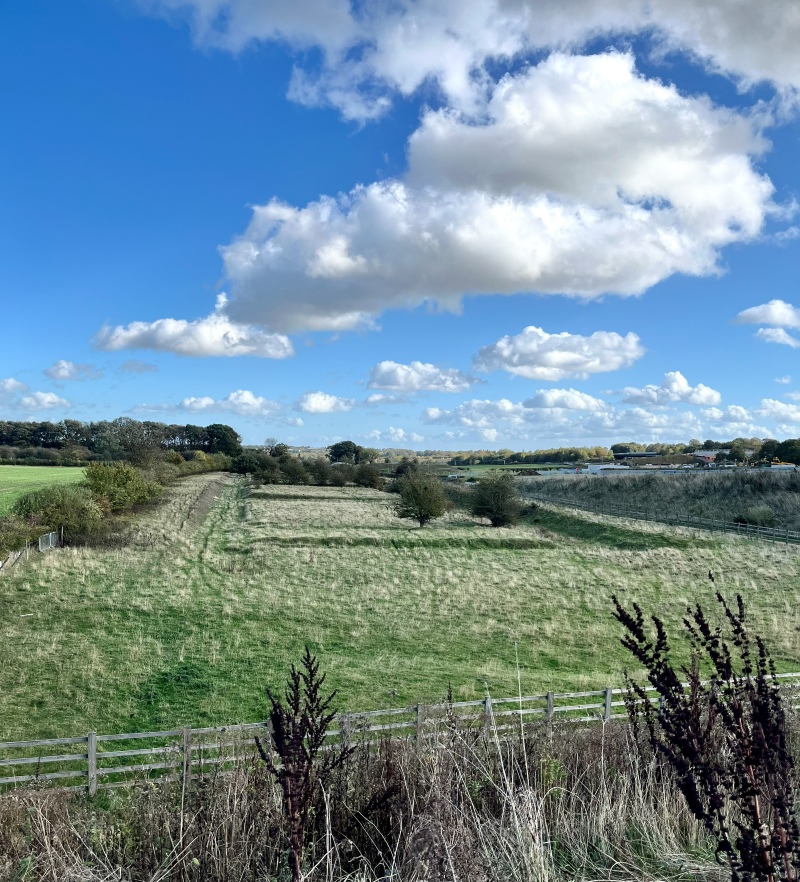
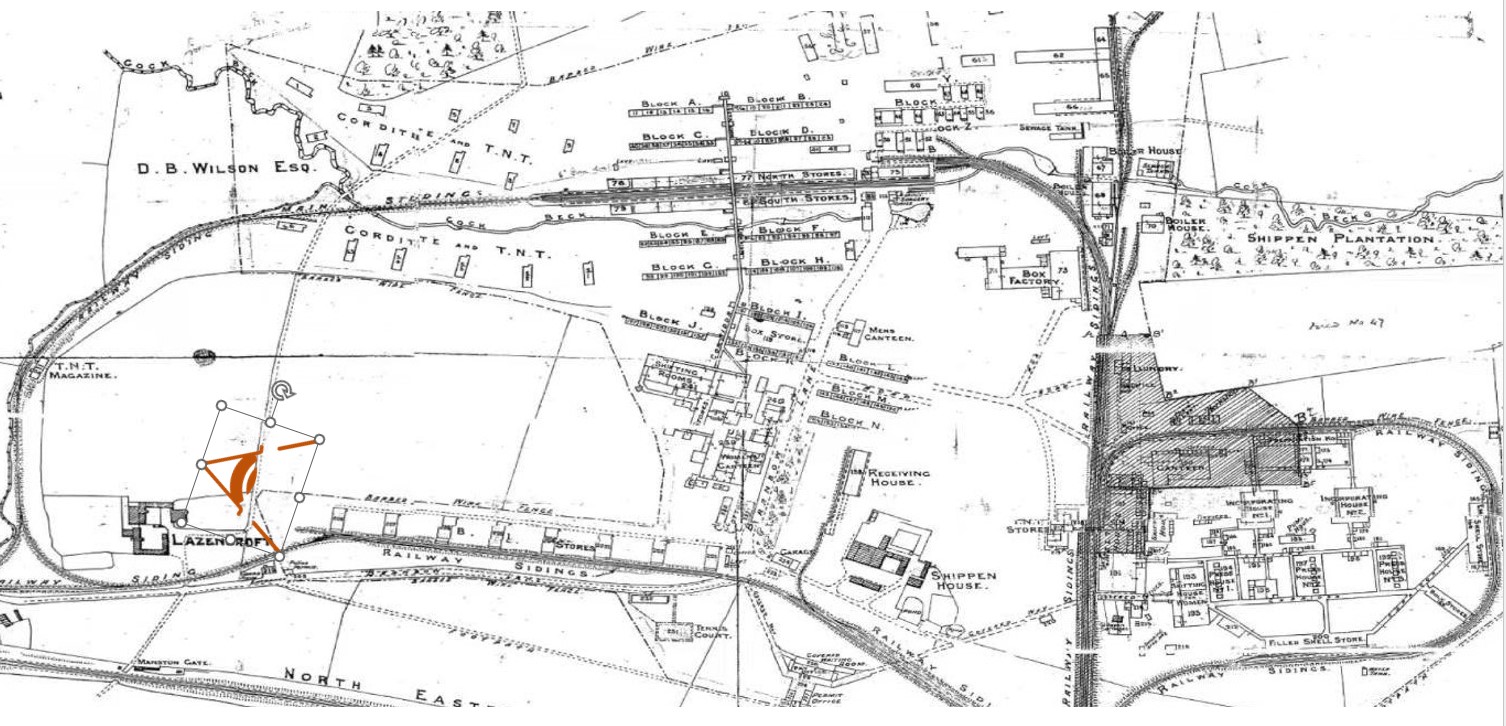
A map of the site at its closure in the early 1920s (I've marked our viewpoint of the site today)
Dexter and I also visited a memorial in a local park dedicated to workers who died at the factory in a number of tragic accidents. The largest loss of life was on the night of 5th December 1915, when an explosion in a shell-filling room resulted in the death of 35 women. These weren't the sort of civilian deaths that could be 'repackaged' for propaganda, so the accident went largely unreported at the time. The current memorial was established in 2012.
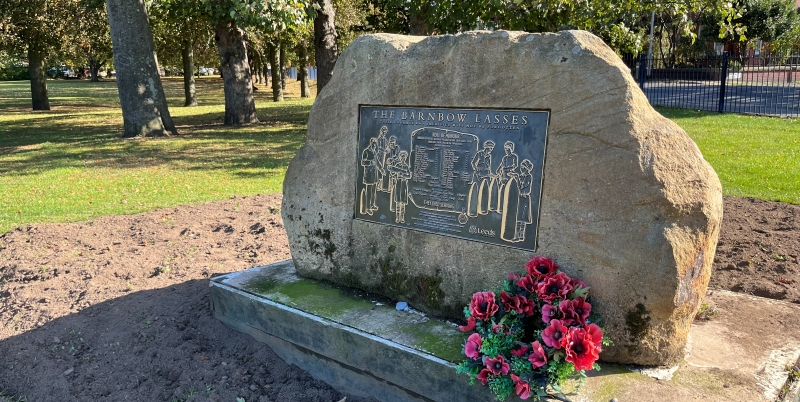
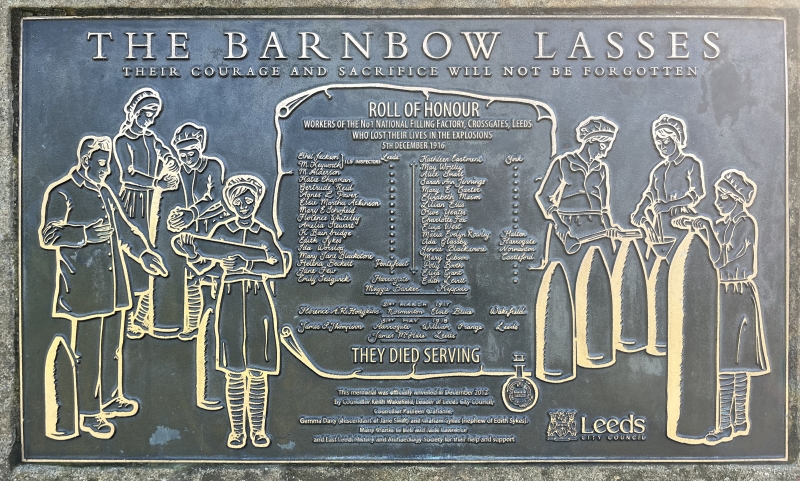
In terms of ideas we had been thinking about in the tutorial such as WW1 as a force for change in gender roles, I guess female industrial work wasn't so unusual in a huge textile centre like Leeds. However wages were apparently quite high and, unlike the mills, women will also have many more supervisory/management roles. The opportunity was of course transitory, the factory closed down completely after the war ended. I'm not sure the workers who died were ever entirely 'forgotten' or their story suppressed, but certainly a century later they are now much more extensively memorialised - streets in a new local housing development carry their names and Leeds City Council are discussing adding their names to the walls of the council chamber as 'Inspirational Women' (from 1933-2026 only men had apparently been sufficiently inspiring 😲)
We had talked in the tutorial about blurring military and civilian identities within Total War, I found it interesting that these accidental deaths were now being remembered very much as war-casualties and memorialised in similar ways to deaths on the battlefields.
There's more detail about the site and the Barnbow Lasses here