OU blog

Personal Blogs

Asoka

New blog post

Visible to anyone in the world

I still get angry. I got angry only yesterday. 

Even though anger feels unpleasant. This doesn’t always make it easy to resist. And against my better judgement I do get angry, I wish I didn't. I don't like getting angry, and like Dr. David Banner you wouldn't like me when I'm angry.

It's hard sometimes. Money is stressful. Things keep breaking down and need fixing, and it’s expensive and tiring to deal with.

I don't always feel friendly. I find it impossible to be friendly all the time.

Equanimity can be challenging too, especially when dealing with others. I can't always get away from people and what they want, and they can be quite demanding at times.

I do still get angry, I wish I didn’t. I keep practising to abandon it, and one day I will be free of it.

I am devoted to the spiritual path, but I don't always find it easy. I keep trying. I want to give up, but I keep trying, despite my failings, I persevere.

Permalink
Share post
Asoka

New blog post

Visible to anyone in the world

It starts with suffering. 

It is dissatisfaction, stress, sorrow, bewilderment which causes a feeling of samvega to arise (Samvega is a Pali word that means spiritual urgency). 

The spiritual seeker is then confronted with many different paths. Paths that claim to be the truth and the way out of suffering, but which one do they choose?

After some careful deliberation they resolve to try out a path. This requires faith as they have not yet realised the truth for themselves.

Faith becomes joy. Finding a path of practice brings hope, and joy arises from giving up worldly anxieties.

Joy then settles into a peaceful contentment and an inner happiness which is independent of worldly conditions.

This then leads to samadhi. Unification of mind. Which brings balance and clarity. Samadhi focuses and steadies the mind so it can see clearly and know the truth for itself. 

From that clear-seeing, insight arises. 

If it's the right insight it will lead to the deathless and the end of sorrow.

Permalink 1 comment (latest comment by Russell Larke, Tuesday 11 August 2026 at 17:32)
Share post
Asoka

Activated

Visible to anyone in the world

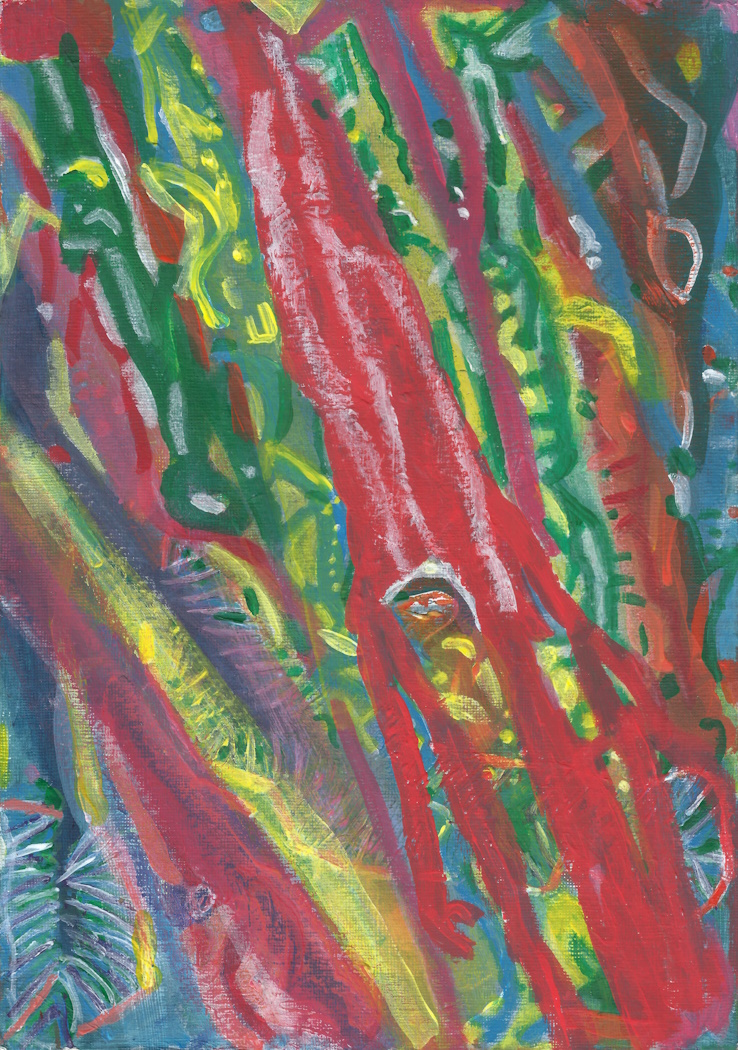
A painting created by the author Richie Cuthbertson

Acrylic on canvas (40×50 cm)

Permalink
Share post
Asoka

Duck 'em

Visible to anyone in the world
Edited by Richie Cuthbertson, Wednesday 11 October 2023 at 19:56


Be like a broken gong when it comes to the opinions of the world. The words may strike the mind but they don't have to reverberate inside. Let the opinions of fools be like water falling off a duck’s back. 

Perceive the voice of a worldling as if it is the wind blowing through leaves, or the strange vocalisations of a creature that arises and ceases. Just sound, nothing more.

One doesn't have to follow the herd if it's going in the wrong direction. Choose your own way.


Permalink
Share post
Asoka

The Heart of the Matter

Visible to anyone in the world
Edited by Richie Cuthbertson, Wednesday 4 October 2023 at 21:56


The world judges by outward appearances.

But it's what's on the inside that counts.

...

Permalink
Share post
Asoka

The Revolutionary

Visible to anyone in the world
Edited by Richie Cuthbertson, Friday 15 September 2023 at 11:33


This world is not easy. Poverty is hard. It is so challenging to make ends meet these days. The cost of living is high, and finding a way to generate an income feels impossible. Every door I open seems to get slammed in my face. Especially when suffering with health problems, it is hard to put in the hours needed to survive. The gig economy is a joke, working for peanuts, and the competition is fierce.

Many who do find work are exploited and dehumanised. Society is broken. Greed has destroyed it.

And then there’s the heartbreak of watching the natural world go extinct. I have watched it here. The decline of insects. Species of wildlife have disappeared. The sea here, just over a decade ago, was full of life. Now it is like a watery desert.

Then there’s war, refugees fleeing the horror of it, only to be greeted by coldness and hostility at the places they seek sanctuary, the places where many of the weapons that destroyed their countries are manufactured. Many dying on their arduous journey to get there.

What a Hellish world we’ve created. Economics is a joke. It is no longer fit for purpose. The wealthy don’t understand what it is like for those in poverty. They patronise us and tell us to work hard. Clueless as to how hard people are working to keep them seated on their perches while they shit on us.

I long to escape this madness. Is one of the things that drives me to seek enlightenment. I never want to come back to this world again. It is a slaughterhouse. A horrible place full of cruelty.

Sorry to be so negative and to rant. The problem with this world is greed, hatred, and delusion. That is the destructive force behind it all. And it doesn’t come from outside ourselves, it comes from within us.

The goal of Buddhist practise is the uprooting of greed, hate, and delusion from the mind. This the Buddha said is the end of suffering, the end of sorrow, the end of stress, grief, and emotional pain. Nibbana/nirvana, the deathless, lasting happiness, perfect peace, and Buddhist enlightenment is what is left behind when the mind is liberated from greed, hate, and delusion.

To strive for this is a noble act, especially nowadays when there’s so much poverty and inequality, when much life on this planet is going extinct. It is a compassionate thing to do for ourselves and others, including the myriad beings we share this planet with. And perhaps the most compassionate thing we can do for future generations who will inherit this Hell we’re creating.

We are not completely powerless. We may not be able to change the greed, hatred, and delusion out there in the world. But we can change it in ourselves. This is where our power lies.

And as each of us changes ourselves, we gradually change the world around us. It becomes a domino effect. For the evil currently destroying our world is dependent on causes and conditions.

This is what gives me hope. All conditioned phenomena are interdependent. Including our economic system that is causing so much harm not just to society but to the many other beings we share this planet with. If enough people choose to overcome the greed, hatred, and delusion within themselves, the world will change for the better, this is the real revolution.

...

Music video by Tracey Chapman "Talkin' About A Revolution"


...

Permalink
Share post
Asoka

Mind Storms

Visible to anyone in the world
Edited by Richie Cuthbertson, Tuesday 12 September 2023 at 22:37


It has been a dark few days within this fathom length body.

This morning I was once again pummelled by the dark forces of the kilesas (greed, hate, conceit, and delusion). They have become my relentless teachers these days. They hit me with everything they got today. Brought me to tears if I am honest.

Revealing to me just how much work there is still left to do on this mind.

I attended a dharma inquiry this evening that really seemed to hit the nail on the head of how I was feeling. I left seeing things more clearly.

I now understand this Buddhist practise is not just about the intellect, it is as much about the heart. Both work together. Complement one another.

Cool head, warm heart.

Friendship is important, as challenging as it can feel at times to relate to others, it teaches me things I miss when practising alone. I think I am a mix of classical Buddhism and Zen, although not the authoritarian kind of Zen. The friendly Zen (-:

I am not really into the Bodhisattva vow, though I respect it. I just feel uncertain about vowing. 

I have decided I want to go for full enlightenment, and if I reach that, it will be impossible to help all beings then; but that does not mean I don't feel love for them, I feel compassion, and when wise enough I will try to keep the true dhamma alive for future generations, if I live that long. I want to help as many beings as I can. But not proselytising,  not conceited, just living from the heart, and out of compassion teaching those who ask, and only when asked.

But I am getting ahead of myself, I still have much to learn before I realise that lofty aspiration.

I have a three hour exam tomorrow on the topic of cyber security. I am not looking forward to it. Wish me luck!

May all be safe, well, peaceful, and 😊


Permalink
Share post
Asoka

The four roads to psychic power

Visible to anyone in the world
Edited by Richie Cuthbertson, Monday 11 September 2023 at 22:39


Four Bases of Psychic Power (satara iddhipada)

Desire or zeal (chanda)

Effort (viriya)

Mind (citta)

Investigation (vimamsa)


Permalink
Share post
Asoka

Crossing the flood

Visible to anyone in the world


The onus is very much on oneself to do the work, no one else can do it for us. None but ourselves can free our mind. One must make effort.

Bear in mind it is said there are 84 0000 dhamma doors that lead to nibbana. The Buddha taught many paths and skilful means over his 45-year teaching career. We are all different, with different interests and dispositions, and so we must make our own raft out of the huge amount of teachings passed down to us over the ages, find the ones that suit us. There isn't one size that fits all. 

In the metaphor of the raft, it isn't a fancy raft that gets us to the other shore. It is just a bundle of sticks placed under the arms to keep us afloat while we paddle across the flood using the four limbs of right effort.

We don't have to know it all. Just grab a bundle of teachings from the huge pile handed down to us, those that resonate with you and make those into your raft. 

And gently paddle, pace yourself, tune, and balance the energy of right effort:

 Thus, have I heard. On one occasion the Blessed One was dwelling at Sāvatthī in Jeta’s Grove, Anāthapiṇḍika’s Park. Then, when the night had advanced, a certain devatā of stunning beauty, illuminating the entire Jeta’s Grove, approached the Blessed One. Having approached, he paid homage to the Blessed One, stood to one side, and said to him:

“How, dear sir, did you cross the flood?”

“By not halting, friend, and by not straining I crossed the flood.”

“But how is it, dear sir, that by not halting and by not straining you crossed the flood?”

“When I came to a standstill, friend, then I sank; but when I struggled, then I got swept away. It is in this way, friend, that by not halting and by not straining I crossed the flood.”

~ S 1.1 (Bhikkhu Bodhi trans.)


Permalink
Share post
Asoka

Gradual incline

Visible to anyone in the world


The reason Buddhist teachings are often in the form of numbered lists is because at the time of the Buddha things weren't written down. The Buddha and the monks couldn't read or write, so they memorised the teachings. Making them into numbered lists made them easier for memory and recall. Then on their own, a person would contemplate and reflect on their meaning, unpack them, investigate them, fill in the details through their own practise and experience of life. 

 The reason we can't go straight to the deathless, why we need to study and practise, is because the concept of letting go is easy enough to see intellectually, but we are all conditioned and have formed habits that get in the way and make it hard to let go. That's why one must undergo training to decondition the conditioning. Then old habits gradually fall away, and new ones develop that help us to realise the state of non-clinging, or non-attachment. The end of suffering.

 The intellectual thinking part is also important as it helps us understand where we are going and what the teachings are for, why we are practising and what the practise is leading towards. Another translation of right view is right understanding.

But it is a gradual process. Which involves making the five aggregates into a path, the noble eightfold path. The robe of liberation. The Buddha likened the path to the continental shelf of India, that gradually slopes down, and eventually reaches a point where it suddenly drops off into the abyss. That's what the path does, it gradually leads us in the direction of nibbana (the end of suffering). And when the path factors are sufficiently developed, there comes the sudden insight, the Eureka moment, were we see something we cannot unsee - that's the drop-off point, enlightenment. From there, there's no going back, one will never see things the same way again. 

It doesn't mean one is separate from the world though, it just means one stops clinging to it, stops yearning for things. The pain of wanting is gone. Craving is extinguished. Conceit is seen through, and the involuntary movements of the mind cease - which brings profound relief. A peace and happiness not dependent on conditions, independent of the world. And because it is not dependent on conditions, it lasts, and doesn't end. 

But love and compassion for other beings is still there. Friendship and connection are still there. That doesn't go. If anything, it grows. Loving-kindness becomes unlimited, immeasurable, abundant.

Without the ego placing limitations on it, one's compassion becomes boundless. 

The whole process is illustrated nicely in the ten Ox-herding pictures in Zen.

...


Permalink
Share post
Asoka

Ocean Spirits

Visible to anyone in the world
Edited by Richie Cuthbertson, Wednesday 6 September 2023 at 17:03


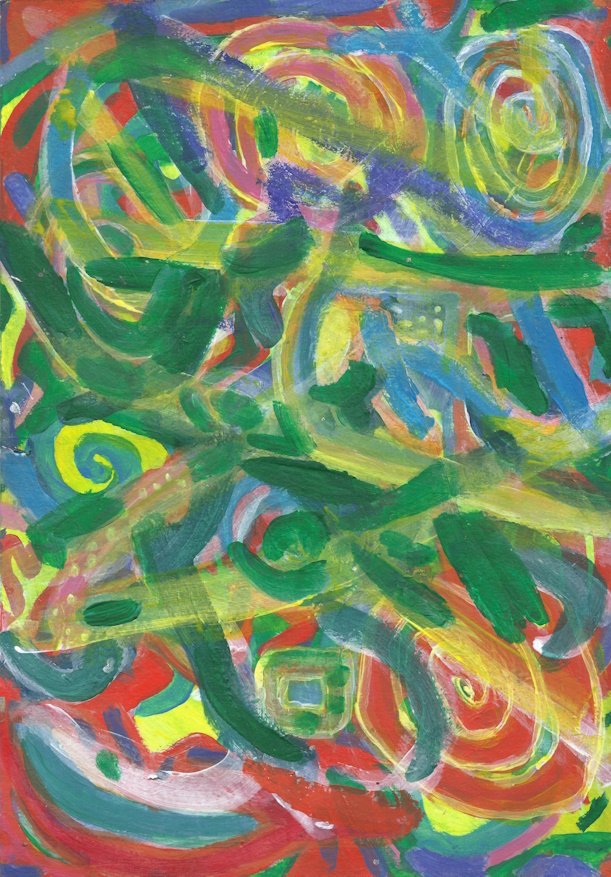
Scan of an abstract painting


Painted in acrylic. Prints available from here.

and also from
here.

© Asoka Richie 2023 (all rights reserved)

...


Permalink
Share post
Asoka

New blog post

Visible to anyone in the world


The Buddha noted that dependent co-arising and the causes of suffering are like a tangled skein.

scan of an abstract painting

Painted in acrylic. Prints available from here.

© Asoka Richie 2023 (all rights reserved)


Permalink
Share post
Asoka

Calming anger

Visible to anyone in the world
Edited by Richie Cuthbertson, Thursday 24 August 2023 at 21:02


" When angry states of mind arise in meditation, balance them by developing feelings of loving-kindness. If someone does something bad or gets angry, don’t get angry yourself. If you do, you are being more ignorant than they. Be wise. Keep in mind compassion, for that person is suffering. Fill your mind with loving-kindness as if he were a dear brother.”  -Ajahn Chah

Anger is suffering. It feels unpleasant. Like a sickness. A poison. Harming the body.

Metta (loving-kindness) feels good. It feels pleasant. Like a medicine. It helps heal the body. Metta fosters connection and friendship. Is good for our health and wellbeing, as well as everyone else’s. 

Anger harms the body; metta heals it. 
Anger harms society; metta heals it.

It can feel extremely challenging to go from anger to metta (loving-kindness) though. Sometimes I can't just snap myself out of an angry state.

Something interesting about feelings: a neutral feeling feels pleasant after a painful feeling. Knowing this can be helpful.

It takes a bit of effort, and some will power at first. One must refuse to enter into any dialogue with the mind. Ignore thoughts. This is not an intellectual matter. For me, anger is a state of emergency, a dangerous fire I need to put out ASAP.

I must forget the past, forget the future, forget the self, forget what the anger is even about, forget it all, words are not what’s needed. There’s no reasoning with a mind absorbed in anger. Keep attentive to the neutral feeling, which becomes easier to do as the mind notices it feels more pleasant than being angry

Let what is sensed be just what is sensed, without adding anymore to it. 

Awareness of space. Of the elements, earth, water, or air.

The touch of clothing on the skin.

A cool breeze can also help.

Half-closing my eyes reduces the visual information coming in.
Which can ease agitation. It is amazing how much difference half-closing one’s eyes makes. It helps reduce sensory input, which can be calming.

Pacing back and forth, and gradually slowing my pace down, till it becomes a calm serene walking pace. Imagining myself walking like a Buddha.

Walking can feel good, because it has this feeling that you are walking through stuff, walking it out of your system. I like the feeling of motion, the sensations in the feet, the feeling of the space around the body.

When the mind is calm, metta is easier to practise which brings pleasant feelings.

The neutral feeling like a bridge from anger to loving-kindness.

There's a quote I remember, but not sure who said it. (I can't find it anywhere online.) But it was by a forest monk (I think). Someone asked him if greed, anger, and conceit still arose in his mind. He answered 'yes, but there isn't anywhere for it to land, so nothing becomes of it.'

Sometimes I can centre on an empty space within. When I go there the fire of anger can’t take a hold and goes out. Same with wanting, conceit and delusion. They don’t affect me when I am centred with emptiness. It all just stops, ceases before it can take a hold. There’s a lovely feeling in the heart space then. It becomes a place of no fear and can feel freeing and peaceful.

 photo of a tree


Permalink
Share post
Asoka

Satta bojjhanga (The seven factors of awakening)

Visible to anyone in the world
Edited by Richie Cuthbertson, Tuesday 15 August 2023 at 10:44


'Herein the disciple rouses his will to arouse wholesome states that have not yet arisen; and he makes effort, stirs up his energy, exerts his mind and strives.' - The Buddha

Simultaneously with the removal of the defilements (craving, ill-will, dullness/drowsiness, restlessness/worry, doubt). Right effort also has the task of cultivating wholesome states of mind. This involves two divisions: the arousing of wholesome states not yet arisen and the maturation of wholesome states already arisen.

Though the wholesome states to be developed can be grouped in various ways --- serenity and insight, the four foundations of mindfulness, the eight factors of the path, etc. --- the Buddha lays special stress on a set called the seven factors of enlightenment: mindfulness, investigation of phenomena, energy, rapture, tranquility, concentration (samadhi), and equanimity.

The seven states are grouped together as 'enlightenment factors' both because they lead to enlightenment and because they constitute enlightenment. In the preliminary stages of the path they prepare the way for the great realization; in the end they remain as its components. The experience of enlightenment, perfect and complete understanding, is just these seven components working in unison to break all shackles and bring final release from sorrow.

The way to enlightenment starts with mindfulness. Mindfulness clears the ground for insight into the nature of things by bringing to light phenomena in the now, the present moment, stripped of all subjective commentary, interpretations, and projections.

Then, when mindfulness has brought the bare phenomena into focus, the factor of investigation steps in to search out their characteristics, conditions, and consequences. Whereas mindfulness is basically receptive, investigation is an active factor which unflinchingly probes, analyzes, and dissects phenomena to uncover their fundamental structures.

The work of investigation requires energy, the third factor of enlightenment, which mounts in three stages. The first inceptive energy, shakes off lethargy and arouses intitial enthusiasm. As the work of contemplation advances, energy gathers momentum and enters the second stage, perseverance, wherein it propels the practise without slackening. Finally, at the peak, energy reaches the third stage, invincibility, where it drives contemplation forward leaving the hindrances powerless to stop it.

As energy increases, the fourth factor of enlightenment is quickened. This is rapture, a pleasurable interest in the object. Rapture gradually builds up, ascending to ecstatic heights: waves of bliss run through the body, the mind glows with joy, fervor and confidence intensify. But these experiences, as encouraging as they are, still contain a flaw: they create an excitation verging on restlessness. 

With further practice, however, rapture subsides and a tone of quietness sets in signalling the rise of the fifth factor, tranquility. Rapture remains present, but it is now subdued, and the work of contemplation proceeds with self-possessed serenity.

Tranquility brings to ripeness samadhi (concentration), the sixth factor, one-pointed unification of mind. Then, with the deepening of samadhi, the last enlightenment factor comes into dominance. 

This is equanimity, inward poise and balance free from the two defects of excitement and inertia. When dullness prevails, energy must be aroused; when excitement prevails, it is necessary to exercise restraint. But when both these defects have been vanquished the practice can unfold evenly without need for concern. The mind of equanimity is compared to the driver of a chariot when the horses are moving at a steady pace: he neither has to urge them forward nor hold them back, but can just sit comfortably and watch the scenery go by. Equanimity has the same "on-looking" quality.

When the other factors are balanced the mind remains poised watching the play of phenomena.

Maintain Arisen Wholesom States

Herein the disciple rouses his will to maintain the wholesome things that have already arisen, and not to allow them to disappear, but to bring them to growth, to maturity, and to the full perfection of development; and he makes effort, stirs up his energy, exerts his mind and strives.  
- The Buddha

This last of the four right efforts aims at maintaining the arisen wholesome factors and bringing them to maturity. Called the "endeavour to maintain", it is explained as the effort to "keep firmly in mind a favorable object of concentration that has arisen." The work of guarding the object causes the seven enlightenment factors to gain stability and gradually increase in strength until they issue in the liberating realization. This marks the culmination of right effort, the goal in which the countless individual acts of exertion finally reach fulfilment. "

By Bhikkhu Bodhi (Excerpt from the book, The Noble eightfold path: the way to the end of suffering)

Permalink
Share post
Asoka

Teaching given to Bahiya

Visible to anyone in the world
Edited by Richie Cuthbertson, Wednesday 16 August 2023 at 17:41


The Buddha to Bahiya:
 
' In the seen there is only the seen,
in the heard, there is only the heard,
in the sensed there is only the sensed,
in the cognized there is only the cognized:
This, Bahiya, is how you should train yourself.

When, Bahiya, there is for you
in the seen only the seen,
in the heard only the heard,
in the sensed only the sensed,
in the cognized only the cognized,
then, Bahiya, there is no 'you'
in connection with that.

When, Bahiya, there is no 'you' in connection with that,
there is no 'you' there,
When, Bahiya, there is no 'you' there.
then, Bahiya, you are neither here
nor there
nor in between the two.
This, just this, is the end of suffering. '

--- Ud 1.10

...

Permalink
Share post
Asoka

Sati-sampajanna and the six senses

Visible to anyone in the world
Edited by Richie Cuthbertson, Thursday 10 August 2023 at 15:33


Sati-sampajanna means mindfulness with clear comprehension (or knowing).

It is a useful exercise to practise while one goes about daily life. It can help calm and centre the mind and bring insight into dependent origination.

Basically, whatever activity one is engaged with becomes one's meditation.

One is aware of what one is doing, where one is. Of one’s behaviour, of that which is appropriate.

Aware of what is non-delusion. Abandoning the wanting, the angst, and the clinging.

Fully here in this present moment, with life as it is -- our dhamma teacher.

One can get into a light samadhi doing this. It can be a refuge from difficult thoughts and emotions. A way of releasing the past and the future by being fully present to whatever task one is doing here and now, without the self-centred dream blinding us to what is real.

There are many ways to practice this. Sometimes it's nice to have an expansive open awareness. Other times it's nice to keep attention fixed on one thing. Depends on the mood, and this is where one must use wisdom and discernment to know what is needed in each given moment. This wisdom and discernment grows with experience. We are all unique, we have all been conditioned differently, no two people are exactly the same. Each one of us must tweak the practice to suit us.

Try to find something in awareness that brings some relief to the mind, even if it just seems like small relief, stay with it, it will grow.

Each situation and circumstance are different. Different objects of meditation work better at different times.

For example, sometimes I will just stay with the feeling of my feet on the ground. When I first did this, the sensations in my feet were quite dull. But after many hours of practise, the soles of my feet have now become very sensitive to the point where I swear I can feel vibrations in the ground, can sense things I couldn’t sense before.

I also like the feeling of the whole body moving as one.

The feeling of movement, how the body feels when it is in motion.

Or the feeling in my hands when holding an object. Is it hot or cold, smooth, or rough, heavy or light etc...

I also like to pay attention to the feeling of the air element in the space immediately around me. Or remain centred with the breath, whilst also aware of everything else happening in peripheral awareness. Where I am, what I am doing.

Sometimes I like being anchored in the spine, that can feel very good. Or the top of my head, the face, the neck, the heart, the belly, the arms, the legs.

The touch of clothing on the skin.

The natural elements are great too. The solidity of earth. The fluidity of water. The cool invisible changing touch of air. The light and warmth of fire, the sun.

The expansive and open feeling of the space element.

The knowing of consciousness, of awareness itself.

Other times I will contemplate interdependence, change, impermanence.

Sometimes I will pay attention to two things at once, such as the breath in my belly and the breath in my nostrils at the same time. Or my feet and hands, or the air element around me as it touches the skin and the sensations in the body caused by breathing.

Sometimes I centre with the emotion of goodwill. With peace and calm. With equanimity.

It depends on what feels good at the time. Take any guidance and make it your own. Find what helps you. Each of us must be our own refuge.

It is not easy; it can be challenging to keep bringing the mind back over and over. One may sometimes need to talk oneself into doing it. Or use the voice of another if really stuck. Read a book, an article or listen to a dhamma talk.

Learn to recognise the hindrances when they are present in the mind: craving, ill-will, fatigue, worry, doubt.

Notice how we talk to ourselves, and how it feels when the hindrances are present in the mind. For me I start feeling unpleasant feelings and notice I am stressed, that for me is a clear sign I am absorbed in unwholesome thoughts. That craving is present in the mind.

During the day, notice if you are stressed. Pause and ask yourself, am I suffering? What is the cause of this suffering? What can I do to ease that suffering? What can I practise to bring relief?

Whenever suffering is present, the five hindrances will also be present.

Applied and sustained attention to something wholesome secludes consciousness from the five hindrances.

When the hindrances are absent, one will feel great relief. When that happens it can help to note how much better it feels when they are absent from the mind, this can help to train it to see the difference and become more willing to abandon unwholesome states of mind, knowing that they are causing suffering, and that it feels much better to let go of them.

Practising sati-sampajanna complements sitting meditation and makes it easier to transition from daily life to sitting, and from sitting to daily life. It keeps the samadhi going and keeps the sign of peace steady in the mind throughout the day.

Sometimes though I do like to think and ponder and reflect on things. Thinking isn’t wrong. It can be a helpful tool. The way we talk to ourselves is a powerful tool. We can talk ourselves into different states of mind.

It depends what mood I'm in. Thought can be used as a meditation object, and used to seclude consciousness from the hindrances by thinking on a topic that is wholesome and staying with that topic.

Repeating a mantra over and over can also do it, or singing, or chanting.

It is the seclusion from the five hindrances that's important. That's what leads to joy, serenity, unification of mind, and equanimity.

It is hard to put into words.

It is an embodied feeling. One is anchored in the body, the subtle body as it feels from within. There's a safe space in the centre of us that is empty. One can anchor the centre of awareness there and still be present to everything else happening, but free from it at the same time, not clinging, not affected negatively by the changing vicissitudes of life. It is the empty seat at the centre of one's being. The inner cave.

Why is it empty? Because there's nobody there. No person. No self.

One can see this directly by playing around with the six senses: sight, sound, taste, smell, touch, mind (thoughts, memories, and ideas).

Divide each sense impression up into three different parts.

1. The object being sensed.
2. The contact with the sense organ.
3. The sense consciousness that arises from that contact.

One can see dependent origination in this. Notice how sense impressions arise dependent on conditions, and when those conditions cease so do the sense impressions.

Am I the object being sensed?
Am I the contact at the sense organ?
Am I the sense-consciousness that arises from that contact?

When I touch an object, I feel sensations. When I stop touching that object the sensations cease.

When my foot touches the ground there are sensations. When the foot is lifted off the ground the sensations cease. Am I the ground? Am I the sensations? Am I the consciousness which arises whilst contact is made, then disappears after?

Am I the sights, sounds, tastes, smells, touches, the thoughts, and ideas?

Where do thoughts and ideas come from? Mostly from the world, from books, articles, podcasts, videos, the media, our memory of the past, from the people we associate with.

Am I any of those things?

Who is this ‘I’ ?

...


Permalink
Share post
Asoka

Five and Seven

Visible to anyone in the world
Edited by Richie Cuthbertson, Friday 25 August 2023 at 20:19


Craving
Ill-will
Sloth
Agitation
Doubt

These are the five hindrances. The enemies of rapture.
When these five are dissolved, there is an upwelling of relief. 
This relief produces joy and pleasure in the mind.

The Buddha then advises one to spread that joy and pleasure throughout the entire body. Till it is saturated with it.

But this is hard to do when the hindrances are present. So one needs the seven enlightenment factors: 

Mindfulness --> Investigation --> Energy (aka effort) --> Joy --> Calmness --> Samhadi --> Equanimity.

These seven are the nemesis of the five, working together to seclude the mind from their influence.

The five hindrances and the seven factors of enlightenment are mutually exclusive. 
Only one of them can occupy a single mind moment at a time. 

We don't actually multi-task, we just have very fast discrete moments of consciousness. 

Each mind moment is a bit like an old fashioned movie projector, that reads one slide at a time, but goes so fast as to seem like it is all happening at once. 

Each slide of the movie projecter is like a single mind moment. A mind state.

With perseverance and effort, one keeps bringing mindfulness back to the meditation object and sustaining attention to it. This recreates the same mind moments over and over. Which steadies the mind and creates a perception of stillness. This isolates consciousness from the five hindrances. Which brings relief from the emotional stress that comes from those states of mind. 

Joy is an important ally, it uplifts us. Joy brings good energy which can help stop one getting drowsy in meditation. 

We naturally generate joy when we become interested in something. When we find something interesting, we get absorbed in it. How does one generate interest in something as simple as the breath, so that the mind wants to stay with it contentedly and doesn't wander off anyplace else?

Joy naturally leads to serenity (calmness), which is still joy but a calmer more refined joy. The excitement has settled but everything still feels very pleasant. 

Samhadi is when the mind becomes unified, all of it gathered together, collected, composed, centred. It is whole-hearted. All of you is present. The mind is happy to be meditating, and doesn't want to be anywhere else. 

The unification of samhadi naturally leads to the different energies of the mind becoming balanced in a state of equanimity. Which is an exquisite expansive state of mind. A wonderful coolness, spaciousness, emptiness, freedom, clarity. It is not dull and unemotional, far from it, it is perhaps one of the most beautiful states of mind one can experience in this life. Hard to get to though, which is a shame, because it is so useful for us. It is the mind tuned into beautiful harmony, no longer clinging. Non-attachment feels like freedom.

This state of equanimity persists for a time after meditation. Whereupon one can direct the mind towards anything and the mind will see it all clearly. 

One simile the Buddha uses is of someone looking at their reflection in a pool of water. The water symbolises the mind. Desire is like dye on the water which distorts the reflection; ill-will is like boiling water; sloth is like stagnant water; restlessness is like water agitated by the wind; and doubt is like water that is clouded with mud making it hard to see anything. Each of these stop the person being able to see their face clearly in the water. When the five hindrances are no longer present, the water becomes clear and still, and then the person is able to see themselves clearly. 

One thing I have found helpful to do sometimes after meditation, or sometimes before is to listen to a dhamma talk.This can bring insight and also rouse up the desire to practise when the inclination isn't there.

Meditation for me is a mix of walking, sitting, standing, and lying down. It is good to remember that one can meditate in any of those four postures, because it can become uncomfortable to stay in the same posture for too long. Changing postures is helpful.


... 

Permalink
Share post
Asoka

Equanimity towards formations

Visible to anyone in the world
Edited by Richie Cuthbertson, Friday 4 August 2023 at 09:59


Equanimity is a pleasant emotion. It is not dry at all. It is better than you think. You may be forgiven for having the impression of equanimity being a dry scientific sort of apathetic state. But it is not like that. It is a very rich emotion, and the freedom it brings feels slightly ecstatic actually.

Equanimity is a balance of all the different energies of the mind all tuned so that they are in sync and working together harmoniously. It is flowing through life without clinging. A state of non-attachment.

One doesn't care for pain or pleasure anymore. It just doesn't bother one. You can be walking with pain in the joints and it just doesn't matter. One still feels pleasure, but when it ceases one doesn't cling to it, or want it back. It is no big deal anymore.

Equanimity is neither love nor hate.
Neither greed nor self-denial.
It avoids all extremes.

What is love anyway? 
What is hate?

The eight worldly winds of pain and pleasure, success and failure, gain and loss, praise and blame just don't matter when one is equanimous. The worldly winds can blow and blow but the house of cards isn't there anymore. There's nothing to defeat. Just emptiness.

One no longer cares about impressing people, or pleasing anyone, or trying to tick another's boxes, or being perfect. One just doesn't give a shit about that anymore. Worldly views are just those, they change like the wind. They're insubstantial, empty, not-self.

 There's no ill-will towards anybody though, no conceit. Just a sweet freedom from being concerned about the opinions of others. One still listens to the opinions of the wise however, the noble ones. Those who have more experience on the spiritual path. To not take on board their advice would be foolish. But the opinions of the world, they no longer matter or effect one. 

Praise and blame is like honey and bee-stings. Both can be dangerous. Praise can get to our heads. It gives us a dopamine hit, excites us, fluffs up the ego. Which can compel us to behave in unskillful ways, cause us to make poor choices, and crave more praise. This feeds the unwholesome roots of greed and delusion.

Blame can make us feel like shit. Dampen our spirits. We take it personally, and resentments can arise and fester. This feeds the unwholesome root of hate.

To walk the middle way. Is to stand outside of the extremes. To look at both from a vantage point that is beyond good and bad. To see both sides clearly and understand them.

It is to pay wise attention to the fault, and wise attention to the beautiful. 

With equanimity one can feel okay whatever happens, one's peace remains unshaken.

A good spiritual exercise to practice sometimes is to allow ourselves to be misunderstood by someone else and not feel the need to correct them. Not feel bothered at all. One can learn a lot about how we crave praise and construct the self from this exercise.

With equanimity one stops taking everything so seriously, so personally. It just doesn't matter, because one clearly sees that all formations are empty. Conditioned phenomena is transient, dissatisfying, insecure, it doesn't lead to lasting happiness and wellbeing. It just leads to more suffering. Attachment is suffering. The things we are the most attached to in the world, are the things that cause us to suffer the most. 

With equanimity one feels undisturbed by anything. One can walk passed a corpse smiling serenely. It is a freeing emotion, and one I am keen to explore more in my practice.

How to get there? The practise of samhadi naturally leads to it. Equanimity is the seventh factor of enlightenment:

Mindfulness --> Investigation --> Energy --> Rapture --> Calmness --> Samhadi --> Equanimity.

Wanting things is stressful. It is tiring and unpleasant. Through our day to day experience, through being mindful and investigating. One starts to understand this at a deep level. Then the mind reaches a point where it feels fed up with yearning, sick of craving and naturally becomes dispassionate towards worldly formations. Without the pain of wanting, freed from the feeling of lack that comes from craving. One becomes content and one's mind feels invincible, unshakable. At peace. It's not dangerous, the feeling of equanimity doesn't get to one's head. It is not apathy, it works well with the emotion of kindness, kindness and equanimity complement one another.

Equanimity is a pleasant cooling of the senses. A relief. A harmless state of non-grasping. Of non-acquiring, non-hating. There's no conceit there at all. One sees clearly that the self is a delusion. And that seeing is truly liberating for the energies of the mind.

To be a person, to have an identity, to be somebody is tiring. It is stressful, dissatisfying. Being caught up in the self-centred dream is to suffer. How wonderful it feels to let all that go.To go beyond all of it and taste true freedom. Freedom from the prison of the self. The psychic energy involved in this delusion becomes unbound, limitless, no longer subject to conditions -- deathless.


....


Permalink
Share post
Asoka

Summary of stages in Mindfulness of breathing, anapanasati (ultra-concise version)

Visible to anyone in the world
Edited by Richie Cuthbertson, Sunday 30 July 2023 at 16:16


This is a gradual training. 

Find somewhere secluded where one won't be disturbed.

Putting aside longing and dejection in regard to the world.
Setting aside all worldly concerns. 

One trains thus:

Mindfulness of the body

1. To begin just simply notice if the breath is long or short.

2. Then pay attention to the whole of the breath from start to finish.

3. Become sensitive to the body as you breathe in and out. 

4. Breathe calming the body. 

Mindfulness of Feelings

5. Breathe sensitive to joy.

6. Breathe experiencing pleasure. 

7. Breathe sensitive to thoughts.

8. Breathe calming thoughts.

Mindfulness of mind states:

9. Breathe sensitive to one's state of mind.

10. Breathe satisfying and gladdening the mind.

11. Breathe steadying the mind.

12. Breathe releasing the mind.

Mindfulness of dhammas:

13. Breathe contemplating change. (impermanence, anicca, dependent origination). 

14. Breathe contemplating the fading of craving. (Dispassion)

16. Breathe contemplating cessation. (of suffering).

17. Breathe abandoning greed, hate, and delusion. (renunciation).

...


Permalink
Share post
Asoka

One excellent night

Visible to anyone in the world
Edited by Richie Cuthbertson, Tuesday 25 July 2023 at 10:21


' Let one not revive the past.

Nor upon the future build one's hopes.
For the past has been left behind.
And the future's not yet reached.
Instead with insight let one see,
Each presently arisen state.
Let one know that and be sure of it,
Invincibly, unshakeably.
Today the effort must be made.
Tomorrow death may come.
Who knows?
No bargain with mortality can keep him and his hordes away. 
But for one who dwells thus ardently. 
Keeps at it, does not give up.
Practises by day, by night ---
It is those the peaceful sage has said
Who have had one excellent night. '

-- poem attributed to the Buddha


Permalink
Share post
Asoka

Resilience

Visible to anyone in the world


Sometimes we make poor choices. Bad kamma happens, some of it delayed, some of it instant. It is painful.

One has to just bear it up. There's nothing else for it. The past can't be changed. Take responsibility for your actions. Learn from the experience.  See what mental dispositions led to the suffering and abandon them.

It comes from within us. The greed, hate, and delusion comes from within. It is not something outside us. We ourselves are the source of it and the end of it.

Resilience is important. Because one will fall over time and time again whilst learning how to walk. 

 It is important to not give up. 

To pick oneself up after failure and keep going, this too is part of the path. Learning how to fall. Because greed, hate, and delusion will not go easy on you. 

Just remember we're all human.

We all make mistakes, we all make poor choices that lead to bad kamma. 

 Part of the journey is learning from our mistakes. Seeing what led to them. Reflecting wisely and growing from them. 

Some of our most potent spiritual lessons can come from humiliation and defeat.

Be kind to oneself. 
It is important.
Hate is poison.

Don't be afraid.
You are not alone.
There is grace out there too.
Friends who support you.
Both human and deva, ancestors too.
But they can't do the work for you.
Only you can do the work.
None but ourselves can free our minds.

 ...

Permalink
Share post
Asoka

Psychic weather front

Visible to anyone in the world


Sometimes I feel alive, enthusiastic, full of excitement and wonder. Other times I am like a flat battery that can't seem to hold its charge or see much hope in anything. Other times there's an odd mix of brain chemistry that is so horrible I can't put it into words. 

It is helpful for me to remember the brain is the body. It is dependent on conditions largely outside my control, meaning it will change. It won't always function in the way I wish it would, and eventually it will cease when the conditions it depends on cease.

That is the way of things with dependent origination. Conditioned phenomena is impermanent. It isn't gloomy to think this way. It can be a helpful tool to bring some equanimity to the mind. It helps me let go of the clinging and aversion towards things, and to stop taking it personally. Which decreases the suffering somewhat.

Sometimes difficult things happen that are outside our control. And sometimes it’s our own fault, we behave in unskilful ways and reap the kamma for it. Whatever it is, we then go and add more suffering to the situation with the longing, aversion, and taking it personally. This is the mental pain we add to physical and worldly difficulties. This is what makes us suffer.

I remember one night I got stranded on the mainland after missing the last boat back to the island. I had just completed a lengthy 10-hour journey coming back from my dad’s funeral. And I arrived at the ferry terminal late due to a delay with the coach. I felt exhausted and a bit unwell. There was nowhere to stay, and a long wait till the next ferry in the morning. So I went to sit on the beach, tried to roll a joint to make myself feel better. And I'd almost finished rolling it, when there was a huge gust of wind that blew it all away, and then it started raining. I felt like the person off the Hamlet advert, but without the cigar.

Then the day of the funeral all came back to me, and I burst into tears. It all just gushed out. I felt so lonely.

Then I saw my dad’s face in the sea. And I said I was sorry for not getting chance to speak to him before he died. I wished him well and told him he was loved.

Then the wind and rain became unbearable, so I went to find some shelter. I spent the rest of the night alternating between walking, standing, and sitting meditation.

I went through so many mood swings in that one night. Like the mind was changing, morphing into all sorts of different shapes and patterns. I was even seeing things that weren't there. It was challenging.

Through it all I tried to remain still and not get disturbed by the changing psychic weather. I just kept bringing my attention back to the breath and body to calm and centre the mind. Not engaging with anything else. Meditation felt like a refuge. There were strange eerie sounds at times like banshees wailing. (They turned out to be seabirds, the tunnel making their calls echo in ghostly ways).

 Eventually after many hours of this, the mind converged into a oneness, and it all disappeared. The psychic weather passed. Leaving behind a stillness and beautiful emptiness that I can't put into words. 

I was greeted at sunrise by a friendly pigeon watching me intently with smiley eyes. Then it vocalised a set of patterns, and some moments later another pigeon responded in the distance with a different set of vocal patterns.

The pigeon flew away. 

The wind and rain outside had stopped. It also dependent on conditions.

I went to get a coffee and my card was declined by the reader. I laughed, and the cashier laughed as well. She said that happens to her all the time, and that she keeps a supply of cash with her just in case.

Luckily, I had a few coins on me and managed to buy the coffee.

...


Permalink
Share post
Asoka

Renunciation

Visible to anyone in the world
Edited by Richie Cuthbertson, Sunday 23 July 2023 at 16:37


One way I look at this is. It is more about becoming aware of the mental dispositions that cause us suffering, and when we become less ignorant of these and wise up to them, we naturally let go of them.

The good stuff remains though. It is okay to have a good life, to be comfortable and have some fun. This practise does not have to be a morose and sombre experience. After all it is the way that leads to the end of suffering. Enjoy the pleasant moments, as fully as you can, but practise wise attention to them. Notice how the mind clings and thirsts for more, and how this makes us suffer. How the things we are attached to the most, are the things that cause us to suffer the most when we become separated from them.

All conditioned phenomena is transient and uncertain. If one's happiness is dependent on conditions, it is bound to disappoint. As those conditions are outside of one's control, they will change and then that happiness will end. That is why it is precarious to place one's hopes in worldly happiness. It is not wrong to enjoy this happiness. It is just, material things are not the real treasure in life. The pearl of great worth comes from within. That's what we reach for at death, what we take with us when we die. Everything else is torn away from us.

Mindfulness, wonder, interest, investigation, energy, joy, peace, friendliness, love, kindness, good humour, generosity, empathy, connection, compassion, serenity, samhadi, and equanimity to mention some, are all beautiful states of mind that don't cause us or anyone else any harm. These states of mind are good for us mentally and physically. They also bring good kamma, because they reinforce the mental dispositions that lead to good states of becoming, that lead away from suffering. They make us happier, healthier beings, and enrich our lives and those around us.

All the beauty of the heart remains, and shines the more brightly without the clouds of greed, hate, conceit and delusion. 

It is like someone who has been sick with an illness, with a fever, becomes unconscious. A doctor comes along and examines the patient, knows what it is that is wrong with the patient and how to cure them. He gives the patient some medicine. Their consciousness returns, then the colour returns to their cheeks, they sit up feeling much better, then their composure becomes serene and radiant. Feeling the relief of no longer being sick.

In a similar way, when our minds are clear of greed, hate, conceit and delusion, they become well again.

It isn't the world outside that is the problem. It is the greed, hate, and delusion within us that is the problem. That is what causes us suffering. That is what gets in the way.  

...

Permalink
Share post
Asoka

Formations

Visible to anyone in the world
Edited by Richie Cuthbertson, Saturday 22 July 2023 at 10:18


Where is all this happening?
Sense impressions.
Feelings.

The body is in the mind.
The mind is in the body.

But what is in the heart?

The centre of
These changing dhammas.
Sankharas 

Built by
A thirst that's
Never satiated.

This empty existence
I cling to.

...


Permalink
Share post
Asoka

The safe shore

Visible to anyone in the world
Edited by Richie Cuthbertson, Friday 21 July 2023 at 17:22

Dependent on conditions.
Human existence is fragile. 
Liable to end.

When certain conditions cease,
So does human existence.

Interdependence is complex.
More than just linear cause and effect.
It spans many levels.
Comes from all directions.

More like a vast incalculable
web of cause and effect.
Interconnected streams
of flowing events
through time and space.

It is why there is change.
Why things are unstable.
Impermanent.
Why nothing lasts.
Why it is empty.
Not-self.
All conditioned phenomena
eventually fades and dies. 

A human life is brief.
Unique and brief.
Like a bubble in a stream.
A flash in the pan.
The flicker of a firefly.

It can be taken away at any moment.

To understand this can help counteract the mental disposition towards conceit.

One realises that one is not a separate self in this universe, this world. That one is nothing special really.

We depend on the elements we are made up of, and on other beings for our survival. A causal chain of events that happen in time and space outside our control.

Eveything is interconnected,
interdependent phenomena.

Thankfully, one doesn't have to know everything about the vast intricacies of dependent orignation to free the mind.

One focuses on one aspect, the dependent origination of suffering. 

The question that matters then is:
How do I feel?
Am I suffering or not?
What is the cause of this suffering? 
And what conditions can I change to bring an end to it?

Birth as a human can be rare apparently.
And humans do have something special.
They have the capacity for wise reflection.
The capacity to practise discernment.
To guide the flow of psychic streams.
That lead to the right view of things.

A human being can become a Buddha.
Enlightened.
The potential is there like a seed.
A seed that can sprout and grow under the right conditions.

When guided by right view,
and right resolve:
the ability to set an intention
and act on that intention.
One can work on removing the conditions that cause suffering and unhappiness in the mind. 

As one keeps practising. Perseveres, and does not give up. Trains the mind ardently. Is heedful. Avoids unwise attention to the fault; and unwise attention to the beautiful.
Keeps abandoning that which leads to suffering.
Keeps cultivating and sustaining that which leads to the end of suffering.

As one becomes more aware of the body, feelings, states of mind, and dhammas.

 As one learns how to calm and centre the mind, bring it together into composure, into wholeness.
How to balance and unify the numerous energies of the mind into a state of equanimity and clarity.
Wisdom naturally arises.
One becomes less ignorant of the mental dispositions that lead to suffering.
More conscious of the unconscious. More lucid. Awake.
Not caught up so easily in the self-centred dream.
Less attached to the conceit 'I am'.
Less absorbed in greed, hate and delusion.
Less affected by the changing worldly winds.
Less attached to conditioned phenomena.
Knowing it for what it is.
Dissatisfying.
Emptiness.

The darkness of delusion disperses.
Ignorance becomes understanding.
Discernment develops.
Resolve gets stronger.
And we begin to behave in ways that don't lead to suffering.
Which weakens the conditions that give rise to it.
Till eventually there is cessation of suffering.

And when greed, hate, and delusion no longer take root in the mind. There is lasting peace, freedom and happiness. An unlimited bliss. 

The noble eightfold path has done its work.

The space left behind is known as the deathless, the unconditioned, the supreme happiness.
Something lasting.
Something secure that doesn't fade away or die.
Something that can't be taken away once it has been realised.

It is an element beyond the changing conditions of dependent origination and the worldly dharmas.

Nibanna is something that is always here, everywhere, it always has been, and always will be. It is the safe shore. The refuge from dukkha (suffering).

The practise of the noble eightfold path: right view (understanding), right intention (resolve), right speech, right action, right livelihood, right effort, right mindfulness, right samhadi. Purifies the mind of greed, hate, and delusion. And leads to the lasting peace and happiness of nibanna.
...


Permalink
Share post

This blog might contain posts that are only visible to logged-in users, or where only logged-in users can comment. If you have an account on the system, please log in for full access.

Total visits to this blog: 1482159