

Personal Blogs
More journalists and writers will be approached to join academia
The Digital Scholar (2011) Martin Weller NOTES
Martin Weller (2011)
INTRODUCTION
Introduced to the power of blogging by John Naughton
(Worth following in the Guardian. Surely a demonstration of how academics blur the line between academic and journalistic writing styles successfully, just as Weller intimates that students will have to learn to differentiate between social networking writing styles and the academic style of an assignment, paper or thesis?)
· Explain things in depth
· Give all sides to the argument
· Why academics can't do the elevator pitch
The Digital Scholar was written through a blog to explore the advent of new technologies.
Wrote his last book on VLEs in 2004.
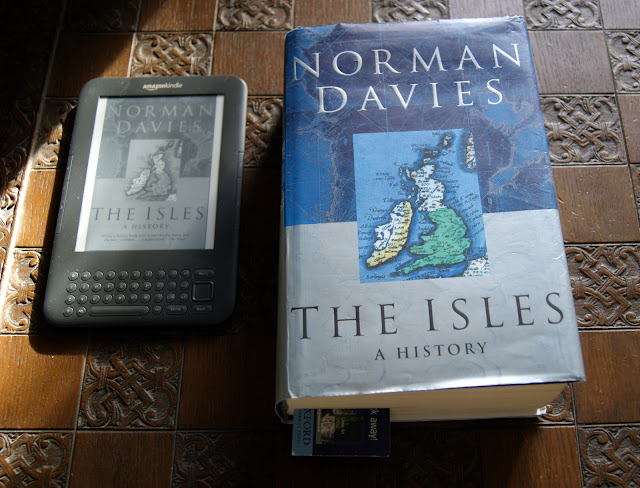
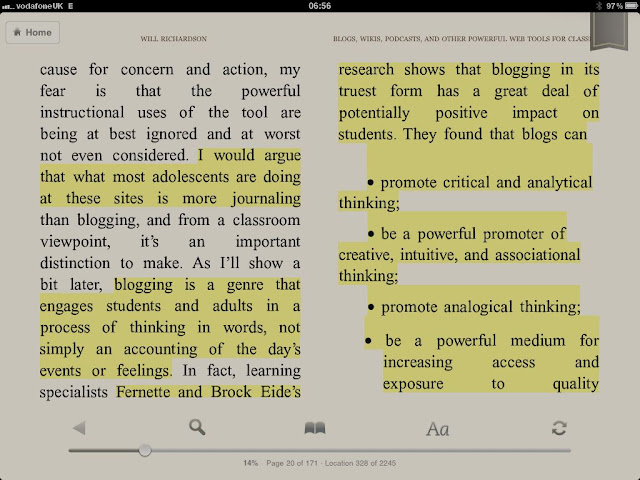
(By coincidence I am using it to prop up the iPad)
- Online databases
- Searching
- Bookmarks from Delicious
- Google Reader
- cited posts from blogs, but not only text, also video.
Blogging for around five years
Also keeps a scrapbook like blog in Tumblr.
(I’ve used Flickr, and Tumblr, even Kodak Gallery in its time. Now I put everything into Picasa Web. The 250 grabs, charts and images are open to share. Dion Hinchcliffe offers his social media diagrams free as separate assets in Flickr River).
- A way to offer drafts to ask for feedback
- Sharing resources
- Working in an intellectually vibrant environment
- Google alerts providing updates on key words
- Keeping abreast of the field
- Declining attendance of conferences
‘With special thanks to’
By sharing content online I believe I may finally find my own way to publication.
Many of these services did not exist or were in their infancy in 2004.
Blogs in particular
A book
There significant changes:
1) The quantity of information available - all digital compared
2) 3000 on Twitter, 2000 subscribe to his blog
Appeals
Distributed, global resource to contemporary issues, puss of new technologies,
contributions by video and audio
3) The richness and range of contributions to include blogs, comments and
debate, video and conferences.
A shift I attitude to the legitimacy of these contributions.
Both a physical object and complementary material.
Grainne Conole using cloudworks.
Another posting a weekly video to encourage debate.
Concept of scholarship
Suffiently broad term, not only teaching and research,
not just engaged in research and employed by universities.
In a digital
Someone who employs digital and open technologies in a particular field.
Bloggers link to each other, democratic and easy to set up.
Epitomy of the kind
of technlogy that results in innovation.
Read or unread, daily or months,
specialist or generalist.
How do we recognise talent?
Should people separate out that academic and informal lives?
· Quantity
· Role of social networks
· Range of resources
Transformation of practice
All scholars are digital if they use a word processor and PowerPoint. But this
is 'business as usual'.
1) Digital
All digital files and shared by the same method.
2) Networked, nor longer isolated.
Easy distribution VS restriction of
scholarship to libraries, conferences, lectures and seminars. Once digitised the
barriers come down.
Dunbar. Friends 150. Reinforce with interaction. Online with a wide group of
peers.
3) Openness
Tim O'Reilly 2004 the architecture of participation.
Finely worked material of the journal, compared to seeing where things will lead
by sharing.
Digital, Networked, Open.
E.g collaboration between two people (Frank & Sally)
The value of a person's individual network for distribution.
The collaboration of two academics sharing their outputs they go along ... Just
a shift?
Collective impact changes everything.
Fast, cheap and out of control.
Brian Lamb. 1970 documentary. intersection of
all three is significant to education.
Fast to write and set up, no need for central services.
Cheap tools that have a premium, no need to turn to a budget holder.
Out of control. Outside normal institutional controls.
Money/payment and the need to persist with a certain system.
Student record systems need to be robust.
The good enough revolution. Wired (2009)
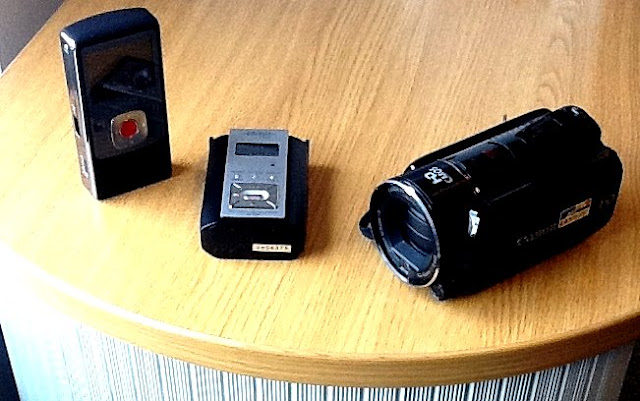
E.g. Flip video ... Cheap, fast and everywhere.
Dinky, lower power technology that is just good enough.
VS. Dystopian and Utopian points of view.
VS. Technological determination - humans controlled by the kit, rather than the
kit controlling the people.
Unpredictable
Taking something and using it in a way never imagined
E.g. Flickr started as a game that used photo sharing.
Social construction of technology
Complex process of co-construction
Adoption of new technology is changing scholarship. Boyer 1990
1) Context
2) Evidence
3) Other industry changes in music and newspapers
4) Boyer 1990 scholarship discovery, integration, practice, application,
teaching
*
*
*
*
9) How digital scholarship may change teaching
10) Analogy of networked weather - you can't help but be touched by it.
Digital
Networked
Open
New publishing and conferencing
13) adoption
14) anxieties
Education
1
2
3) Irrelevant
Not peripheral, or an issue to resolve, but rather changes to society ... As
John Seely Brown.
VS. Suggestions that our students have changed and cites Marc Prensky.
Separating myths from the hype.
What are the solid foundations.
A truism regarding exposure to computers. Prensky 5,000 books, 10,000 digital,
20,000 TV US
75% of 9-19 have access to a computer at home UK
72% South Africa
To get information
To research say on personal health
Oblinger and oblinger
Livingstone
Net Gen disappointed
Gen X against pointless interaction in class and kind of connection online.
Cannot correlate truancy to educational irrelevance.
net Gens more likely to be disappointed by how tech is used.
Net gens differentiate between writing to socialise compared to writing for
school.
Those who like writing and have an aptitude are more likely to blog so no point
in getting those with poor writing skills to blog.
A good deal of variance.
Brown 2009.
Teens poor performance, low patience, poor
reading and poor research skills.
· Express themselves in personal language
· Just print off
· Visiting a narrow range of sites
· Don't question its reliability
· 21% blogs
The net Gen literature sees difference where none exists.
- Older gens did homework in front of TV
- Did a previous gen have an ambiguous view.
- Similar angst amongst students in 1908, 1960s and now. Unable to show causality.
- Differences between net gen students and general public. Differences are not
- significant.
- General decline in literature reading.
Bennett et al (2008) not net Gen difference.
18-22 students outnumbered by mature students in the US.
Google, Dec 2009.
87 billion of 131 billion searches.
55.6 million in 2007 to Wikipedia
Facebook, 500m, 130 friends, once a day
YouTube, in June 2008, content 91 viewers in 2008
Significant activity online across a range of society.
Future liberation of topics.
Griffiths (2008) graffiti artists share and behave in a way that educationalists
would design into a programme of learning, and so it is with many other topics,
on or off the curriculum, formal or informal, from knitting to physics.
Learn as the key motivational desire.
Physics 100,000
FLOSS communities
Demonstrates many of the characteristics:
Mentoring
Communities of practice
Learning by doing
Self directed learning
Communities can form that would have previously been unable to do so due to
geographical and other barriers.
Openness in education - shift driven by technology.
Make academic papers open.
Broader trend and philosophy of the Internet.
Web 2.0
Top 10
Public or semi-public sharing of personal information
MIT Open 2002
1 million visitors
132 million tertiary students worldwide in 2004
OU 3 million within 2 years and helped recruit students to courses 7,000.
Slideshare
More traffic than MIT
Several hundred years to create the lecture Based models
Using third party content in their lectures.
How do universities remain relevant to society?
Apple to iTunes
Guardian to Podcasts
Stephen Downes 10,000 hits per day (video)
Boundaries between sectors less clear-cut
Some perfect storm ... Convenient for some to see. The Net Gen literature is
exaggerated, overblown, HE is not about to face a tectonic shift.
Firm evidence of benefits and that it is necessary.
Critical mass
Ubiquity
Invisibility
Brown
2007 those using social networks in the minority, now in the majority.
Give students relevant skills.
Asses which of these technologies will be significant.
Why do Students choose a university?
Not because of the technology used.
Core suitability
Academic reputation
Jobs
Teaching qualities
Non-academic reasons:
Proximity to homes
Scholarships
Non academic services
Cost of living in the uni area
Job prospects (while studying)
The Digtal Scholar (2011) Martin Weller

Alerted by a Tweat, I bought the book in minutes.
There's never a better time than 'Now'.
Purchase your copy here.
Unwell, so having it read to me on the Kindle, while taking notes on an iPad.
When I wander off I pick up the thread on the iPhone.
It's surprising how much can be read while the kettle boils.
In due course and I'll have my very own 3,000 word interpretation of this 50,000+ worder, far more once I've added my notes, thoughts additional references and illustrations.
My web 2.0 sensibilities are for the online equivalent of the Illustrated, hardback coffee-table book, with video and podcasts, interactivity and links.
I'd have Dion Hinchcliffe's graphic designer do some colour diagrams, Steven Appleby provide some cartoons, while I would interview the author for YouTube and set it all to something suitably camp like Mike Oldfield with a Roger Dean poster decorating the set.
When do we get the webinar?
And I pre-emptivelly wrote a review in Amazon on the basis of the first two chapters, hearing the author debate and speak the subject and reading his blog (as well as his earlier book that he brings up as a way of looking at how things have changed since 2006).
P.S. Buy you e-book version now then return here to discuss, or find you in Linked in or Google+ ...
Or for some blended learning if you live near Lewes, East Sussex, over at the Needlemakers for a coffee.
My 'take-aways' so far:
- Digital, Networked, Open.
- Fast, cheap and out of control.
- Why students choose one university over another.
- The 'good enough' revolution. Wired (2009)
- The unpredicatable use of technology.
- (and Martin Weller's daughter, he writes on page one, didn't think, based on his 'ellevator pitch' that the book would do very well. This, with a bit of 'airplay' on the blogosphere, need not be the case. Get to work tweeting, noting, sharing, putting into Linkedin, Twitter, Facebook, Xing and Viadeo. I can't see a movie in it though).
3 Ways to making your intranet social
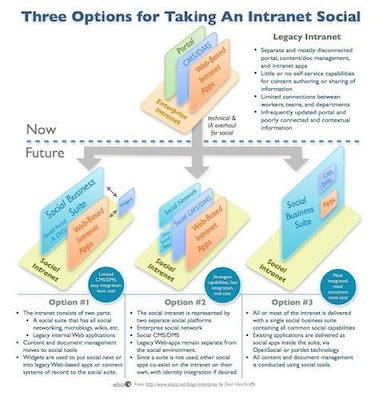
How best to use social networking in an intranet
http://www.ebizq.net/blogs/enterprise/2011/05/making_an_intranet_more_social.php
These are sound arguments from Dion Hinchcliffe on three fronts:
- a cogent, well written arguement
- supported by the figures
- persuasively illustrated
How do you persuade people to give up some of the time they have allocated to other things to doing something that a) appears to be a social activity (as if colleagues don't talk over coffee, over lunch, in corridors and at the desk and b) becomes a record of the time spent doing this very thing.
Communication is work.
Building rapport in a team is work.
Visualising the interplay of people online
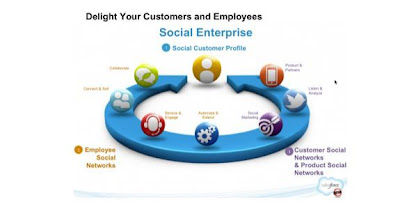
Dion Hinchcliffe keynote speech (2011)
http://dionhinchcliffe.com/2011/08/31/dreamforce-11-live-blogging-the-benioff-keynote/
Dion Hinchcliffe's writing is just as sure, rich, dense and convincing. ______________Persuasive visualisations of the way the wild web 2.0 world is going
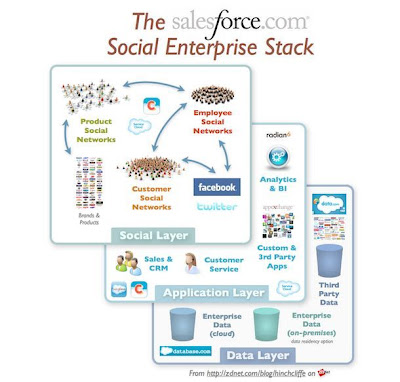
Dion Hinchcliffe Social Enterprise networking thinking
It isn't hard to apply the same thinking to social learning.
Dion Hinchcliffe's Social Networking Charts
Dion Hinchcliffe Social Enterprise networking thinking
____________________________________________
Dion Hinchcliffe keynote speech (2011)
http://dionhinchcliffe.com/2011/08/31/dreamforce-11-live-blogging-the-benioff-keynote/
____________________________________________
Whizzy charts from Dion Hinchcliffe in Flickr
http://www.flickr.com/photos/dionh/6093074681/
How best to use social networking in an intranet
http://www.ebizq.net/blogs/enterprise/2011/05/making_an_intranet_more_social.php
____________________________________________
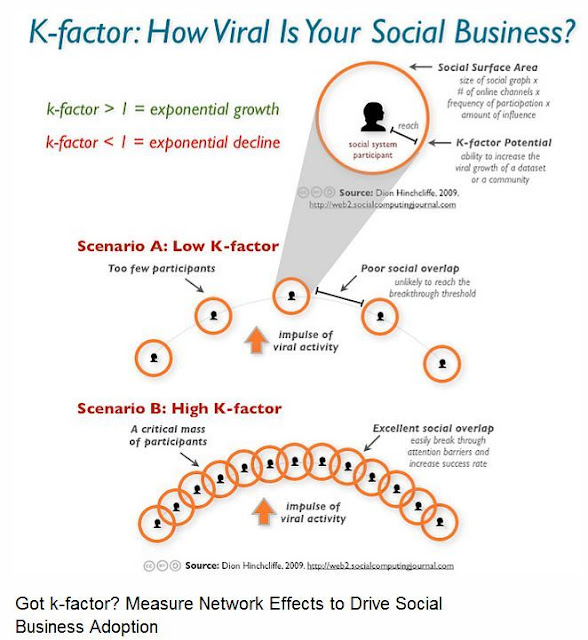
_______________________________________________________________________________________
How viral is your social network?
http://www.flickr.com/photos/dionh/6069343004/in/photostream/
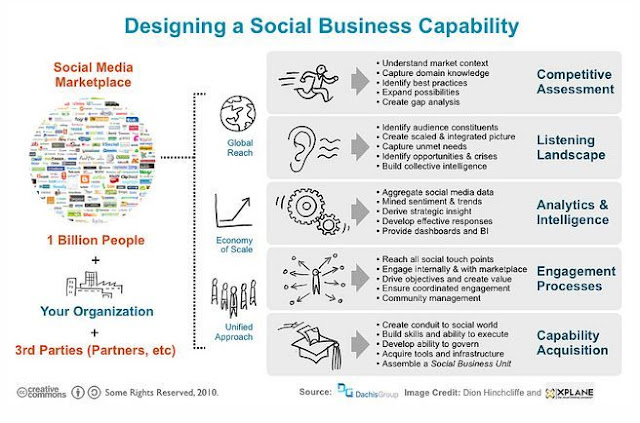
Dion Hinchcliffe design social business capability
http://www.flickr.com/photos/dionh/6046080068/in/photostream/
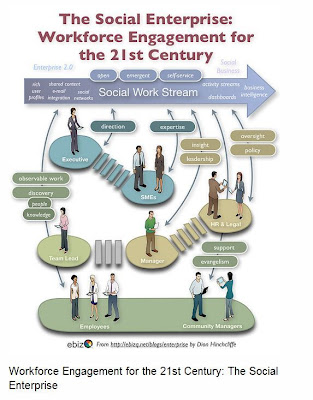
Dion Hinchliffe social enterprise workforce engagement
http://www.flickr.com/photos/dionh/6029463580/in/photostream/
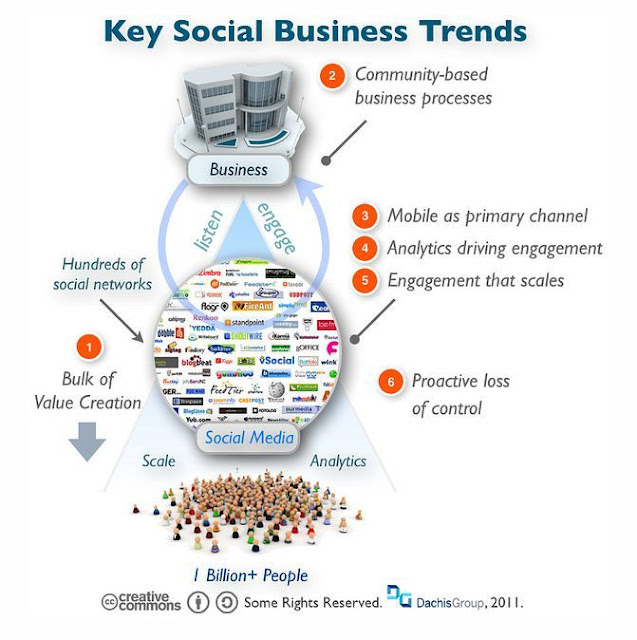
Dion Hinchcliffe key social business trends
http://www.flickr.com/photos/dionh/5951245850/in/photostream/
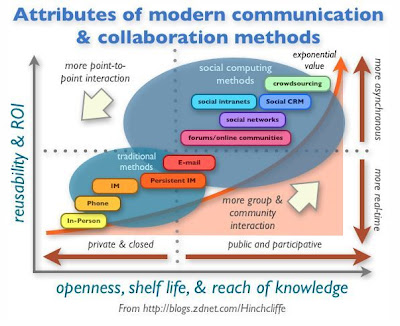
Dion Hinchcliffe Attributes of Modern Communication and collaboration methods
http://www.flickr.com/photos/dionh/5716256964/in/photostream/

Dion Hinchcliffe Social Business Ecosystem Chart
http://www.flickr.com/photos/dionh/5653961068/in/photostream/
Another First and once again gobsmacked - by the OU interface and the performance of the iPhone
My first smartphone is an iPhone.
As I am writing about mobile learning for an EMA I needed one didn't I ? In any case it's my birthday in three weeks time. Without the kit to test it for yourself you remain a second hand learner.
I am gobsmacked at how dinky it all is after the iPad.
Some Apps work even better in miniature, for example the spaced learning aide-memoir site Spaced-Ed saw me signing up for further micro-courses.
I am into Linkedin, Wordpress and Twitter too; each of these offers a simplified variation of its larger sibling.
This tiny keyboard defies its ability to type at all defies logic, I feel as if I am trying to play a harp wearing gardening gloves.
In relation to where else I can take all that this device offers my immediate thought was confined to a coffin, or under the bed if you'd prefer or perhaps on a bunk in a small yacht.
Unlike the iPad I am could take this for a run or under-dressed spring skiing.
Getting all my Kindle books here with the reader could allow me to cycle the South Downs while listening to a book, not that the Kindle is so hard to have in a jacket pocket.
Much more to discover; my 45 words per minute typing down to 60 characters a minute may render my stream of consciousness less steam and more substance.
On Verra
P.S. I need them for nothing else but had to resort to reading glasses; I dare say there will be yet smaller devices such as a voice-activated iBadge?
P.P.S. No spellchecker and it irritates me that its is automatically miscorrected to it's.
P.P.S. 12 hours later I find myself at a desk with a large screen editing this (spacing mostly), the iPad on my knees like a figure from a book I have reviewed her ... but the figure is an image in Picasa Web. I started on the iPhone (using it as an iTouch at the moment, wifi only) running through 8 items: colleague blog update, Linkedin Group updates, shared doc on Social Media 'Must do' list with links, and while the kettle boiled a few stabs at basic French from an App which I'll ditch as it is too basic and the next step requires payment).
ON REFLECTION
Not only managing the distractions, but the ease at which the Apps can extract payment through the likes of iTunes.
iTunes U is another matter -free learning, on the go wherever you go (and even when you need to go).
MAODE H800 EMA WORDLE
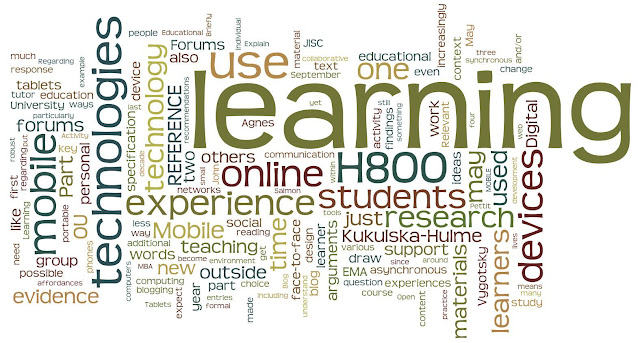
If only a 6,000 word assignment could be written by assembling all your evidence, research and notes, putting in the criteria for this four parter, then hitting a button
This is the Wordle version
I wonder if by doing Wordles of our work it would be possible to differentiate between a lower and a higher grade assignment on the basis of the size (and therefore frequency) of certain words?
P.S.
Discussing mobile learning with my 13 and 15 year old I told them about loading all course books onto an iPad (becoming common place in Schools across North America); they both said it would be too distracting as you'd want to chat or play games.
I said what about an e-Reader, and they said that was boring, what was wrong with a real book
To cap it all my 15 year old has gone retro, both in her dress sence (her version of hippie or punk depending on her frame of mind), and insists on using a throw-away film camera or a functiong 1970s Polaroid camera.

The motivation has to be the content, not how it is delivered, and the end result in terms of grades, the university and career of their choice etc: I like the analogy of mobile content being like 'Chicken Tikka': whatever the means of delivery the expectation is that it is still Chicken Tikka.
'Whicever mode of delivery I choose, the meal I eat will still be Chicken Tikaa'. Luckin et al. (2005:122)
REFERENCE
Luckin,R., Brewster,D., du Boulay, P., Corbay, S. (2005) in Mobile Learning. A handbook for educators and trainers. Edited by Agnes Kukulska-Hulme and John Traxler.
Not globalisation, but localisation
Advice on protecting an email address
Hospitalised
Being offline for seven hours was the least of the unpleasantness.
Being put straight into one of those back-to-front gowns wasn't encouraging, though it has its compensations, I was seen with two minutes of arriving. The experience of the A & E was fine, it was the need to endure in considerable pain for six hours until the matter could be resolved.
I had the iPad but had no desire to do anything (not permitted in any case).
Behind the curtain I listen in as a distraction, it was the first day for at least two members of staff. (I could name them and run through the symptoms of several of the morning's intake too).
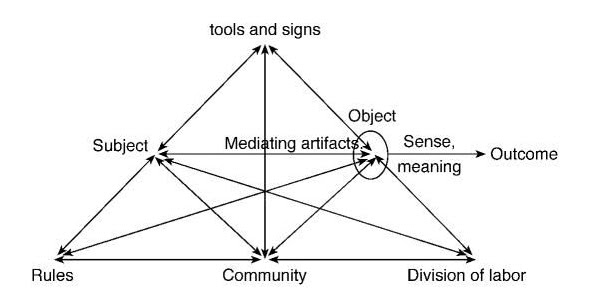
As another distraction I thought about efforts to introduce hand held devices to hospitals in 2000, various case studies from PDAs in 2005 (total failure) as well as Yrjo Engestrom's 'activity systems' studies of hospitals in Helsinki.
I was politely asked by the Consultant if I could be discussed with his student doctor once she had seen me and come to a diagnosis, so they talked about me, not as if a I wasn't there but the way we parents can talk about our children even when they're sitting in the back of the car. I was humoured politely when I said what fascinated me was the expert/learner relationship and the nature of the conversation (I heard both what they discussed within earshot AND what was said around the hub - everyone was eager to learn and share today).
I desired taking a picture of the poster that shows how to identify staff; I got the all, from the staff assistant, through nurse, matron, doctor and consultant.
In due course I'll reflect on where I came within the activity system, surely as I was mostly the 'subject' or a mediating artefact? NHS Direct website, then a phone call first to them and my GP confirmed my self-diagnosis. Plenty of checks in case of other possibilities were confirmed at hospital. Between being seen by the staff matron and a doctor there was a three hour delay that almost reduced me to tears. Once diagnosed there was another hour.
The procedure itself took half an hour, the hideousness of it endured by concentrating on something else - I relived a gap year of 30 years ago during which I came to know every piste and off-piste ski run at Val d'Isere / Tignes.
E-Learning for Corporates
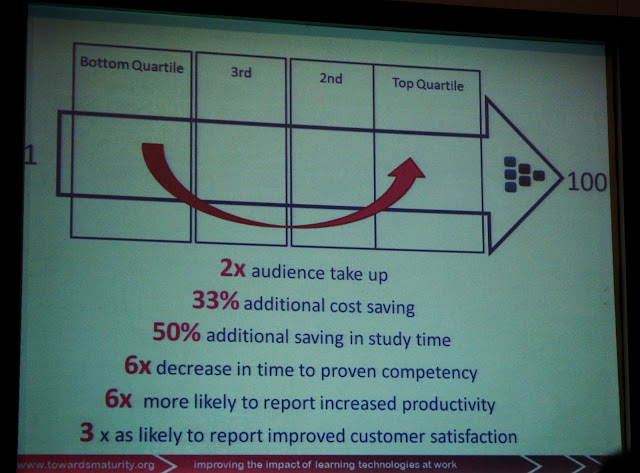
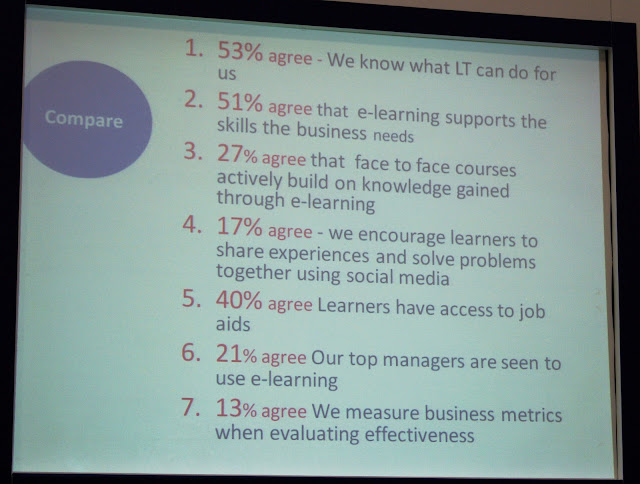


Gordon Bell, Microsoft, Extreme Life-Logging
Gordon Bell
Microsoft Research Silicon Valley
Email: GBell At Microsoft.com is the most reliable communication link
Mobile phone & answering machine: (415) 640 8255 best voice link
Office & Computer LYNC Phone: (415) 972-6542; this rings on my PC
FAX only if you must: MS fax gateway(425) 936-7329 address to "gbell"
Microsoft Office: 835 Market Street, Suite 700, San Francisco, CA, 94103
Gordon Bell is a principal researcher in the Microsoft Research Silicon Valley Laboratory, working in the San Francisco Laboratory. His interests include extreme lifelogging, digital lives, preserving everything in cyberspace, and cloud computing as a new computer class and platform. He proselytizes Jim Gray’s Fourth Paradigm of Science.
Gordon has long evangelized scalable systems starting with his interest in multiprocessors (mP) beginning in 1965 with the design of Digital's PDP-6, PDP-10's antecedent, one of the first mPs and the first timesharing computer. He continues this interest with various talks about trends in future supercomputing (see Papers… presentations, etc.) and especially clustered systems formed from cost-effective “personal computers”. As Digital's VP of R&D he was responsible for the VAX Computing Environment. In 1987, he led the cross-agency group as head of NSF's Computing Directorate that made "the plan" for the National Research and Education Network (NREN)aka the Internet.
When joining Microsoft in 1995, Gordon had started focusing on the use of computers and the necessity of telepresence: being there without really being there, then. "There" can be a different place, right now, or a compressed and different time (a presentation or recording of an earlier event). In 1999 this project was extended to include multimedia in the home (visit Papers… presentations, etc.).
He puts nearly all of his atom- and electron-based bits in his local Cyberspace—the MyLifeBits project c1998-2007. This includes everything he has accumulated, written, photographed, presented, and owns (e.g. CDs). In February 2005 an epiphany occurred with the realization that MyLifeBits goes beyond Vannevar Bush's "memex" and is a personal transaction processing database for everything described in June 14, 2005 SIGMOD Keynote. The MyLifeBits project with Jim Gemmell is described in an article by us in the March 2007 Scientific American. Alec Wilkinson described Gordon and the MyLifeBits effort in the 28 May 2007 issue of the New Yorker. By the publication of the book the final epiphany was that our e-memories are where the records reside and bio-memories are just URLs into these records.
He and Jim Gemmell have written a book entitled Total Recall: How the e-Memory Revolution Will Change Everything which was published in=n September 2009. You can order it at Amazon, Barnes & Noble, Borders, orIndieBound. Please check out the Total Recall book website. Your Life, Uploaded: The Digital Way to Better Memory, Health, and Productivity is the paperback version published September 2010. It is available in Dutch, French, Italian, Japanese, Korean, and Portuguese.
The remainder of the site includes these pages:
- Papers, books, PowerPoint presentations, videos since 1995, when joining Microsoft
- Extended Bio-- education, work history, honors... Alaska fishing and France biking
- Vitae: Listing of books, computers, interviews, papers, patents, projects, and videos
- THE COMPUTER MUSEUM ARCHIVE An archive of The Computer Museum in Boston 1980-1998.
5. Gordon's Cyber Museum that has Bell's books, the Hollerith Patent, the CDC 8600 Manual, a talk about Seymour Cray, an album of supercomputer photos, posters about the history of computing, etc.
6. Gordon's Digital Equipment Corporation (DEC) Cyber Museum has artifacts, books, brochures, clippings, manuals, memos (e.g. The VAX Strategy), memorabilia, photos, posters, presentations, etc. relating to Digital Equipment Corporation a.k.a. DEC.
7. Supercomputing and the CyberInfrastructure lists articles, memos, talks, and testimony regarding the various aspects of high performance computing including funding, goals, and problems in reaching to the Teraflops in 1995 and Petaflops in 2010.
Bell's Law of Computer Classes and Class formation was first described in 1972 with the emergence of a new, lower priced microcomputer class based on the microprocessor. Microsoft Technical Report MSR-TR-2007-146 describes the law and gives the implication for multiple cores per chip, etc. Established market class computers are introduced at a constant price with increasing functionality (or performance). Technology advances in semiconductors, storage, interfaces and networks enable a new computer class (platform) to form about every decade to serve a new need. Each new usually lower priced class is maintained as a quasi independent industry (market). Classes include: mainframes (60's), minicomputers (70's), networked workstations and personal computers (80's), browser-web-server structure (90's), web services (2000's), palm computing (1995), convergence of cell phones and computers (2003), and Wireless Sensor Networks aka motes (2004). Beginning in the 1990s, a single class of scalable computers called clusters built from a few to tens of thousands of commodity microcomputer-storage-networked bricks began to cover and replace mainframes, minis, and workstation. Bell predicts home and body area networks will form by 2010. See also the description of several laws (e.g. Moore's, Metcalfe's, Bill's, Nathan's, Bell's) that govern the computer industry is given in Laws, a talk by Jim Gray and Gordon Bell.

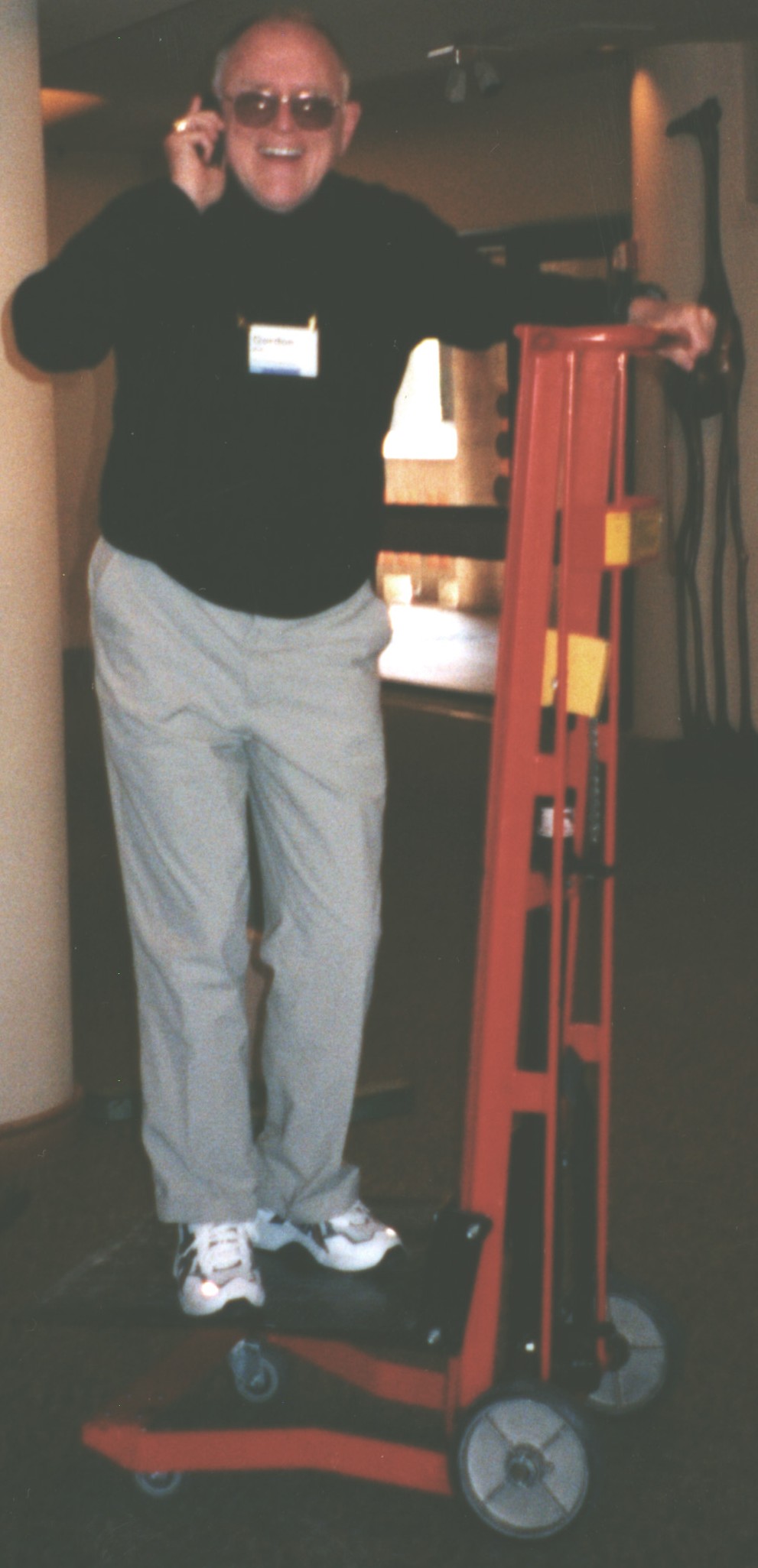 Gordon was with his Diamond Exchange colleagues at the Boulders, Carefree, AZ where the group tested the Segway, a dual-processor, two wheeled, computer and Human Transporter. Since the test in 2002, he has taken and recommended tours in the Pacificia near San Francisco, and Washington, DC. Yes, this is a product endorsement. Right is the Ford SUV version
Digital Housekeeping
Illl-health has impacted on my activity online. This in itself is an insight. On the one hand we lable people for analysis, putting them into groups that vary from 'creator' all the way through to 'inactive' in order to simply its complexity, but more importantly in order to be able to share and discuss.
It has to be two, even three years since I did some long overdue 'digital housekeeping'. It isn't in my nature to go through my virtual pack of cards to put them in order; indeed, is order of any kind necessary so long as you have tagger thoroughly? It is, because such tags are no less valid just because you thoughts, ideas, assignments, references, quotes, pics, charts, grabs and so on are now collated. Indeed, these groups, chronologies and narratives are offering their own insights.
I've been inclined to equate 'stuff' (digital assets) as vegetation in a compost bin, however, this 'stuff' doesn't simply rot, rather it replicates itself ... then rots and transmogrifies in various ways. You think too hard and analogies fail because of the versatility, fluidity and complexity of the World Wide Web 2.0.
Creation is a part of what I do. There is considerable searching, grabbing, highlighting and note-taking too. Screen grabs and 'Snips' are treated like photographs and dealt with off-line in 'Picasa', online they are uploaded to Picasa Web and Dropbox. From here the url is shared in various ways in this blog and elsewhere. This 200GB album was looking like Wembley Stadium after a rock concert so I've gone in and begun to sort out and clean up my 'digital litter'.
What I find is that a grab, chart or image can instantly induce recollection of why I chose the image in the first place; the thinking behind the choice is revived. On their own these images will mean very different things to others until I add the text.
ON REFLECTION
Certain habits, such as titles, tags and references save you scrambling around later. Too often a great chart from a survey is rendered, in academic circles, useless, if I cannot locate the source. I can feel like riding a bicycle with square wheels ensuring that quotes and images are properly referenced at the time you highlight, note or grab, but it means that when you put them into an assignment, or simply a presentation or blog, this reference, usually with a URL is readily available.
This suits the kind of person who for a very short period (one month), not only kept a diary, but stuck the ephemera of the day into the folder/scrapbook too. Unsustainable, but extraordinary how a 3d bus ticket from the 1970s does more to remind me of the Yellow 45 bus I took along the 'Great North Road' to primary school then any words (that I couldn't have written at the time) to explain it.
Intermittently, having come across him during H808, I think about the Microsoft programmer who uses a digital device to RECORD everything he does, all day (sound and vision). That's the easy part. The hard part is creating the software to extract and store content of worth. The problem is that the mind, which must equate to how innovative we are, is anything but well ordered.
How often do we stop and think?
I may be an atheist but perhaps on the seventh day we should rest; we unplugged the router, put the phone on charge for the following week, turn off the TV and buy a paper? Or go to church ... or the non-religious equivalent.
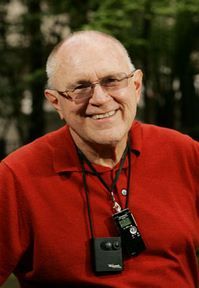
A search for 'Microsoft' in this diary brings me the name 'Gordon Bell', the entry I wrote in January and a link to the New Scientist article and its author. Gordon Bell wrote that he hoped eventually to unconver some patterns 'you would never have gleaned unaided.'
I very rarely look at old diaries. Doing so I was in despair. Neither the chronology, nor the day of the week is relevant, rather it is the unlinked themes that run through it, but to get at those requires transcription and digitisation.
I'd prefer to live life than live about the life I lived.
What Microsoft may achieve, though Google are surely doing it, is to formulate a better way to manager knowledge.
Which brings me to my final though for now, and that is to go entirely Google.
I use Google tools extensively already.

I've never done much with 'Blogger' prefering 'Wordpress,' but Google makes it seamless, indeed, collectively Google tools are half-way between a virtual learning environment (VLE) and that amorphous collection of tools we collectively give the term 'personal learning environment' (PLE).
EMA in six images
I use this blog as an e-portfolio.
It now holds notes from entire books, ad well as an assembly of key points for the H800 EMA.
This way I can pick up where I left off via desktop, laptop or iPad.
I know there are other even better ways to do this, Google Docs and Dropbox, but what I like here is the search function, tags and chronology.
On the basis that I always tag I can now assemble searches by author or topic.
I then return to these pages to edit or add.
I like having the HTML coding so that I can cut and paste into an external blog.
Images: photos, screen grabs or snips, as well as photos and charts, come from Picasa Web.
(See below)
In a concerted effort to narrow down my ideas I am trying to cover the EMA in images only. As a result of all of this I believe I know my stuff, the problem, is to demonstrate that to others in a format that is academic rather than journalistic and highly visualised.
ON REFLECTION
I ought to use the affordances of PowerPoint to construct this thing, using the frames like cards that I can move about and bullet points as a way to construct the treatment. Then write it up, and read it out. Better still record this and play it back to be sure of it's sense before checking further that it meets all the criteria.
With excellent planning H800 gives us this time, whereas in H807 and H808 I'm sure there was course work offered, but very few people coming out to do it.
Could the contents of this blog be put into FileMaker Pro?
Would that make it more versatile?
H800 EMA Mobile
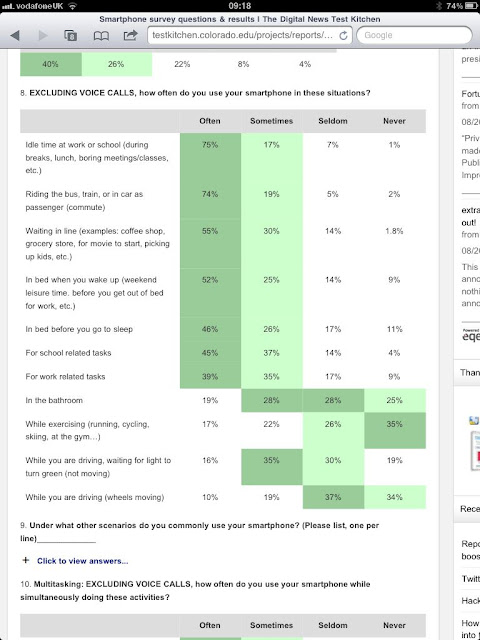


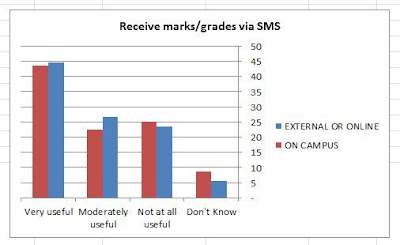
Compulsive Religious Education ?
A friend asked my son if he was doing compulsive RE at the dinner table the other night. My son said yes, not really knowing what his friend had asked.
I explained the difference between compulsory and compulsive and then improvised someone with 'compulsive RE' disorder that meant they were constantly genuflecting to everyday objects, getting down on their knees to pray and singing hymns.
Everyone joined in with their ideas and we had a laugh.
Maybe they both learnt the meaning of the two words?
Mistakes come in many forms, from the impertinent, to the accidental, but as Greyson Perry says about art and creativity, 'Creativity is mistakes.' And sometimes very funny.
Google Translate from German - not text book, but surely adequate for comprehension and communication?
M-Learning stands for 'Mouse-free Learning'
How to motivate people and tutor groups to engage more as a team?
Reasons to be cheerful, one, two, three ...
"It's a matter of love; the more you love a memory the stronger that memory becomes."
Nabakov.
We are generally the better persuaded by the reasons we discover for ourselves than by those given to us by others'. Lec
The pleasure of reading is doubled when one lives with another who shares the same books. Lec
'The surest way to corrupt a young man is to teach him to esteem more highly those who think alike than those who think differently'. Nietzsche
'Analogy is the only language understood by the subconscious mind'. Jung
"Everything that irritates us about others can lead us to an understanding of ourselves." Jung
"The creation of something new is not accomplished by the intellect but by the play instinct acting from inner necessity. The creative mind plays with the objects it loves. " Jung
HOLIDAY ILLNESS
Down with something hideous and find myself on antibiotics. Want to be studying but haven't the head for it, not academic papers.
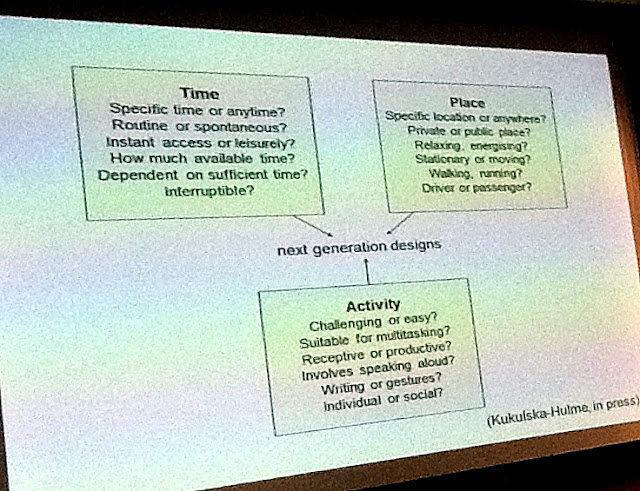
This cover 20 benefits of mobile learning though.
As an asthmatic I wonder if the kind of videos I used to produce as interactive Apps might be of value?
Watch several movies, the wonderful 'Barefoot in the Park' with Robert Redford and Jane Fonda, the TV movie on the rise of Hitler with Robert Carlyle and 'The Englishman who went up a hill and came down a mountain' with Hugh Grant and Tara Fitzgerald.
'The Rise of Evil' is historically accurate though somewhat eager, understandably, to ensure that Hitler has no redeeming points. I'd recommend it as viewing alongside the two volume biography by Ian Kershaw.
'Barefoot in the Park' which I must have seen on TV in the 1970s drew me into the wonders of a stage play making it onto the big screen. I also admire the way five days of sex is handled by showing newspapers being put outside their hotel bedroom door every morning. I thought Paul put his shoes out to be polished, another film?
New blog post
Talking about social media learning
A call from a colleague with a major corporate and we talk social media learning for nearly three hours.
During this time I repeatedly search this blog, using the e-portfolio that it has become, sending charts and grabs from Picasa and from the iPad, creating a mind-map in Bubbl.us and balancing how the MA in Open and Distance Learning compares to the OU MBA he completed last year and the MRes he is doing now.
Just a phone call. We could have gone to Skype, Elluminate or even Google+. The phone freed up the laptop. Several photos picked up from workshops, as well as screen grabs, were emailed from the iPad which was also running.

Fig.1. Social Media Learning Mind Map
Timely as I am procrastinating over the ECA which will be on the use of Forums and Mobile devices in e-learning.
A reminder of how a synchronous conversation can achieve so much, especially when there were items set before our eyes to discuss.
We also discussed (I hadn't the energy to take many notes. In retrospect I wish I'd recorded it):
- Belbin Team Roles
- Activity Theory
- Management Mindsets
- Silos
- Web 2.0
- Learning on the periphery
- Vicarious Learning
- Medical Market Research
- TV Production
- The role of an Alumni Board
- Narrative
- Research
- Assessment
- Blogs as 'electronic paper'
It was invaluable to have the external point of view, someone from a global comany of thousands talking about social media learning. Looking at the devices we now have, such as smartphones and tablets, it was particularly interesting to be reminded of human nature, how devices may be used for things and in ways that they were not designed.
Whilst the iPad permits mobility, we often use it when static: in our favourite chair, recumbant on the sofa, even in bed or in the bath. Is this mobile learning? It's hardly getting out of the house, drawing down data on the run using augmented technology to enhance the environment your in. And simply having content on an iPad so that you can using the touch screen to open and close the text, enlarging text, flipping the screen size between portrait and landscape all the time - the joy of its tactile nature. Unable to sleep I use the light from the iPad as a torch to sneak away from the marital bed and passed the children's bedrooms and to find my way downstairs withouth having to put the landing light on.
It also was clear how both devices and approaches to learning cannot be isolated, we got our joint heads around Engestrom's 'Activity Systems'. The technology is complementary, the move to personalise everything through device and software choices.
I'd played Devil's Adocat a couple of times suggesting that 'nothing had changed' only to come away agreeing that many of my behaviours were/are different as a direct result of Web 2.0. I have gone from learning in private, hunched over my books never showing it to anyone to a situations where, more like someone tending a public garden, or at least one seen from the street, people can see my thinking. Ironically, it is the end result that often fails to appear because I'm not about to post TMAs and ECAs online.
Some authors I quoted/cited during the conversation:
- Vygotsky
- Engestrom
- Richardson
- Moon
- Cox
- John Seely Brown
- Jonathan Swift
To which I subsequently add as a result of browsing the blog and so re-engaging with my own experience within the chronology of the module; it is this, after all, that is to be examined, rather than my knowledge from this and the preceding modules. A learning design fault?
- H807 You diddle about with every instrument in the orchestra and several that have just been invented.
- H808 You learn to conduct, or at least why a conductor is important (even if you can't play an instrument or read music).
- H800 You learn to play an electronic keyboard
I quoted Swift as saying (paraphrasing) 'I don't know what I mean until I hear myself speak'. If anyone has any idea how to cite this please do offer your thoughts.
More authors to consider in this context (mobile learning, forums, e-learning, web 2.0):
- Haythornthwaite
- O'Reilly
- Weller
- Traxler
- Gregory
- Mason
- Sharpe
- Beetham
- Belshaw
- Hinchcliffe
- Bacon and Dillon
- Siemens
- Boyer
- Wenger
- Bruner
Other topics that we should have discussed:
- User Generated Content
- Collective Intelligence
- Apprenticeships
- Problem based learning
- Participation
- Demand Pull
BEING DEVELOPED FURTHER HERE
http://socialmedia4education.wordpress.com/2011/09/08/social-learning-for-corporates/
This blog might contain posts that are only visible to logged-in users, or where only logged-in users can comment. If you have an account on the system, please log in for full access.